What could possibly go wrong?
/
Mamdani strongly condemns Trump's capture of Venezuelan leader Maduro as 'act of war'
Both Maduro and Mamdani believe in redistributing wealth downward, with Mamdani focused on taxing the wealthy and corporations to fund public services, and Maduro redistributing wealth through oil revenues and state control of resources.
Mamdani and his fellow parasites have one resource from which to create their city of warm collectivism: a motherlode of high-income individuals and corporations which they believe they can drain indefinitely and never run out (their) money. Billionaires, millionaires, and, ultimately, six-figure earners will always be there to fund their looting, and a shining city on a hill will rise again.
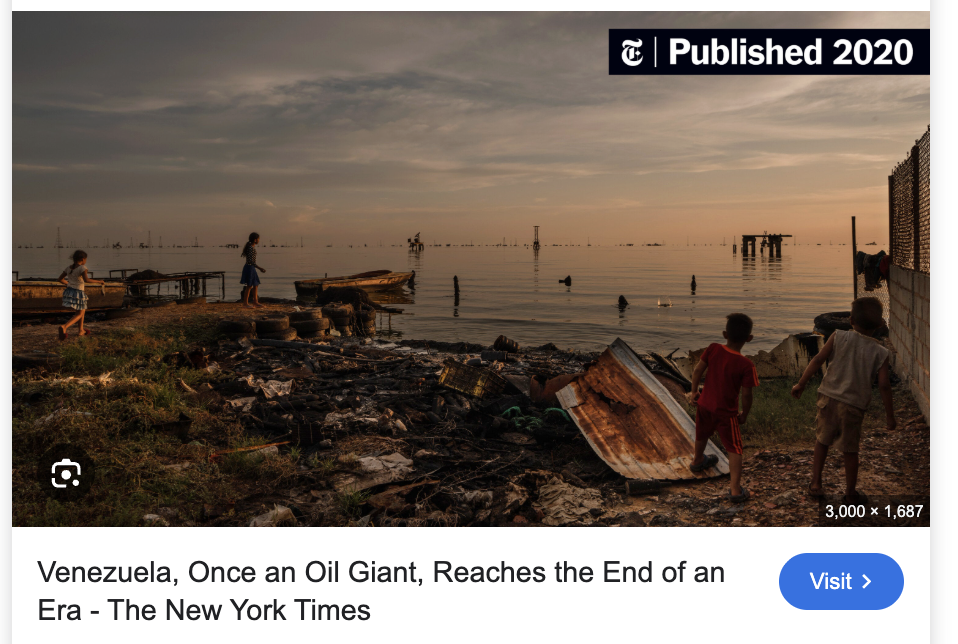
Before he buys his wife a new pair of $700 designer boots and kicks off the celebration, however, New York’s new mayor might want to look to his friend Maduro’s country and see how Venezuela’s past two communists handled their countries own sole resource, one that also promised “unlimited wealth”, and the results they brought down upon their people. Eight million Venezuelans have fled their country out of a population of 28 million, and an equal number would probably follow if they could. It’s no wonder Venezuelans are cheering the sudden removal of Maduro.
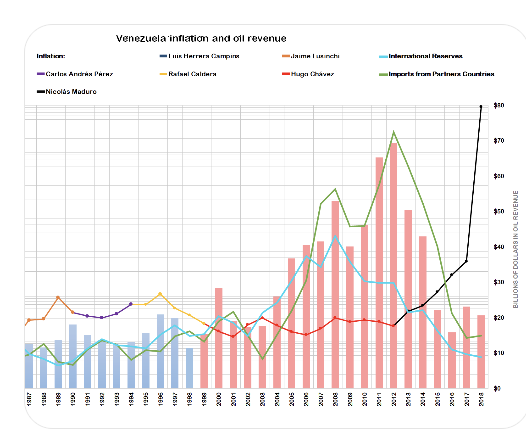
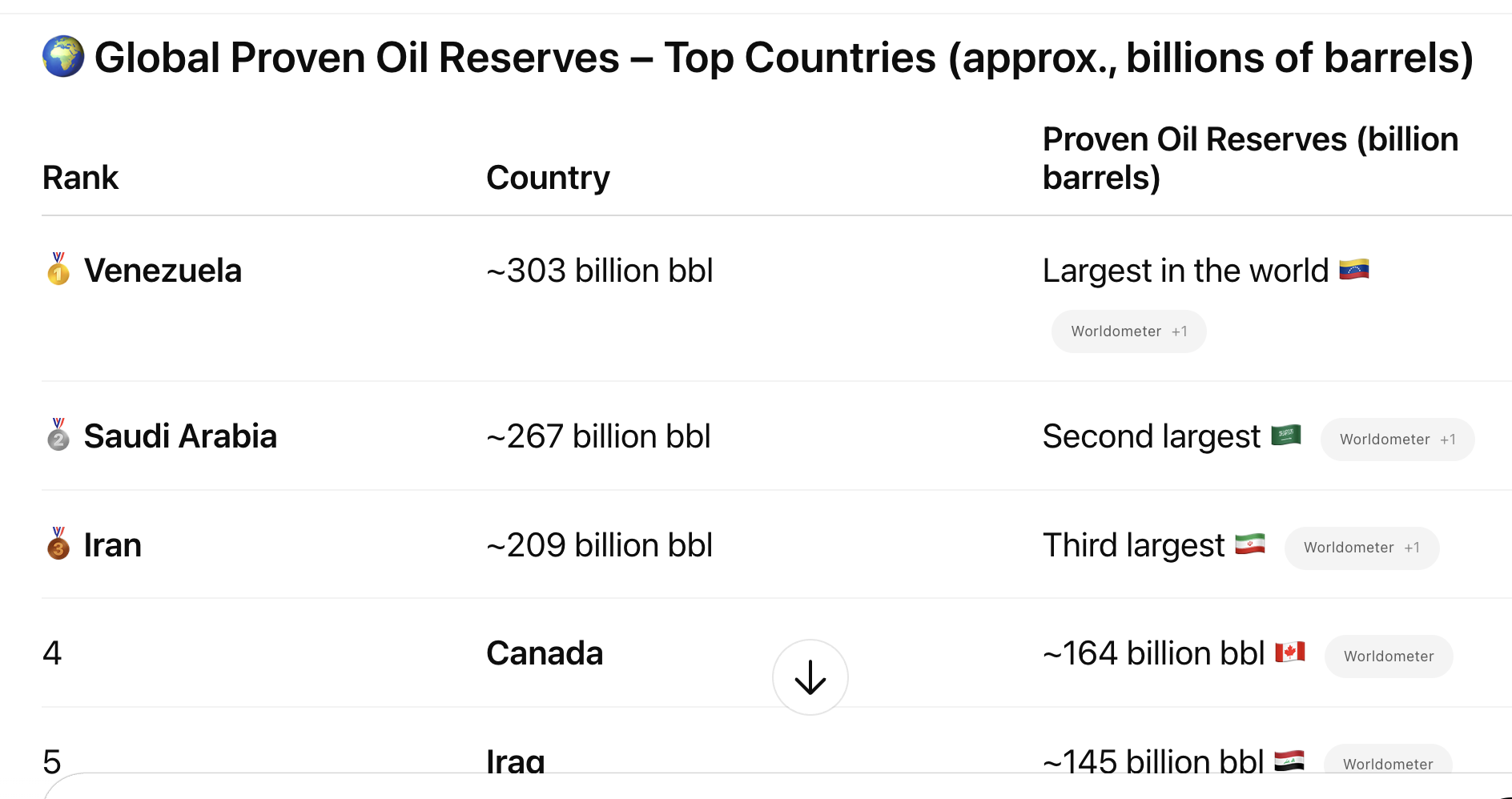
Venezuela has the largest proven oil reserves, in the world, yet is now producing less than a 1/2 million barrels a day (B/pd), compared to the 10+ million B/pd pumped by countries with smaller reserves such as Canada, Saudi Arabia, and the U.S.
How did Venezuela’s production drop 80% during the Chavez/Maduro decades? Simple, really. Here’s a brief summary, courtesy of Google AI:
Under Presidents Hugo Chávez and Nicolás Maduro, Venezuela's government systematically diverted revenue from the state-owned oil company, PDVSA, to fund extensive social programs while significantly neglecting the necessary investment and maintenance of oil fields. This policy, coupled with mismanagement and an exodus of expertise, led to a steep decline in oil production and the eventual collapse of the industry.
Key Actions and Impacts:
Diversion of Funds: The Chávez and Maduro administrations used PDVSA as a "piggy bank" to finance massive social spending ("missions") on healthcare, education, food, and housing. While these programs initially reduced poverty, they were funded at the expense of long-term investment in the oil sector itself.
Neglect of Infrastructure: Funds that should have been used to maintain and upgrade oil facilities, which is crucial for the country's heavy, difficult-to-extract oil, were instead redirected. This lack of investment led to the deterioration of infrastructure, frequent accidents, and a sharp decline in production capacity.
Loss of Expertise: In the early 2000s, Chávez fired thousands of experienced technocrats from PDVSA after a general strike, replacing them with political loyalists who often lacked technical expertise. This loss of human capital further crippled the industry's ability to maintain production levels.
Production Decline: As a result of these policies, Venezuela's oil production plummeted. In the late 1990s, production was around 3.4 million barrels per day; by 2020, it had fallen to a low of approximately 337,000 barrels per day.
Increased Dependence: The strategy, rather than diversifying the economy, only increased Venezuela's dependence on oil exports, making it highly vulnerable to global oil price fluctuations and external shocks like U.S. sanctions.
Ultimately, the diversion of funds for social spending without reinvestment in the core industry created an unsustainable economic model that contributed significantly to Venezuela's severe economic crisis.
1. Major Nationalization Waves
1976: Venezuela first nationalized its entire oil industry, creating the state-owned company Petróleos de Venezuela (PDVSA). While this was a negotiated transition, it established state control over all oil resources.
2007: Under President Hugo Chávez, the government seized the assets of foreign oil companies that refused to grant PDVSA majority control (at least 60%) of their projects in the Orinoco Belt.
2009: The government further seized dozens of oil service companies and contractor assets, including docks and boats, to consolidate state power over the sector.
Other Industries: Beyond oil, Chávez nationalized hundreds of private businesses in sectors like telecommunications, electricity, and agriculture.
Production Decline: The combination of mass firings of skilled workers, lack of reinvestment, and international sanctions following these expropriations contributed to a collapse in Venezuelan oil production.
Here’s a longer recounting I’ve distilled from a ChatGPD response to my questioning:
In 2003, Hugo Chávez fired roughly 18,000 employees from (the state-owned] PDVSA—about 40% of its professional workforce and replaced them with untrained, unskilled party loyalists
Those dismissed included:
Reservoir engineers
Drilling supervisors
Safety engineers
Refinery operators
Project managers
Why this mattered
Oil production is not “turn the tap and pump.” It requires:
Continuous reservoir modeling
Pressure management
Complex heavy-oil upgrading
Refinery balancing and safety expertise
Concrete effects
Heavy-oil projects in the Orinoco Belt require precise steam injection and upgrading—missteps permanently damage reservoirs.
Refinery accidents increased sharply (Amuay refinery explosion, 2012).
By the late 2010s, PDVSA lacked enough trained staff to operate even existing equipment at capacity.
👉 Result: Capacity was lost permanently, not temporarily.
B. Maintenance collapse (equipment decay and outages)
What happened
Cash that normally funded:
Pipeline inspection
Pump replacement
Corrosion control
Refinery turnarounds
was redirected to:Social spending
Political transfers
Off-budget uses
Concrete examples
Refineries ran years past scheduled maintenance cycles
Storage tanks leaked or became unusable
Pipelines ruptured and were not repaired
Oil upgraders shut down because spare parts were unavailable
Key point
Oil infrastructure degrades non-linearly:
Skip maintenance for 1–2 years → manageable
Skip it for 5–10 years → facilities must be rebuilt, not repaired
👉 Result: Venezuela lost production even when oil prices were high and demand existed.
C. Investment collapse (no new barrels replacing old ones)
What happened
PDVSA’s capital expenditure fell sharply after the mid-2000s.
Foreign partners (ExxonMobil, ConocoPhillips) exited after expropriations.
Remaining joint ventures were starved of cash.
Why this mattered
Oil fields naturally decline:
Conventional fields: ~5–8% per year
Heavy oil: often worse without active management
In Venezuela
Decline rates exceeded 10–15% annually in some fields
New projects were announced but never completed
Even maintaining flat production would have required tens of billions annually
👉 Result: Production spiraled downward even before sanctions.
🇻🇪 Venezuela
Model: Politicized state oil company
Fired technical staff
Diverted capex to non-oil uses
Expropriated foreign partners
Used PDVSA as a social-policy arm
Outcome
Production fell ~80% from peak
Infrastructure collapse
Loss of operational competence