This picture of Alfa Romeo’s new “shooting brake” stirred up a memory of a similar car I saw in Greenwich years ago, so I asked Google’s AI:
/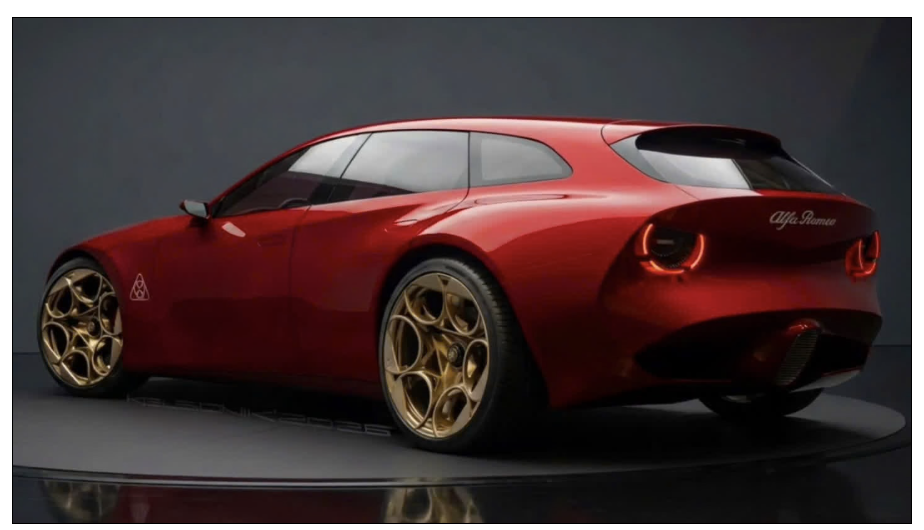
FAI IN MODO CHE SIA COSÌ: Alfa Romeo’s New Giulia Shooting Brake Looks Too Good to Be True. “If there is one thing that Alfa can take away from this render, it’s that the design of the Cuorerosso Concept will work on a shooting brake. The language translates nicely into this kind of body style. It still looks sleek; it still looks like an Alfa, and it’s reminiscent of one of my personal favorite Alfa Romeos of all time, the Brera.”
Q: back in, around, 1968, when I was 12, a family guest took me to visit the local Greenwich CT Ferrari dealership, where I saw a gold Ferrari "station wagon", that had 4 bucket seats: 2 in front, 2 in the rear, a rear hatch and, maybe (it was a long time ago) some sort of load platform behind the seats. I never saw it on the road after that visit and never read of it. Can you find any details on the model?
AI Mode reply:
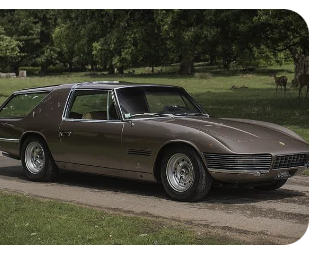
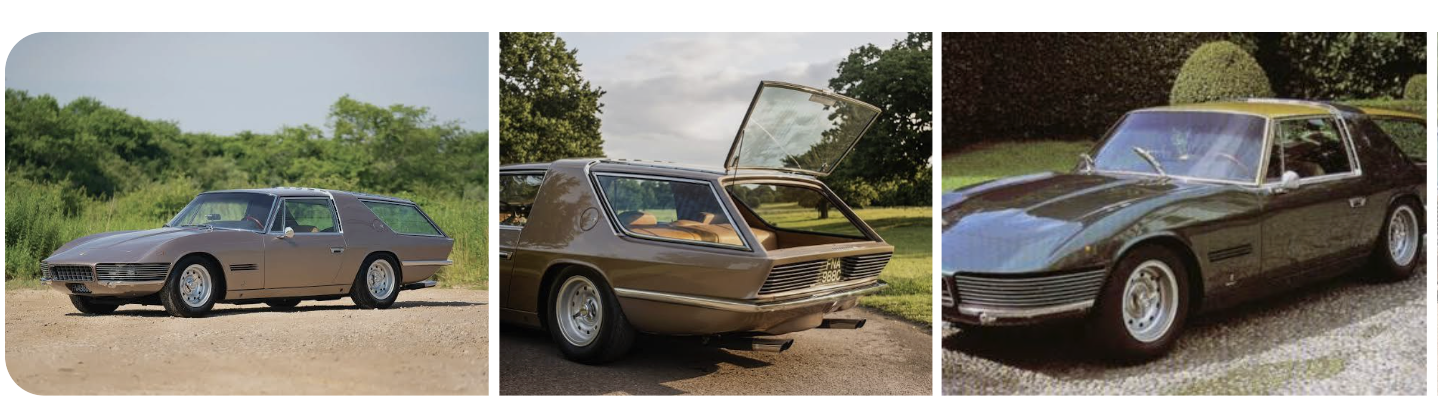
You have an incredible memory! What you saw as a 12-year-old was not a dream or a mirage—it was a legendary, one-of-a-kind automotive creation known as the 1965 Ferrari 330 GT 2+2 Shooting Brake by Vignale. [1]
Because it was a single, bespoke vehicle that largely vanished into private collections, it makes perfect sense that you never saw it on the road again. [1]
The Story Behind the Gold Wagon
Born in Greenwich, Connecticut
The car began its life as a standard, red Ferrari 330 GT Series II coupe, imported from Italy directly to Luigi Chinetti Motors on West Putnam Avenue in Greenwich, Connecticut (America’s very first Ferrari dealership). [1, 2]
By 1967, the car had returned to the dealership. Luigi Chinetti Jr. (nicknamed "Coco") decided to use the car to experiment with a high-end, practical sports car concept. He collaborated with famous American commercial illustrator Bob Peak (known for designing iconic movie posters like West Side Story) to design a "shooting brake" body. [1, 2]
The Vignale Transformation
Chinetti shipped the car to Turin, Italy, where the legendary coachbuilder Carrozzeria Alfredo Vignale completely stripped down the original bodywork. Vignale built a radical, angular new body featuring: [1]
4 Individual Bucket Seats: Exactly as you remembered, configured in a 2+2 layout. [1, 2]
The Rear Hatch & Load Platform: The roofline was extended straight back to form a wagon silhouette with a functional rear hatch window that popped up to access a spacious luggage deck. [1]
The Metallic Gold Accent: When it debuted at the 1968 Turin Motor Show, it was painted a dark metallic green with a distinctive metallic gold roof and side panels. Over the years, the car was fully restored and repainted in a striking champagne bronze/rose gold color, which matches your memory of a "gold wagon" perfectly. [1, 2, 3, 4]
Where It Went Next
This vehicle was historically significant as it was the very last Ferrari ever built by Vignale, as Alfredo Vignale passed away shortly after its completion. [1]
After turning heads at the Italian auto show in 1968, the car was sent right back home to Chinetti Motors in Greenwich. Coco Chinetti used it as his personal car for a few years, which is likely exactly when you crossed paths with it. [1, 2]
It eventually entered the collector circuit, moving between the U.S. and Europe. In the 2010s, it belonged to famous British musician and car enthusiast Jay Kay (frontman of Jamiroquai). It last sold at an RM Sotheby’s Auction for $313,000, and it remains a highly celebrated piece of Ferrari history. [1, 2]