Formica vs Corian vs granite vs quartzite vs quartz
/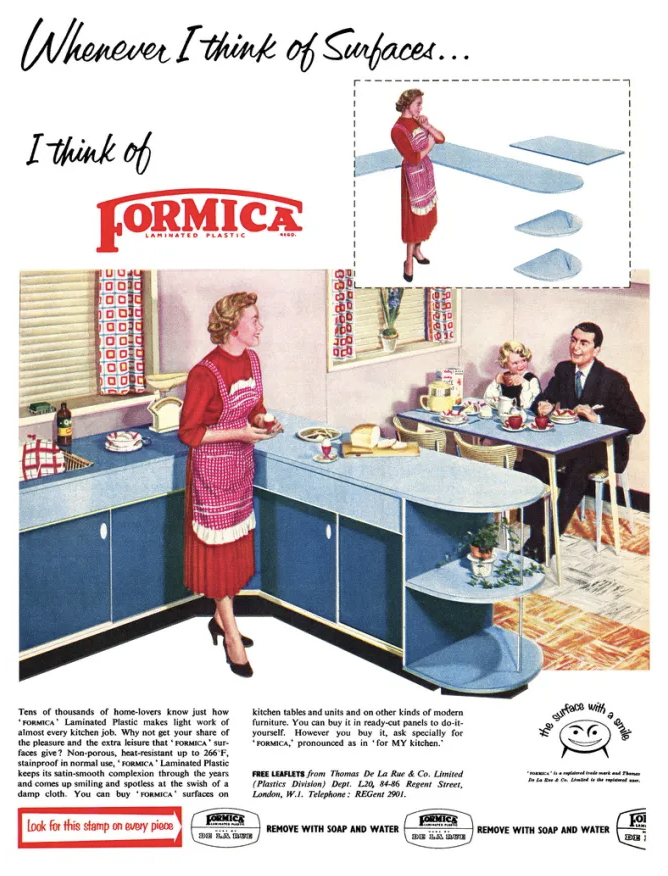
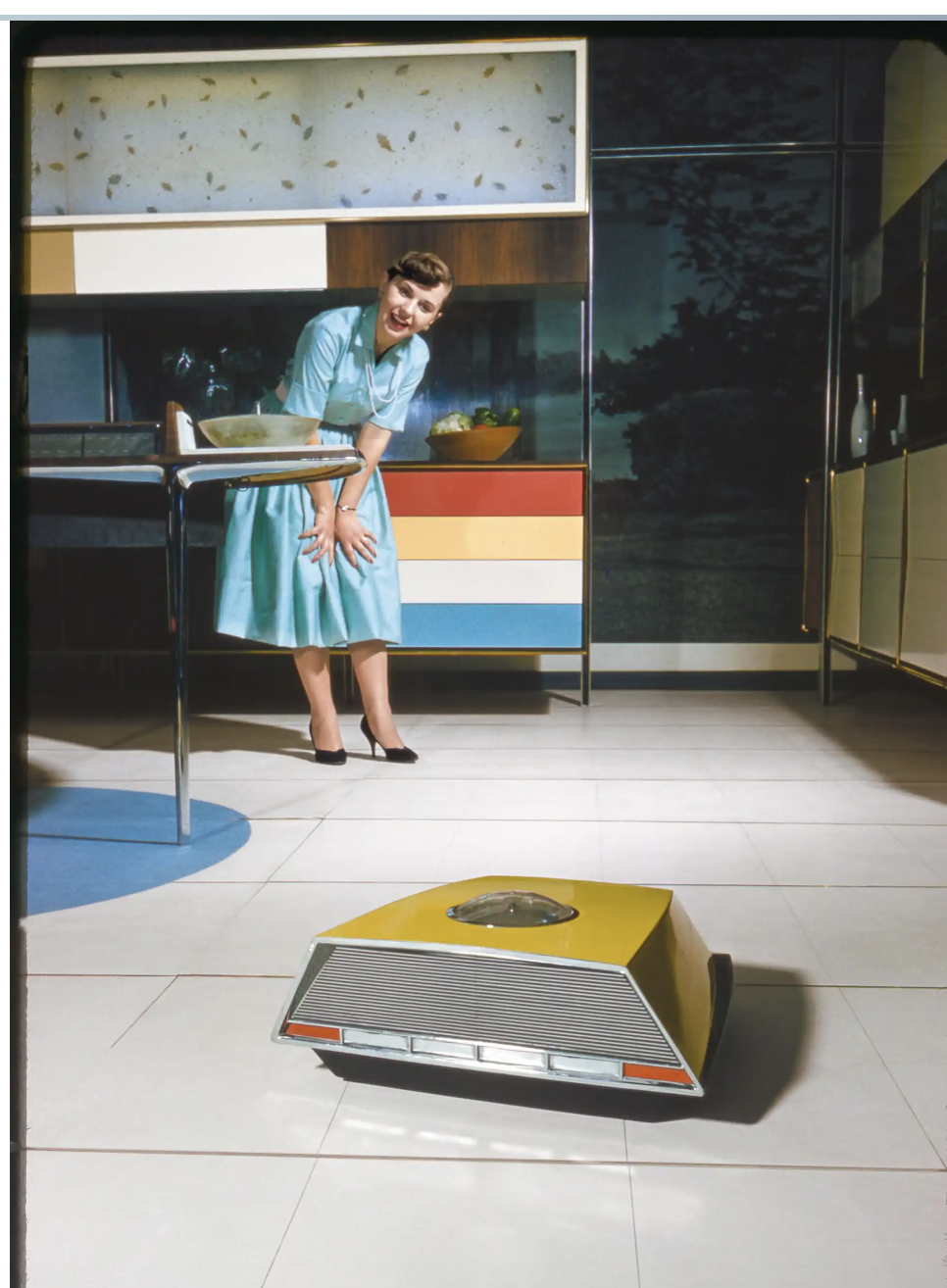
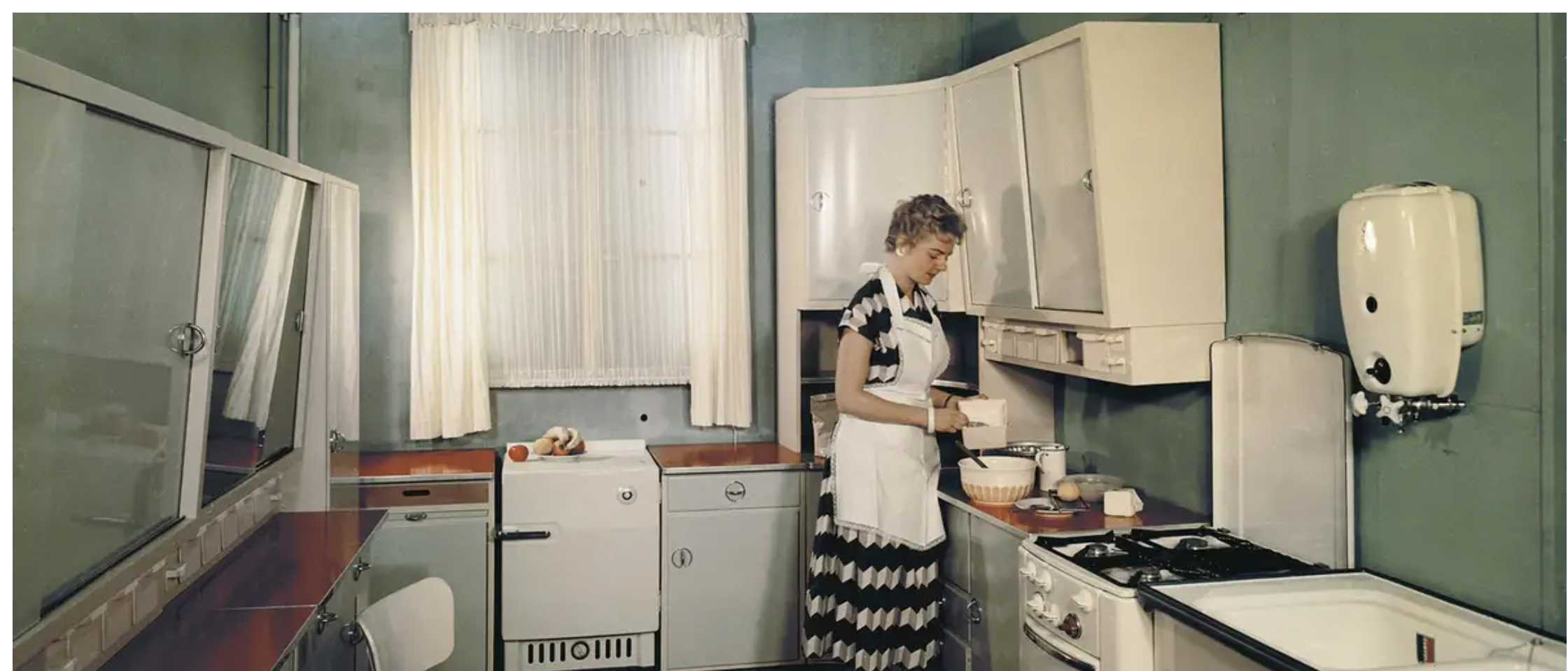
“This housewife is a ‘FORMICA’ kitchen enthusiast – but aren’t we all? Won’t you feel life is good when you own a kitchen where all the surfaces are jewel-bright-clean-at-a-wipe ‘FORMICA’ Laminated Plastic?”
Nothing in real estate goes out of fashion faster than kitchens and bathrooms. Don’t believe me? Do you remember the ubiquitous gold-fixtures/jet pool bathrooms of the 90s? I rest my case.
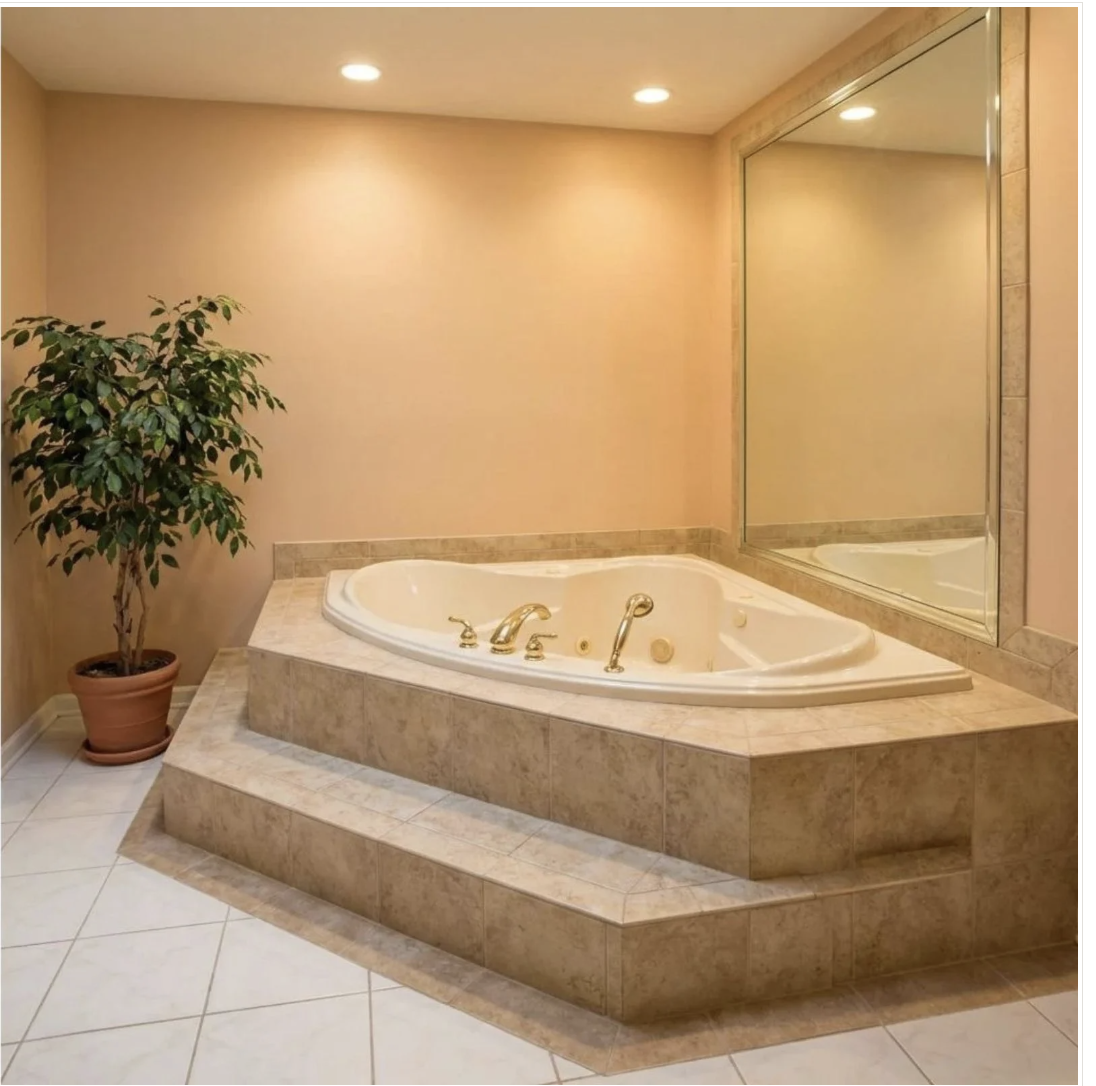
But let’s not talk about bathrooms today, let’s discuss what’s happened to kitchen countertops, because, why not?
Countertops came to my attention the other day when I ran across an article that blamed granite’s falling-out-of-favor with consumers on, in part, an hysterical fear of silicosis; a lung disease that can be caused by prolonged inhalation of massive amounts of granite dust — common enough in the manufacturing process, and an absolutely non-existent risk from the installed countertops themselves. Doesn’t matter, the absurd overestimation of risk is persistent, as can be seen in the continued use of lead aprons for dental x-rays; they’re are no longer necessary – haven’t been for decades – and in fact can hamper the efficiency of the examination. Dentists and hygienists I’ve spoken with tell me that, while they know that, their patients still demand them, so they remain in use.
So granite’s going (helped along with the television home style shows, which need a continuous supply of fodder to broadcast). What’s next? Today, it’s Quartzite and Engineered Quartz; tomorrow, look for Formica to make comeback, and can Corian II be far behind?
Here’s some AI generated stuff explaining the differences:
Market Trends & Popularity
National Kitchen & Bath Association (NKBA) data shows that engineered quartz and quartzite have shifted market momentum, with a recent industry forecast ranking quartz and quartzite ahead of granite in designer consideration (with quartzite leading specific designer source lists at around 78%). [1, 2]
Granite has slipped to third place in many contemporary trend reports, though it still commands respect for its high heat resistance and unique, organic earth-tones. [1, 2]
Key Material Differences
Engineered Quartz: An artificial composite made of crushed quartz stone bound with resins. It is non-porous (requires no sealing), highly uniform in pattern, and easy to clean, though less heat-resistant than natural stone. [1, 2, 3]
Natural Quartzite: A 100% natural metamorphic rock transformed from sandstone. It offers the coveted, soft veining look of marble combined with a hardness level superior to granite, though it is porous and needs periodic sealing. [1, 2, 3]
Granite: A natural igneous rock known for bold, speckled, or exotic patterns and superior resistance to heat, though it requires regular sealing to prevent staining.
But wait, there’s more!
Quartz vs. Quartzite: Here's the One Experts Say Is Best for Your Home
And:
Are Granite Countertops Outdated in 2026? A Practical Answer
1. Why Granite (and Stone) Left Corian Behind
While HGTV and home improvement shows undeniably amplified the "granite craze" to the masses, the preference in ultra-luxury markets like Greenwich came down to fundamental material differences:
The Luxury Value of Rarity: Corian is an engineered, man-made acrylic polymer. No matter how premium the blend, it is a factory product that can be infinitely replicated. Granite, marble, and quartzite are geological art pieces formed over millions of years. Wealthy homebuyers value the exclusivity of owning a completely unique, non-replicable slice of the earth. [1, 2, 3, 4, 5]
The "Plastic" vs. "Cold Stone" Feel: In high-end kitchens, weight and tactile feedback matter. Corian is chemically a plastic, which means it feels warm to the touch and sounds hollow when a glass is set down. Granite is heavy, dense, and permanently cool—sensory traits that buyers instinctively associate with wealth and structural permanence. [1]
The Achilles' Heel of Corian (Heat): In a high-end chef's kitchen, Corian has a major functional drawback: it melts and scorches at roughly 212°F. Accidentally setting a hot cast-iron skillet directly on a Corian counter will permanently scar or discolor it. Granite is entirely impervious to direct heat from a stove or oven. [1, 2]
While Corian holds the advantage of being completely non-porous and seamlessly repairable, high-end buyers overwhelmingly chose the prestige [emphasis added] and heat resistance of stone.
2. The Safety Panic: What is Replacing Silica-Heavy Stone?
Your intuition regarding the "panicky homeowner" and fabricator safety is spot on. The industry is currently facing a massive reckoning over silicosis—a fatal lung disease caused by breathing in fine crystalline silica dust generated when cutting engineered stone and certain natural rocks. Australia completely banned engineered stone (quartz) because of this, and California has enacted strict emergency regulations to protect workers.
While the dust poses a severe danger only to the workers cutting the slabs during manufacturing and installation (it is perfectly safe and inert once installed in the home), the bad press and shifting tastes are driving luxury homeowners away from standard engineered quartz and speckled granite.
The modern replacements in top-tier homes include:
Natural Quartzite: Not to be confused with engineered quartz, quartzite is the current undisputed king of luxury real estate. It is a natural metamorphic rock that offers the spectacular, dramatic veining of high-end marble but is actually harder and more scratch-resistant than granite. Homes with quartzite countertops are commanding a premium at resale. [1, 2, 3, 4]
Porcelain Slabs: This is the massive technical leap forward. Large-format porcelain slabs are engineered from clay, but they are fired at such high temperatures that they become entirely non-porous, highly heat-resistant, and scratch-proof. High-end porcelain can beautifully mimic rare marbles, and because it contains significantly less crystalline silica than quartz, it is being embraced as a safer option for fabrication. [1, 2]
Sintered Stone: Brands like Lapitec and Dekton have developed "silica-free" or ultra-low silica mineral slabs made entirely of natural minerals bonded under extreme heat and pressure. They are practically indestructible—impervious to UV light, scratching, and direct flame.
All of which is far more than you ever needed or wanted to know, but here it is.