I don't want to be treated by a doctor who while training and being paid $88,662 annually "had difficulty" `figuring out how to feed himself
/
The claim:
1 in 5 CT medical trainees lacks reliable access to food.
That trainee doctor treating you at a teaching hospital may be struggling to afford food, a new study by Yale Medical School has found.
Yale researchers reporting in the Journal of the American Medical Association found that 45.3% of first-year medical residents in the Yale New Haven Health System reported some level of “food insecurity,” and 1 in 5 of all medical trainees reported lack of access to food. Finances were the barrier for many, the study found.
“Lack of money was associated with food insecurity,” the researchers wrote, recommending additional support for medical trainees.Residents and fellows often provide front-line care in emergency rooms and other settings at teaching hospitals, as depicted in the television series “The Pitt.” [top-notch reporting, using a television show as a source – ED]. Food insecurity can add to the stress of training, alongside burnout and social isolation, the researchers said.
A first-year resident at Yale earns $88,662 in total salary, according to the Yale School of Medicine website. At the same time, medical school graduates who borrow for their education owe an average of $227,514 in student loans, according to the Education Data Initiative. [None of which need be repaid until after graduation, so this number has nothing to do with the supposed ‘food insecurity” the poor dears are suffering from now — ED].
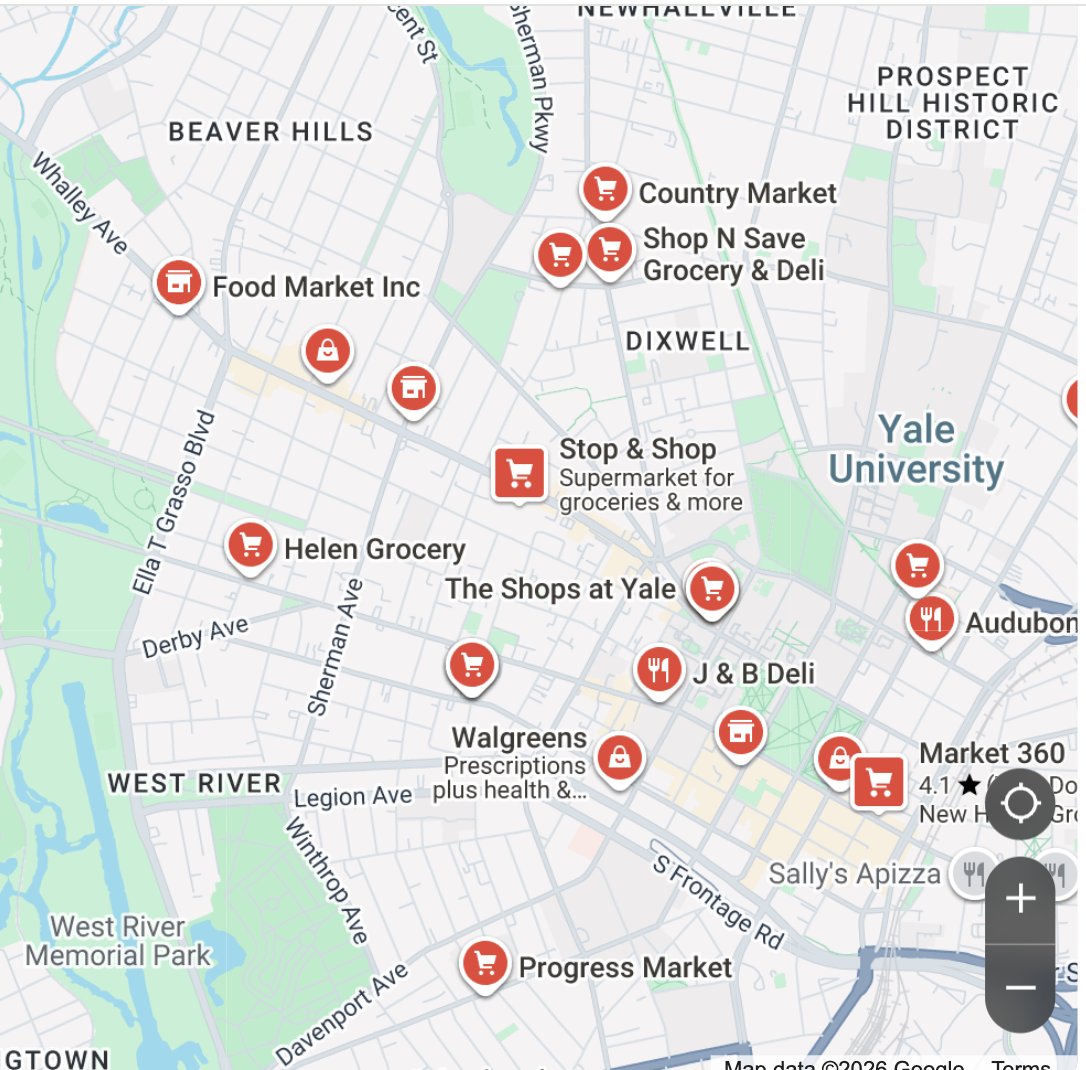
In addition to financial stress, the doctors said a “lack of accessible grocery stores” played a role in their food insecurity.
As to that, the reporter didn’t ask, so I did:

No time to cook for themselves? No problem
Q: What dining options are available to yale new haven medical residents?
AI Answer:
Medical residents at Yale New Haven Hospital (YNHH) have access to multiple institutional dining facilities, on-campus student venues, and local street options. Because residents frequently transition between the hospital buildings and the Yale School of Medicine campus, their choices span hospital-operated cafeterias, university dining halls, and dedicated resident lounges.
Hospital Cafeterias & Cafés
The York Street Campus (YSC) serves as the primary hub for inpatient rotations, offering multiple dining options where residents can use hospital-issued meal stipends or cards: [1, 2]
East Pavilion Cafeteria (Main Cafeteria): Located on the first floor of the Atrium lobby, this is the main dining space. It is open 7 days a week from 6:00 AM to 8:00 PM and offers full hot entrees, a grill section, a salad bar, and rotating healthy options. [1, 2, 3]
Atrium Café: Located in the main lobby, serving salads, pizza, sandwiches, sushi, and coffee on weekdays from 6:00 AM to 4:00 PM. [1]
New Haven Pavilion Cafeteria & Café: Located on the second floor of the Clinic Building, open weekdays from 7:30 AM to 2:00 PM. It features an attached Peet’s Coffee bar open weekdays until 3:00 PM. [1, 2]
Smilow Cancer Hospital Cafés: Residents rotating through Smilow can stop by the Park Street Coffee Shop (1st floor, open weekdays 6:30 AM to 3:00 PM) or the Overlook Café (2nd floor, open weekdays 9:00 AM to 5:00 PM). [1, 2]
Dedicated House Staff Amenities
For quick breaks during a shift or overnight call, residents have exclusive access to specialized benefits: [1]
House Staff Lounge: YNHH provides a dedicated resident lounge equipped with televisions, a refrigerator, 24-hour coffee, and nightly food deliveries specifically designated for on-call staff.
Stipends: Programs under Yale New Haven Health include a pre-loaded food allowance or monthly stipend that can be spent directly across the various hospital cafeterias. [1, 2]
JAMA ‘s “study” admits that the authors used a different definition of food insecurity than the federal government’s. Was that so they could reach a pre-determined outcome? Oh, that woud never happen, this is science.
These findings should be situated in their broader social context. Resident physicians earn salaries well above the federal poverty level, and reported food insecurity in this population differs in severity and circumstance from that experienced by economically marginalized households; our findings are not intended to equate the two. The USDA measure assesses consistent access to adequate food given a household’s resources and competing obligations, not income alone, and food insecurity above the poverty threshold is well documented.2,3 The mechanisms underlying reported food insecurity in this relatively well-compensated population remain undetermined and warrant direct study.
That last sentence: “the mechanisms [for these results] remain undetermined” is essentially saying, we don’t know why this segment of Residents report they are unable to afford food, because we didn’t ask.” Despite a plentiful supply of food stores in the immediate area, and subsidized cafeterias on campus, nearly a third of relatively well-compensated medical trainees experience food insecurity? Really? Why? And, follow-up question, why didn't the researchers examine whether respondents actually used them, what they paid for meals, and whether their reported difficulties were financial or logistical?
This is “researching” and reporting for headlines, not facts.