Paste Eaters in Pradise
/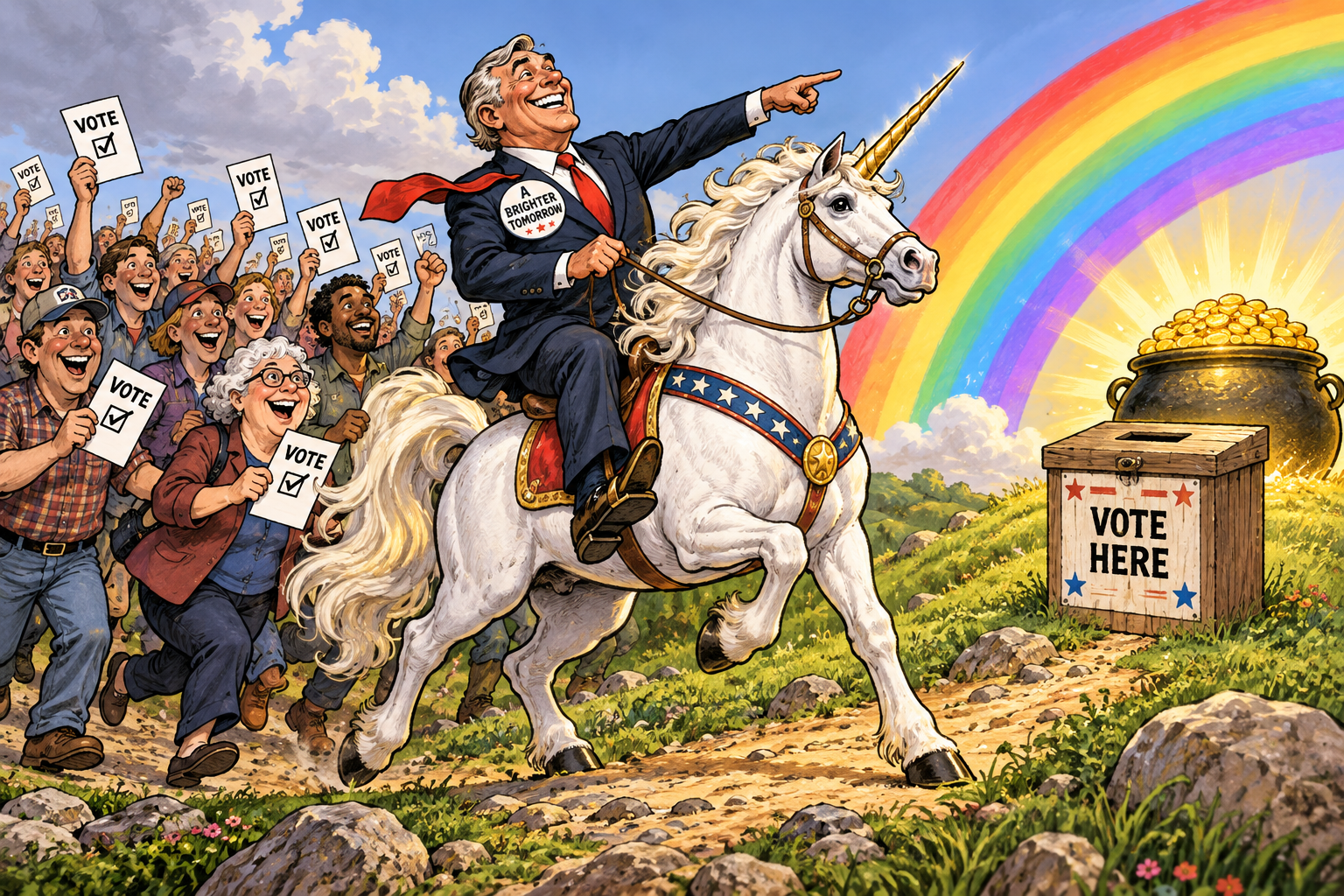
I get it, I think: the average voter doesn’t know why food prices are up, his electric bill has tripled in the past decade, and his rent’s soaring out of his reach, he just knows that it’s happening, and he wants it to stop, and he blames whichever party’s in power for not ending the misery. He sees, he objects, but he never asks why things are so, never asks if, for instance blocking construction of natural gas pipelines or tacking on a “social service” charge to utility bills might have contributed to his woes. “I don’t want to know the reason, just fix it, and if you can’t, I’ll vote for the other guy.” Ant that’s why — there’s that word again — it seems likely that the country’s about to hand the reins back to the very people who created this mess in the first place.
Sad.
Trump's not on the ballot but swing state voters still cast ballots with MAGA in mind
"Republicans have showed in the past two years that they really have made things worse," Chris from Doylestown said when asked if he believes Democrats will bring down prices. "Gas is way up, the energy is way up, food's way up. There's nothing that's cheaper, so they can't argue that."
"I mean, Donald Trump's in office, how much worse can it get?" he went on. "Telling me that it can get worse than this? It's the worst it's ever been. You think that by having... Democrats in office... that somehow it's gonna make things go even higher? I don't think so."
I paid $1.67 for a gallon of gasoline on January 20, 2021, the day Biden was inaugurated. Under his rule, gas hit a peak national average of $5.01 in June 2022, and stayed lodged in the stratosphere for the rest of his term. That should have pleased his constituency — after all, Obama’s Energy Secretary called for $8 gas in 2008, and the president and fellow democrats took immediate steps to achieve that, shutting down pipelines and power plants and preventing new ones, as well as refineries, from being built. Yet somehow, the people were dissatisfied. Not enough to stop them from voting to keep him office for two terms or bringing back his Vice President in 2020, but unhappy nonetheless.
All the noble sounding goals of Democrats are met with huge public support, until the chumps discover that, despite the promises otherwise, they’ll have to pay for them themselves. “Free” solar energy, is just one example. Medicare for All is another:
Medicare for All Is Popular—Until People Find Out How It Would Work
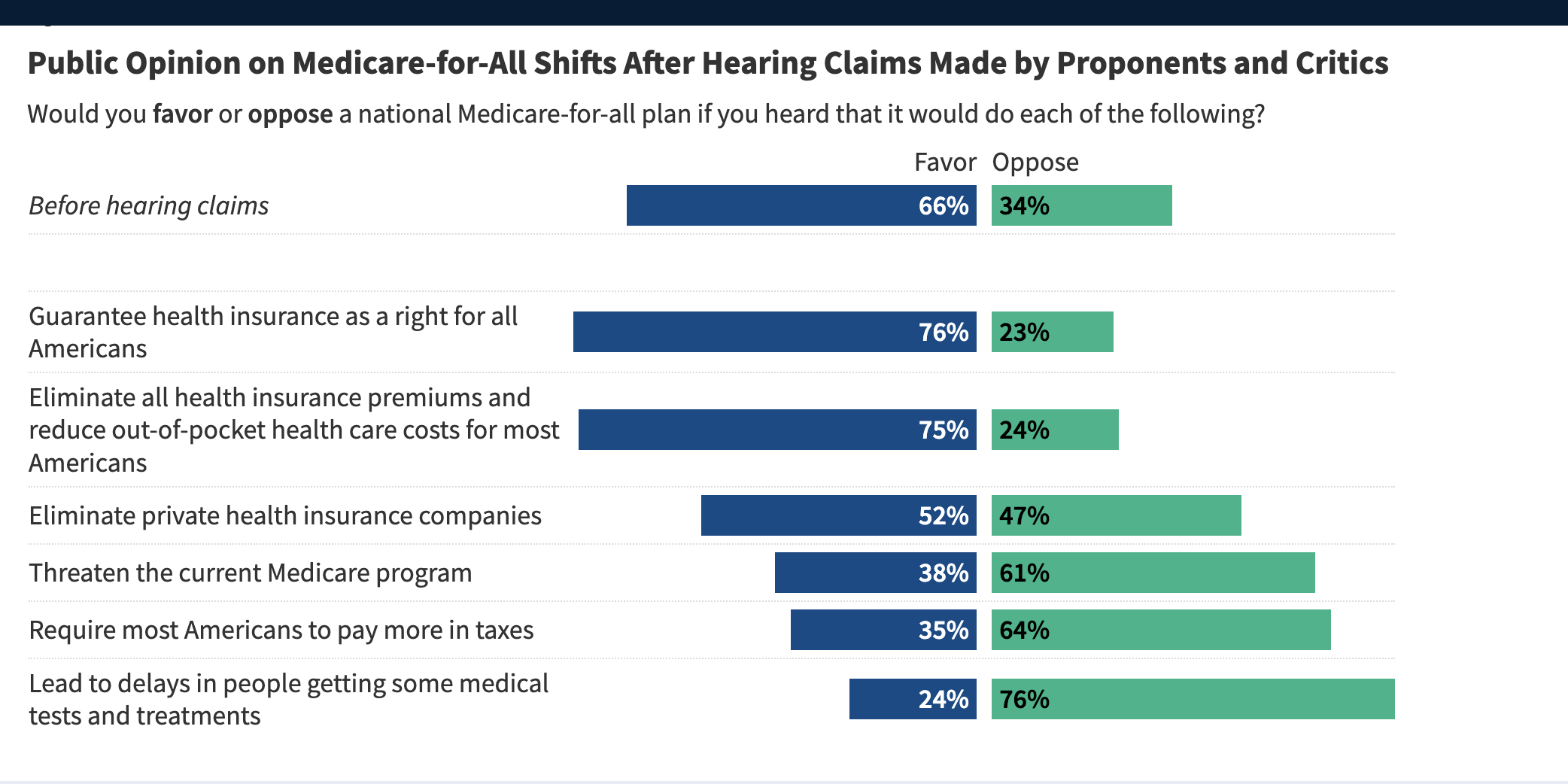
Medicare for All may be a popular slogan, but the policies that would be necessary to make it work would not be. A recent poll found that Americans approved of Medicare for All in principle by a margin of 66 percent to 34 percent—but they opposed it, 64 percent to 35 percent, if it would increase their taxes, and by 76 percent to 24 percent if it delayed access to medical tests and treatments.
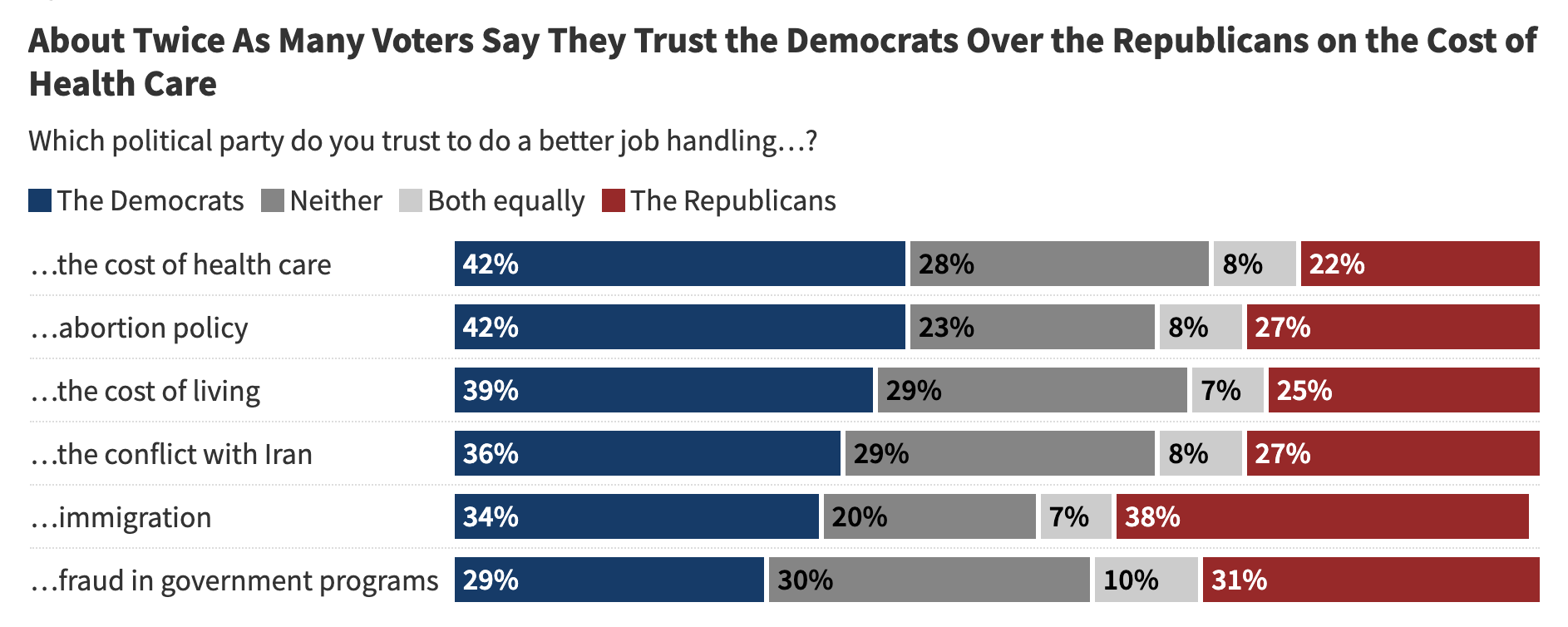
With about a month to go before Election Day, the latest KFF Health Tracking Poll finds a large enthusiasm gap between partisans, with Democratic voters much more likely than Republican voters to say they are “more motivated” to vote this year than usual (63% vs. 38%). As voters make their final assessments before they cast their ballots, the Democratic Party has a clear edge over the Republican Party on who voters trust to handle many top issues in the election, including the cost of health care (42% vs. 22%) and the cost of living (39% vs. 25%). Notably, the size of the gap between the Democratic and Republican parties on health care costs has increased since April of this year, when 37% said they trusted the Democrats and 26% said they trusted the Republicans.
Health costs continue to be a top affordability worry for voters, tied with concerns about gas prices as in recent months. Six in ten voters are worried about being able to afford their health care costs, and about half of voters say it is “extremely important” for candidates in the midterm elections to talk about the cost of health care—ranking alongside the cost of living as the top two issues voters want to hear candidates talk about in the closing weeks of the midterm campaigns.
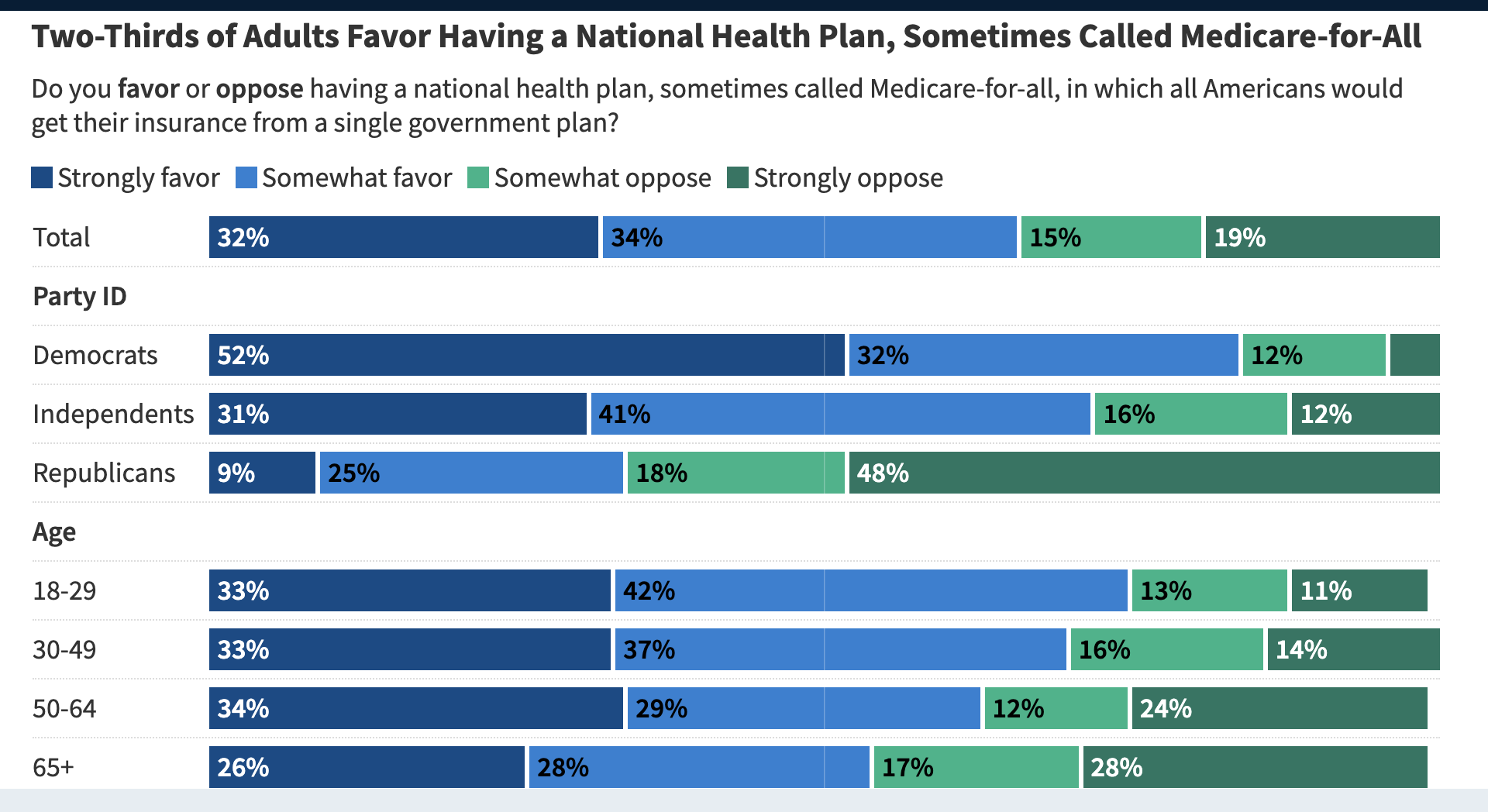
There is bipartisan support among the public for major changes to the country’s health care system, but partisans have vastly different views of the type of change needed. Large majorities of adults, including about nine in ten Democrats and three-quarters of Republicans, say the U.S. health care system needs either a complete overhaul or major changes. Reflecting the increased attention to Medicare-for-all in congressional races where some progressive Democrats have campaigned on it, two-thirds (66%) of U.S. adults now support Medicare-for-all, up from 53% when KFF last asked the question in October 2020. Views of a single-payer system remain highly partisan, with majorities of Democrats (84%) and independents (72%) saying they favor it, compared to 66% of Republicans who oppose such a plan.
Despite the public’s generally favorable view of Medicare-for-all, support drops when people hear criticisms of such a plan commonly made by opponents about the potential for higher taxes, longer wait times, or threats to the current Medicare program. On the other hand, support for Medicare-for-all increases when people hear claims made by proponents, including that such a system might guarantee health coverage as a right for everyone or eliminate insurance premiums and cost-sharing. Taken together, these findings suggest that while a majority supports Medicare-for-all in the abstract, support is likely to shift over the course of any public debate in which the public hears arguments for and against such a plan. For a summary of historical KFF polling data on opinions of Medicare-for-all, see here.