Would the "wealth tax" advocates also support giving him a refund for taxes paid in previous years?
/
Billionaire Carl Icahn loses 93% of his multi-billion fortune in just 5 years
“Battered by bad bets”
AI Overview
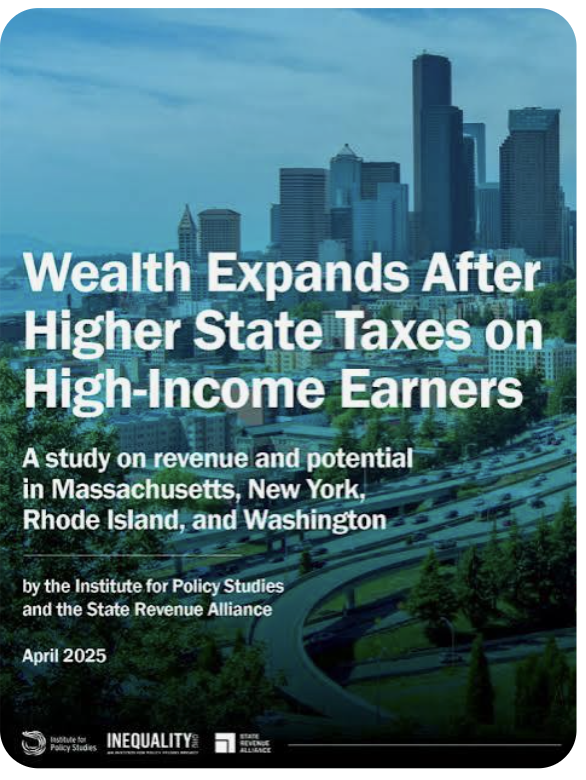
A number of U.S. politicians—primarily progressive Democrats and Independents—have advocated for a federal wealth tax, which taxes an individual's total net worth (assets minus debts) rather than just annual income. Senator Elizabeth Warren, Senator Bernie Sanders, and Representative Ro Khanna have led the most prominent legislative efforts in the United States.
Primary Legislative Sponsors
Senator Elizabeth Warren (D-MA). Warren has championed the Ultra-Millionaire Tax Act, originally introduced during her 2020 presidential campaign and reintroduced in 2021 and 2026. Her proposal levies a 2% annual tax on household net worth above $50 million and an additional 1% surtax (3% total) on net worth exceeding $1 billion.
Senator Bernie Sanders (I-VT). Sanders previously proposed a graduated wealth tax starting at 1% on net worth over $32 million and scaling up to 8% on wealth over $10 billion. In March 2026, he introduced the Make Billionaires Pay Their Fair Share Act, which proposes a flat 5% annual wealth tax on U.S. billionaires.
Representative Ro Khanna (D-CA). Khanna partnered with Senator Sanders to introduce the 5% annual billionaire wealth tax in the House of Representatives in 2026.
Representative Pramila Jayapal (D-WA) and Representative Brendan Boyle (D-PA). Both lawmakers co-led the introduction and 2026 reintroduction of Warren’s Ultra-Millionaire Tax Act in the House alongside more than 45 congressional co-sponsors.
Other Notable Advocates
2020 Presidential Candidates. During the 2020 Democratic primary, former Vice President Tom Steyer advocated for a 1% wealth tax on the wealthiest 0.1% of Americans. Candidates Pete Buttigieg, Amy Klobuchar, and Beto O'Rourke expressed openness to the concept during primary debates, while former HUD Secretary Julián Castro proposed an inherited wealth tax on lifetime inheritances exceeding $2 million.
State-Level vs. National Stances. While some state leaders have pushed state-level wealth taxes, California Governor Gavin Newsom opposed a 2026 California ballot measure (Proposition 40) for a state-level billionaire tax, stating he favors a national wealth tax instead to prevent wealthy residents from relocating to lower-tax states.
State Candidates. Iowa State Senator and U.S. Senate candidate Zach Wahls campaigned in 2026 in support of a 5% annual national wealth tax on billionaires.
Global Wealth Tax Proposals. While G20 nations—led by countries like Brazil and France—have debated a coordinated global minimum tax on billionaires, available records do not show prominent U.S. federal politicians formally sponsoring legislation for an international or global wealth tax. U.S. lawmakers have instead focused on domestic legislation that includes provisions to tax Americans' offshore holdings and impose a 40% to 60% "exit tax" on ultra-wealthy citizens who renounce their U.S. citizenship to avoid taxation
(Note: Other progressive lawmakers, such as Representative Alexandria Ocasio-Cortez and Senator Ron Wyden, frequently advocate for higher taxes on the ultra-wealthy, though their primary proposals focus on high marginal income tax rates or taxing unrealized capital gains rather than a pure annual net-worth tax.)