The google-eyed barista's overseas debut continues to provide delicious lagniappes
/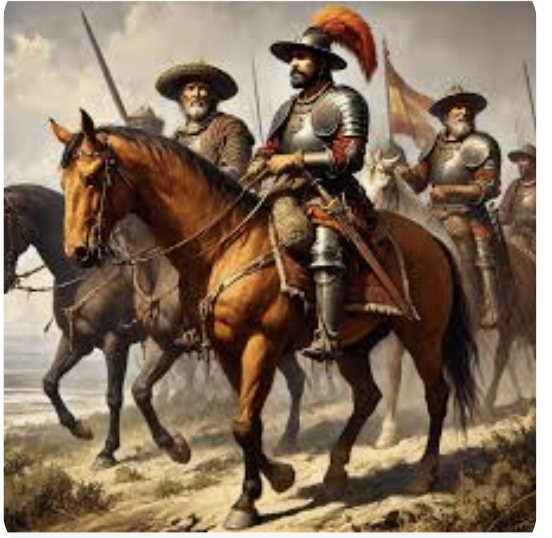
By now, AOC’s disastrous attempt to prove her presidential mettle at Munich is old news, but additional snippets from her tour keep popping up, and oh, they’re such fun. Here she is explaining her personal opinion on the origin of the western cowboy. Amusing as it is, she’s not entitled to her own facts (I’ll just point out that, not only did horses and vaqueros originate in Spain and were introduced into the New World by the Spanish, but so did the cattle they rounded up, and the language used to direct the operation. The wheel, too, was a western innovation, for that matter, but that’s yet another story.)
Not that Wikipedia is always a reliable source of trustworthy information, but this entry jibes with my own knowledge of the subject so we’ll go with it:
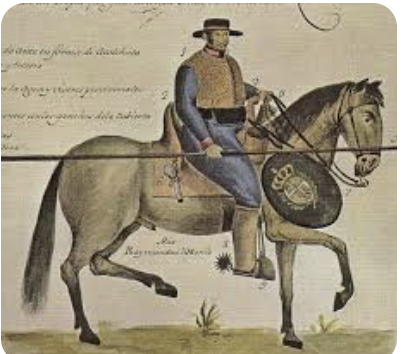
Vaquero
The origins of the vaquero tradition come from Spain, beginning with the hacienda system of medieval Spain. This style of cattle ranching spread throughout much of the Iberian Peninsula, and it was later brought to the Americas. Both regions possessed a dry climate with sparse grass, and thus large herds of cattle required vast amounts of land in order to obtain sufficient forage. The need to cover distances greater than a person on foot could manage gave rise to the development of the horseback-mounted vaquero.
Arrival in the Americas
During the 16th century, the Conquistadors, and other Spanish settlers brought their cattle-raising traditions as well as both horses and domesticated cattle to the Americas, starting with their arrival in what today is Florida (then Spanish Florida), Mexico (then New Spain) and Central America.[28] Among the earliest Spanish Vaqueros in the Americas were in Spanish Florida who arrived with Ponce De Leon in 1521 with their Andalusian cattle.[29][30][31][32][33] The traditions of Spain were transformed by the geographic, environmental and cultural circumstances of New Spain, which later became Mexico and the Southwestern United States. They also developed this culture in all of western Latin America, developing the Gaucho cowboys in Argentina, Chile, Guatemala, and Peru. In turn, the land, and people of the Americas also saw dramatic changes due to Spanish influence.
The arrival of horses in the Americas was particularly significant, as equines had been extinct there since the end of the prehistoric ice age. However, horses quickly multiplied in America and became crucial to the success of the Spanish and later settlers from other nations. In “Libro de Albeyteria” (1580), the Spanish-Mexican horseman and veterinarian, Don Juan Suárez de Peralta, asserted that horses were so abundant they “roamed wild in the countryside, without an owner” and that there were “horses and mares that are over twenty years old, and they die of old age without ever seeing man.”[34][35]
Marco Rubio realizing he’s now having to explain Spanish Cowboys to AOC. pic.twitter.com/y7KswSFUOM
— This Mom Says 🪔🇺🇸🏴🏴 (@ThisMomSaid) February 16, 2026
As bonus material, here’s the segment from one of her interviews that should have, but probably won’t, stamp “C'est fini” to her nascent presidential aspirations:
🚨🚨 .@JDVance burst out laughing after watching @AOC fumble at a basic foreign policy question.
— Nicole Silverio (@NicoleMSilverio) February 17, 2026
VANCE: Martha, you bring me on your show, you show me the most uncomfortable 20 seconds of television I've ever seen. @DailyCaller pic.twitter.com/he0knx591E