Because they're insane (as well as being officious, petty little dictators, of course) Updated
/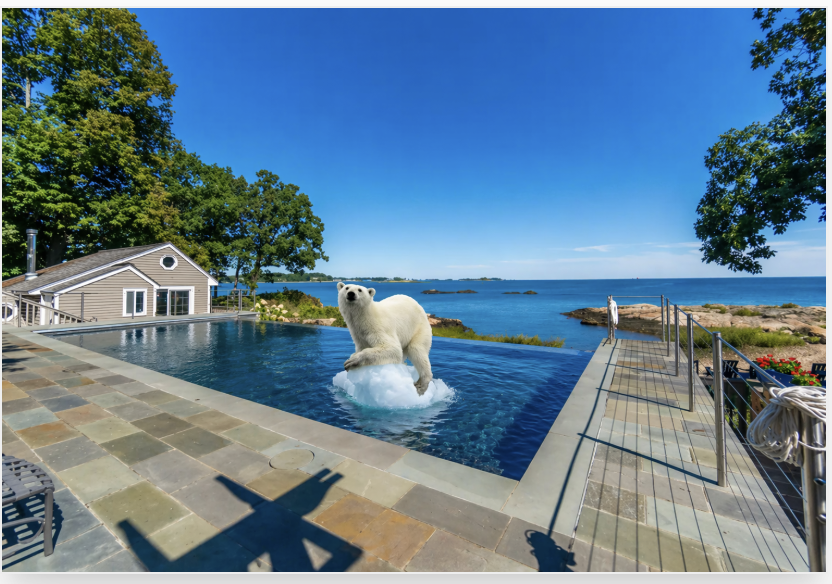
Fairfield’s proposed in-ground pool ban amid rising sea levels nearly unprecedented
With sea levels projected to rise 20 inches in Long Island Sound by 2050 according to a 2019 report, Connecticut coastal towns and cities are rethinking how to adapt to climate change.
"In towns, over the last 10 years there's been an appreciation that sea level is rising," said James O'Donnell, director of the Connecticut Institute for Resilience and Climate Adaptation, and author of the February 2019 sea level report.
In Fairfield, officials are debating a different kind of response: banning the construction of new in-ground swimming pools along the shoreline.
It's an unusual move – one that appears to have few, if any, precedents nationwide. Swimming pools typically are allowed in coastal flood zones if they meet strict standards set by local, state and federal governments. Fairfield officials say their proposal reflects the town's highly developed shoreline and layout. But it also illustrates how, as climate risks grow, some coastal communities are beginning to consider a wider range of responses.
Fairfield's Town Plan and Zoning Commission has proposed adding a section to its regulations that would prohibit in-ground pools in several coastal flood zones, citing environmental and safety risks during major storms. Spas and hot tubs would still be allowed, but only if they are elevated above a certain height, according to the proposal.
The new rule would affect nearly 1,000 shoreline properties. The 14 existing pools in those areas would be allowed to remain as "legal nonconforming" structures.
Fairfield officials say the goal is to prevent further erosion along the town's vulnerable coastline – one of the most heavily developed stretches of shoreline in the state, where seasonal cottages increasingly have been converted into year-round homes.
There's also a safety component. During major floods, pools can break apart and become dangerous debris.
"A swimming pool generally isn’t tied down to a foundation – it’s basically a big block of concrete," O'Donnell said. "When the floodwaters rise above it, it can float, like a big concrete bathtub."
Under federal guidelines, pools in flood-prone areas must be anchored in place or "frangible," meaning they are designed to break apart safely during storms.
"Anything that's going to break apart and become a projectile for where somebody lives, that’s problematic," Fairfield Planning Director Emmeline Harrigan said.
Several residents have pushed back on the proposal, saying it goes too far given that federal and state regulations don’t prohibit pools in coastal zones. Their displeasure has drawn national attention.
"Obviously we struck a nerve," Harrigan said.
>>>>
Even if it doesn’t pass, the proposal underscores the kind of out-of-the-box thinking communities are using to respond to rising seas and increasing flood risks. In New London, rows of concrete "reef balls" in the Thames River are helping to protect the shoreline by mimicking natural reefs. And in Groton, at the University of Connecticut's Avery Point campus, researchers have turned nearly two centuries of sea level data into music to highlight the urgency of climate change.
The message also is being reinforced at the state level. Last summer, Connecticut passed a law requiring municipalities to plan for major weather and climate emergencies.
"As a Long Island Sound-adjacent community, we are required to talk about sea level rise and future resiliency efforts," Harrigan said. "This is not uncommon to other municipalities across the state."
UPDATE: A mentor/friend of mine sends along this email he sent, alog with the note, “we’ll see if the reported of this article responds to my email”:
Interesting article. I note that the report was dated 2019 and 2050 was the timing of a total 20 inch rise in sea level. Since it is now 2026 I would assume that sea level has risen almost 23% or 4.6 inches. Has that been the case?