Lies, damn lies, and renewable energy
/
Sen. Bernie Sanders, Meet 'Just the Facts' on Renewable Energy Myths and Realities
Mark Tapscott:
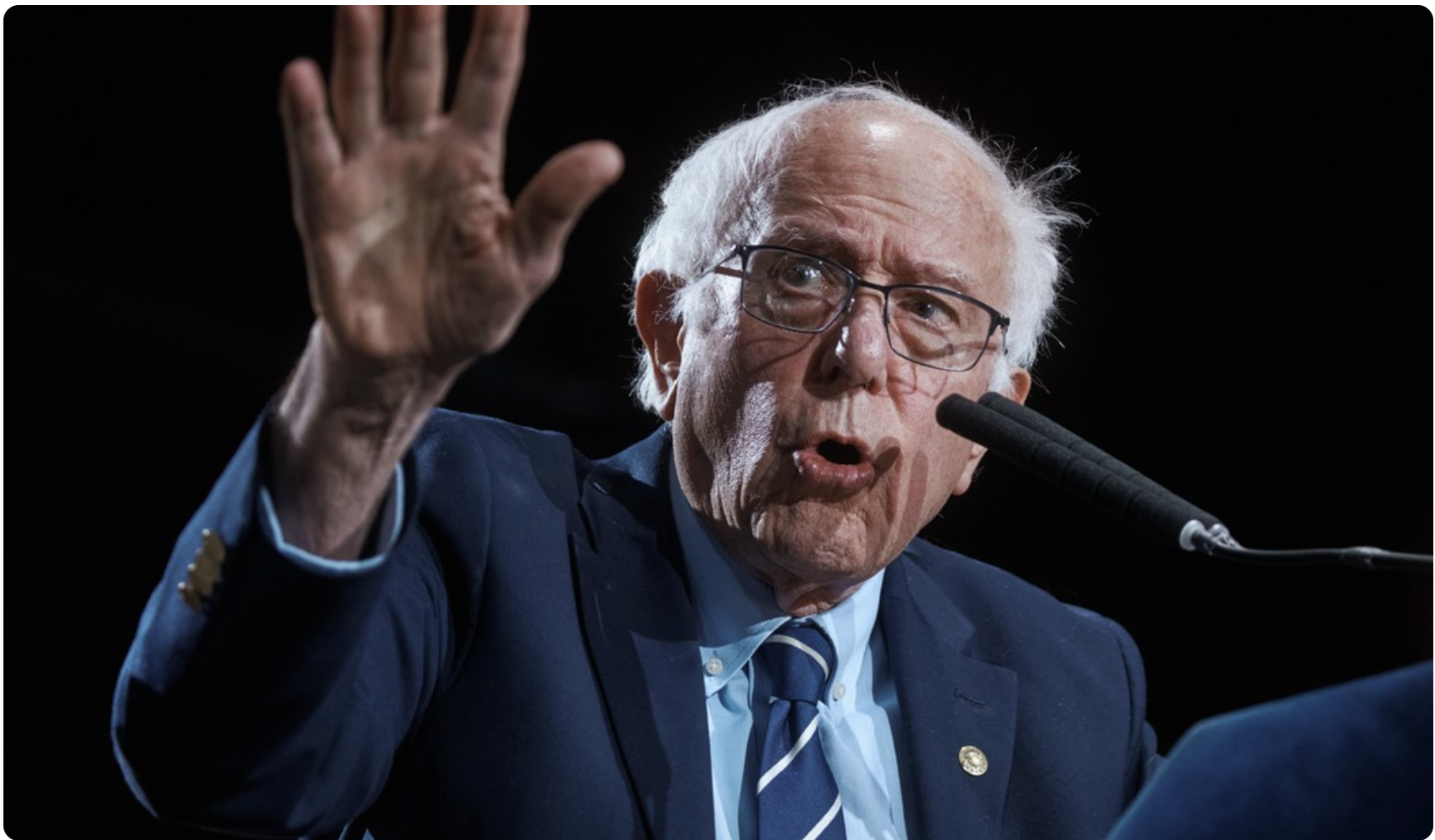
Hardly a day goes by without luminaries of the left like Vermont's Independent Socialist Sen. Bernie Sanders pumping half-truths, undocumented claims, and outright lies about the evils of fossil fuels versus the saintly characteristics of renewables like solar and wind power.
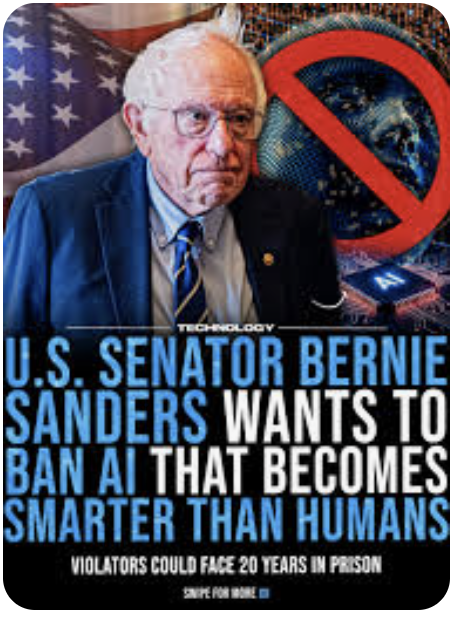
Here's a typical example of the routine sort of cant Sanders deals on energy issues: "At a time when solar and wind are the cheapest forms of new energy in the world, Trump wants to open a BILLION acres of US water to oil drilling. Why? To line the pockets of his fossil fuel billionaire friends. The rest of the world moves forward, we get left behind."
Thanks to the sharp-eyed researchers working for James Agresti's Just Facts (based in Conroe, Texas), exposing the fallacies and fables in Sanders' energy claims is no more difficult than a mouse click and a few minutes of illuminating reading. Apparently it's not easy enough for editors and reporters at major mainstream media outlets to check out claims like those peddled by Sanders before publishing them as reliable.
Consider these 14 points from a Just Facts evaluation of the Sanders tweet quoted above:
The assertion that solar and wind are “cheap” is based on a metric called “levelized costs,” which fails to account for the fact that wind and solar don’t produce energy when the wind isn’t blowing or the sun isn’t shining. Thus, they must be backed up by expensive energy storage systems or technologies that generate electricity on demand, like natural gas.
Due to the unreliability of solar and wind, the U.S. Energy Information Administration warns that its levelized costs for solar and wind “are not directly comparable to those for other technologies,” a vital fact that proponents of wind and solar often ignore.
After 40+ years of the U.S. government aggressively subsidizing solar and wind while discouraging the use of fossil fuels through taxes and regulations, solar and wind provided only 6.6% of all U.S. energy in 2024.
In addition to the federal government, some states have subsidized solar and wind so heavily that the New York Times reported in 2024 that “thousands” of “renewable energy” companies “are reeling” from a reduction in only one California solar subsidy, causing a “sharp decline” in rooftop solar installations.
Per a 2024 report by the International Energy Agency, “Although renewable energy technologies are becoming more cost-competitive,” “roughly 87% of global renewable utility-scale capacity growth in 2023–2028 is expected to be stimulated by policy schemes” in which “government policy is the primary driver for the investment decision.”
Despite claims from politicians like Gavin Newsom that solar is the “cheapest form of energy,” his state of California — which gets more of its electricity from solar than any other state — has the highest electricity prices in the continental U.S., or more than twice the national average. This elevated rate doesn’t even account for all of the government spending on solar that is borne by taxpayers instead of consumers.
In Germany, which is a “global leader in sustainable energy production,” the average price of household electricity is 3.5 times that of the United States.
A diverse array of scholarly publications document that affordable energy is “essential for public health and economic prosperity,” while high energy prices drive up hunger, drive down wages, stoke unemployment, and harm people in a wide variety of other ways.
While admitting that “past economic growth and poverty reduction have been associated with high GHG [greenhouse gas] emissions,” a 2024 World Bank report calls for “trade-offs” because “ending poverty for the 3 billion people who struggle on less than $6.85 a day would come at a high cost to the environment.”
Contrary to claims that green energy subsidies create “good paying” jobs, they actually enrich selected investors while neglecting workers. As explained in scholarly publications like the encyclopedia Environmental and Natural Resource Economics, the financial benefits of renewable energy subsidies “largely accrue to the owners of capital” because “energy development” is “capital-intensive,” and growth in “the green jobs sector does not necessarily imply net job creation” since it reduces the jobs “that would have been produced from fossil fuels,” and thus, “net job creation may be zero (or negative).”
Western Europe’s abandonment of fossil fuel production and nuclear energy has left it heavily dependent on Russia for energy.
A shell company in Bermuda with deep ties to Vladimir Putin and Russian oil companies has donated tens of millions of dollars to the Sierra Club and other environmental groups that oppose fracking.
A 2021 Bloomberg report documents that Communist China dominates global supply chains for key components of the solar industry, including 78% of the world’s supply of solar cells.
A 2025 report by the International Energy Agency states that the “battery supply chain” for electric vehicles has become “increasingly geographically concentrated” in China, which was “responsible for 80% of global battery cell production in 2024.” The report also states that “China has also established a near monopoly on battery components production.”
More at the link. Meanwhile, here’s another post on the same subject:
European energy policy: full speed towards the wall
The signals in Europe are crystal clear. Energy prices are structurally higher than in the United States; the electricity grid is grinding to a halt; industry is leaving Europe; and dependence on imports is growing. These are not isolated incidents. This is how the system works. And yet, one message is echoing from Brussels and The Hague: let’s accelerate the process.
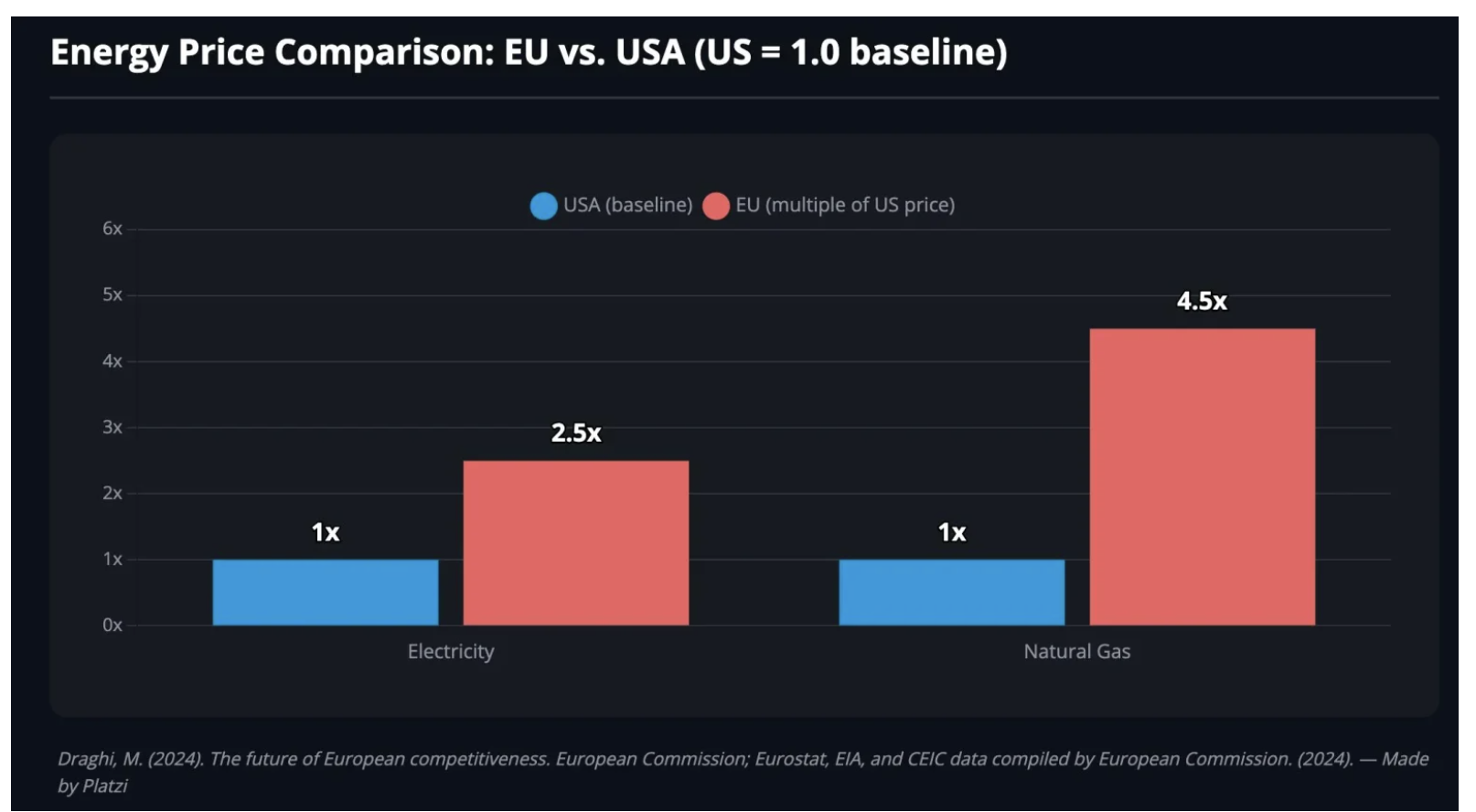
This is not bad luck, but policy
In recent years, Europe has deliberately chosen to:
• Close nuclear power plants
• Phase out domestic gas production
• Replace reliable energy sources with weather-dependent alternatives
This is not a technical development, but a political choice. The choice is based on the assumption that there is a climate crisis requiring rapid and drastic measures. But that assumption is by no means certain — and is rarely seriously questioned. Our World Climate Declaration (WCD) — now signed by 2,062 experts — states explicitly that there is no climate crisis that justifies this policy. And so the need for a hasty energy transition disappears.
France vs Germany: the difference between theory and practice
Within Europe, the evidence is clear. France opted for nuclear energy, with the following consequences: approximately 70% of electricity is generated by nuclear power plants; there is a stable, predictable system, and there are low CO2 emissions per kWh.
Germany, on the other hand, chose the Energiewende, in which nuclear power plants have been closed, hundreds of billions have been invested in wind and solar, energy prices are higher than in France, and, ironically, CO2 emissions are higher than in France.
Even within the logic of climate policy, the conclusion is inconvenient: Germany is performing worse than France, at much higher costs. This is not a subtle difference. It’s a fundamental failure of policy.