Havemeyer Park as it was in the beginning
/A comment by a reader about Havemeyer Park’s Nimitz Place reminded me that some years ago, Greenwich Sentinel’s Anne Semmes published excerpts from an Oral History Project on the development; it offers a great perspective of what this particular neighborhood, but Old Greenwich and Riverside in general, were like back in the 50s, even early 60s, and what’s been lost.
Havemeyer Park – A Unique Community
By Greenwich Sentinel
…. One can trace the history of Havemeyer Park to its initial incarnation, that of a 200-acre homestead, just north of Boston Post Road, where Henry Osbourne Havemeyer built a family country retreat in 1880, named Hilltop. Havemeyer, president of the American Sugar Refining Company, enjoyed the bucolic setting of Hilltop with its mansion, barn, three greenhouses, farm animals, and extensive plantings. Havemeyer died in 1907. The home was demolished after his wife, Louisine, died in 1929.
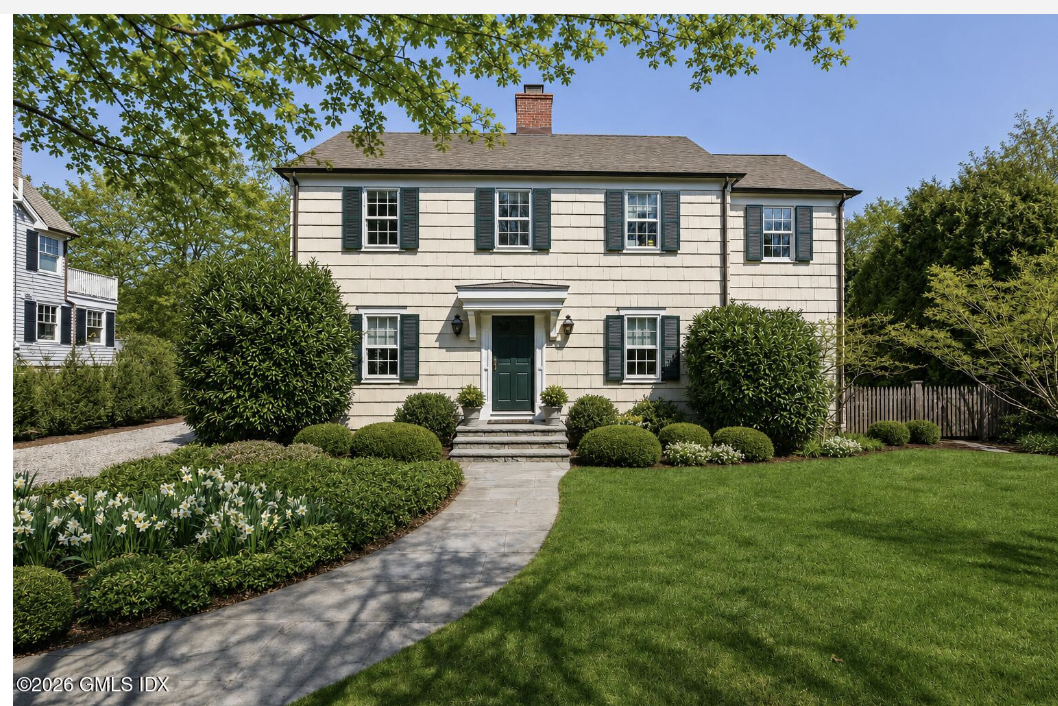
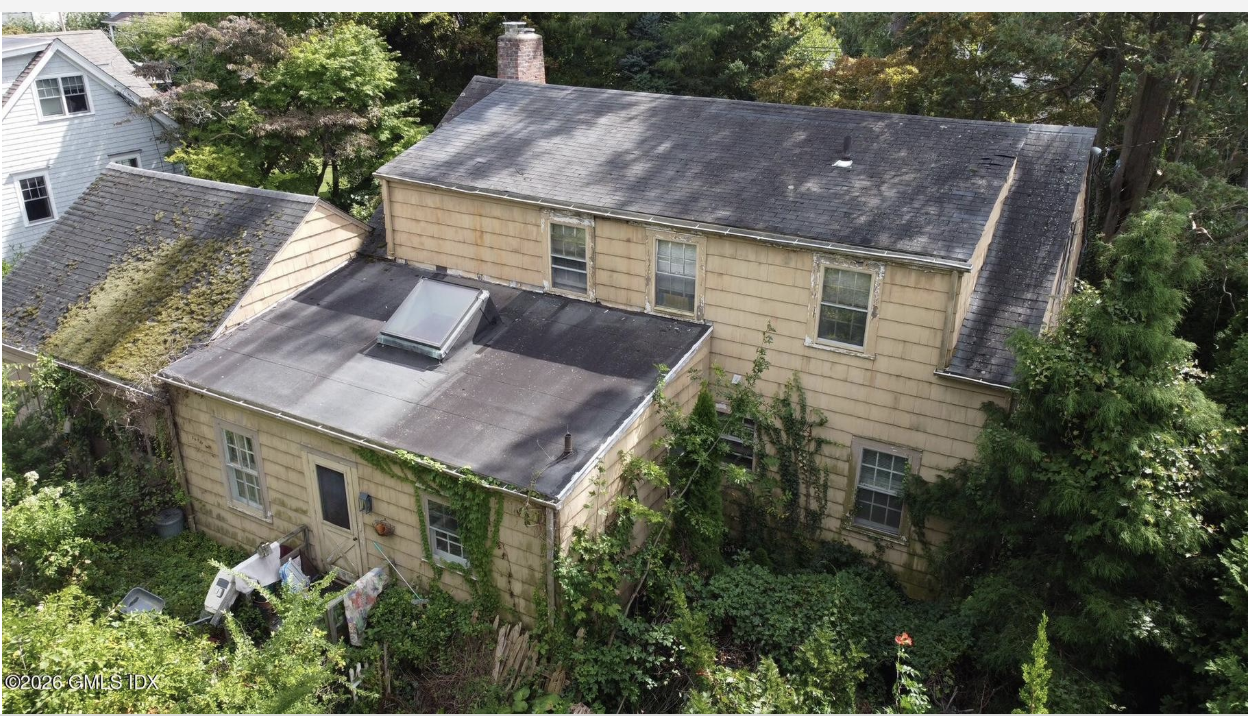
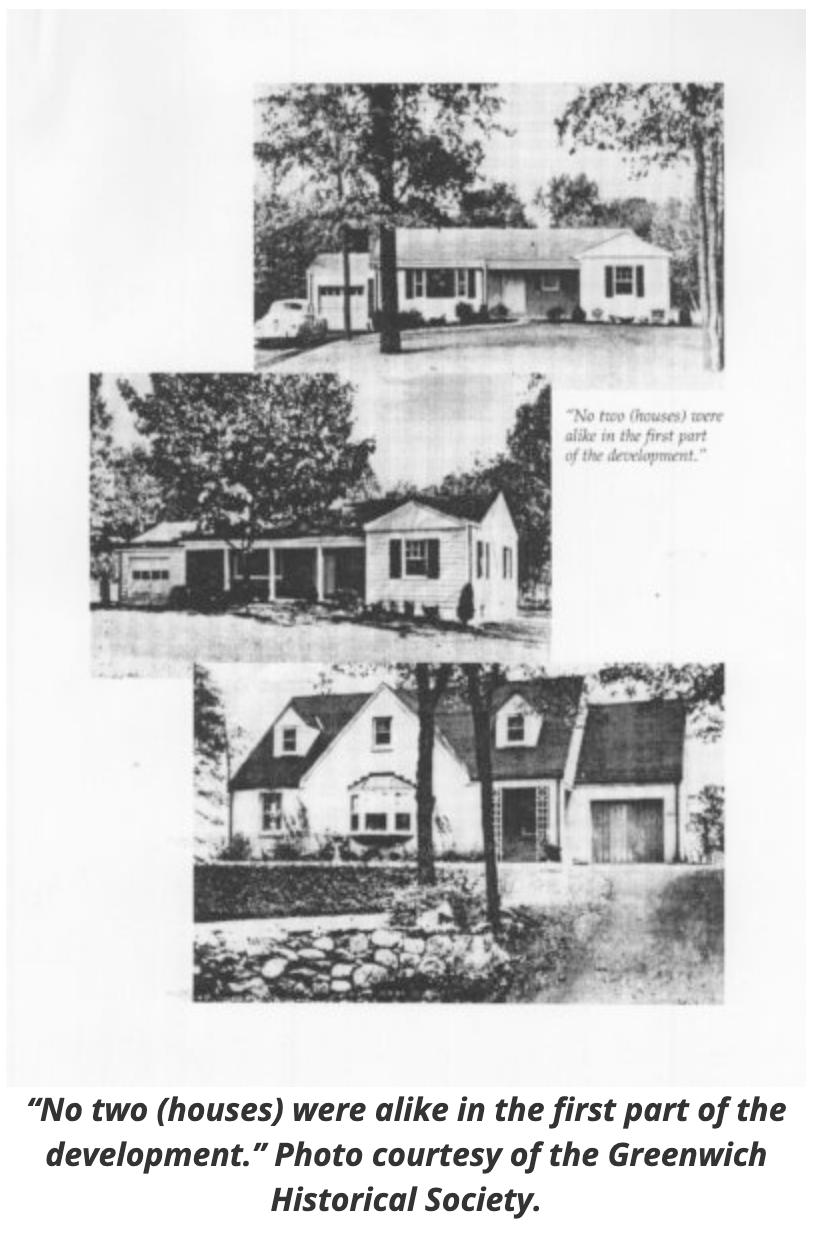
Gene Tunney, known primarily as the world heavyweight champion from 1926 to 1928, married socialite Polly Lauder of Greenwich in 1928. In 1946, he purchased the property from the Havemeyer estate for $178,000. Tunney, a former Marine, envisioned the land, now named Havemeyer Park, as a housing development for returning WWII veterans. He and Arthur M. Starck formed the Stamford Building Company. The Cape Cod-style homes were built on one-quarter acre lots. The first units were completed by 1947; eventually 360 of them were constructed. A $1,000 loan from the bank could procure a home priced at $10,000. It is no surprise that the neighborhood boasts street names like McArthur Drive, Halsey Drive, and Nimitz Place.
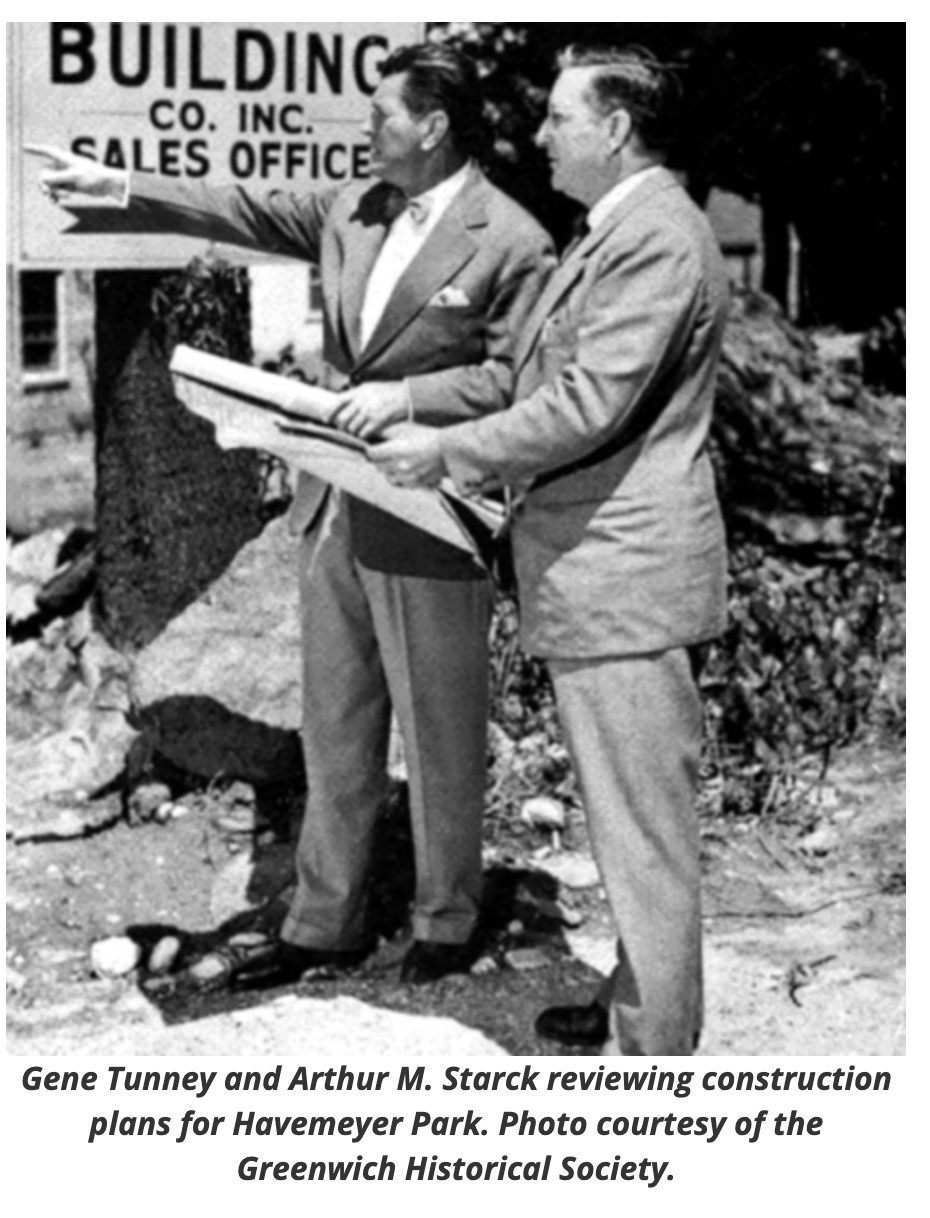
Ginny Ridenour, a former resident, recounted a story about Mr. Tunney. “I heard that in the early years he used to come along and check out the site; and if people would come out and say, ‘Mr. Tunney, I don’t have enough room for my garage’ or whatever, he would try to accommodate the wishes of the residents. And the builder finally told him, ‘You have to stay off the site because we can’t make all these changes.’”
Russell Vernet lived in Havemeyer Park from 1950 to 1996. When he moved in “practically everybody was a veteran…We had a Cape Cod, and it was a two-story, but the second floor was never finished; and the basement, of course, wasn’t finished. But, over a period of time I completely finished the upstairs into two bedrooms and a bath and made a playroom in the basement…Almost everybody who moved in was a hands-on handyman.” Vernet describes some of the streets as dirt roads “for a long time after we moved in…So there was a lot of roadwork that had to be done.”
Havemeyer Park’s population consisted mostly of young families. It was amusingly dubbed “Have a Baby Park” for the many children in the neighborhood. Ginny Ridenour remembered the first day she moved there in 1959. “My next door neighbor came over and she said, ‘Do you have children?’ and I said, ‘Yes, we have one.’ And she said, ‘Oh, I’m so glad because we have three.’ And from that moment on we began a beautiful experience in Havemeyer Park.”
Within the community there were many organized and impromptu social activities. From Boy Scout and Girl Scout troops to picnics, a garden club, costume parties, Valentine’s Dances and more. “We really had a whole social life right within our own area. Nobody joined the Newcomers or anything like that. They never felt they needed to,” according to Ridenour.Russell Vernet described a Christmas tradition where a neighbor “used to put up a big screen in front of his house; and he had a projector and would project the words of the Christmas carols onto that screen. Then he’d play the accordion, and we’d all stand around and sing.”
The Havemeyer Park Owners Association, begun in 1948, grew out of concern for roads and traffic. In those days, according to Gerald Porricelli, past president of the homeowners’ association, “… we were speaking at Planning and Zoning Commission hearings, writing letters particularly about traffic, the density of traffic coming onto Havemeyer Lane and arranging for access out on Palmer Hill Road.” Over time, Porricelli commented, the population of Havemeyer Park has become more transient in nature and the number of neighborhood activities has diminished from its early days. “You see a lot of turnovers…we have working families with not a whole lot of time to give to these kinds of events.”
Ginny Ridenour reflected on her early days in Havemeyer Park saying, “It was a very positive period of our life, and I think this is what we’ve all come away thinking about it…I don’t know what the magic was, but we really did all have such fun…It was truly a unique place to start your life in Greenwich.”
I’ll add this: these were solidly-built homes: plaster walls, hardwood floors, good hardware and trim, and they stood up beautifully over the decades. Compared to what developers of what we’d now call “affordable housing” put up in Riverside in the 60s, they were truly remarkable houses. Tunney was a champ.