Luxury Housing for the few — and I’m not speaking of the rich
/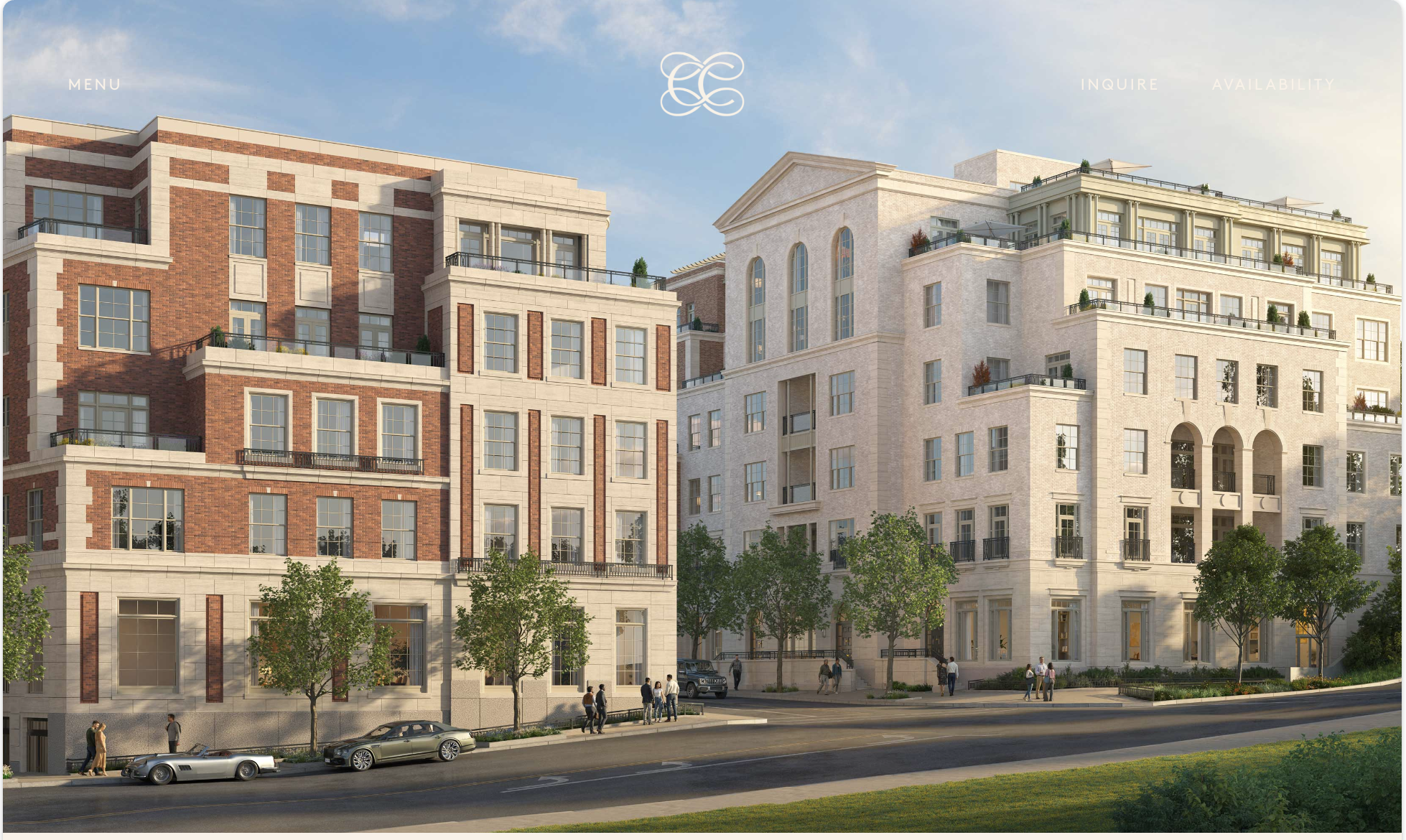
The legal wars continue, but the first initial marketing efforts for the luxury condos at the old D’Elia Honda location on Mason Street has begun.
Some of the long, tortuous journey through the P&Z and the courts is printed below, and there is plenty more at GreenwichWise, but essentially, in exchange for building far more units than zoning would otherwise allow, without setbacks, the builder must make 24 of the 75 units “affordable” and must match market-rate units in size and finish quality.
Here’s how “affordable” is defined:
Income and Affordability Limits for Greenwich (2026)
For Greenwich under CGS § 8-30g, the state median income standard applies because it is lower than the federal HUD area median metrics. The limits break down as follows:
AI Overview
Under Connecticut's § 8-30g statute, affordable housing is defined as residential units where households pay 30% or less of their annual income, and that income is 80% or less of the area median income (AMI).
100% State Median Family Income: $129,500
80% Adjusted Income Limit: $103,600 (overall cap)
60% Adjusted Income Limit: $77,700
The units sound lovely; certainly I couldn’t afford one, nor could any of my children, and that’s the way the world goes ‘round — big deal. Except that, for 24 people, it doesn’t. For a monthly payment of, as I calculate it, $2,590 ($103,600 x 30% = $31,080 ÷ 12 = $2,950), approx. $370,000-$465,000, these lucky buyers will get to purchase a condominium unit identical to ones that less deserving people will be paying $4.5 million for, and up.
My question is, why are these two dozen buyers with incomes below $103,600 more deserving than, say, someone earning $103,700 a year? Or for that matter, $250,000? Or, let’s go wild here, $5,000,000? If, as certain Greenwich residents claim, there is a “moral obligation” to make a few units of housing available to a select few individuals who’d like to live in town, from where does that obligation arise, why does it extend only to a certain income class and then stop, and, most important, does it really stretch so far that there exists an obligation (and on whom?) to provide luxury housing worth $4.5 million for the price of a single bedroom rental apartment?
(Some background):
This Upcoming Connecticut Development Will Bring 78 Residences to Downtown Greenwich
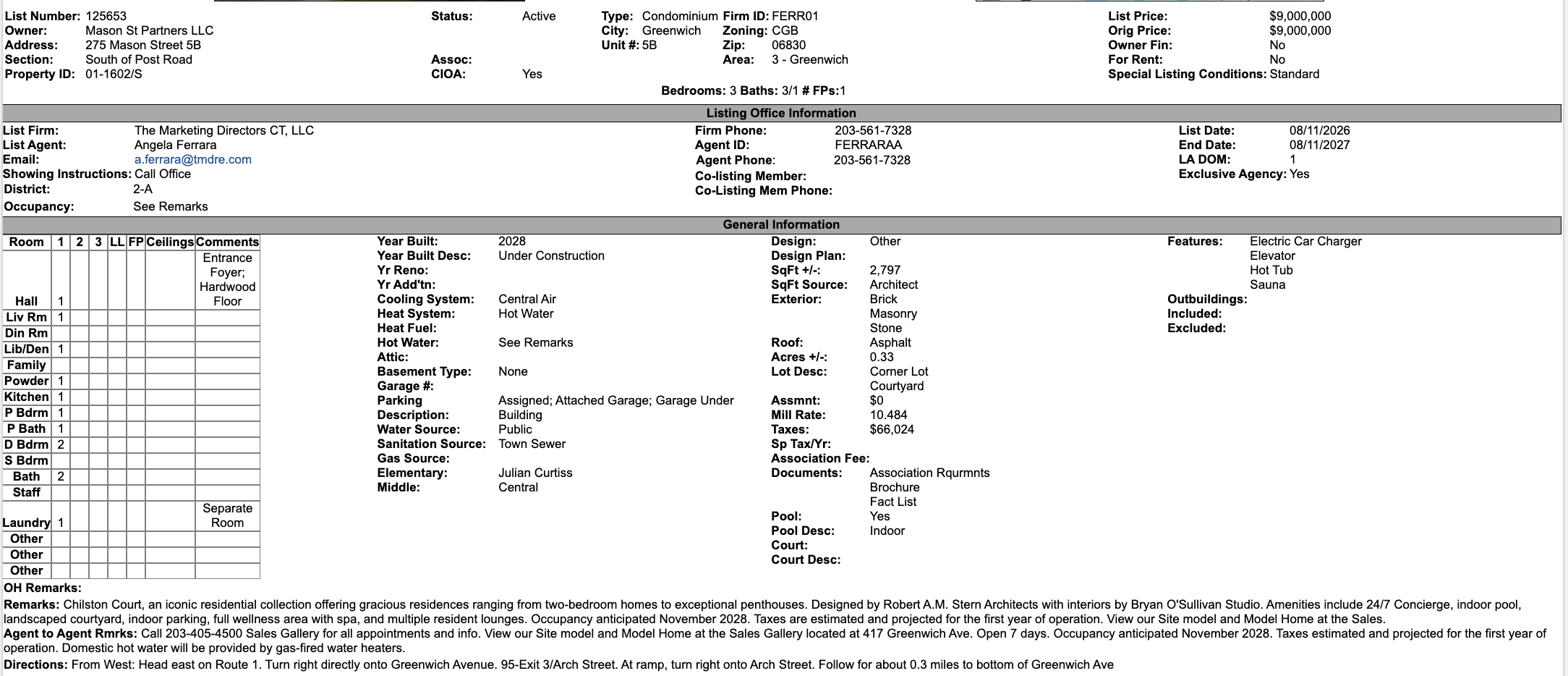
The Robert A.M. Stern Architects-designed Chilston Court will offer condos and penthouses priced from roughly $4.5 million to upward of $10 million
…. The residences range from two-bedroom homes to penthouses, with even the smallest layouts measuring more than 2,000 square feet. Caspi said the units were intentionally designed with oversized primary suites, generous closets, wide hallways and ceilings exceeding nine feet so owners accustomed to sprawling Connecticut estates wouldn’t feel as if they were sacrificing comfort simply because they were moving into a condominium.
Rather than trying to recreate a suburban estate, Chilston Court instead borrows cues from luxury hospitality. Interiors by London firm Bryan O’Sullivan Studio are complemented by roughly 10,000 square feet of shared amenities—including a lap pool, wellness facilities, a 20-person private dining room, and speakeasy—along with concierge services and dedicated delivery closets that allow packages, groceries, and laundry to be dropped off while residents are away.
Chilston Court apartments start around $4.5 million and climb past $10 million.
The developer and the town are still mired in litigation, and this will probably all drag on for years, The article below, however, was published before last week’ Superior Court decision upholding the Town’s demand that all “affordable units” units be comparable to their multi-million dollar neighbors.
GREENWICH — The Planning & Zoning Commission is being sued by developers over conditions it imposed on approvals for two large residential buildings on Mason Street that were authorized by the commission in December.
The lawsuit seeks to overturn the conditions and grant approval for the project with retail space and no restrictions on the size of the affordable units.
Mason Street Partners and developer Joshua Caspi say the conditions that the commission imposed went against state law 8-30g, which is designed to provide the community with affordable housing units. The law states projects offering affordable housing units, as the Mason Street development has been proposing, can only be denied or modified on "health and public safety" issues.
The lawsuit contends that the conditions imposed on the approvals — eliminating any retail space from the project and requiring that the affordable units be nearly identical in size as the market-rate units — ran counter to the state law and should be invalidated.
The lawsuit has been filed in State Superior Court in Hartford. A message sent to the office of town attorney Barbara Schellenberg was not returned.
The long-running and controversial project was resubmitted to the Planning Commission in November, with a reduced number of total units in both buildings on Mason Street set at 75, down from 92 in an earlier draft. The 24 affordable units were evenly distributed in the two buildings.
During review, the commission went into a lengthy discussion about "comparability," seeking to ensure that the affordable units did not carry any perception that they were of lesser value or quality. Commissioners said they wanted to avoid any perception of "a rich door, poor door," in the phrase that came up during discussions of the application.
As part of its condition for approval, the commission required that the affordable units would have to be no less than 90% of the size of the market-rate units. The commission also said there could be no retail space in the buildings, which would have taken up around 4% of the total square footage of the new construction.
The developers in their suit took issue with the requirement for "comparability."
According to the legal complaint filed last month, "Mason Street Partners responded to this concern by pointing out that comparability is not a health or safety concern," the lawsuit stated. In addition, the developers claimed, earlier court rulings held that "comparability was 'a matter of opinion' that cannot be a basis of denial.” Further, they stated, the smallest affordable units in the Mason Street development would be larger than most of the condo units on the market in Greenwich at full price.
Because the project is taking advantage of state law 8-30g, providing the community with affordable housing units, the town Planning & Zoning Commission has little regulatory power over the proposal. Under the state law, the developers can override local zoning codes for the goal of creating affordable housing. The project does not meet the normal setback requirements from the street in central Greenwich, and the structures are higher than what would normally would be allowed.