Oh, Canada
/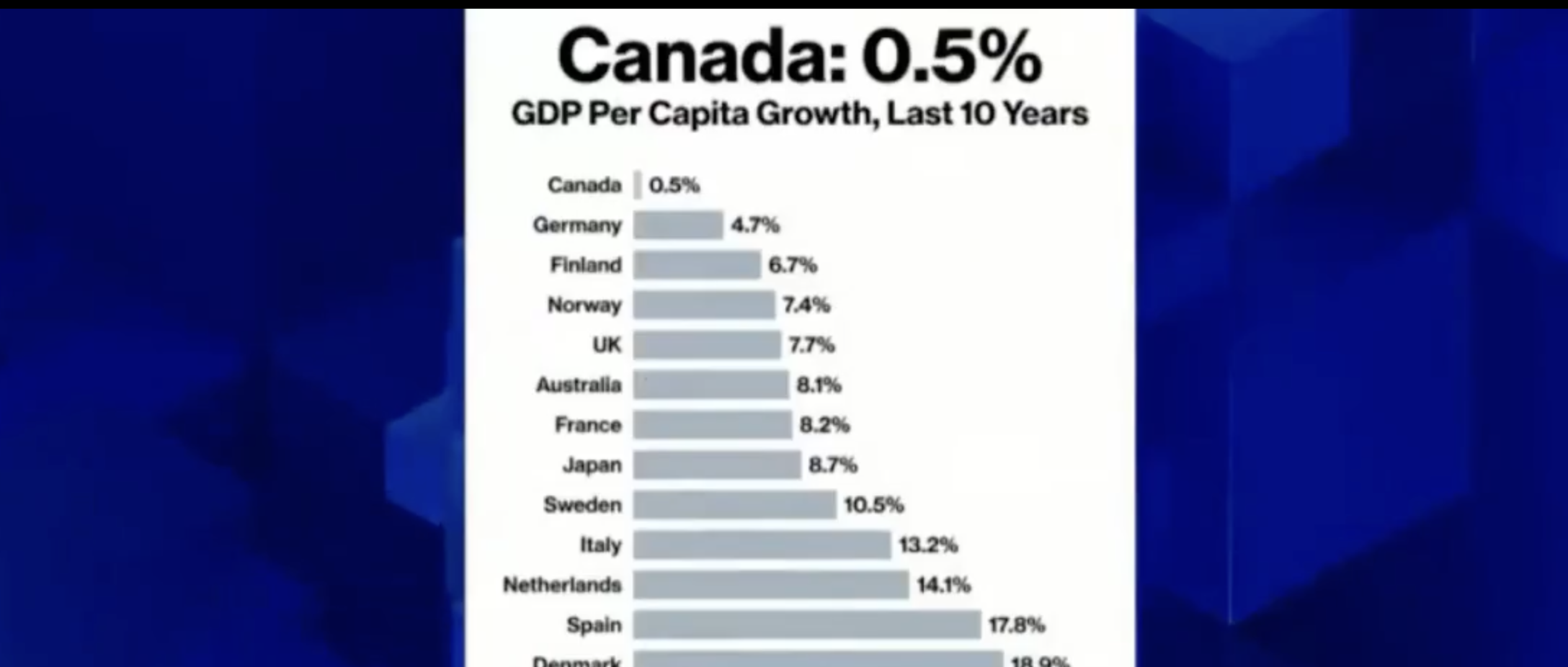
‼️This is INCREDIBLE
— Tablesalt 🇨🇦🇺🇸 (@Tablesalt13) August 28, 2026
after Dominic Leblanc went on CNBC Squawk Box and got ROASTED
Chrystia Freeland goes on and GETS TORCHED EVEN WORSE
"How do you cozy up to one of the most repressive regimes (China)?
"Youre dead last in GDP growth? What went wrong?" pic.twitter.com/JTFAh5E5YT
The pipeline she is bragging about cost $34B (of taxpayer dollars) when a private company proposed to build it for $7B but the political environment in Canada had become so hostile to energy infrastructure that Kinder Morgan withdrew (along with other major investment)
As for Chrystia Pollyanna Freeland’s “don’t worry, we’ve got natural resources” optimism, she might want to look to Africa for examples of “the resource curse”: there are no rich countries in the Dark Continent, and those that sit on huge mineral and oil deposits are as impoverished as their unfortunate neighbors who have none.
ChatGPT:
Democratic Republic of the Congo (DRC)
The standout case. The DRC produces roughly 70% of the world’s cobalt, is a major copper producer, and holds large deposits of coltan, diamonds, gold, tin, tantalum, and newly identified lithium. Estimates of its untapped mineral wealth run as high as $24 trillion. It also has vast hydropower potential, arable land, and the world’s second-largest rainforest.
Yet it remains one of the poorest countries on Earth: GDP per capita is typically cited in the $580–$1,060 range, around 73% of the population lives on less than $2.15 a day, and it ranks near the bottom of the Human Development Index. One in six people living in extreme poverty in sub-Saharan Africa lives in the DRC.
Niger
A leading uranium producer and significant gold producer, with additional oil and other mineral potential plus renewable-energy resources.
It is consistently among the poorest countries globally, with very high extreme-poverty rates (around 42% in recent figures), low school attendance, and one of the lowest HDI rankings (often third from last).
South Sudan
Heavily dependent on oil (often ~90% of government revenue) with additional mineral potential.
It is one of the poorest countries in the world, with extremely high poverty rates, repeated production disruptions due to conflict, and very low human-development outcomes.
Central African Republic (CAR)
Holds gold, diamonds, uranium, and some oil potential.
It ranks among the poorest countries globally and has suffered prolonged conflict that has prevented resource revenues from translating into broad development.
Other notable cases
Guinea — among the world’s largest bauxite (aluminum ore) reserves, plus gold and iron ore.
Zambia — long-time major copper exporter.
Mozambique — coal, natural gas, and other minerals, yet still very poor.
Sierra Leone and Liberia — diamonds and iron ore, with histories of conflict linked to those resources.
Angola — large oil and diamond wealth; poverty and inequality remain high despite higher national income than the countries above.
These patterns are not unique to Africa, but they are especially pronounced there because so much of the world’s remaining critical-mineral reserves (cobalt, copper, manganese, platinum-group metals, etc.) are concentrated on the continent while governance, infrastructure, and local processing capacity have lagged. Many analyses note that Africa as a whole holds about 30% of global critical-mineral reserves yet captures only a small fraction of the final value of the products those minerals go into.
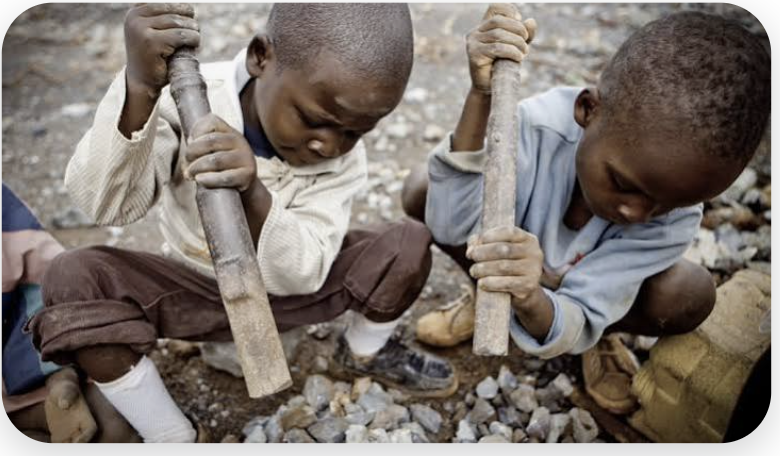
out of sight, out of mind: Congolese cobalt miners working on behalf of the western world’s SUV owners.