Nice. Now do Hasan, Ilhan, and Rashida Tlaib.
/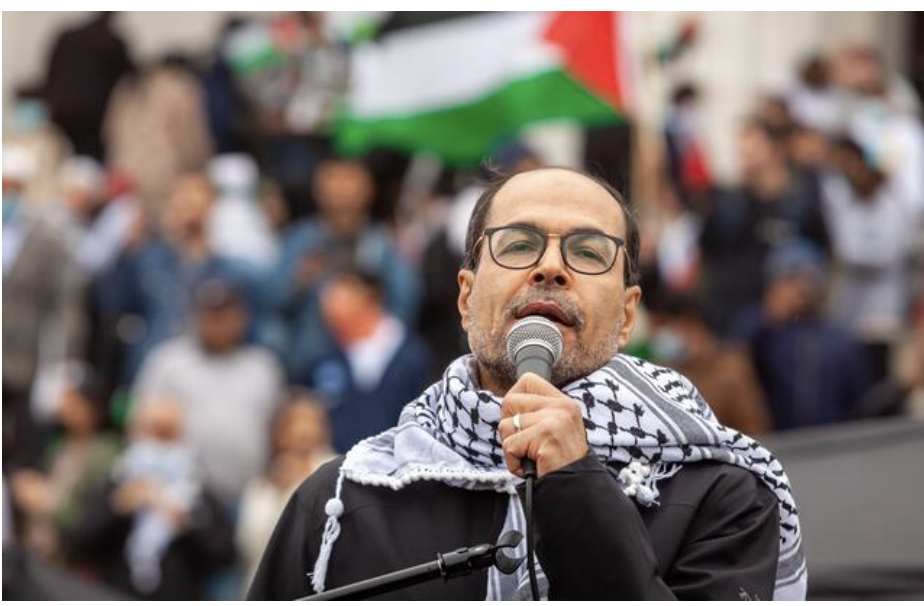
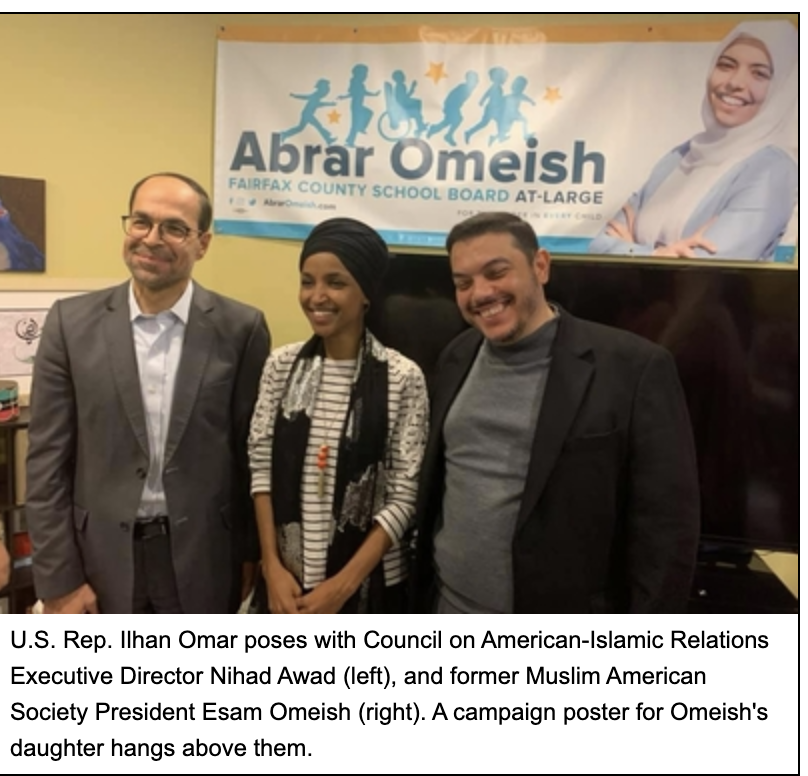
Pro-Hamas co-founder of CAIR, Nahad Awad
Muslim advocacy group [CAIR] asks Greenwich synagogue to reconsider Ayaan Hirsi Ali appearance
This is rich, coming from CAIR, a group that routinely calls for the cancellation of speakers it deems hostile to Islam while remaining silent and even defending the vilest of Islamic anti-Semites like Hasan Piker.
Grok:
CAIR’s public record on this type of intra-community issue follows a consistent pattern:
It issues statements condemning anonymous antisemitic flyers, synagogue vandalism, or physical attacks on Jews. [All of which are meaningless lip service — Ed]
It does not single out high-profile Muslim or pro-Palestinian voices (Piker, certain elected officials, campus activists, etc.) when they use language critics describe as antisemitic tropes, Holocaust inversion, or collective blame of Jews for Israeli policy.
Instead, CAIR typically frames such accusations as an attempt to silence criticism of Israel or as Islamophobic smearing. It has defended figures like Ilhan Omar and treated “Zionist organizations” themselves as the core of the “Islamophobia network.”
In short, CAIR’s condemnations of antisemitism are almost exclusively directed at incidents or actors outside the pro-Palestinian advocacy space it occupies. Piker’s statements, which sit squarely inside that space, have not triggered a CAIR denunciation.
And:
CAIR and its chapters have repeatedly urged venues to cancel or disinvite speakers they label Islamophobic or anti-Palestinian. Here are documented cases.
Ayaan Hirsi Ali and Bari Weiss (Commonwealth Club, 2021)
CAIR-SFBA sent a letter to the Commonwealth Club’s leadership demanding cancellation of a February 11 event featuring Hirsi Ali and Weiss. They called the speakers “fringe,” accused them of “propagating Islamophobia and anti-Palestinian sentiment,” and said the event was “contrary to [the Club’s] mission.” The event proceeded.Ayaan Hirsi Ali (Brandeis University honorary degree, 2014)
CAIR wrote to Brandeis President Frederick Lawrence requesting that the university withdraw its invitation to award Hirsi Ali an honorary degree. CAIR cited her past statements (“we are at war with Islam,” calls to “defeat” Islam, etc.). Brandeis rescinded the honor. CAIR issued a press release welcoming the decision as a “victory over hate.”Robert Spencer (Concordia University Chicago “Issues, Etc.” conference)
CAIR-Chicago publicly urged Concordia to cancel the conference because Spencer (Jihad Watch) and others were scheduled. They described Spencer as a “notorious Islamophobe.” Spencer did not speak; CAIR-Chicago later issued a statement expressing pleasure that he was not given a platform.Raymond Ibrahim (U.S. Army War College, 2019)
CAIR-Pennsylvania sent a letter to the War College commandant and provost demanding they revoke Ibrahim’s invitation to lecture on his book Sword and Scimitar. They called him a “notorious Islamophobe.” The lecture was postponed. Ibrahim and others described the outcome as a cancellation under pressure.Bill Maher (UC Berkeley commencement, 2014)
CAIR-SFBA supported student efforts to drop Maher as commencement speaker over his comments on Islam. After the student committee voted to rescind the invitation, the university administration overrode them. CAIR-SFBA criticized the administration for imposing the speaker.Robert Spencer (Catholic Diocese of Worcester men’s conference, 2013)
CAIR welcomed the diocese’s decision to rescind Spencer’s invitation after local Muslims contacted the diocese. CAIR National Communications Director Ibrahim Hooper called Spencer one of the nation’s “most notorious purveyors of anti-Islam hate.”
These examples follow a consistent pattern: public letters, press releases, and community pressure campaigns aimed at having invitations withdrawn. Outcomes vary—some events are canceled or speakers drop out, others proceed.
And here’s CAIR’s Nihad awad on November 24, 2023, discussing the October 7th massacres:
“The people of Gaza decided to break the siege, the walls of the concentration camp on, October 7th. And yes. I was happy to see people breaking the siege and throwing down the shackles of their own land and walk free into their lands that they were not allowed to walk in. And yes, the people of Gaza have the right to self-defense, have the right to defend themselves. And yes, Israel as an occupying power does not have that right to self-defense. And this is not me emotionally speaking. This is what the international law says, that occupier power has no self-defense from the territory it occupies.”