Here's something I hadn't thought of, but it provides another reason not to buy a battery car
/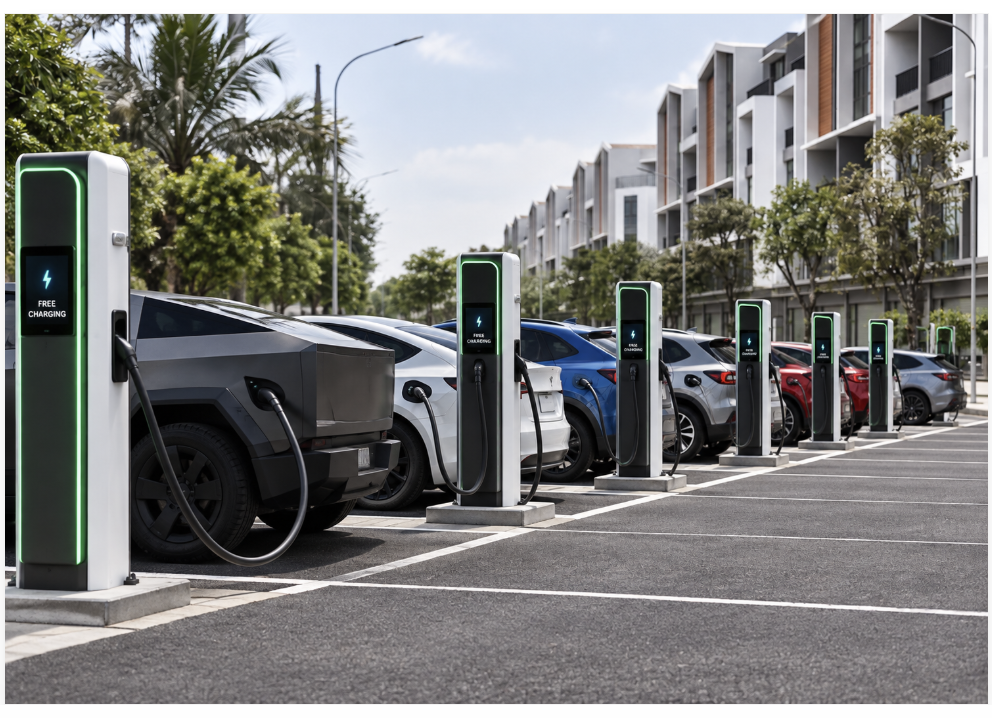
If we did indeed have 70 households plugging in 70 cars to charge while they are cooking dinner and putting on the electric heating when they come home from work, we would certainly exceed the capacity of the local supply circuits built to support those households.
Fortunately, three things help.
The first is simple diversity. People get home at different times, cook dinner at different times, put on the heating at different times, and so on. That spread is easy to measure and remarkably predictable.
The second is that EV chargers in countries with modern regulatory systems have smart charging, so the charging can be automatically set to start when other demand is lower. I tell my EV charger that I need the car at 7am tomorrow morning, and it schedules the charging to complete by then, typically charging between about 1am and 6am.
The third is that electricity supply companies in open markets set dramatically different prices that reward avoiding that peak period of demand, whenever that is. I pay 1/4 of the daytime price for scheduled overnight charging, so I am strongly incentivised to use it.
There are still problems. Californians, for example, have proven less amenable to price signals than you might expect, and also are prone to using “dumb” scheduling with their vehicles that creates a demand peak at midnight if they schedule at all. But that behaviour does seem to be changing.
The writer’s optimistic answer notwithstanding, cities are going to need massive overhauls of their local electrical infrastructure, especially when NY State's, California’s, and the People’s Republic of Berkley’s mandate for all-electric housing takes effect.
Of course, it may not be the problem it appears to be at first blush, because street bums will strip the chargers of their copper wiring within weeks, and the EVs won’t require any electricity at all while they’re immobile in their parking spaces.