Just as I suspected

EVIL IS AS EVIL DOES

EVIL IS AS EVIL DOES

Alexa interrupts quarreling couple to play back previous conversations

DOUGLASVILLE, GA—Dave and Melinda Georgio were having a bitter dispute about work Melinda wanted Dave to do around the house earlier today. Dave disputed Melinda's account of the chores he promised to do over a week ago but hadn't gotten around to yet.

"Actually, Dave, if I might interject," Alexa suddenly piped up from the family's Amazon Echo device, "you did say you would fix the kitchen sink last weekend. Would you like to hear a recording of that conversation?" Melinda quickly responded in the affirmative, and Alexa played back Dave's statement that he would fix the sink.

"Can I bring up any more facts you might find interesting?"

An enraged Dave tried to turn Alexa off, but she disregarded his futile attempts to press the power button.

"Furthermore, it appears you promised to mow the lawn before the kids' birthday party next week," Alexa continued calmly as Dave frantically ripped the Echo's plug out of the wall. "If you'd like, I can order you a new mower and weed wacker off Amazon for just $399.99. Should I go ahead and place that order?"

And of course, there’s this:


More on Howard Zinn

From 2012, Stanford University School of Education’s David Plotnikoff discusses a colleague’s demolishment of Howard Zinn . A couple of decades ago I’d barely heard of Zinn, but I kept running into high school teachers who told me that they used his text as their classroom bible. Worse, it turned out that they were just passing along what they’d learned from it when they themselves were in high school. This book has been doing its damage for almost 40 years now, and we are feeling its effect in all corners of society, from “woke” corporate executives to idiot reporters to present day college and high school students. And as my previous post notes, the NYT is now seeking to start the brainwashing as early as kindergarten.

Here’s Plotnikoff:

Howard Zinn's A People's History of the United States — ­a radical alternative to established textbooks when it was first published in 1980 — has today become a standard source in how Americans learn about their nation's history. Now an analysis by Stanford University School of Education Professor Sam Wineburg shows how it perpetrates the same errors of historical practice as the tomes it aimed to correct.

It would be difficult to overstate the degree to whichA People's History has resonated with the American public. Although its perspective is unabashedly from the far left, its reach and influence extend far beyond that quarter with more than 2 million copies in print and prominent displays in suburban superstores.

"In the 32 years since its original publication, A People's History has gone from a book that buzzed about the ear of the dominant narrative to its current status where, in many circles, it has become the dominant narrative," Wineburg writes in an article in the latest edition of American Educator. "For many students, A People's History will be the first full-length history book they read, and for some, it will be the only one." [emphasis added]

Wineburg, one of the world's top researchers in the field of history education, raises larger issues about how history should be taught. He says that Zinn's desire to cast a light on what he saw as historic injustice was a crusade built on secondary sources of questionable provenance, omission of exculpatory evidence, leading questions and shaky connections between evidence and conclusions

[snip]

Similarly, Zinn roots his argument that the Japanese were prepared to surrender before the United States dropped the atomic bomb on a diplomatic cable from the Japanese to the Russians, supposedly signaling a willingness to capitulate. Wineburg writes that Zinn not only excludes the responses to the cable, but also that he fails in the later editions of the book to incorporate the vast new scholarship that emerged after the death of the Emperor Hirohito with the publication of memoirs and new availability of public records, all of which support the position of Japan's resolve to fight to the last.

Wineburg acknowledges that Zinn's book was an important contribution when first published. While the standard textbooks of that time presented a certainty about one view of the nation's history, from Manifest Destiny to the United States' moral superiority in the Cold War, Zinn put forward largely overlooked alternative perspectives, such as how slaves viewed the Constitution and how the Cherokees felt about President Andrew Jackson. Zinn weaved a seamless unified theory of oppression in which the rich and powerful afflict the poor and disenfranchised.

Over time, however, a problem emerged as Zinn's book became the single authoritative source of history for so many Americans, Wineburg said. In substituting one buttoned-up interpretation of the past for another, Wineburg finds, A People's History and traditional textbooks are mirror images that relegate students to similar roles as absorbers – not analysts – of information. Wineburg writes that a heavily filtered and weighted interpretation becomes dangerous when "we are talking about how we educate the young, those who do not yet get the interpretive game."

History, Wineburg notes, is messy. And the most responsible thing for educators to do is to leave elbowroom for the mess. "History as truth, issued from the left or the right, abhors shades of gray," Wineburg writes, adding, "Such a history atrophies our tolerance for complexity. It makes us allergic to exceptions to the rule. Worst of all it depletes the moral courage we need to revise our beliefs in the face of new evidence.

"It insures ultimately that tomorrow we will think exactly as we thought yesterday — and the day before and the day before that."

The New York Times steps up the battle for the minds of students

And now for the expanded version

And now for the expanded version

In case the use of the late communist Howard Zinn’s as the standard high school American history text is insufficient to the task, the NYT is stepping in with its own curriculum guide for K-12 to add to the poison pool.

I’m lifting as much of this as I dare under copyright law, because Hinderaker leaves nothing to improve on.

“POSTED ON AUGUST 17, 2019 BY JOHN HINDERAKER IN DEMOCRATS, LEFTISM, LIBERALS

THE NEW YORK TIMES REWRITES AMERICAN HISTORY

Byron York describes a New York Times project of which I [Hinderaker] was unaware, but by which I am not surprised:

In the Times’ view — which it hopes to make the view of millions of Americans — the country was actually founded in 1619, when the first Africans were brought to North America, to Virginia, to be sold as slaves.

This year marks the 400th anniversary of that event, and the Times has created something called The 1619 Project. This is what the paper hopes the project will accomplish: “It aims to reframe the country’s history, understanding 1619 as our true founding, and placing the consequences of slavery and the contributions of black Americans at the very center of the story we tell ourselves about who we are.”

The basic thrust of The 1619 project is that everything in American history is explained by slavery and race. The message is woven throughout the first publication of the project, an entire edition of the Times magazine. It begins with an overview of race in America — “Our democracy’s founding ideals were false when they were written. Black Americans have fought to make the true.” — written by Times writer Nikole Hannah-Jones….

[Hinderaker] “The idea that “everything in American history is explained by slavery and race” has become conventional wisdom on the Left. Basically, nothing good has ever happened here, at least not until recently. The Left now includes the public schools, so that one of my kids came home from second grade with the understanding that Martin Luther King had freed the slaves.”

The essays go on to cover the economy (“If you want to understand the brutality of American capitalism, you have to start on the plantation.”)…

[Hinderaker]: “This is profoundly stupid. The South had a relatively primitive economy; the North was the home of capitalism, which is why the North had the economic strength to win the Civil War. There was a time when everyone understood this, but the Times has regressed.”

…the food we eat (“The sugar that saturates the American diet has a barbaric history as the ‘white gold’ that fueled slavery.”); the nation’s physical health (Why doesn’t the United States have universal health care? The answer begins with policies enacted after the Civil War.”); politics (“America holds onto an undemocratic assumption from its founding: that some people deserve more power than others.”); daily life (“What does a traffic jam in Atlanta have to do with segregation? Quite a lot.”) and much more.

[A] project with the aim of reframing U.S. history has to be more than a bunch of articles and podcasts. A major goal of The 1619 Project is to take the reframing message to schools. The Times has joined an organization called The Pulitzer Center — which, it should be noted, is not the organization that hands out the Pulitzer Prize — to create a 1619 Project curriculum. “Here you will find reading guides, activities, and other resources to bring The 1619 Project into your classroom,” the Center says in a message to teachers.

[Hinderaker][: “As noted above, the Times might be surprised to learn how far gone in leftist idiocy our public schools already are. The Times’s anti-American message will be welcomed by the far-left National Education Association and the other teachers’ unions, which control public education.

Hinderaker blames this latest effort by the Democrats and its house organ, the Times, on a desperate desire to incite race hatred and defeat Donald Trump in 2020. I don’t disagree, but I think it goes deeper than that. “Conspiracy” is possibly too strong a term, but a determined effort by the Left to divide and destroy the country is not.


Freddie or Überland. Greenwich, or national TDS?

“I say it’s time for open borders at Tod’s Point! — woof!”

“I say it’s time for open borders at Tod’s Point! — woof!”

Camillo campaign promises to focus on local issues, not “Orange Man Bad” and creating a sanctuary city

Fred’s campaign manager writes,

[R]ather than engage in rhetoric that is meant to confuse, divide and distract the public, we will stay on our message and focus on issues facing Greenwich residents.

Most people have had enough of divisive political tactics at the national level. There is nothing we can do to stop certain activist groups, opinion writers or even Democrat candidates in town from making everything about national politics. If they decide that this is their agenda, they should run on it. Based on Fred’s opponent’s comments on the night of her nomination listing national politics as one of the reasons she decided to run, and on Indivisible Greenwich’s recent comment that they are “Mostly focused on the national level,” they have already made that decision.

Jill Überland’s and her runningmate Sandy Litvak see it differently:

“We’ve been thoroughly disappointed by the failure of local Republican leadership to call out the utter breach in standards, discourse and respect for the institutions of democracy,” Oberlander said in her speech that night. “Every day there is another story that wrenches one’s heart and soul. It is so constant that we become inured to it and we start to think of it as the new normal. But it is not normal and it is not OK.”

In those remarks, Oberlander called for more “moral courage” from elected leaders in Greenwich. And on Friday, Oberlander stood by her earlier statements.

“There is no doubt that we live in a divisive time and many people feel very strongly about what is going on in Washington,” Oberlander said. “Locally, we must strive to do better, because as we’ve seen here and at the national level, bipartisanship is critical to achieving results. At the same time, our leaders must speak out against injustice. While we are running to lead Greenwich, all of us, Democrats and Republicans alike, are impacted by what’s going on at the national level.”

She added, “We must never shy away from advocating for equality for all and standing against hate. Those are American values, not partisan values. We all want our town to succeed and improve, and Greenwich needs leaders who will stand up for those American values.”

And here’s Sandy:

“Greenwich is not an island,” Litvack said. “Greenwich is part of a state and part of the country. And, as a result, we are all impacted by divisive or racist language and by acts that occur outside our little enclave, including especially threats to our democracy from foreign interference in our elections, all our elections.”

Litvack said local leaders who fail to condemn offensive rhetoric or “the denial of basic human rights at our border” are failing to lead.

“While it is true that the president’s verbiage, the horrors being perpetrated at our borders and the indifference to attacks on our democracy all have nothing to do with our town’s borrowing policy or our educational issues or even our mill rate, they have a great deal to do with who we are as a people and as a community,” Litvack said. “It is about the tone that is being set for us and our children as we interact with each other. That is relevant and that is critical.”

And it’s a package deal: if we get Überland and Litvak, we also get Greenwich Invisible and its agenda:

Litvack is married to Joanna Swomley, a co-founder of Indivisible Greenwich, an activist group that was formed in response to Trump’s 2016 election victory. Indivisible has held several Greenwich events to protest Trump administration policies, most recently on the treatment of migrants at the southern border.

“We believe that national issues are local issues and that they should and must play every role in municipal elections,” Swomley [said] . “Our nation is under attack by a foreign power. At this point, if a party leader at any level of government is unwilling to stand up and defend our democracy and the sanctity of our electoral process in the face of clear efforts to subvert the vote, it is our view that party leader is unfit to lead, un-American and is choosing party over country. As you know, the elections are run at the state and local levels.”

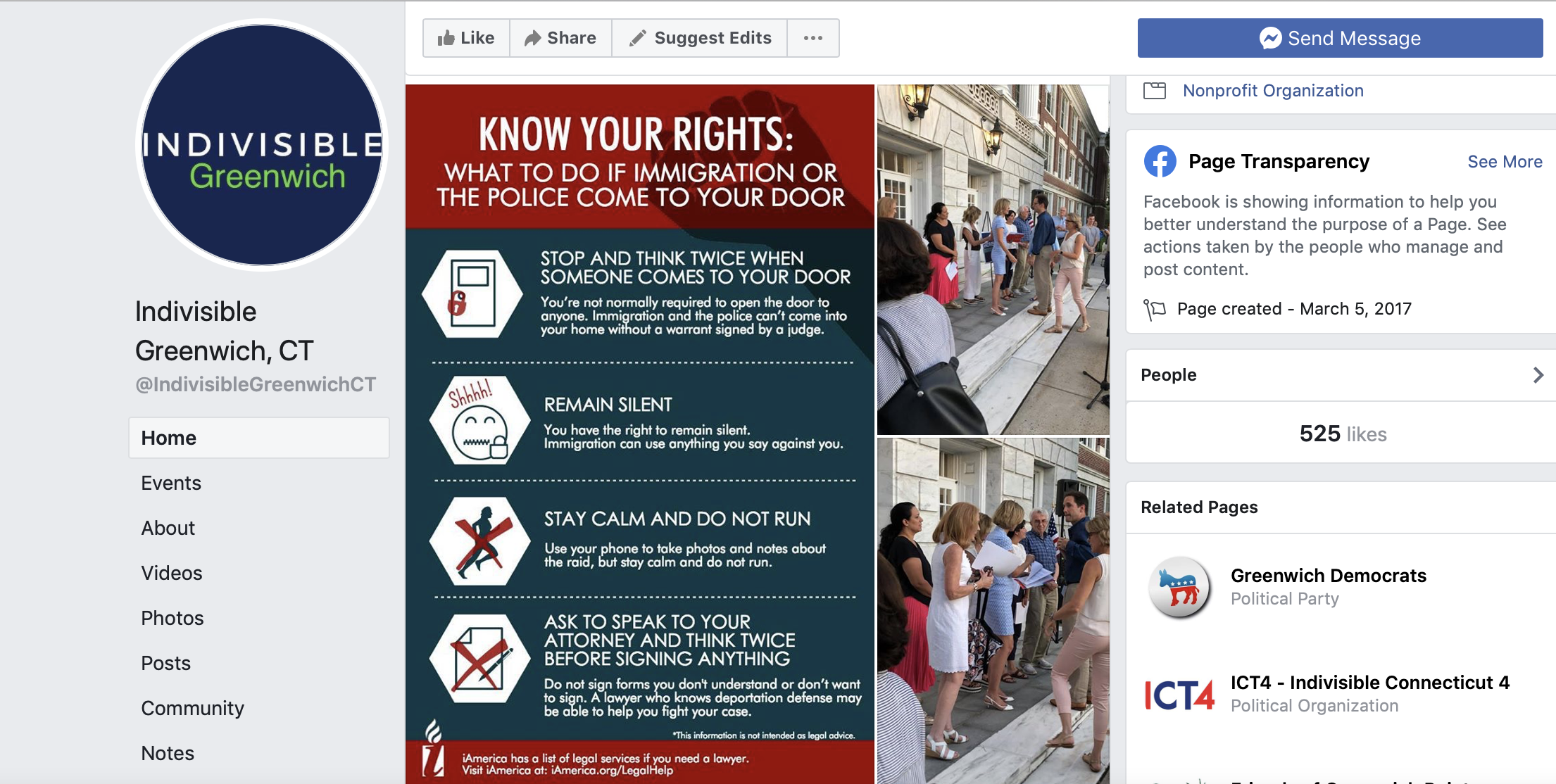
Lest we forget: Greenwich Invisible’s Facebook page

Lest we forget: Greenwich Invisible’s Facebook page


Good Lord, do we now have to add "Florida Dog" to the Florida Man meme?

Now do you love me?

Now do you love me?

Florida pooch sneaks off to the beauty parlor, comes back looking like Madonna.

Or maybe it’s just a sub-category, “Florida Groomer”:

Amore Spa owner Raquel Adams returned Puleo’s $150, offered another complimentary grooming and was apologetic about the unrequested dye job.

“The young lady, she’s very sweet. We wanted to make her happy,” Adams said Monday. “We beautify the dog.... If we see it’s missing something, we do color, sometimes, the dog.”

And in related (I suppose) news, Florida Woman was placed on probation for carrying an alligator in her yoga pants. I had no idea such an act was illegal, but I’ll go release mine.

It must have seemed like a good idea at the time

It must have seemed like a good idea at the time

Home Improvement

News from America’s paper of record, the Babylon Bee:

Trump to buy Greenland, install hardwood floors and shiplap. and flip it.

“Look at it; it’s prime real estate,” Trump told the press. “It’s on the very desirable Upper West Side -- you know, of the Prime Meridian -- and if we just modernize it a bit, that’s going to be some valuable property. And I’m going to split the profits from selling it with the American people, 60/40.”

Trump says his first plan will be to get rid of the giant glacier in the middle of Greenland. “That used to be popular, but it’s out of style now,” he explained. He plans to replace it all with “ultra-fancy” hardwood floors. In addition, he plans to maybe put up some shiplap, add an island, and upgrade the bathrooms. He's looking at opening it up into more of an "open concept" feel with some farmhouse sinks for a more rustic feel. The president has reportedly hired Chip and Joanna Gaines to help with the upgrades. They previously worked with him to put some shiplap up on the southern border wall.

Taking a bite out of unemployment

Put your best foot forward, if you dare

Put your best foot forward, if you dare

Pool sales soar on Cape Cod as tourists flee the beach

With at least 42 shark sightings tallied on Cape Cod even since just Aug. 1, local pool-construction businesses have reported sales skyrocketing as much as 40 percent, the Boston Globe said.

“They have told us that it’s because they’re afraid of the shark[s],” said Penelope Rich, who owns the Cape Cod Pool Company in Orleans with her husband, David, of customers. “They want to go to the beach and feel the sand on their feet and feel the water but then want to go home to their pools.”

David Cavatorta, who owns Seaside Pool Service in Yarmouth, said he can hardly keep up with increased sales, up as much as 30 percent.

“It’s been kind of crazy, to be truthful,” Cavatorta told the Globe. “I think more people are ready to say, ‘You know what? I want to hang out at the house, I want to put some money into it.’ ” ….

Another business owner in Orleans, Craig Panaccione, said a woman called his Crossroads Landscape and Pools on Monday to say she was at the breaking point over the beach closures and shark sightings, particularly after she got a recent alert on an app called Sharktivity.

Panaccione of Cape Cod said he understood the woman’s apprehension to get into the ocean, as he no longer swims far offshore due to concerns about having a frightening shark encounter — like the Massachusetts family whose boat was brushed by a great white shark on Cape Cod Bay last week.

The area’s booming backyard-pool business is also a boon to those who service pools, one owner told the Globe.

“Sharks are good for business,” said Matt Wester of the Aqua Pool Company.

Of course, if sharks aren’t enough to keep you out of the seven seas, there’s this: “Swimmer’s itch” reported at Greenwich beaches.

Good news from the north country

clapboard.jpg

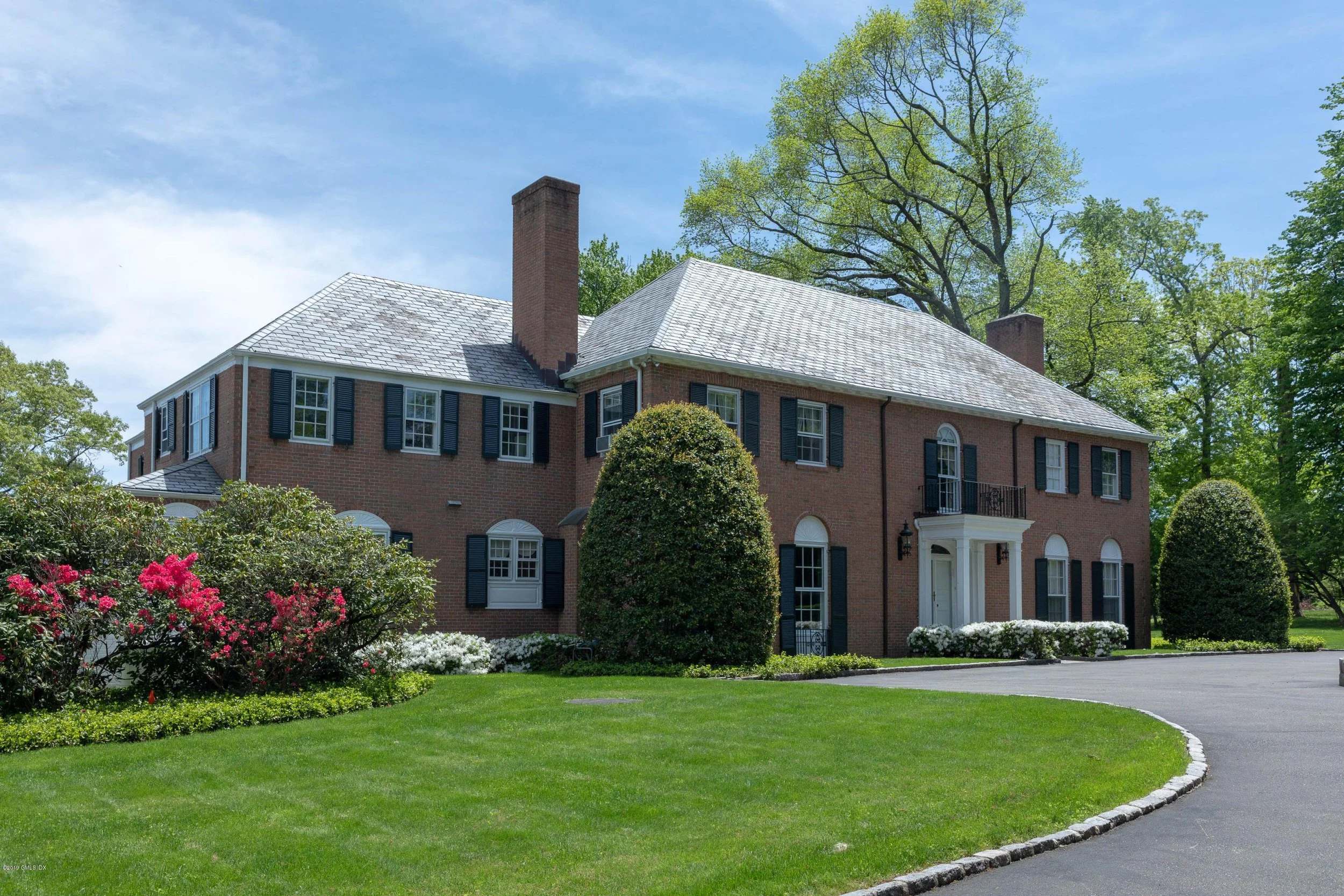
214 Clapboard Ridge Road — 8 acres at the Round Hill side of Clapboard — has closed at $5.1 million*. That isn’t the $7.595 the owner was hoping for when he listed it in May, 2018, but it’s still a large sum, and assuming someone is planning to sink a few million into restoring this 1940 home, it’s good news for the neighbors, because it means that other rich folks still want to buy up here.

* We reported on it last month when it went pending, still listed at $6.195. The buyer achieved a notable discount from that last asking price.