Remember when to criticize Obama was to to be racist? It's still the rule

Screen Shot 2020-10-15 at 11.28.51 AM.png

Author of 1619 project claims attacks on her scholarship [sic] are racist

On Thursday, The New York Times published an essay critical of its “1619 Project.” Bret Stephens, a writer of the sort that passes for conservative at The Times, wrote a painfully balanced rebuke of the 1619 Project, arguing that the project and its founder, Nikole Hannah-Jones, were not truly anti-American but admitting that the project and its founder made serious errors in judgment that ended up dooming the project. The Times‘ leadership issued statements praising the 1619 Project, but Hannah-Jones appears to have lashed out with something of a tantrum, anyway.

On Tuesday, The Washington Post revealed the internal machinations of The Times — and Hannah-Jones’ response, essentially accusing The Times of racism.

“Times leadership took pains to praise the 1619 Project this weekend. They maintained that Stephens’s criticism represented not an institutional scolding of the project but [a] commitment to thoughtful debate,” the Post reported. NYT Acting Opinions Editor Kathleen Kingsbury said, “The Times’s openness to hear and tolerate criticism is the clearest sign in its confidence in the work.”

“Hannah-Jones, though, was livid. She sent vitriolic emails to both Kingsbury and Stephens ahead of publication. She also tweeted that efforts to discredit her work ‘put me in a long tradition of [Black women] who failed to know their places,'” the Post explained. “She changed her Twitter bio to ‘slanderous and nasty-minded mulattress’ — a tribute to the trailblazing journalist Ida B. Wells, whom the Times slurred with those same words in 1894.”

Speaking to the Post, the 1619 Project founder finally admitted she had made a key mistake. She had notoriously claimed that American patriots had rebelled against Britain in order to preserve slavery — a claim for which there is no evidence, and a good deal of evidence to the contrary. Historians repeatedly called her out on this, and The Times eventually issued a correction.

Scholars Demand Pulitzer Board Revoke Prize Over ‘Glaring Historical Fallacy’ in 1619 Project

Belatedly, Hannah-Jones admitted she should have consulted with scholars who had a particular focus on colonial history, the Revolutionary War, and the Civil War.

“I should have been more careful, because I don’t think that any other fact would have given people the fodder that this has, and I am tortured by it,” she said. “I’m absolutely tortured by it.”

The Post did not report whether or not Hannah-Jones said she was “tortured by” lying about something else, however. Hannah-Jones and the 1619 Project had claimed that America’s true founding came in 1619, with the arrival of the first slaves (who actually arrived far earlier), rather than in 1776, with the Declaration of Independence. Last month, however, both Hannah-Jones and the Project apparently deep-sixed this claim, deleting the language from the website. Hannah-Jones even went on television and lied, claiming she had never made such a claim.

In fact, scholars have demanded the Pulitzer Prize board revoke Hannah-Jones’ Pulitzer Prize over these lies.

Bret Stephens’ column called out these lies, arguing that “the 1619 Project has failed.” While Stephens praised Hannah-Jones and defended her against some critics, he pointed out that the founder’s “monocausality” — an insistence on reinterpreting American history through the lens of slavery and its legacy alone — led her to make massive mistakes that destroy her own project. He even noted the fact that rioters painted “1619” on a toppled statue of George Washington.

Rather than engaging civilly with this important criticism, Hannah-Jones accused her employers of racism. Her tweet thread is even worse than the Post reported.

A quick sale, but not a quick profit

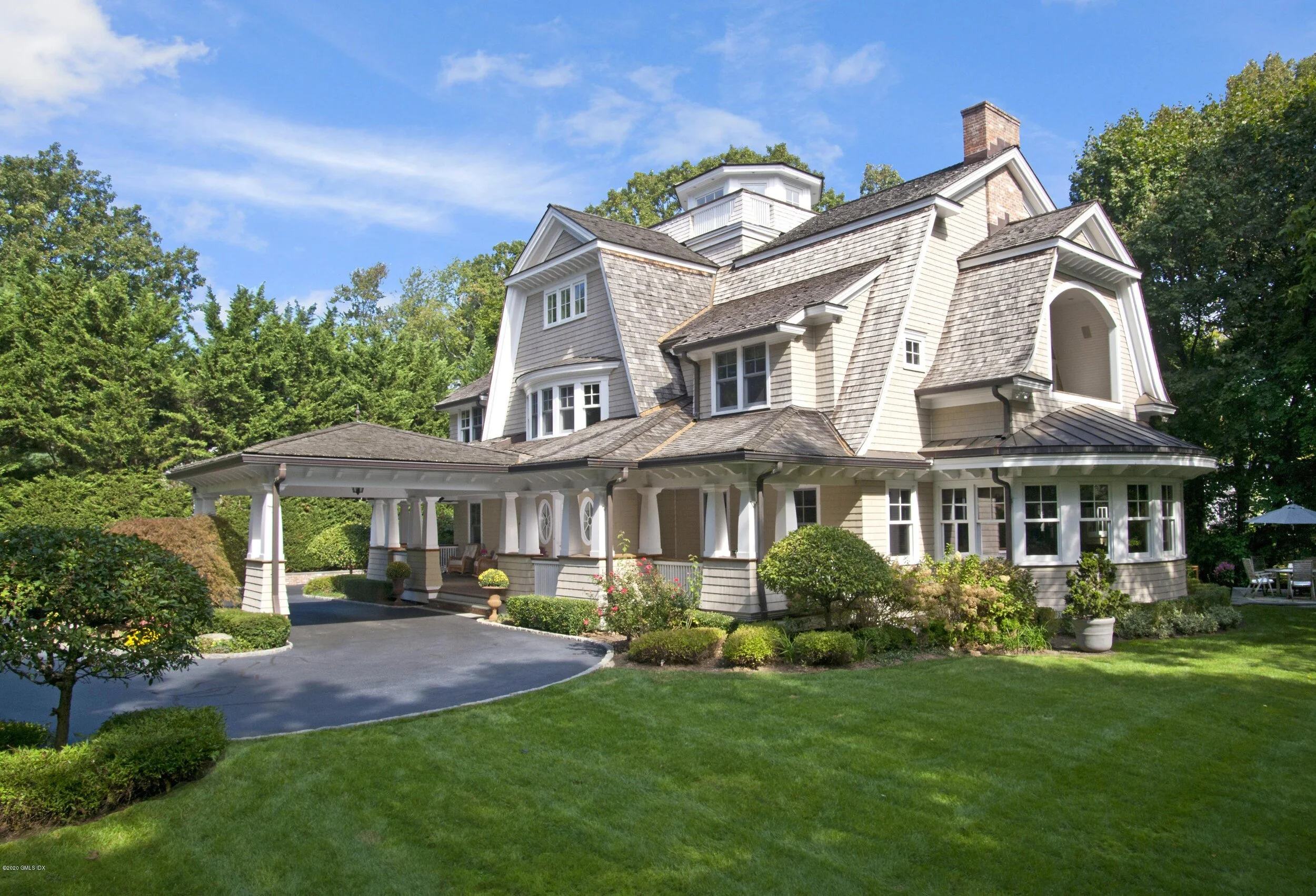
402 A.jpg

402A Sound Beach Avenue spent just 79 days on the market and has now sold for $4,237,500. That’s an impressive sum, but the sellers bought it new in 2007 for $5.690 million.

I would think buyers would find this one’s back-lot location a plus, as it diminishes the traffic noise from busy Sound Beach, but there’s something the market doesn’t like about flag lots.

To ask is to answer

Screen Shot 2020-10-15 at 7.22.08 AM.png

If there was an email trail showing Donald Trump, Jr. corresponding with a corrupt Ukrainian businessman and introducing him to his father while being paid $83,000 per month for nothing, and, if the Donald was on record as claiming he’d never discussed Jr.’s foreign business deals, and if there was a video of Jr. sniffing coke off a prostitute’s backside, would the mainstream media and social media embargo the story?

We don't want them, but I'm not worried, yet; they'll be gone in two years

Screen Shot 2020-10-15 at 5.48.52 AM.png

(I say “we”, though I’m really just a most-of-the-time visitor here. I like to hunt and shoot and fish, and have fit in with my neighbors more easily, I believe, than this latest crop of transplants will.)

When asked if it was COVID-19 that forced him to flee New York for Maine in March, Jordan Cohen doesn’t waffle.

“One hundred percent,” the Greenwich Village native, 40, told The Post. “It was when things looked precarious and we didn’t know if we’d get out.”

Jordan grew up near Grace Church, attended Bronx Science and has family ties that go back to Ellis Island arrivals. But he also has warm memories of sleepaway camp and family vacations in Maine. It’s where he took his girlfriend, Elisabeth, on their first trip together. It’s also where, a year later, he proposed at Acadia National Park. So when it was time to beat a hasty retreat from the coronavirus, Jordan looked north.

“I always dreamed of living in Maine,” he said, “but it wasn’t possible because of work.”

Then the pandemic hit, and Jordan lost his tech job. He and his now-wife, Elisabeth, made the move, intending to “ride out” COVID in more rustic climes — but ultimately stayed.

After renting in Searsmont, a town of some 1,617 people inland from coastal Camden, they bought a historic home from 1925 on desirable Chestnut Street in Camden itself for $725,000. Elisabeth, 35, does sales work remotely from the finished attic (with a view of Mt. Battie), while Jordan started his own marketing agency, the Fox Hill Group.

Prospective renters and buyers were desperate, according to brokers on the frontlines. “People have called and said ‘Get me any house in Maine,’ ” said Gwyneth Freeman of Better Homes & Gardens, The Masiello Group.

A strong economy and low interest rates made 2019 a historically good year for Maine real estate, resulting in 40 percent less inventory in 2020. When frantic out-of-staters began looking to escape the pandemic, housing demand exceeded supply, pushing prices up and accounting for a large volume of closed sales.

“Because of COVID, April and May sales were down,” said Tom Cole, president of the Maine Association of Realtors. “But June picked up, and July was gangbusters, with nearly 6 percent more out-of-state buyers than last year. In August, out-of-state sales went up nearly 10 percent, showing a clear trend of what’s happening.”

“It’s the most crazy market I’ve seen,” added Nancy Hughes of Camden Coast Real Estate. “There’s a very high demand, with people willing to pay high prices, but the lack of inventory made prices even higher.”

As a result, it’s common for a property to attract multiple offers; in fact, a “picturesque three-bedroom” in Brunswick (home to Bowdoin College) attracted a whopping 12. Bidding wars are now prevalent and offers made sight unseen, based solely on video tours given by realtors doing walk-throughs for clients sitting at home. Needless to say, houses don’t linger on the market long. The Brunswick house sold within four days of listing for $274,900 to a Nashville couple who paid well over ask: the handsome sum of $305,000.

“We’d see something we liked and look back a day later and it would be under contract,” said Rich G., a 37-year-old lawyer who relocated with his girlfriend from “hectic” Toms River, New Jersey, to Aroostook County.

The couple paid $159,000 for a three-bedroom ranch in Caribou, in the northeast corner of the state near the Canadian border. But they had to move fast.

“We made an offer within a day or two because we really liked the house,” said Rich, who asked not to publish his surname. “We acted quickly because we knew what was happening in the market.”


Screen Shot 2020-10-15 at 5.48.24 AM.png

Portland went left fifteen-twenty years ago as Massholes and New Yorkers discovered its inventory of old houses amid a vibrant cultural scene of restaurants, coffee shoppes and incredible views of Penobscot Bay. But the restaurants are all closed, most permnently, as are the music venues, bars and coffee shops.

Will they come back? Well, consider that the local branch of Bernie Sanders’ American Socialist Party has five seperate referendums on the ballot this year, proposals ranging from rent control, a $15 an hour minimum wage ($22 per hour for so long as the COVID “emergency” continues), a Green agenda that will drive the cost of new housing sky-high and require the existing housing stock to be retrofitted for energy efficiency, a prohibition against new fuel supplies, even hydro-power from Canada. Recovery will be long delayed, if the city comes back at all, and without Portland, there is no “city life” in Maine.

Portland is below what was long called the Volvo, and now the Subaru Line, and just two hours from Boston. These naive newcomers are buying north of the line, heading into the northern counties, five-to twelve hours from Boston (and fifteen from New York), where Betty’s Diner provides the sole source of dining, except for church potluck suppers on Sunday afternoons. No tapas bars, no tasting menus, no cheese shops, no theatre, no entertainment of any kind, except for amateur nights at that same church.

And that’s during the summer. If there’s a bleaker spot than Caribou, Maine, in November, it’s Caribou in March. Yes, there’s hunting, snowmobiling and ice fishing available, and it’s possible that these newcomers will discover heretofore unknown pleasures therein, but I suspect that novelty will wear off for these former West Villagers before the first endless winter leaves in June, taking them with it.

Screen Shot 2020-10-15 at 5.49.30 AM.png

If they do leave, and attempt to resell the houses they purchased at record prices this year, they’ll discover that the market has disappeared. No one willingly moves to Bangor or Presque Isle — the tundra’s been losing population since the potato industry shifted to Idaho decades ago and the blueberry market went to New Jersey.

We’ll be glad to see them go, but I hope they’ll stick around long enough to attend their new home’s annual Town Meeting, usually held in February or March, and provide local amusement; it’d be so much fun to see the reaction when they propose banning hunting (which they’ve done in many of the towns south of the Subaru Line) and raising property taxes to pay for introducing a critical race theory curriculum in the town’s K-12 school, and sending the constable to Boston for racial sensitivity training.

Here’s a warning

…..One taciturn Mainer told The Post his opinion on the subject, if not his name. “We’re fine with people moving up here,” the long-time local drawled. “It’s just when they want to change everything that we could have a problem.”

Tulip, beware.

Greenwich's State Senator and her courageous rejection of privilege

Vote, just not for her

Vote, just not for her

Alex Kasser nee Bergstein, our current state senator running for reelection, gave a TED talk last year to some gullible Wesyleyan students entitled “Breaking the Bondage of Patriarchy and Privilege: She’s achieved the first part, abandoning her marriage and children and running away with a female staffer 20-years her junior, but it seems she’s still having difficulty with that letting go of privilege bit.

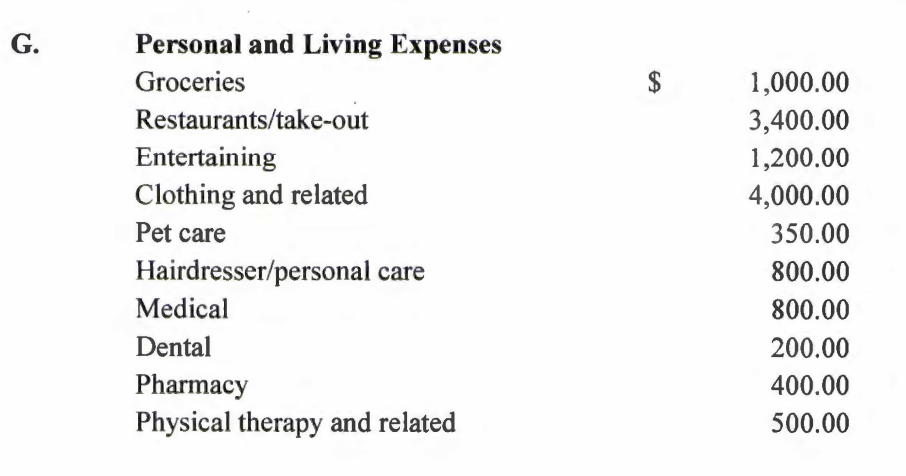
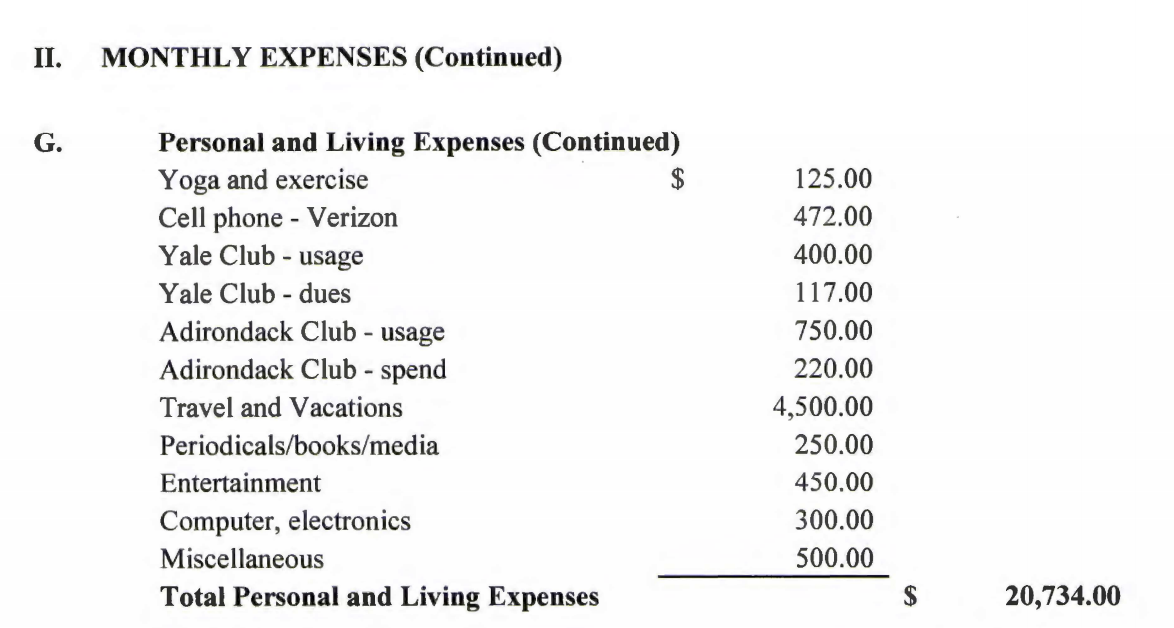
A reader went down to Superior Court and copied the entire Bergstein/Kasser divorce file and, unsolicited, has forwarded it to me. It’s a public record, and though I won’t publish the intimate details of the family’s travails, Kasser’ sworn financial affidavit seems fair game, so here are excerpts. Bear in mind, these are monthly expenses: Kasser claims to be spending $108,000 a month — that’s a lot of privilege.

(Not counting the house in Greenwich currently occupied by her former family, Kasser owns: 2 homes in Nantucket; 1 apartment in Monaco; 1 estate in Milford; and a cabin in the Adirondacks.)

Screen Shot 2020-10-14 at 6.54.26 PM.png
Screen Shot 2020-10-14 at 6.56.23 PM.png
Screen Shot 2020-10-14 at 6.55.19 PM.png

In her pleadings, Kasser asserts that “the Defendant has no expertise in finance”. Notwithstanding her current position as Chair of the State Senate Banking Commission, I’m inclined to believe her; anyone who can spend $4,000 a month ($48,000 annually) on clothes, $3,400 on restaurants ($40,800), and $4,500 ($54,000) on vacations strikes me as a privileged profligate. Let’s hope she’s just a figurehead on the Banking Commission.

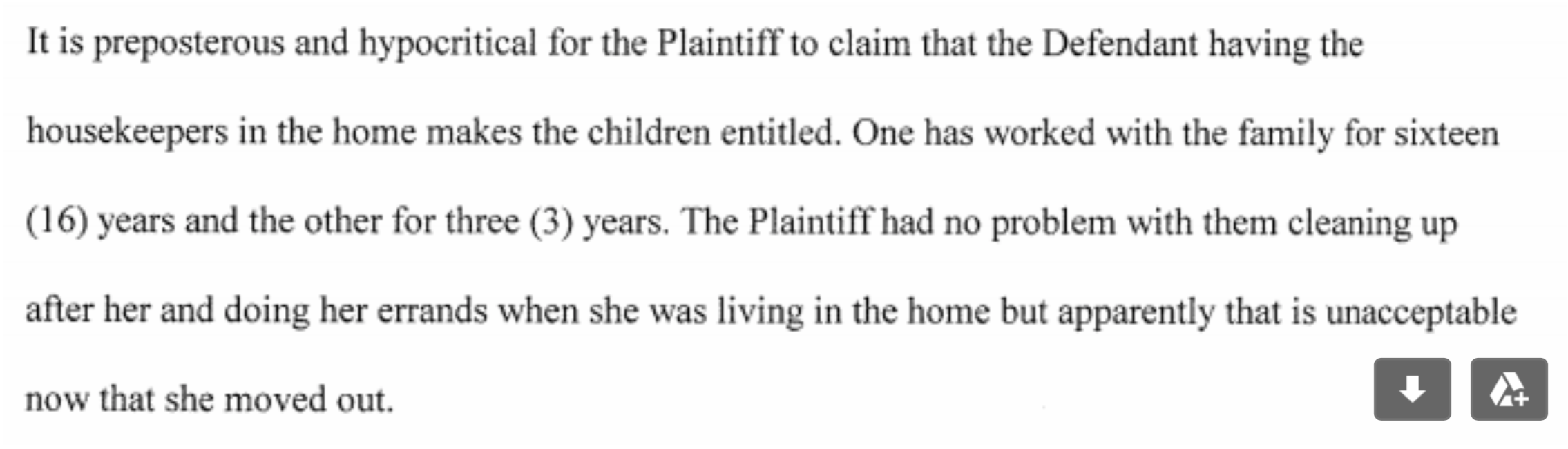
To her credit, though she herself may be mired in the world of privilege, Alex is determined to save her own children from growing up in a pampered environment. While, according to the husband’s pleadings, she hasn’t visited those children since March, she did file an objection to the presence of a nanny in her former household. Her husband’s response was cutting:

Screen Shot 2020-10-14 at 7.22.34 PM.png

I don’t ordinarily begrudge a person spending money — it’s not mine, so it’s none of my business — unless that person is a politician with a $19.2 million trust fund, who spends $1,296,000 a year on personal expenses, and then lectures us schnooks on our privilege. In that case, I get angry, contemptuous and disgusted.

Twitter rules

Screen Shot 2020-10-14 at 5.47.00 PM.png

Social media giants embargo NY Post’s Hunter Biden expose

The Post’s primary Twitter account was locked as of 2:20 p.m. Wednesday because its articles about the messages obtained from Biden’s laptop broke the social network’s rules against “distribution of hacked material,” according to an email The Post received from Twitter.

Twitter also blocked users from sharing the link to The Post article indicating that Hunter Biden introduced Joe Biden to the Ukrainian businessman, calling the link “potentially harmful.”

“In line with our Hacked Materials Policy, as well as our approach to blocking URLs, we are taking action to block any links to or images of the material in question on Twitter,” a Twitter spokesperson told The Post in a statement.

Screen Shot 2020-10-14 at 5.47.33 PM.png
Screen Shot 2020-10-14 at 5.46.42 PM.png
Screen Shot 2020-10-14 at 5.46.23 PM.png

UPDATE: Following up on its locking the NY Post’s account, Twitter has now locked out White House Press Secretary Keyleigh McEnany’s.

They’ve decided who’s gonna win and taken their stand. Let’s hope they chose poorly but either way, at least the pretense of neutrality is over.