They have to get the drug mixture just right, then monitor for side-effects (UPDATED)

Don't Expect to Hear From the White House Much Over the Next Week

President Joe Biden will remain out of town for an extended stay at Camp David as he and his campaign team work to ready the octogenarian commander-in-chief for next week's debate with former President Donald Trump. 

Already away from Washington at his home in Rehoboth Beach, Delaware, Biden will travel to the presidential retreat in Maryland on Thursday evening for a week-long stay at Camp David. A new FAA NOTAM (Notice to Airmen) confirmed the no-fly zone around Camp David until next Thursday, the date of Biden's showdown with Trump on CNN.

UPDATE: Great minds think alike.

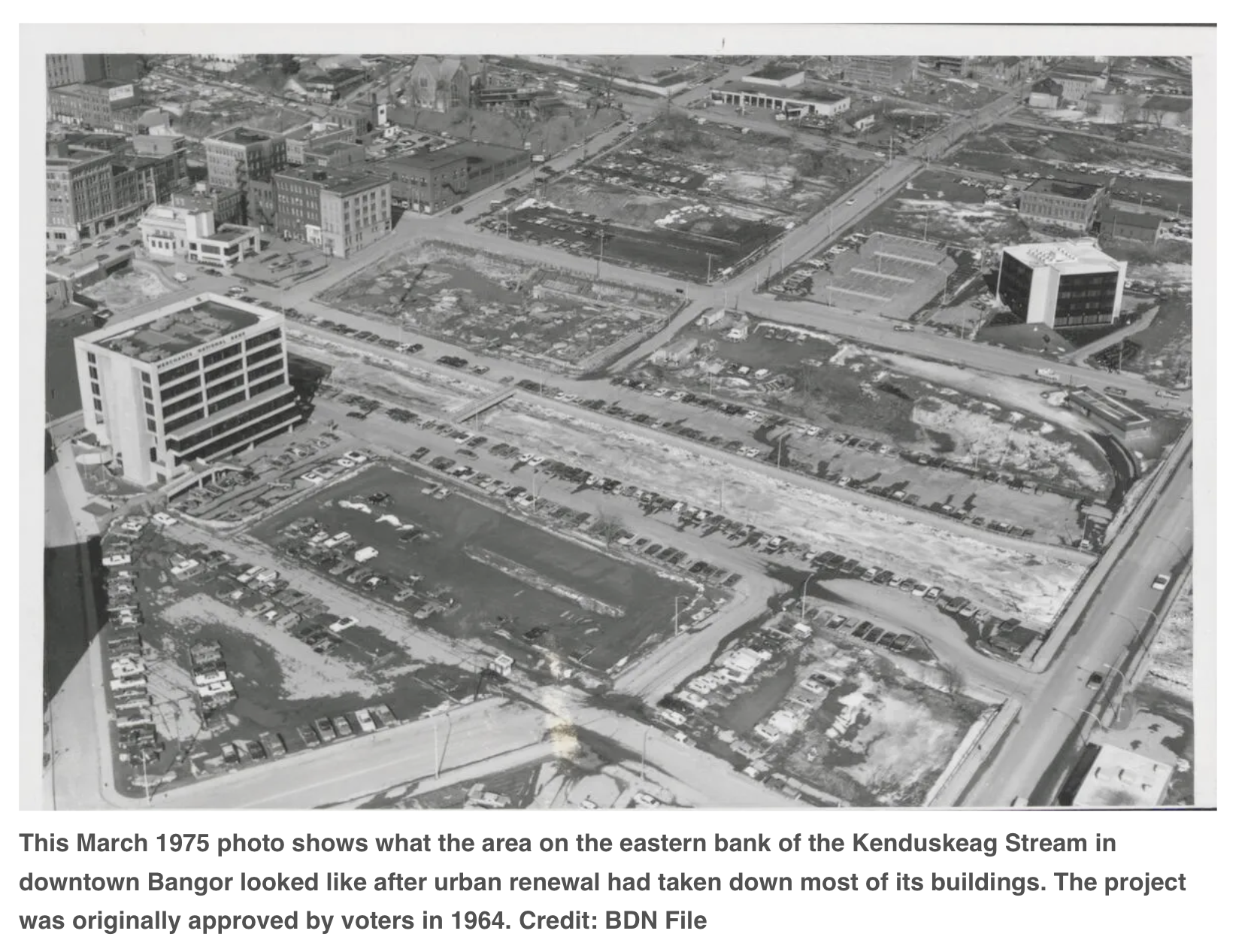
60 years ago, Bangor, Maine voluntarily bombed itself into oblivion

Bangor “Civic Boosters” set off an urban “renewal” explosion — the city has never recovered

When I moved to Bangor in 1981 to practice law, I was struck by the acres of asphalt parking lots and dearth of the historic building that might be expected in a city originally settled in 1769. It was explained to me that the founders of the very firm I’d just joined, George Peabody and George Eaton, had dominated the political scene for decades, taking turns serving as mayor, and they were instrumental in convincing city residents to sign on for a massive urban renewal project. The plan was implemented, the city was razed, and then federal funds dried up, leaving a parker’s paradise, but little else. Bangor looked like hell in 1981; it still does.

Sixty years ago this week, Bangor residents turned out in force to vote on one of the most divisive and transformative measures in the city’s history: the downtown urban renewal project. 

The project, which would eventually see more than 100 buildings demolished across 32 downtown acres, passed with 53 percent of the votes on June 15, 1964. With 7,657 Bangor residents voting on the measure, it was the largest local election turnout in Bangor at the time since 1929.

>>>>

What started as an effort directed almost solely at improving Bangor’s housing stock began to shift focus in 1959. That year, city staff began floating the idea of adding a new project onto the urban renewal effort: a redesign of the area along the Kenduskeag Stream between State and Washington streets that would create new streamside parking, a project that had strong support among the downtown business community. That project was approved in 1960 and completed in 1964.

By 1961, however, the downtown urban renewal idea had snowballed well beyond just the new streamside parking area, to encompass a sweeping redesign of large swaths of downtown.

The federal urban renewal program was changed once again to allow cities to tack additional projects onto established ones. In June 1961 city staff threw together a preliminary plan to revamp most of the east side of downtown, mostly by tearing down old buildings and selling the land back to interested parties. The major argument was that the area was full of badly designed traffic patterns and substandard buildings, and was more suited to the economy of the 19th century — not of the modern age. 

Public opinion on urban renewal became divided. It was one thing to help vulnerable residents access safe, modern housing. It was another to rip up whole blocks of Bangor’s historic downtown. Between June 1961, when the project was first brought forth, and when the measure finally went to the ballot box in June 1964, there were three years of sometimes agonizing public discourse. 

Proponents extolled the project’s virtues with town hall meetings and glossy brochures. Five redesign plans were shown to the public, some of which were even more sweeping than the plan that was eventually adopted in March 1963, which would see all but one building on Exchange Street demolished, and much of Pickering Square and what was then Mercantile Square razed to create more parking and buildable land. It would also see Bangor’s old City Hall at the corner of Hammond and Columbia streets torn down, to be replaced with a parking structure. City Hall would move to its current location on Park Street. 

A large but disparate opposition questioned the project’s cost, its impact on local businesses and the fact that there were many unknowns as to how it would all work out, including how wise it was to assume all that newly vacant land would end up filled. For the six months leading up to the June 1964 referendum, the Bangor Daily News published near-daily articles discussing the matter. The issue was further complicated by a time element — if the matter wasn’t settled by October 1964, the city would lose out on the federal funds earmarked for the project.

In the end, voters saw downtown urban renewal as a chance to redefine the city’s fortunes, moving it away from its storied but long-gone past and toward the future. It was a big gamble, to be sure, but when faced with huge economic challenges like the end of passenger rail in the city and the rumored closure of Dow Air Force Base — which was announced a few months later in 1964 — something had to be done. 

City planners and the public could not, at the time, have known that the legacy of urban renewal would be one of such mixed results. Some good did come out of it — mostly in the form of better housing and housing policy. But most people today associate Bangor’s urban renewal with the wholesale destruction of iconic buildings like the old City Hall, the Bijou and Park Theatres and the Flatiron building, and with a loss of historic character, with little of the promised development taking its place.

“But even today, there are still large, undeveloped swaths of land, mostly used for parking lots, in the urban renewal zone

A few new buildings were constructed on those razed lots, like One Merchants Plaza, where the BDN is housed today, and the Penobscot Judicial Center, which opened in 2009 and was the last major building to be built on an urban renewal lot. But even today, there are still large, undeveloped swaths of land, mostly used for parking lots, in the urban renewal zone — a visible reminder that good intentions can have unintended consequences.


He can't leave office soon enough (well, so long as he takes Kampallawalla Ding Dong with him)

ronnie montoya shows an admirer his artificial boobs

Priorities: X User Bonchie Notices Who Does and Doesn't Get an Invite to the Biden White House

The Biden White House shows you what its priorities are on a daily basis. American citizens? We come last. The economic concerns? They lie and gaslight us. Biden's mental state? They tell us the videos are 'cheap fakes'. 

Back at the start of his presidency, Biden oversaw the botched withdrawal of Americans from Afghanistan. One that saw a lot of Americans left behind and 13 service members killed at Abby Gate.

But one Gold Star father -- Steven Nikoui, whose son was killed at Abby Gate -- did get arrested at the State of the Union address, so we guess that's kind of the same?

Related, in so far as it sums up these dreadful people:

I've been pointing this out ever since the "rural high speed" boondoggle began in the states years ago

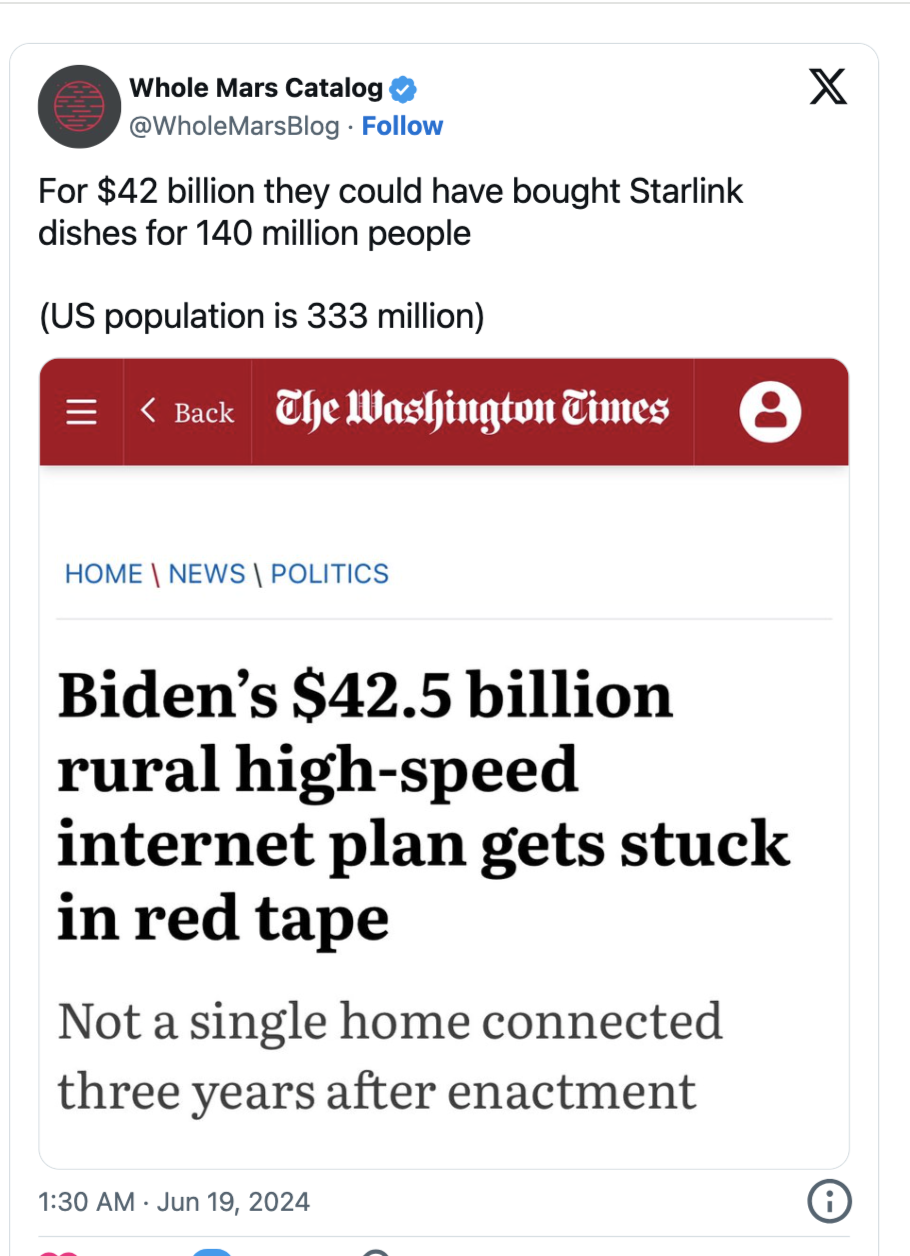
NOT A SINGLE HOME CONNECTED: Americans still waiting on Biden broadband plan; rural high-speed internet stuck in Dems’ red tape.

Residents in rural America are eager to access high-speed internet under a $42.5 billion federal modernization program, but not a single home or business has been connected to new broadband networks nearly three years after President Biden signed the funding into law, and no project will break ground until sometime next year.

Lawmakers and internet companies blame the slow rollout on burdensome requirements for obtaining the funds, including climate change mandates, preferences for hiring union workers and the requirement that eligible companies prioritize the employment of “justice-impacted” people with criminal records to install broadband equipment.

The Commerce Department, which is distributing the funds under the Broadband Equity Access and Deployment (BEAD) program, is also attempting to regulate consumer rates, lawmakers say. This puts them at odds with internet providers and congressional Republicans, who say the law prohibits such regulation.

The slow pace of funding allocation and compliance will push the project start dates for modernizing rural internet access to 2025 and 2026, according to a timeline officials outlined in a House budget hearing.

Federal Communications Commissioner Brendan Carr said the program’s goal of providing high-speed internet to most underserved areas will not be fully realized until 2030, nine years after its enactment.

This is happening across the country, wherever graft bucks are available (that would be everywhere). Maine has been shoveling millions of federal and its own taxpayer’s money to subsidize cable companies, and thanks to the Inflation Rocketing Act, it pulled in an additional $110 million in 2022 and $272 million this year In 2022, the Governor stated that it was her goal to have ”high-speed internet connections available to all by the end of 2024” Practically nothing’s been built since she made that statement, so she’d better get busy.

That's $165,385 per INDIVIDUAL charger

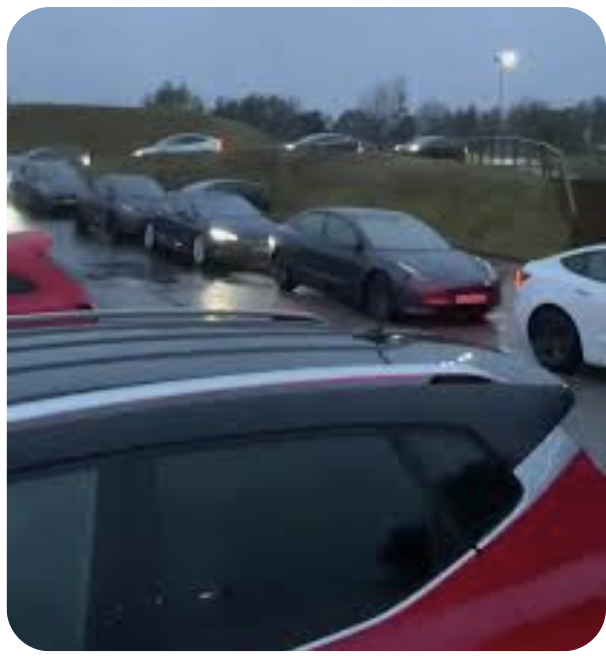
ev charger line

Maine to Spend $8.6 Million Installing (fossil-fueled) 52 EV Chargers Across 17 Locations Statewide

Cumberland and Penobscot Counties received the bulk of the new charging stations, coming in at seven each. The remaining three stations are to be located in Franklin, Oxford, and Piscataquis Counties.

And the folly continues:

One business is projected to see an increase of 1,600% in its annual solar tax costs

Maine’s businesses (and residents) are about to be hit with massive cost increases — in some cases of more than $50,000 for 2024 — thanks to a scheme devised by state lawmakers to subsidize solar power.

According to letters sent to customers by Versant Power, Maine’s second largest electrical utility, the portion of small business’ electrical bills described as “stranded costs” is set to increase from 2023 to 2024 anywhere from 20 percent to as much as 1,644 percent.

“A new, fixed monthly stranded cost dee is under review and would capture expenses and incentives to develop Maine’s renewable power generation and net energy billing programs,” Versant Power informed businesses in the rate hike letters.

Under the net energy billing program, Maine’s electrical utilities collect increased fees from residents and businesses, and that money is then used to subsidize the installation of so-called “community solar.”

In practice, the net energy billing scheme turns the utilities into tax collectors for the state — and bill collectors for the solar industry.

The price hikes coming for Maine businesses vary according to the customers rate class and level of electricity usage, but a review of several of the Versant letters shared with the Maine Wire shows that one business will see the stranded cost portion of their annual electrical bill spike from $24,419 to an estimated $77,261 — a 216 percent increase.

A smaller business with far less annual power consumption is looking at an increase from $196.75 to an estimated $3,432 — an increase of 1,644 percent.

Those costs only account for the annual increases in stranded costs, which is a small slice of the total annual electrical costs.

[RELATED: Solar Industry Wins State House Fight to Protect Windfall Profits…]

According to the Office of the Public Advocate (OPA), which was created to advocate on behalf of rate payers, the solar subsidizes may increase electricity costs state-wide by as much as $220 million in 2025.

According to an analysis of electricity prices in paid for June 2024 by USA Today, Maine already has the sixth highest electricity costs in the country.

According to a 2023 analysis of Maine Public Utilities Commission (MPUC) records, the vast majority — 88 percent — of the companies profiting from the solar subsidies were headquartered outside of Maine.

If the rate hike requests are approved, businesses and residents will begin paying more for their electricity beginning in July.

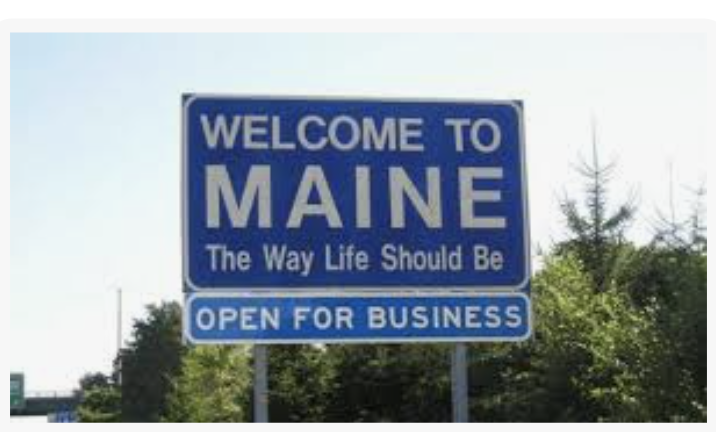
Just as Biden cancelled the XL Pipeline on his first day in office to signal the start of his war on oil, it wasn’t surprising that Maine’s new Democrat governor also signalled her intentions on taking office by ordering the removal of her predecessor Paul’s LePage “Open for Business” signs along Maine’s highways.


In any sane society, these people would be thrown in jail for a year and upon release, taken directly to the airport and tossed out on their asses.

In Europe and America, however, they’ll be put on welfare and cosseted in free apartments while awaiting their citizenship papers.

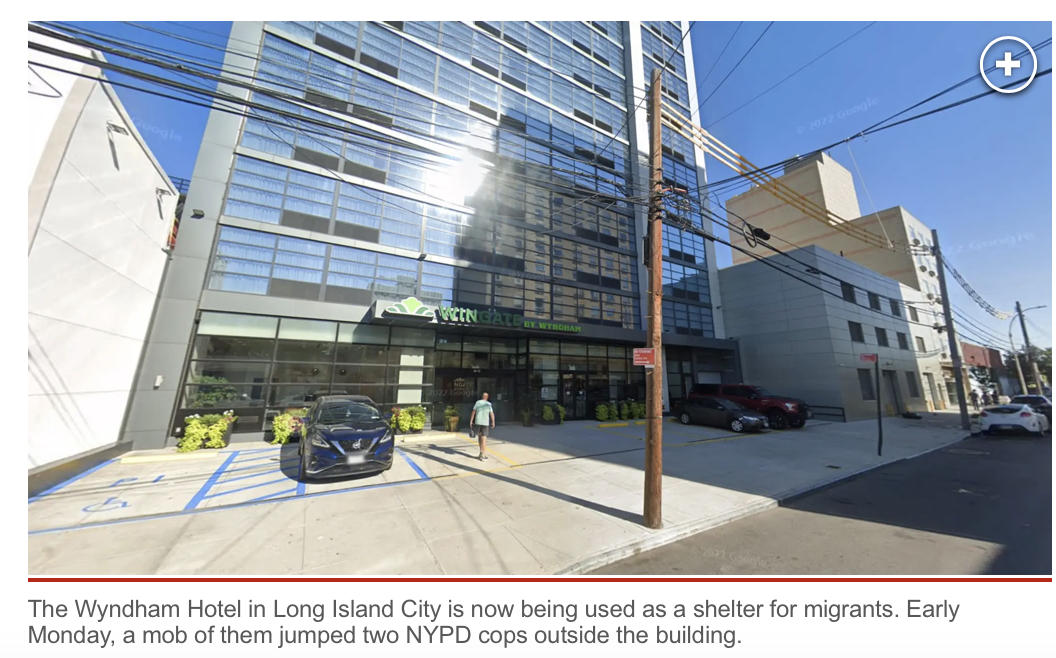
Migrant mob pummeled NYPD cops checking on unattended children outside NYC homeless shelter: sources

A mob of migrants are facing gang assault charges after allegedly pummeling two NYPD cops outside a Queens hotel shelter, prosecutors and law enforcement sources said Tuesday.

Four men were busted after they attacked two of New York’s Finest shortly before 4:30 a.m. Monday as the cops were checking on three unattended children outside the converted Long Island City hotel that now houses asylum seekers, according to authorities.

“At that point, a group of approximately five adults began punching, kicking, and shoving the officers – with two assailants throwing bikes and striking the cops,” Katz said.

When they asked about the unsupervised kids the men allegedly pounced on them.

“In an effort to check on the children’s safety, they approached a nearby group of adults to make sure that the children were being supervised,” Queens District Attorney Melinda Katz said in a statement.

Law enforcement sources told The Post that all four suspects – Juan Munoz, 25; Alejandro Munoz, 42; Karina Navarro-Chavez, 42; and Miguel Chiluisa, 23 –are migrants housed at city-funded sites.

All four were arraigned Tuesday before Judge Edward Daniels on charges of assault, attempted assault, criminal possession of a weapon, resisting arrest and obstructing governmental administration.

Juan and Alejandro Munoz and Navarro-Chavez were also charged with child endangerment, while Chiluisa – who was tracked down and nabbed nearly an hour after fleeing the melee – is additionally charged with second and third-degree escape, prosecutors said.

A fifth suspect, a woman, hit one of the cops with a child’s bike but fled the scene.

“4:30 a.m.”