Why I hate Congress: reason no. 14,786,391. And no, it’s not Rashida Tlaib

It’s Congress itself; although I also despise the lickspittle, gullible press that goes along with the charade. The members need to appear to be “doing something” about something, so they whoop up a sexy-sounding bill that “addresses” it: in this case, border security and drug cartels, and pass it (almost) unanimously. Then, having accomplished nothing, they settle back in their comfy chairs to return calls from their lobbyist/donors.

What, exactly will this bill do? It took some looking, and the Fox reporter, who’s no better nor worse than the rest of her fellow Swamp correspondents, doesn’t bother to say — doubtless because she was too lazy to look — but it’s simply an amendment to an existing law that already requires the CBP to file a report with Congress detailing its efforts to address the smugglers’ border tunnel network; this groundbreaking law (so to speak) changes the existing one to require an annual report, instead of just a one-off. That’s it. Sound and fury, signifying nothing, but the headlines, man, the headlines! I don’t know why our domestic terrorist Tlaib opposes it, but who cares? Perhaps she just refuses to engage in meaningless theater.

One of the few Democrats I’ve seen actually pretend to address the issue of Musk’s exposure of waste in government spending conceded that Musk was indeed performing a service by exposing the gambling going on in the casino, but complained, “he should be putting all this in a report and submitting it to Congress so that we can conduct proper, orderly hearings and investigations and draft appropriate legislation”. In other words, “so we can bury it forever and do nothing, just as we’ve done for the past five decades”.

Does anyone else remember William Proxmire’s Golden Fleece Awards? Given out monthly from 1975 to 1988, and called by the Washington Post “the most successful public relations device in politics today” each award exposed some ludicrous government expenditure — the $15,000 USAF hammer, identical to one Proxmire picked up at a hardware store around the corner for $2.50 was one of the most infamous of them — and got lots of giggles from his colleagues and vows to do better, and then disappeared down the rabbit hole, forever. Nothing has changed since Proxmire’s days; DOGE is just the latest incarnation of the Golden Fleece, and will meet the same end. Here’s the beginning of that process: Well, It’s Been Fun — Trump’s Commie Labor Pick Confirmed.

And that’s why I hate Congress.

And here’s one of the bill’s co-sponsor’s self-congratulatory press release trumpeting his bold strike against evil and the American Way.

The Subterranean Border Defense Act Would Help Congress Address Growing Threat of Cross-Border Tunneling

WASHINGTON — Today, Representatives Lou Correa (D-CA), the top Democrat on the House Border Security and Enforcement Subcommittee, and Eli Crane (R-AZ) introduced the Subterranean Border Defense Act, a bipartisan piece of legislation that would require annual reports to Congress on efforts taking place to counter illicit cross-border tunnel operations.

“It’s clear that human traffickers and illegal drug smugglers have developed dynamic ways to evade capture—making it urgent and necessary that we adapt to defend against their attempts to breach our border,” said Rep. Correa. “I’m honored to be leading this bipartisan effort, alongside Rep. Crane, to help improve our efforts to counter these tunnels and those who rely on them, and protect the lives of those on both sides of our border.”

As Transnational Criminal Organizations (TCOs) continue to expand in both size and sophistication, illicit cross-border tunnels along the southwest border of the United States represent a significant and growing threat to national security. Since 1990, law enforcement officials have discovered more than 140 tunnels that have breached the U.S. border, with an 80% increase in tunnel activity occurring since 2008. CBP dismantles cross-border tunnels as part of its overall border security and law enforcement missions.

“As terrorists, cartels, and smugglers develop new ways to infiltrate our country, the U.S. must stay on the cutting edge of security technology to protect our citizens and our infrastructure,” said Rep. Crane. “I’m proud to be able to champion one more deterrent on our southern border that will play a crucial role in keeping Arizonans safe.”

The National Defense Authorization Act for Fiscal Year 2023 mandated that CBP submit a one-time report to Congress on a strategic plan for counter illicit cross-border tunnel operations. This report has since led Congress to conduct critical oversight and has enabled CBP to formalize many of the authorities, processes, technologies, and resources needed to counteract illegal underground tunnels under the U.S.-Mexico border. The Subterranean Border Defense Act would mandate a report every year going forward to ensure Congress has sufficient knowledge and oversight in regard to this dynamic threat.


Mytery solved; or, at least, explained

(here’s that ironic reference thing again)

Reader Putnam Lake posted a link to a very good article in Slate on a subject that’s certainly relevant to Greenwich. Here are some excerpts:

How Giant White Houses Took Over America

They’re huge. They’re unsightly. They’re everywhere. When one went up next door, I went on a quest for answers.

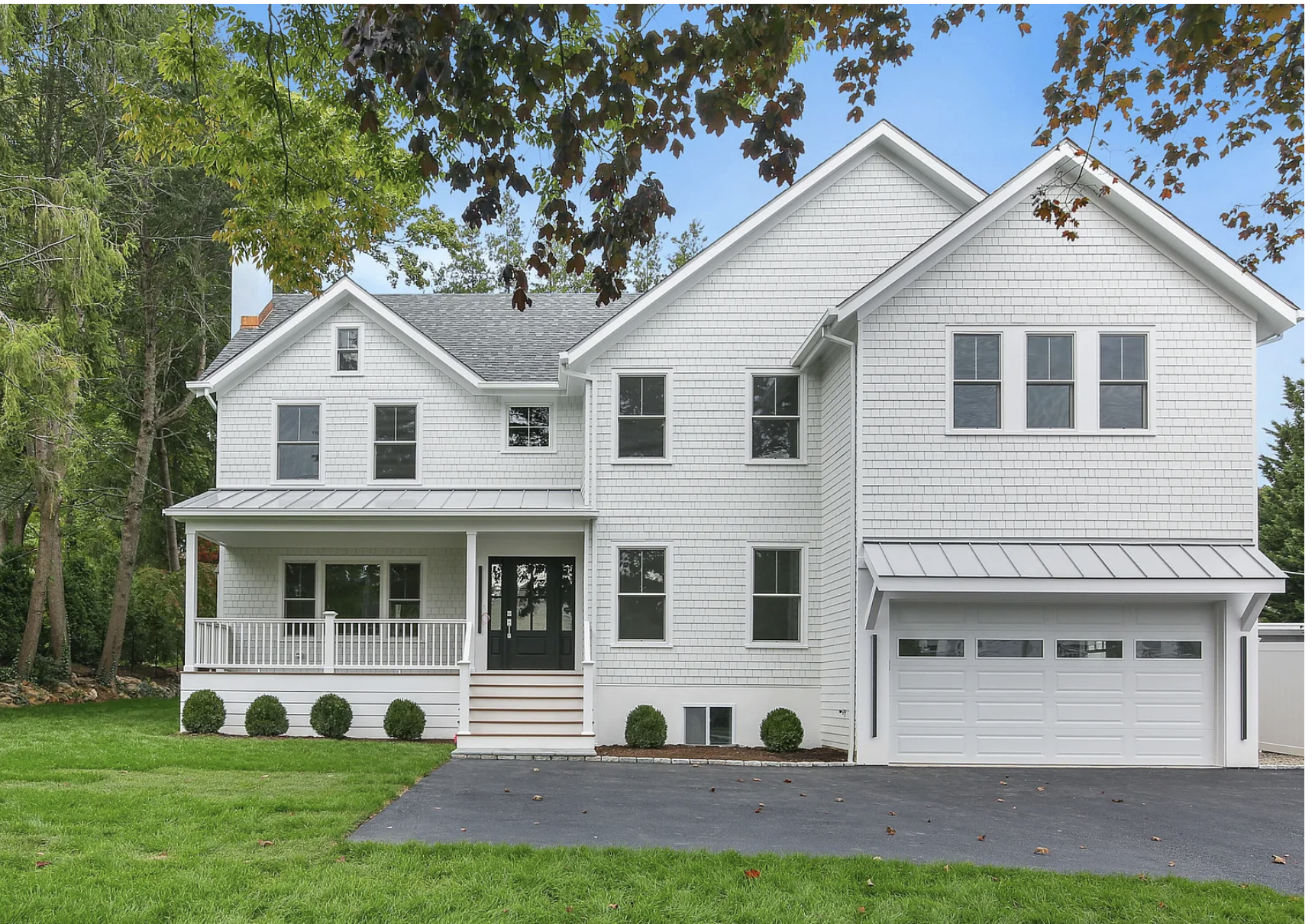
Giant White Houses are white, with jet-black accents: the shutters, the gutters, the rooves. They are giant—Hulk houses—swollen to the very limits of the legally allowed property setback, and unnaturally tall. They feature a mishmash of architectural features, combining, say, the peaked roof of a farmhouse with squared-off sections reminiscent of city townhomes. They mix horizontal siding, vertical paneling, and painted brick willy-nilly.

….

As I’ve visited other cities in recent years, I’ve noticed that Arlington is far from alone. This style is becoming the dominant mode in well-off neighborhoods everywhere, from Atlanta to Nashville to Austin to Boulder. If you drive through the Arlington of wherever you live, you’ll surely see Giant White Houses sprouting on every cleared lot. As one went up next door, I wondered: Why are the houses so giant? Why are the houses so white? Why are the houses like this now?

After speaking to realtors, architects, critics, and the guy who built the house next door, I’ve learned that the answer is more complicated than I’d imagined. It has to do with Chip and Joanna Gaines, Zillow, the housing crunch, the slim margins of the spec-home industry, and the evolution of minimalism. It has to do, most of all, with what a certain class of homebuyer even believes a house to be—whether they realize it or not.

1. Why So Giant?

….. To construct a house like this in Arlington these days, McMullin said, you’ve got to spend over $1 million. Once realtors take their commissions, county fees get paid, and all the other ancillary costs are factored in, the developer’s profit was more modest than I expected. “All in, just on a cash basis, these projects are making anywhere from 8 to 15 percent,” he said. “Heck, you could take that money and just buy a bond. Land costs are so high, construction costs, the administrative burden—that all just increases every year.” The result: If a developer doesn’t absolutely maximize the square footage of the house he builds in this market, he might not make any money at all.

The Giant White House, though, is not only giant in its floorplan—it’s giant vertically. It’s a trend that comes not from the suburbs but from the city. In recent decades, the loft—the converted warehouse, with its open spaces and high industrial ceilings—became popular in American cities, said Paul Preissner, an architect and professor at the University of Illinois–Chicago. “Those kinds of preferences trickled out to homeowners, and now everyone wants a cathedral-like ceiling.”

Twenty-first-century builds are framed in the same way that houses have been framed for 100-plus years, Preissner said. But just as the popularization of the nail gun—patented by a couple of World War II vets who adapted machine-gun technology for construction use—made building those wood frames easier, modern technological developments like glulam lumber and stronger steel make it cheap and easy to build everything just a little bit bigger. “Drywall comes in 8-foot-by-4-foot sheets,” Preissner said, an explanation for the typical 8-foot ceiling in a midcentury house like ours. “But now they just cut drywall to custom size.” The GWH next to us features 10-foot ceilings on the first floor, and 9-foot ceilings upstairs and in the basement.

The result? The house next door towers over ours. Through my dining room windows, I’m staring at the GWH’s above-grade basement. Through the windows of the GWH’s dining room, our roof serves as a kind of horizon line. From the second floor, you’re looking down on the neighborhood through the upper branches of the lot’s few remaining trees.

Preissner told me that this kind of total disconnection from one’s neighbors is not a bug but a feature of this kind of house. “People want their second floor much higher up, to be removed from the street, for more privacy,” he said. He compared this “escalating preference” to cars getting bigger and bigger, because it makes drivers feel insecure to be at the wheel of a sedan when everyone else has SUVs. People buying GWHs, Preissner said, “want to be higher up so they’re not looked down upon.”

2. Why White?

Many of the design choices on GWHs—the white color scheme, the vertical board-and-batten siding, the tin roof—can be traced to the modern farmhouse trend and, basically, to Chip and Joanna Gaines, whose Fixer Upper TV show popularized the style among wealthy homeowners a decade ago. “HGTV, the Gaineses down in Texas—all these people heavily influence the market that we’re dealing with,” said James McMullin, the Northern Virginia contractor. “Maybe a different market is influenced by the New Yorker or something.”

But the current GWH has moved just slightly beyond a pure modern farmhouse—its style is more complicated, and ever-evolving. The whiteness of the home doesn’t only speak to the traditional white-painted rural farmhouse; it speaks to minimalism, a style that has crept from the elite into the vernacular over recent years. “The real social language of this color is cleanliness,” Preissner pointed out, and the house’s lines—the sharp distinctions between white and black—give off an air of crisp, purposeful clarity. Wagner said, “It started out as a kind of farmhouse look, and now it’s a weird hodgepodge of minimalist things that are borrowed from farmhouse style, but pared down.”

That these structures—which are, when you think about it, about as maximalist as houses can be—should cop aspects of minimalist design is aesthetically confusing, but it’s not culturally confusing. “Minimalism is a signifier of class,” Wagner said. “In the 2010s, minimalism was CEOs, and people who had architect-designed houses, and Apple. It implies sophistication.” These days, Wagner sees a lot of what she calls “normie minimalism” in home design.

Are we stuck forever with the white house? Eli Tucker, a D.C.-area real estate agent, said that he’s seeing interiors—which once featured nothing but shiplap and hardwood—get a touch more homey and retro: “You might hang wallpaper in, say, the powder room,” he mused.
For exteriors, though, “White is the formula, until the market says it’s not.”

McMullin agreed. “Our whites are not as bright anymore,” he said. “You may not detect that.” (I do not.) “We have tried to bring in more earth tones, on a marginal basis. We’re seeing a return of brick and stone accents. But all that said, every time we vary too far from that formula of white and black …” He’d seen other developers take big aesthetic risks—an Eichler-style midcentury modern in a neighborhood full of bigger houses, for example—and watched as those properties sat on the market for months.

“Everybody’s scared to make a mistake,” said Tucker. When each new build is a seven-figure risk, “Nobody wants to be the idiot who built the wrong thing and nobody likes it.”

3. Why do these houses look the way they do?

The left side of this GWH has a pitched roof and vertical siding; the middle is an entryway and porch set atop red brick stairs; the right side is a squared-off box, calling to mind the cheap, rectilinear 5-over-2 apartment construction filling city blocks. “When I was a kid,” Preissner said, “we used to have these flipbooks split into three parts. You could put Boba Fett’s head on C3PO’s waist, with R2-D2’s legs, and then flip them around. For a builder doing architecture for residential clients, that’s just what happens.”

Jon DeHart, who sold the house, said the same thing, though he was far more upbeat.
“The trend right now is a blend,” he said. “Farmhouse is still in, and there’s a strong contingent of people who love modern, and love contemporary. So by building a house that at least has the appearance of all those, it speaks to all those interests.” When he saw the house’s design, he said, he found it “very sellable.”

Teslas burning, now X under siege by a DoS attack? (Just updated — yes. It is)

Access to X/Grok’s been spotty all morning and this afternoon; it generated the picture of the wagon train I posted below, but wouldn’t cooperate before that and it’s down now. I’m not ordinarily a tinfoil hat wearer, although the past decade has nudged me in that direction, but given the frenzy being stirred by DOGE, I wonder about the timing here.

UPDATE:

X Under Massive Cyber Attack

X has been hit by a "massive cyber attack", according to Elon Musk. The boss of the social media platform said the attack was carried out "with a lot of resources". Mr Musk claimed that either a large coordinated group or a country was involved, or both.27 mins ago

Another Update: With X down, links to its posts are inaccessible, so here are some snapshots that have caught my attention. I’ll add that I was asked to try to help a 40-year-old man living in a sober house recently, so I took him out for coffee and spent an hour listening to him rant. His story was that he’d spent the past decade living and “protesting” (rioting) in various areas of the country, getting by on the occasional odd-job, but mostly from small allowances paid by unknown-to-him funding sources to the assorted groups he shared quarters with. He’d been arrested in “at least ten states”, he claimed, including Georgia, where he’d spent months attempting to burn down the new Atlanta police and fire training complex. I told him that, so far as I could see, his “plan for living” had produced nothing except a unemployed, penniless middle-aged man with a drug and alcohol problem living in a half-way house, and suggested that if he wanted to continue that way, as he insisted he did, I had nothing to offer him. I paid for our coffee we left, and went our separate ways.

Anway, here are those pictures:

Given the murder - to the approval of a majority of Democrats — of insurance executive brian thompsson, this is hardly a harmless goad.

The Fourth Branch of Government? It (wasn’t supposed to) exist

Another Win for EU 'Democracy:' Leading Presidential Candidate Kicked Off Romanian Ballot

David Strom, HotAir:

I know that many dreamers out there still live in a fantasy world where the Europeans are the good guys dedicated to freedom and Western values, but that is becoming less and less true over time. Sure, the EU is happy enough to allow the population to vote, as long as they vote the "right" way. If they threaten to exceed the Overton Window set by the technocrats--the transnational elite--the elections can be canceled until the "right" candidates are put on the ballot. 

Strom provides his usual thoughtful commentary, and the entire article is well worth reading, but it’s the portion where he turns his focus to our country that really caught my attention:

It is striking to me that many Americans love this version of "democracy" as much as the Eurocrats do, and they do because they share the same vision of governance: rule by technocracy. 

They imagine the permanent bureaucracy to be a check on the president and hence the voters, so they accuse Trump of being an autocrat because he, as an elected official in charge of the Executive Branch, is using his powers instead of deferring to the unelected bureaucrats. 

Strom:

Newsflash, Deep Staters: civil servants only have power through the president, and the president has his power through Article II of the Constitution. 

Here is what Article II of the Constitution says in the very first sentence. 

The executive Power shall be vested in a President of the United States of America. 

Nowhere is there a bureaucratic power or some mythical fourth branch of government. 

The transnational elite seriously believes that all power does or should rest in their hands. That there is a global technocratic elite that serves as the rightful leader of the hoi polloi and that elections should rightly be shams to calm us all down and provide "legitimacy" to their rule. 

In Europe, the EU decrees who can be elected. In the US they tried to use lawfare to keep Trump off the ballot, but it amounts to the same thing: the elites should get to decide who can have power. 

Trump has defied them, and is having to move quickly--like a bull in a China shop--because he has no choice. It is a race against time because there are millions of bureaucrats in the Deep State and trillions of dollars mobilizing to impede his retaking of power away from those who have run things for decades. 

Trump is riding a populist wave, and populism is always messy and just a bit dangerous. But populism rises as the elites become so corrupt that the people have no choice but to rise up against them. 

I hate that we are here. I wish we had decent and trustworthy elites, but we don't. 

We have elites who do things like this: kick candidates they dislike off ballots because they might win. That is what tyrants do. 

Pemberwick contract

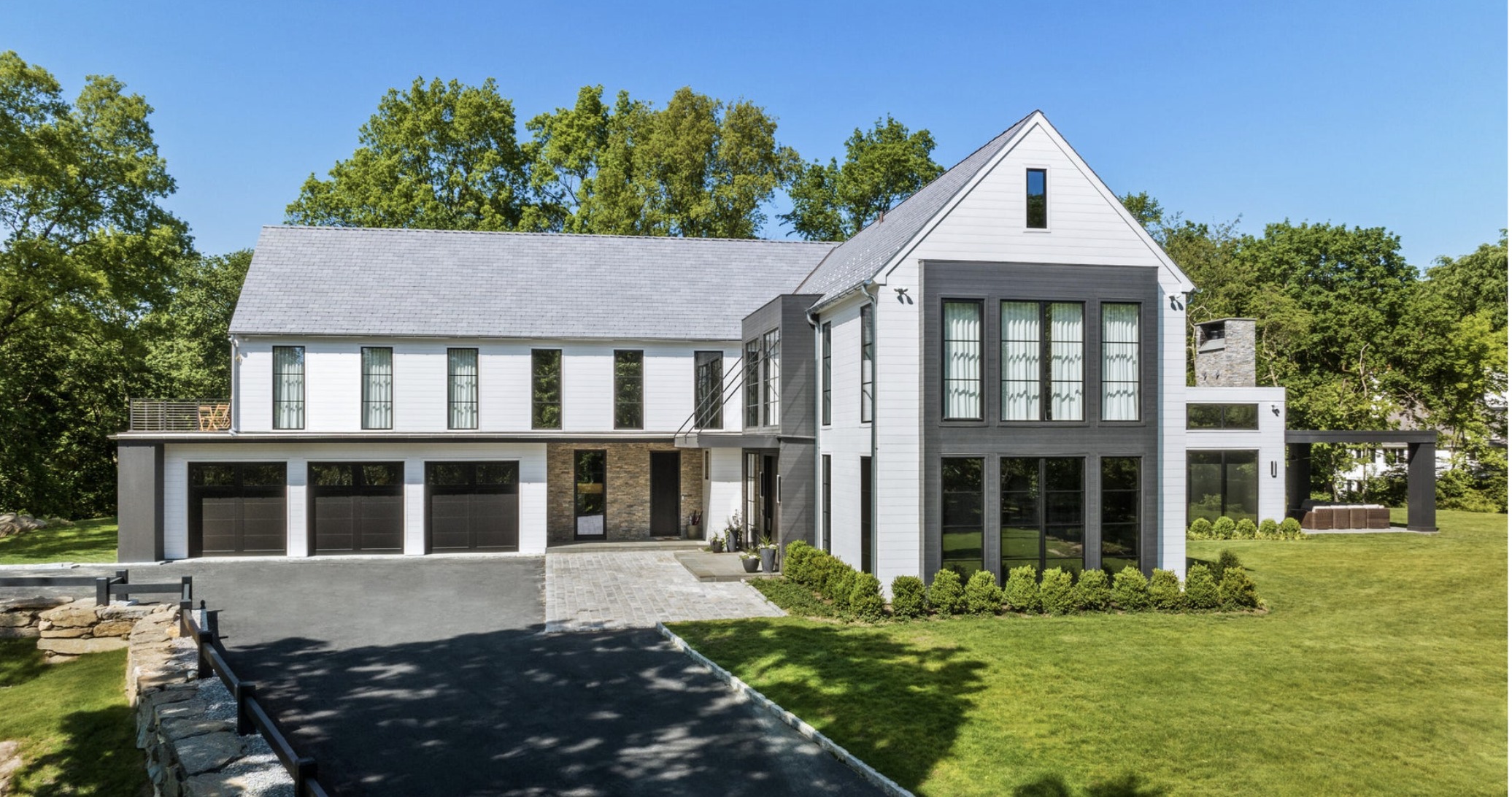
296 Pemberwick Road, asking $2.996 million. A complete, total remake and expansion of a 1954 house. The builder, Frattaroli builds a decent house, and this looks like no exception, but $3 million for Pemberwick Road? The previous highest sale on Pemberwick, admittedly for a much smaller redo completed in 2022, was $1.540. Someone has to be a pioneer, I guess, and besides, what could possibly go wrong?

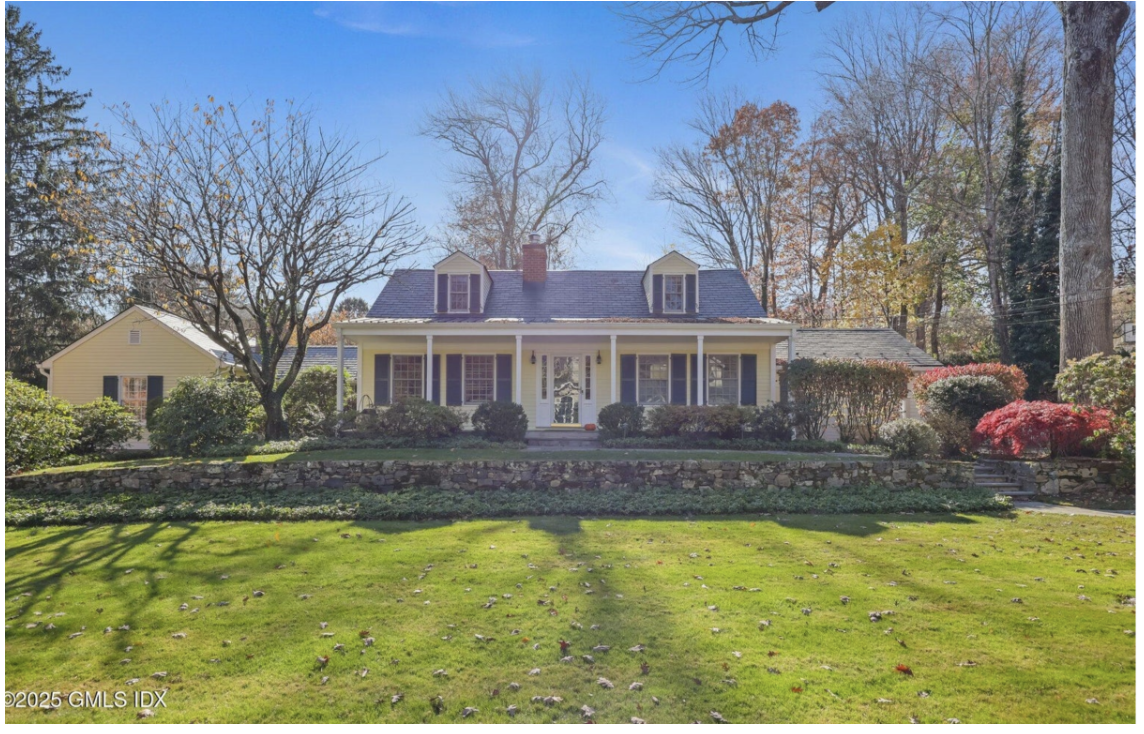
(As envisioned in 1954):

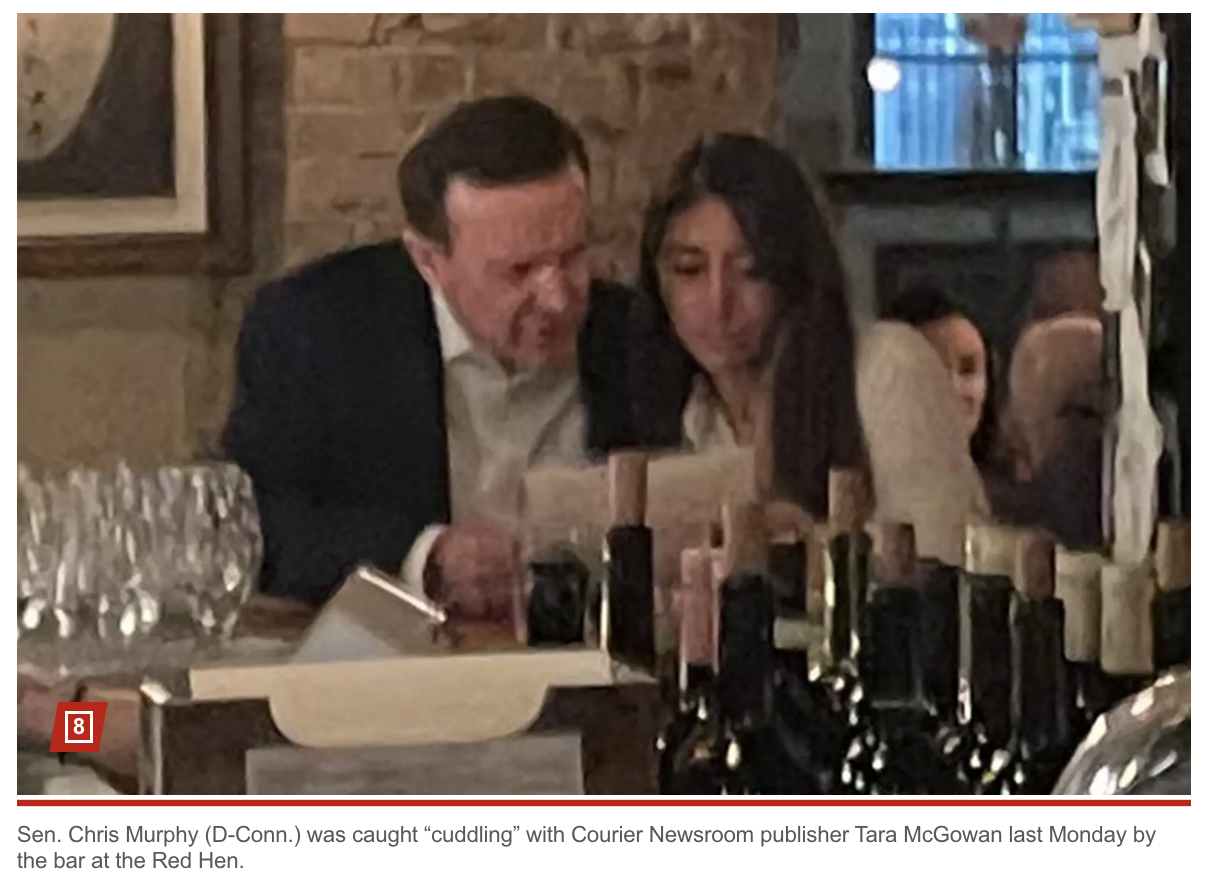
Murphy elopes with his publicist

Founder of Soros-funded 'propaganda' news network has visited Biden's White House nearly 20 times

Courier Newsroom CEO Tara McGowan has close access to Biden's White

Here’s a hagiography about Murphy’s new hottie — he’s obviously in good hands as he drives for the presidency:

Published November 3, 2020

Tara McGowan, the 34-year-old founder and CEO of the progressive political org Acronym was running late to Politico’s Women Rule conference last December at the JW Marriott in Washington, D.C. Women Rule is a full day of back-to-back discourse among dazzling power women—Nancy Pelosi popped over for a 40-minute sit-down with Politico’s senior Washington correspondent and premier badass Anna Palmer shortly after announcing the Articles of Impeachment against President Donald Trump—and the atmosphere is downright heady, an estrogenic bath of passion and purpose. McGowan slipped into the full ballroom during a session in which three prominent opinion makers were talking about the difficulties of being female in a male-dominated universe. After a few minutes of polite panelist cross talk, McGowan leaned over to her seatmate and whispered, “When do we get to the part where we just take over?”

She could run that panel herself, having launched something of an insurgency in the world of big-money, big-D Democratic political fundraising, trying to modernize the methods campaigns use to influence “we the people.” As entrepreneurial missions go, hers was bracingly succinct: to make sure Donald Trump doesn’t get re-elected.

Acronym is a digital-first, data-driven nonprofit that was built, according to its “about” page, to advance “progressive causes through innovative communications.” Its affiliated super PAC Pacronym can’t give money directly to a campaign; its employees aren’t even allowed to talk to people working on a campaign. But super PACs can fund political communications, and they often outspend the campaigns themselves. Acronym is the majority investor in the local-news-site organization Courier Newsroom and the communications firm Lockwood Strategy. Courier, which supports local-news sites across multiple states, has drawn fire for intentionally serving up a "progressive" point of view to readers. One could say that reporting a positive take on a local congresswoman bringing health funding to her community is slanted, but it's not fake news.

…. Shadow had dissolved by July, but McGowan and Acronym hadn’t, and she continued her march toward November 3, strategically spending the $100 million she’s raised from investors and donors such as Steven Spielberg, Laurene Powell Jobs, Jeffrey Katzenberg, and George Soros’s Democracy PAC.

Acronym is a digital-first, data-driven nonprofit that was built, according to its “about” page, to advance “progressive causes through innovative communications.” Its affiliated super PAC Pacronym can’t give money directly to a campaign; its employees aren’t even allowed to talk to people working on a campaign. But super PACs can fund political communications, and they often outspend the campaigns themselves. Acronym is the majority investor in the local-news-site organization Courier Newsroom and the communications firm Lockwood Strategy. Courier, which supports local-news sites across multiple states, has drawn fire for intentionally serving up a "progressive" point of view to readers. One could say that reporting a positive take on a local congresswoman bringing health funding to her community is slanted, but it's not fake news.

McGowan herself will tell you that the structure of Acronym is complex, in the same legal-but-sometimes-frustrating way of similar Republican groups. And it’s true that her data-driven, no-consultants evangelism has upset the ecosystem of the establishment, which pumps most of its money into traditional media. But there’s a reason seasoned investors (many of whom have been flexing their political muscle nearly as long as McGowan has been alive) have given her their trust—i.e., their money—and made hers one of the largest organizations of its kind on the Left and the only one run by a woman.

Watching her pitch what she’s selling to a very small group of very rich capitalists, you see the storyteller in her come out, as she deftly mixes emotion and logic into something quite persuasive. A digital native whose impatience with boomer naivete sometimes trickles out, McGowan has a throwback, almost WWII-era idealism about the sanctity of American democratic principles. Like many successful entrepreneurs of her generation, she possesses what The New Yorker’s Andrew Marantz has called a “techno-utopian” viewpoint, writing, “McGowan doesn’t seem reckless or sinister enough to intentionally rig an election. Rather, she seems…starry-eyed…prone to believing that a wide array of societal ills can be cured by another innovation, another round of investment, or another app.”

It’s an apt description, but it doesn’t quite capture the hard-knocks realpolitik animating her vision. She’s faced a lot considering she is the founder of a three-and-a-half-year-old business; it’s understandable that she’s grown more suspicious of the transactional nature of D.C. relationships.

McGowan talked with Marie Claire via Zoom from her home/temporary HQ in Portsmouth, Rhode Island, about building a progressive organization, achieving instant notoriety, and, well, just taking over.


Marie Claire: You studied journalism, not computer science. How did you build a $100 million digital-first, multiple-entity organization?
Tara McGowan: I’m a digital native. I didn’t have any formal training, but I was on the Internet from age 10. I was probably within the first 10,000 or 20,000 people on Facebook. In 2013, I got a call from a billionaire I’d never heard of in San Francisco named Tom Steyer. He flew me to San Francisco to start an organization making climate change a voting issue for young people. I was his second hire at NextGen Climate [now NextGen America]. I ran the first digital independent expenditure [i.e., PAC money] program, I think, in the country. Working for Tom is where I started building my reputation as a political strategist thinking differently about how we communicated online, especially in terms of [targeted] advertising.

….

MC: So, about that mission…
TM: From day one, it has been to build power and a digital infrastructure for the progressive movement. We didn’t have the digital strategies, tools, or the will to figure out a better way to get facts and progressive narratives into the news feeds, and psyches, of voters—especially those not paying attention to mainstream media. If we’re not countering disinformation on the same feeds, we’ve lost the information war, which is how Trump was able to be elected. We didn’t fully understand how information was reaching voters because we were using the 2012 playbook and Trump was playing [with] 2016’s.

This part should give any normal person pause before committing to the harridan, but then, Murphy is no normal person – a normal politician, yes, but that’s a different entity entirely:

MC: You must have been a pretty tough kid.
TM: I think it’s because I grew up fighting with my dad. We’re both argumentative, and it made me a strong debater, confident to have the courage of my convictions. It’s pissed off every person in every restaurant my entire life because we get into screaming fights in public.

Look for fun nights out on the D.C. dining circuit.

Uh oh

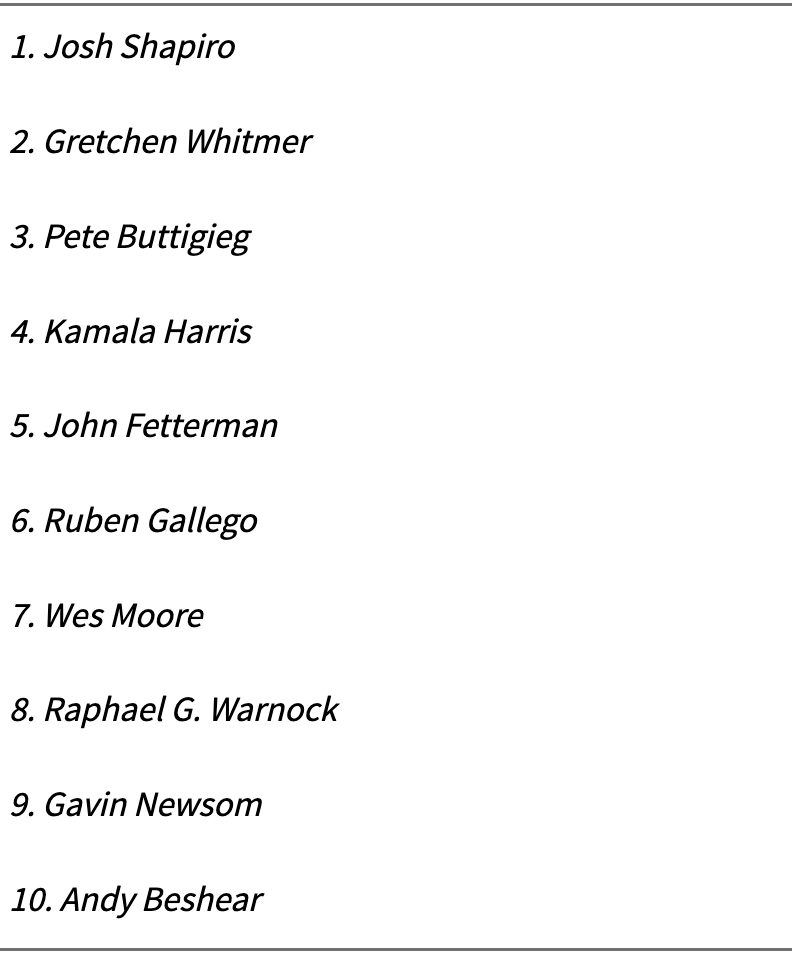
Lara’s going to have her work cut out for her if she’s to get her lover into the White House: The Washington Post released Top Ten list for preferred presidential nominees this weekend, and Big Ears ain’t on it. Tara’s probably on the phone with Soros and his son as I write _ we’ll see if that works when the next WaPo list comes out.

Oh, why me Lord, why ME?

Connecticut, NY, and Maine have done the same thing, and their befuddled citizens will be asking the same question in the very near future.

Harhs, but fair — Glenn Reynolds sums it up: I GUESS STUFF LIKE THIS IS WHY THE WORD “RETARDED” IS COMING BACK INTO VOGUE:

Or, as a wise man once cautioned …

Well, yes, you don't want to rush that kind of decision before all extenuating circumstances are considered

Boy, 10, crushed to death when 340-pound foster mom sits on him because he was ‘acting up’

A 10-year-old Michigan boy died after his obese foster mom sat on him for five minutes for “acting up” — crushing him under her 340-pound frame.

Jennifer Wilson told police young Dakota Stevens had fled from her home that morning, and that he was misbehaving after she retrieved him from a neighbor’s house.

Wilson said the 91-pound boy threw himself on the front lawn outside her home, at which point she sat on him while calling his caseworker as he screamed and eventually stopped moving.

Of course it’s a sad, tragic story; this detail also makes it a horrible one:

She was fostering three other children in her Berrien County home, but a Department of Child Services spokesman confirmed to the outlet that “her foster parent license is now suspended and being reviewed for permanent revocation.”

“Suspended”? “Reviewed”? WTF?