
No need to be so curt, but in this market ...
/28 Curt Terrace, Glenville, is pending after 11 days. Priced at $1.780 million, it’s apparently going for more than that.
From Agent-to-Agent Remarks: “No escalation clauses and no love letters.”
Greenwich, Connecticut real estate, politics, and more.
Greenwich, Connecticut real estate, politics, and more

28 Curt Terrace, Glenville, is pending after 11 days. Priced at $1.780 million, it’s apparently going for more than that.
From Agent-to-Agent Remarks: “No escalation clauses and no love letters.”
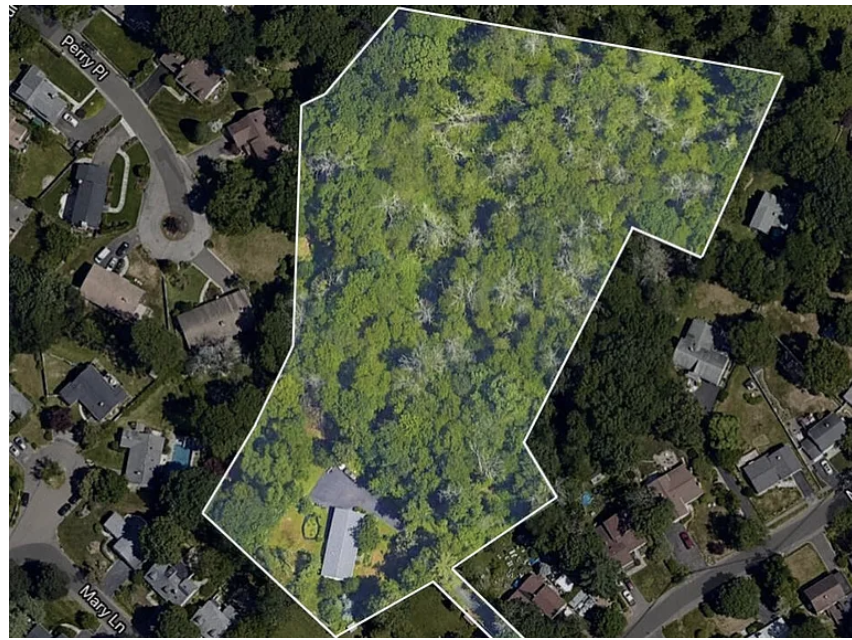
25 Mary Lane, Riverside, a 4.68-acre land listing with a wetlands problem and priced at $1,997,500, was reported under contract last October, but it’s back on the market today. There are lots of reasons for contract contingencies to derail a deal; often it’s financing difficulties, but I’m guessing that this one fell apart because of the swamp, and what consultations with our wetlands people showed what could done here. That’s just a guess, of course.
On a happier note, 29 Highland Farm, which just yesterday I reported had fallen out of contract, is back on track today (with a different buyer?), which is good news for the owner; we’ll hope that Mary Lane enjoys the same good fortune.
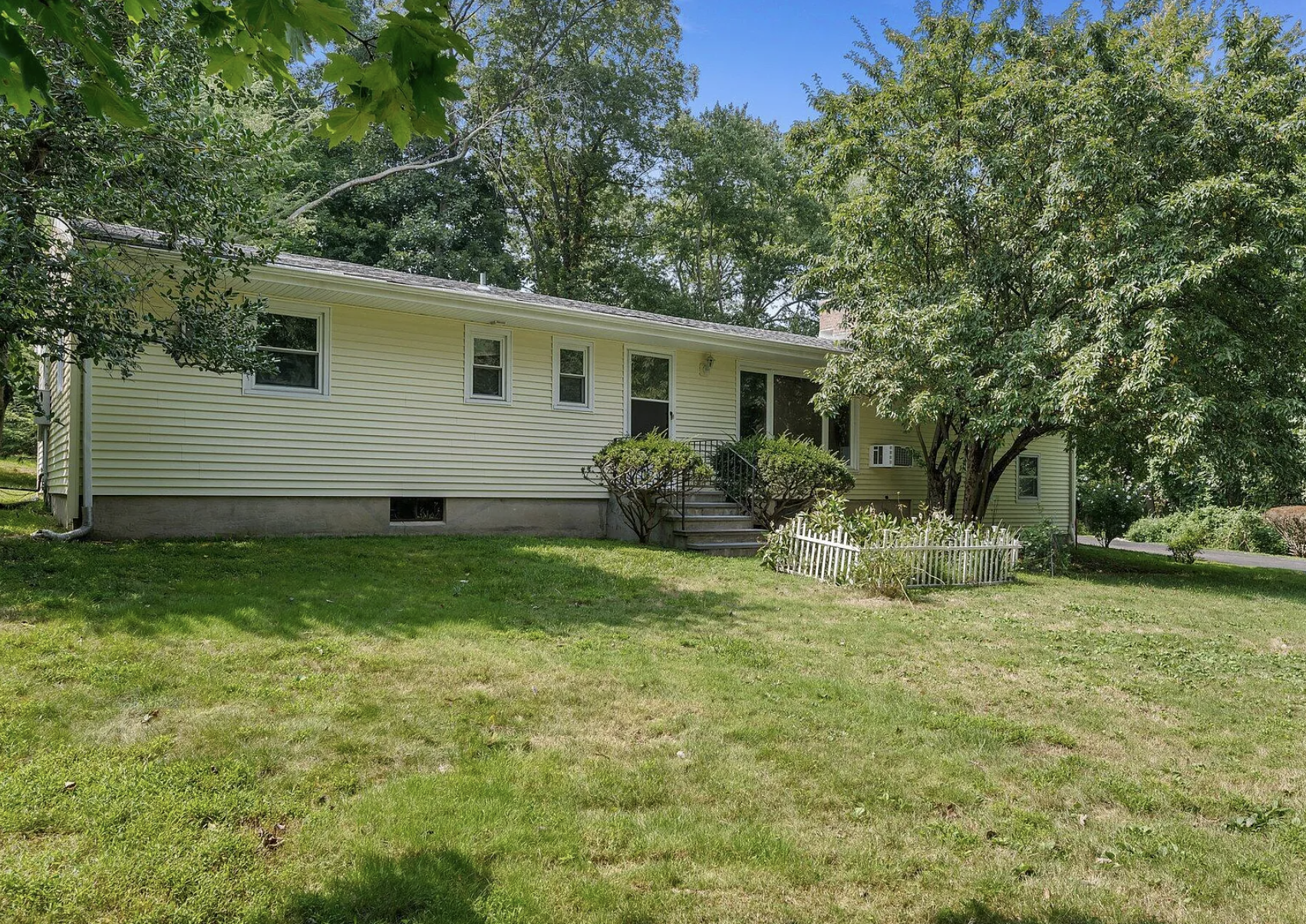

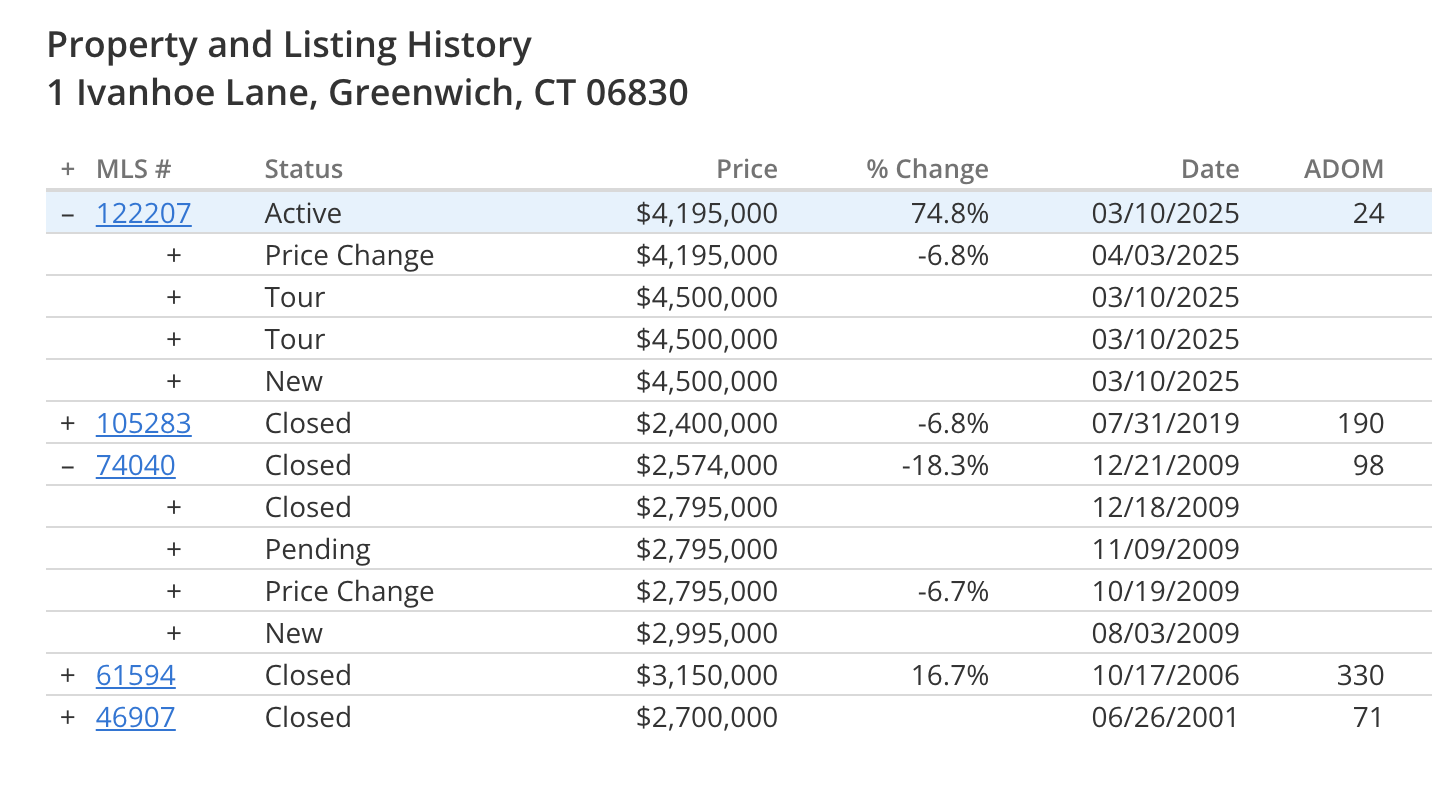
1 Ivanhoe Lane has dropped from $4.5 million to $4.195. I wrote about this when it first hit the market, and included the property’s price history over the years just to show the shift. I’m doing so again, but I do believe that it’s not the price that’s hurting this house’s prospects — it’s very nice — so much as the stager’s daring, but misguided decision to substitute pale imitations for the classic Zebra and the Tipi.

no. just no

Too feeble an attempt — an ironic reference just won’t do

not even close

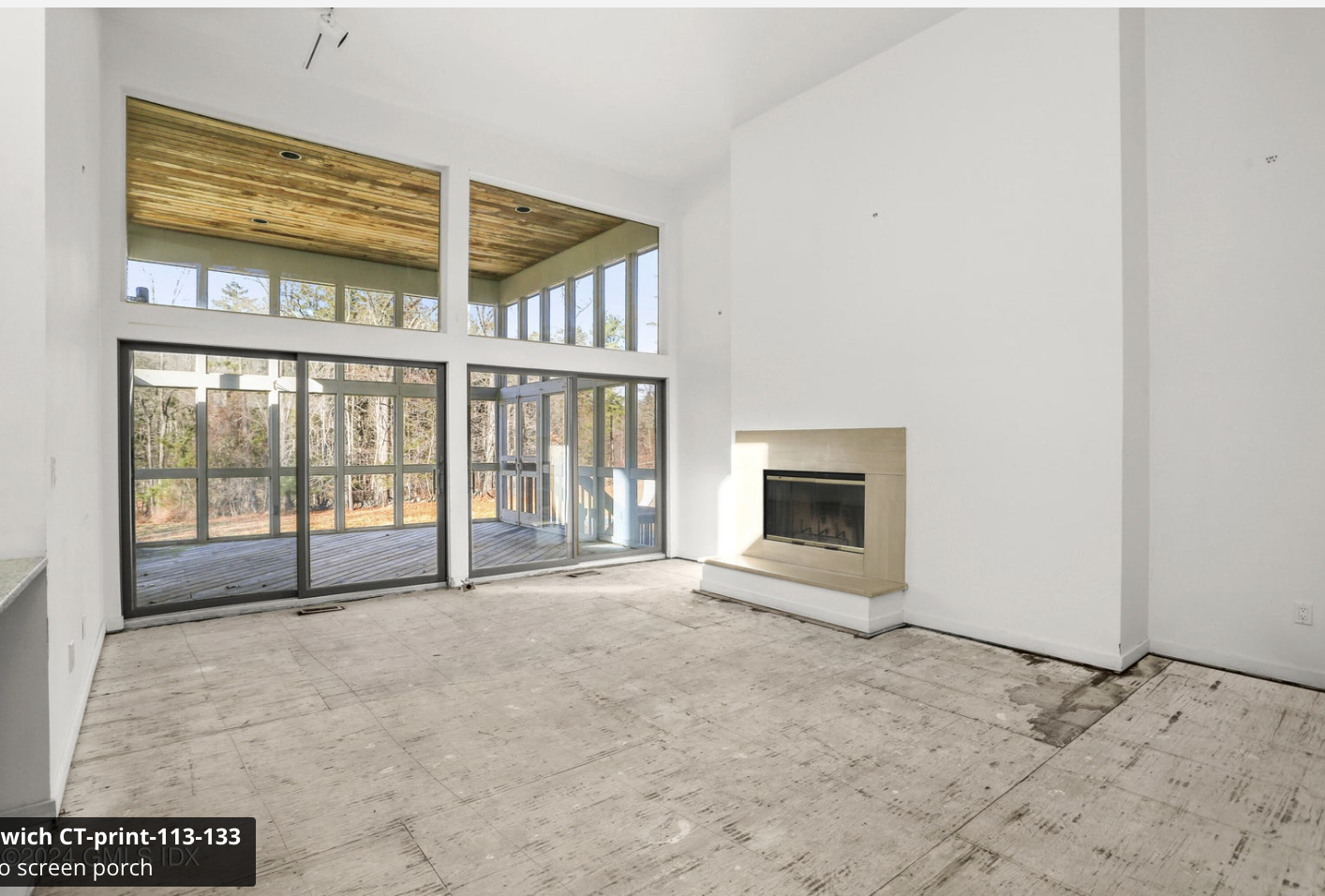
6 Carissa Lane, $2.850 million. I can’t say I see $1,215,000 in improvements performed since they bought it in 2020 for $1.635 (from owners who had paid $1.675 million all the way back in 2003), but I have seen what’s happened to the market these past five years.

New on the market today, 135 Byram Shore Road (corrected) , $850,000. Of note, perhaps, is that the owner installed a new oil tank in 2020 and left the old one in the ground. Before committing to purchase, a soil inspection might be wise.
Remarks: FABULOUS CORNER LOT LOCATION IN BYRAM NEIGHBORHOOD IN GREENWICH. THREE-BEDROOM, TWO-BATHROOM HOME BUILT IN 1914 WITH A WRAP AROUND PORCH & BAY WINDOWS IN NEED OF SIGNIFICANT RENOVATION. THERE IS A 2020 OIL TANK AND A BURIED OIL TANK. IDEAL FOR BUILDERS OR ANYONE INTERESTED IN A PROJECT. SOLD ''AS IS''. BYRAM NEIGHBORHOOD IS A CHARMING & HISTORICALLY RICH AREA NESTLED ALONG THE EASTERN SHORELINE OF THE BYRAM RIVER. BYRAM OFFERS RESIDENTS A BLEND OF SUBURBAN TRANQUILITY & CONVENIENT ACCESS TO URBAN AMENITIES, MAKING IT A DESIRABLE LOCATION. CLOSE DISTANCE FROM PROPERTY TO WESTERN MIDDLE SCHOOL (7 MIN), DOROTHY HAMIL ICE RINK (7 MIN) AND CLOSE DISTANCE TO GREENWICH HOSPITAL (8 MIN), PORT CHESTER TRAIN STATION (5 MIN), GREENWICH AVE (5 MIN), CVS, COSTCO, THE HISTORIC CAPITOL THEATER.
STAGING BY ZEBRA PRODUCTIONS LTD




Sellers are offering a bonus gift if sale closes before July 1st:


And so far, no one has; no one’s bought it, either, but hey ….
69 Taconic Road, bought out of foreclosure on March 19, 2024 for $1.750 million, was quickly renovated and put back on the market in August for $4.750. That listing expired, price unchanged, March 1st, and it’s back on today, new broker, same price, $4.750.
Interesting, or ironic, perhaps, the foreclosed-on previous owner, on Sethi Mukesh, urchased th house in 2000 for $1.7 million from an owner who herself had bought the property in 1992 from the Resolution Truct Company for a $2 million after the last crash.
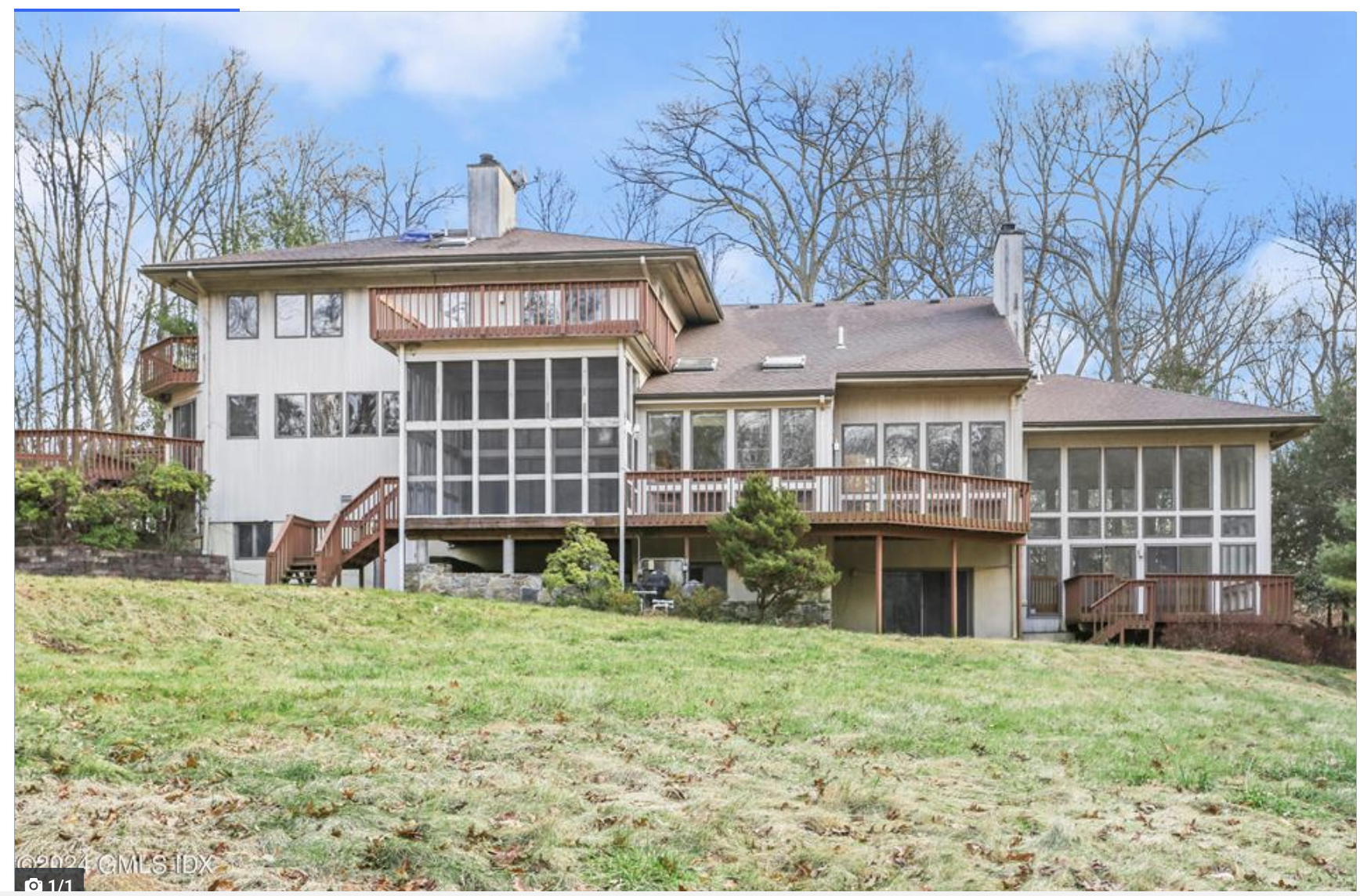
As foreclosed on, March 1st, 2024

who are the compassionate ones: those who would keep Africa mired in poverty, or those who want to unleash their countries’ wealth?
Nations once relegated to the margins of economic discourse are now sprinting toward prosperity, their trajectories propelled by a single, unifying force: energy.
Energy is indispensable. From the huge AI data centers in the U.S. to the mega-scale manufacturing factories in China, affordable and dependable energy supplies make all the difference between living and thriving.
Access to domestic energy resources – or the ability to secure imports – unlocks a cascade of opportunity: Jobs multiply, infrastructure rises, and governments gain the fiscal muscle to invest in their people.
Oil and gas, derided by climate elites as relics of a bygone era, are proving instead to be the engines of a new dawn. A cohort of nations is charting a radically different course fueled by the unyielding pragmatism of hydrocarbon exploitation.
Guyana: From Obscurity to Oil Juggernaut
Nestled along South America’s northern coast, Guyana was once an afterthought in global economic discourse. Today, it is the world’s fastest-growing economy, with gross domestic product (GDP) skyrocketing by a staggering 63% in 2022 and 38% in 2023. It is projected to grow another 27% this year.
Guyana’s growth leaves even the vaunted “Asian Tigers” – Hong Kong, Singapore, South Korea and Taiwan – in the dust. By 2025, analysts project a still-robust expansion of more than 14%, driven by the relentless output of the Stabroek Block, 6.6 million acres of oil reserves off the country’s Atlantic shoreline. The 2015 Liza discovery, a 10-billion-barrel bonanza, has transformed this nation of 810,000 into an energy powerhouse.
The fiscal windfall – $2.57 billion in 2024 alone – has funded infrastructure upgrades, healthcare expansions and education reforms. As Upstream Online reports, Guyana’s per capita income has quadrupled since 2019, a feat unimaginable without oil.
Niger: Africa’s Pipeline to Prosperity
Half a world away, in the arid expanses of West Africa, Niger is scripting a similar tale. Long known for uranium and subsistence farming, this landlocked nation is poised to ride an oil boom that could redefine its future.
The key? The Niger-Benin pipeline, a 1,212-mile conduit that promises to ferry crude from Niger’s Agadem Rift Basin to the Atlantic coast. After diplomatic hiccups with Benin were resolved in August 2024, production was expected to surge past 110,000 barrels per day (bpd) in the coming years. GDP is forecast to soar as a result.
Senegal: Gas Lights the Way Forward
Further west, Senegal is joining the energy-driven renaissance. The Sangomar oil field, which began production in June 2024, and the Greater Tortue Ahmeyim (GTA) natural gas project, straddling the Senegal-Mauritania border, are rewriting the nation’s economic playbook.
In 2024, the Sangomar field exceeded its initial target, producing 16.9 million barrels of crude oil compared to the planned 11.7 million. With oil output exceeding 100,000 bpd and GTA is poised to deliver liquefied natural gas (LNG) to global markets, Senegal’s GDP growth is projected to hit double digits in 2025, among the highest in Africa.
Senegal’s GDP growth was around 10% in 2024, and energy exports were projected to account for 30% of government revenue in 2025. Crucially, gas-fired power plants are slashing electricity costs, enabling industries to thrive.
Côte D’Ivoire: Diversification Through Hydrocarbons
Côte D’Ivoire, long reliant on cocoa and coffee, is emerging as West Africa’s quiet energy giant. The country has exceeded initial estimates for production from its Baleine oil and gas field.
Oil production has doubled since 2020 to 60,000 bpd, while natural gas – supplying 72% of the nation’s electricity – has lured industries from across the region. The country plans to reach 200,000 barrels of oil per day and 450 million cubic feet of gas daily by 2028.
Thanks to rapid oil and gas development, Cote d'Ivoire has managed to reduce its poverty rate from 55% in 2011 to 37% in 2021 (the latest data available). With oil output projected to more than triple in next four years, the poverty rate could drop to single digits.
Energy poverty, not climate change, remains the immediate threat to these regions and continues to plague the future of millions of Africans and South Americans. Solar panels and windmills cannot power steel mills, factories or cities.
The governments of Guyana, Niger, Senegal and Côte D’Ivoire understand this. They are prioritizing their citizens’ livelihoods over “carbon-reduction” targets drafted by so-called elites in Brussels or New York.
Their success exposes the vacuity of net-zero dogma and reaffirms a timeless truth: Energy abundance is the foundation of human progress.
Vijay Jayaraj is a Science and Research Associate at the CO2 Coalition, Fairfax, Virginia. He holds an M.S. in environmental sciences from the University of East Anglia and a postgraduate degree in energy management from Robert Gordon University, both in the U.K., and a bachelor’s in engineering from Anna University, India.

What will Samantha do now?


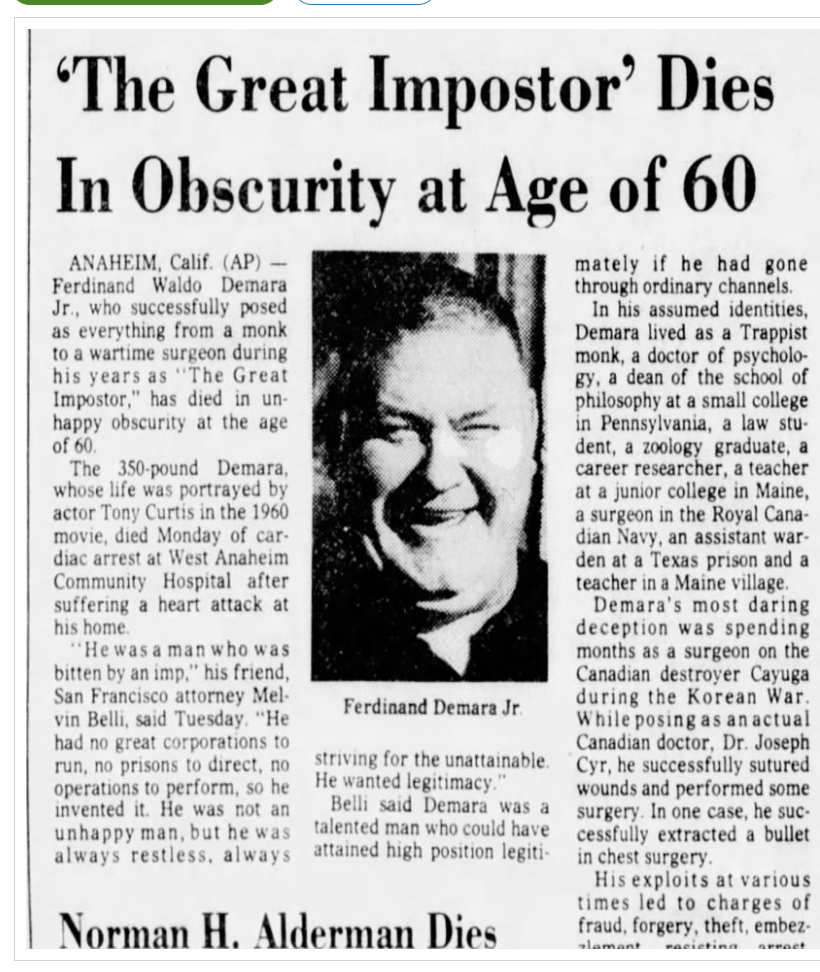
I missed this back when it was current news, probably because I was still watching Disney movies when Tony Curtis was playing the man, but it remains an amazing tale.
As a young man in the 1940s and ’50s, Massachusetts native Ferdinand Waldo Demara jumped from career to career and calling to calling. He was, at various points, a monk, a psychologist, a college professor, a naval surgeon, a prison warden and a high school teacher in Maine.
He was not qualified in any way to hold any of those positions. But through sheer charisma, colorful storytelling, careful manipulation and a litany of false identities, Demara was able to worm his way into all of them. He was one of the greatest impostors in American history — until he was unmasked for the final time and arrested on a tiny coastal island in Penobscot Bay.
Demara was born in Lawrence, Massachusetts, in 1921. At age 16, Demara struck out on his own; a lifelong devout Catholic, he bounced between a Trappist monastery and Catholic boys homes. It was when he enlisted in the U.S. Army in early 1941 he found his true calling: as an impostor.
Weeks after enlisting, Demara “borrowed” the name of an Army friend and went AWOL, before re-enlisting — this time in the U.S. Navy — a week after the attack on Pearl Harbor. There, he served on a destroyer in the North Atlantic and was briefly sent to military hospital school before he once again, as he told Life Magazine in 1952, “left the service temporarily.”
Demara bounced between monasteries in Kentucky, Arkansas and Iowa, claiming to be a man named Robert L. French, who had a Ph.D. from Stanford University. He eventually landed at DePaul University in Chicago, and later taught at other Catholic colleges around the country.
As Demara later noted in his biography, his approach to assuming false identities and convincing people of his qualifications was based on two rules. The first, as he said, was that “in any organization there is always a lot of loose, unused power lying about which can be picked up without alienating anyone.” The second was that “if you want power and want to expand, never encroach on anyone else’s domain; open up new ones.”
The first time the jig was up for Demara was in 1946, when FBI agents arrested him for desertion from the U.S. Navy during a time of war. He was court-martialed and sentenced to six years in prison, though he only served 18 months. When he was released in 1948, Demara took on the name of Cecil Hamann, a real-life biology professor in Kentucky, and in 1949 joined the seminary of the Brothers of Christian Instruction in the Maine town of Alfred.
In Maine, Demara invented an entire backstory for his Hamann character, including that he’d traveled throughout India, Tibet and Japan, according to the 1952 Life profile. The brothers, according to Demara, “rolled out the red carpet” for him, and with his help founded LaMennais College, a junior college in Alfred. LaMennais College eventually moved to Ohio, where it still exists as Walsh University. No mention of Demara is on the school’s website.
In 1950, Demara went to New Brunswick to receive more training before being ordained. There, he met a local doctor, Joseph Cyr, to whom Demara quickly became close. When Demara returned to Maine, he submitted his resignation to the seminary and headed back to New Brunswick, where in 1951 he enlisted in the Royal Canadian Navy as Dr. Joseph Cyr, a naval surgeon, to serve during the Korean War.
Demara had never operated on anyone and had no medical training. At a naval hospital in Nova Scotia and on board a ship in Korea, Demara completed at least 17 surgeries, ranging from pulling teeth to removing a bullet from a soldier’s chest. According to Demara, he operated on instinct and good guesses, and for a particularly tricky lung removal procedure, he used news coverage of a similar surgery undergone by King George VI of England as his reference.
Demara’s successes were reported widely in the news. While his fellow soldiers grew to love “Dr. Cyr,” Demara could only keep up the charade for so long. In late 1951, the real Dr. Cyr read about his fictional counterpart’s medical exploits overseas, and the jig was, once again, up. Demara escaped the situation without any prison time. The Canadian government deported him, and Demara went home to Massachusetts to plot his next moves.
After laying low for a few years, Demara took on the name Ben W. Jones, and with a fake southern accent, in 1954 began working as a prison guard in Texas, where he eventually became warden of a maximum security wing. A prisoner noticed Demara’s picture in an old Life Magazine and reported him to authorities, but before they could catch up with him, Demara had already fled and headed east: first, to New York, and then to the Maine island of North Haven.
There, under the alias Martin Godgart, in September 1956 Demara began teaching English at the island high school. He quickly endeared himself to his students and the community at large. A 1997 Bangor Daily News story said he threw himself into town projects, led extracurricular activities for students and regaled townsfolk with increasingly wild stories from his colorful past. A fellow teacher told the Bangor Daily News that Demara was “one of the finest teachers North Haven has ever obtained.”
Those stories began to sound fishy to some folks around North Haven. A few local residents devised a plan to obtain Mr. Godgart’s fingerprints off a beer glass, and sent them off to Augusta to be tested against federal records. In February 1957, the results came back: their gregarious new teacher and Ferdinand Waldo Demara were one and the same.
On Valentine’s Day 1957 two Maine State Police detectives arrived in North Haven via a Coast Guard cutter. They waited in the parking lot of the school until Demara arrived, and reportedly, upon seeing them, Demara said “What took you so long to get here?”
Demara pled guilty to a charge of cheating by false premises by not having a Maine teaching license, and was sentenced to two months probation. Though it appeared his imposter years were over, Demara — always one to make hay while the sun shone — sold his story to author Robert Crichton, who in 1959 published the book “The Great Impostor,” a bestseller that told a slightly embellished version of Demara’s life story.
“The Great Impostor” was turned into a 1961 Hollywood movie of the same name, directed by Richard Mulligan and starring Tony Curtis as Demara. The real Demara made appearances on television, including on “You Bet Your Life” with Groucho Marx, and “Take a Good Look” with Ernie Kovacs. He moved to California and attempted an acting career, becoming friends with Hollywood personalities including actor Steve McQueen, with whom he remained close for the rest of his life.
By the mid-1960s, his fleeting fame had ended, and Demara returned again to two of the professions he’d most often pretended to be qualified for: teaching, and the priesthood. Most of his time was spent as a chaplain, including at a hospital outside Los Angeles. According to an obituary published in the New York Times after his death in 1982, he never enjoyed living under his real name.
(Digging further, I found an earlier article from 2016 here — also a fun read.)

Stepping Stone lane
25 Stepping Stone Lane, $2.780 million. Listed at $2.595 March 3rd.
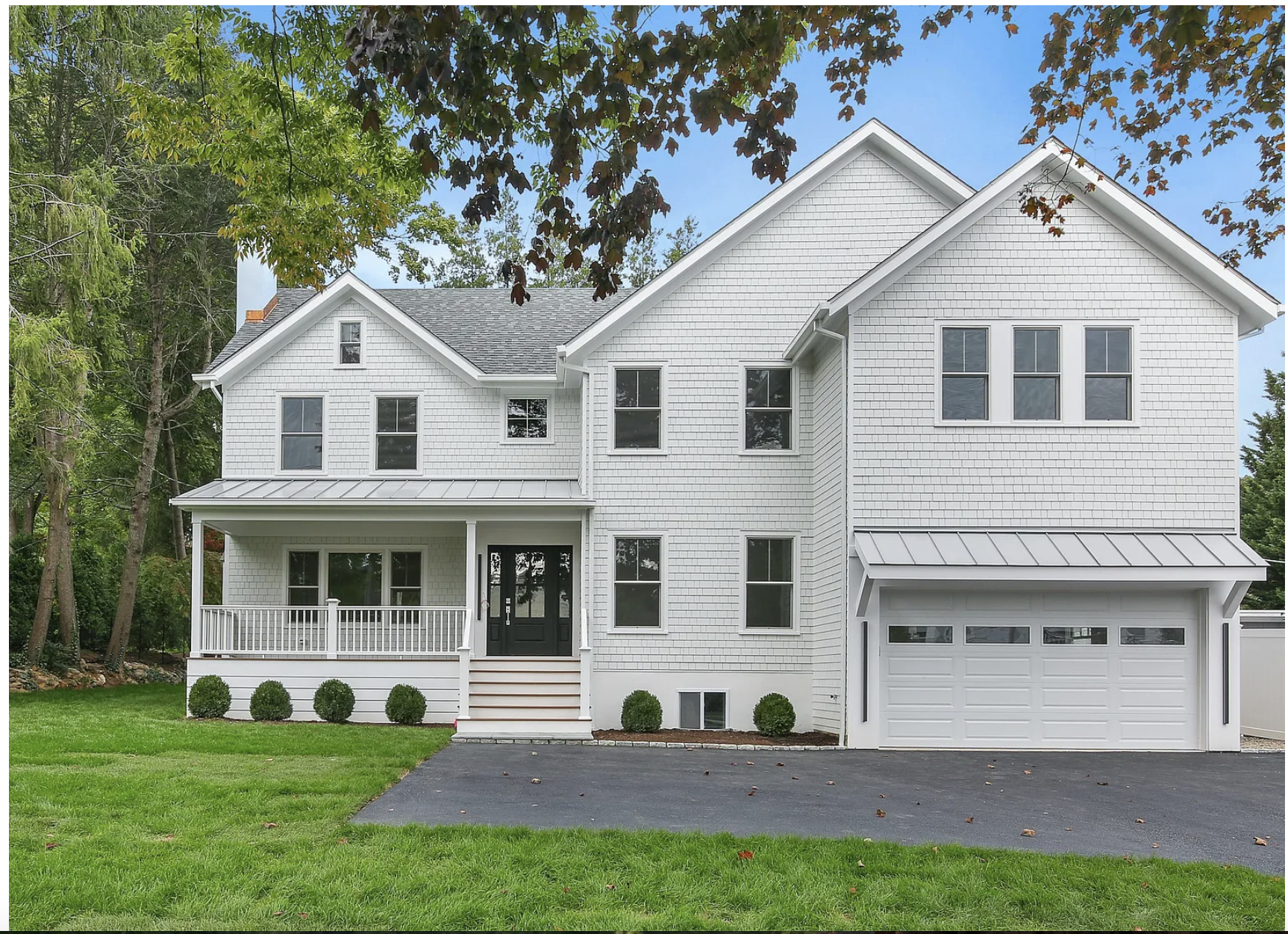
269 Pemberwick Road $2.7 million
A complete renovation and expansion, originally listed at $3.150 million October 4th.

“Go back to your ice floe, sir, and stay there”
The US-Canadian dual citizen speculates he may be ‘barred or put in jail to sleep on a cement floor’ after his European tour, after years of speaking against Trump
The preening self-importance of these people has been noticed before:

Of course, we have not have to wait all that long before time wounds this heel, permanently:

Be notified of new posts! Sign-up here:
Want to comment without registering?