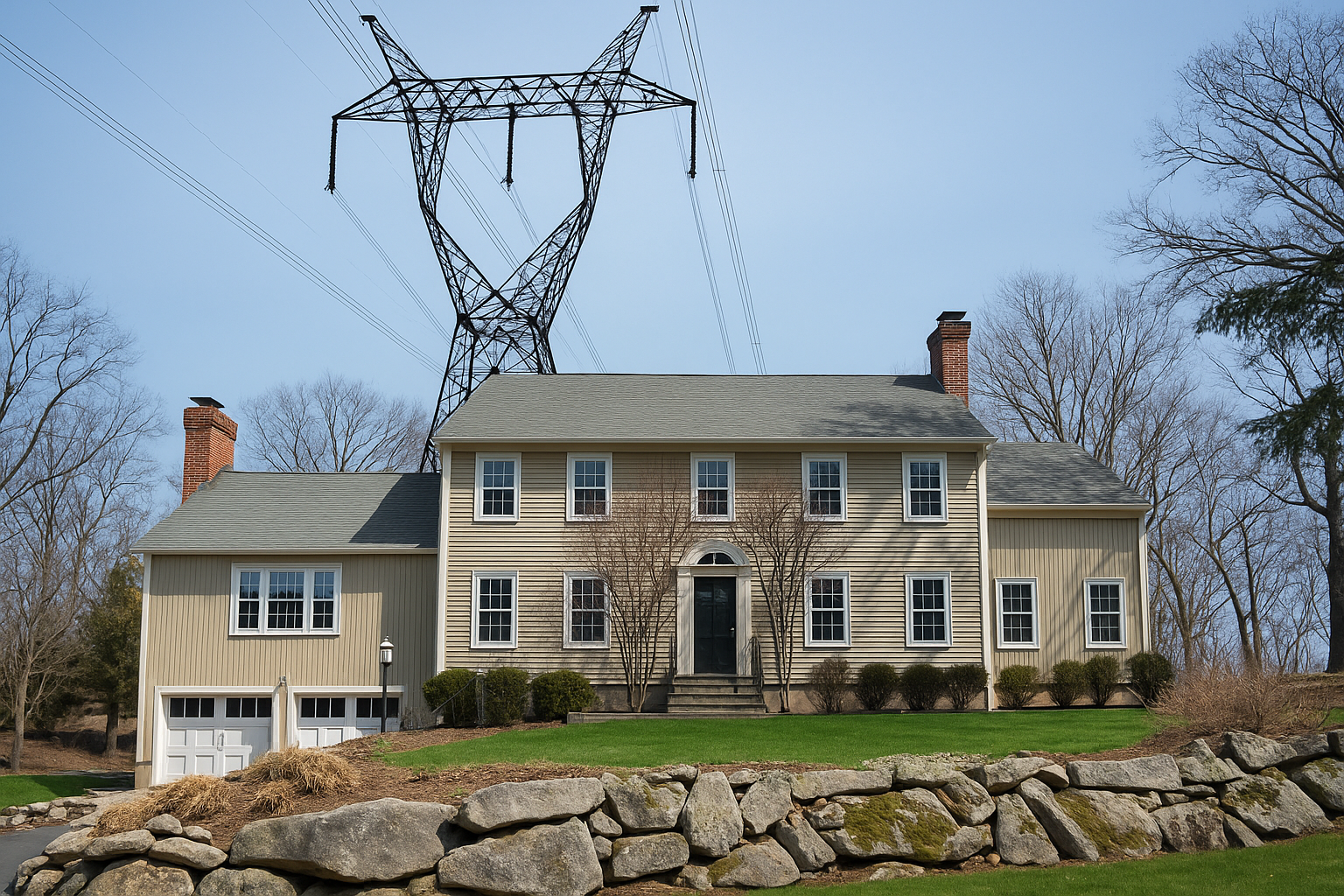
More Demagoguery, this from Junior's former colleagues in Hartford

CT’s second-dumbest politician stirs from her D.C. nap and comes north to cheer on Pratt & Whitney strikers

CT approves unemployment benefits for strikers; veto expected

CT Insider:

A bill that would add Connecticut to the short list of states providing jobless benefits to strikers won final passage Friday, an organized labor victory muted by Gov. Ned Lamont’s promised veto.

The unusual decision by House Speaker Matt Ritter, D-Hartford, to allot scarce time for a bill opposed by the governor reflects the influence of organized labor and desires of the House Democratic majority caucus to be recorded on the issue.

…. The legislation, Senate Bill 8, passed on a largely party-line vote of 87 to 59, with 13 Democrats opposed and one Republican, Rep. Tom Delnicki of South Windsor, in favor. The annual legislative session ends Wednesday.

Lamont, a Democrat who has twice been elected with significant labor support, and the House Republican minority said removing the prohibition on strikers from getting unemployment benefits is a distinction Connecticut cannot afford as it tries to improve its economy and shed an anti-business reputation.

…. Connecticut is one of the most highly unionized states in the U.S., but overall membership has faltered since the 1980s, especially among private-sector workers. Only 6.7% of private-sector workers are unionized in the state, compared to 67% of state and municipal employees.

Ed Hawthorne, the president of the Connecticut AFL-CIO, said the labor federation still hoped Lamont might reconsider his veto, but the passage by the General Assembly would be significant nonetheless as unions look for ways to show influence in a difficult time for labor.

…. New York and New Jersey are the only states currently offering jobless benefits to strikers, each after two weeks out of work, as the Connecticut bill would offer. Washington state recently adopted a similar law, effective next year.

Connecticut has been early in other labor advances that took root elsewhere, notably the nation’s first mandate on private employers to offer sick days or other paid time off, a paid family and medical leave program, and an hourly minimum wage exceeding $16.

Labor advocates say the strikers’ benefits bill is a necessary counter to the advantages most employers have at the bargaining table, especially since the Trump administration has left the National Labor Relations Board with insufficient members to act and shrunk the ranks of labor mediators.

“This really is a fight against the Donald Trump administration,” Hawthorne said. “It’s more important than ever, because we don’t have a backstop right now. You saw it in the Pratt & Whitney strike.”

The International Association of Machinists recently ended a 23-day strike at the jet-engine manufacturer. The union says if Connecticut had strikers’ benefits, the settlement would have come sooner.

“The just-completed Pratt strike underscores this,” wrote Peter Holland, the vice president for state and local government relations. “It’s reasonable to assume employees would have withheld their labor much longer, holding out for a more valuable offer from Pratt.”

House Minority Leader Vincent J. Candelora, R-North Branford, said the House debate Friday was a dangerous, if confusing, political gesture by Democrats.

“Obviously we scratch our heads over spending a day on a striking workers bill that we know the governor wants to veto,” Candelora said. “We think it certainly sends the wrong message to our business community. Even the fact that we’re taking that bill up is really dangerous.”

Candelora noted that Pratt has manufacturing plants outside of Connecticut.

“I think that bill goes well beyond politics,” he said. “I am really concerned the same way the governor is concerned of the message that it sends to our business community and the impact it could actually have.”

Everything the Hartford Yahoos have been up to recently sends the identical message, and to a broader audience than just the business community: get out of Dodge while you still can.


Sunday reading

How An Unassuming Geologist Cracked The Global Fertilizer Cartel

Michigan is sitting on a motherlode of potash and Ted Pagano is using $1.3 billion in government funds to mine it and grab market share away from Canada and Russia.

The eureka moment came in 2012, when professor emeritus William Harrison of the University of Western Michigan invited Ted Pagano, then a 35-year-old freelance geologist, to his 27,000-square-foot geological repository in Kalamazoo. A rock nerd’s heaven, the warehouse’s heavy-duty shelves feature crates of minerals from across the state. But Pagano was there to see something specific: the 80 pallets of rock cores donated in 2008 by the Mosaic Company, a large ($11.1 billion in 2024 sales) NYSE-listed potash specialist. Cores are standar­dized cylinders of rock, three feet long and four inches in diameter. These were recovered from some 75 wells drilled back in the early 1980s to depths 8,000 feet beneath Osceola and Mecosta counties, a sparsely populated swath of central Michigan, into a layer of rock rich in minerals deposited by an ocean that evaporated millions of years ago. Those minerals include salt (sodium chloride) and potash (mostly potassium oxide), which farmers prize as a fertilizer. It’s a critical mineral—the U.S. uses 5.3 million tons annually and imports 95% of it, mostly from Canada.

Pagano was excited to see these cores because he hoped they would prove his hunch: that Mosaic had been sitting on a potash motherlode in Michigan far bigger than anyone realized. He suspected that the deposit, if properly developed, could provide 1 million tons of fertili­zer per year for American farmers. That would be nearly seven times the volume that Mosaic’s little 150,000-ton-per-year plant in Hersey, Michigan, was producing. Putting up $70,000 of his own money, Pagano had formed Michigan Potash & Salt Company and was already leasing up mineral rights from ranchers and farmers in the area. Even so, Pagano says, “I went to the core lab with skepticism.”

Harrison and Pagano cut open sealed plastic bags to extract rock wrapped in newspapers from 1984. Testing revealed thick deposits of some of the highest-purity potash deposits ever discovered. They were especially excited when they opened the cores from a well called Stein 1-7. It had been drilled miles from the area consi­dered the sweet spot, so Pagano thought the odds were high that these cores would show low concentrations of potash. Instead, they were just as good. This was proof that the actual extent of the Michi­gan potash deposit was considerably larger than even experts like Harrison had expected. Pagano began leasing like crazy: Soon he had a position covering 15,500 acres (about 24 square miles) of what has proven to be one of the biggest potash deposits in the United States.

Read More From Forbes

I found the entire Forbes article fascinating, especially the story of who Ted Pagno is and how he came to discover this lode and finance its development. Here’s a bit more from the main article on the significance of this find:

To extract the potash, Pagano will use a form of “in-situ,” or solution mining. He’ll drill 8,000-foot-deep wells in pairs. One is the injection well, down which Michigan Potash will send hot water to dissolve potash and salt in place. The second is the production well; the solution travels up that well to the processing plant for separation and drying. The water is reclaimed, heated and sent back down the hole. From the surface the mine will hardly be noticeable and should be eligible for green tax credits. “There’s no hair on this project that we’re ashamed of,” says chief operating officer Aric Glasser.

In all, Forbes estimates that costs should come to about $140 per ton; potash sells for about $350 a ton today. Global giant Mosaic can produce potash for less—about $80 a ton—but Mid­western farmers are still on the hook for another $80 per ton in rail shipping costs from Saskatchewan, 1,200 miles away, plus any tariffs that President Trump might choose to impose (currently 10% on Canadian potash). Agricultural giant ADM has already agreed to buy nearly all of Pagano’s yearly potash production.

Mosaic rejected Pagano’s offers to buy some or all of its remaining Hersey plant and, citing high costs, shut down its potash operation there in 2013. It sold the remaining salt processing operation to Cargill for $55 million. “They thought they didn’t have to worry about competition,” Christofferson says.

Vladimir Putin’s February 2022 invasion of Ukraine changed that thinking. The EU banned the import or even transit of Russian and Bela­russian fertilizers. China banned potash exports to conserve supply for its domestic market. Prices soared to $1,200 per ton. To keep a lid on costs, neither President Biden nor Trump has banned or sanctioned imported Russian potash.

Every ton Pagano can supply domestically should make more potash available outside the U.S. in international markets including sub-Saharan Africa, whose farmers desperately need fertilizer. “It takes a crisis to wake people up out of complacency,” Pagano says. And it takes an intrepid contrarian to challenge an oligopoly.

Oooh, our widdle junior senator is now a fire-breathing socialist: "Vote for me!"

Break up the corporations! $30 minimum wage! Unions must rule! Oh - guns? They aren’t so bad, guys — I mean, I understand why you rubes and hicks might want one or two of ‘em.

As Sen. Chris Murphy walks across Connecticut, he carries a new message

New to him, perhaps, but it’s the same old red socialist crap that demagogues have been spewing since the days of bread and circuses

Over a 35-minute walk-and-talk with CT Insider, Murphy spent plenty of time criticizing Trump — for the President's cutspardons and general "assault on the rule of law." The senator warned, as he has before, that he's not fully confident the U.S. will have free and fair elections in 2026.

But he also articulated a newer, populist world view that could have come straight from the mouth of progressive torchbearer Bernie Sanders, the independent Vermont senator.

"The concentration of corporate power in this country is killing our economy and driving people absolutely crazy," Murphy said. "We need to break up concentrated corporate power; we need to dramatically raise wages, including the minimum wage; we need to we need to rebuild the power of unions in this country; we need to raise the economic floor so that people have more secure retirement benefits, a better education guarantee."

Since Trump beat Democrat Kamala Harris to win the presidency in November, Murphy has increasingly sounded like this. Democrats have struggled with working class voters in recent elections, and he sees this type of messaging as a way to win them back.

But it's one thing to speak like a populist, it's another to vote like one. What's a policy Murphy might not have supported a decade ago that now he'd embrace?

"When I came into politics, I talked about creating a level playing field between labor and management," he said. "Today, I'm convinced we should have a preference for unions. We should make it really easy for somebody to join together with their fellow workers in order to bargain for better wages and better benefits."

Unprompted, he offered another example.

"When I started out in politics I was arguing for pretty incremental increases in the minimum wage," he said. "I think we've got to see a dramatic increase in the minimum wage so that we eventually get to a point where one income for a family of four is enough to lead a dignified life. That's not a $15 minimum wage. That's a $25 or $30 minimum wage."

Murphy's shift toward economic populism means he has de-emphasized issues that were once central to his political identity. For example, he now believes Democrats should accept a wider range of opinions on gun policy, to find candidates who can win in more rural districts. And he waves off a question on college sports reform, another of his onetime favorite topics, saying that's not something he's likely to hear about from constituents on his walk.

Not everyone is necessarily buying Murphy's pivot to populism. In December, political analyst Nate Silver tweeted that he doubts "the populist revolution will be led by a Senator from Connecticut who went to Williams College and has spent his whole career in politics."

(Here’s our junior senator from way back in February 2023, before he discovered a new appreciation for guns and gun owners)


I can't believe I allowed myself the false hope that Republican politicians would somehow abandon their true nature and step up to save the country; what a chump

They exist to be reelected, period. Watching Republican congressmen and senators joining their co-conspirators at the feeding trough these past weeks has been so disgusting, so discouraging, that I’ve pretty much stopped following political news. It’s ironic, though, that for all of the leftists’ hysteria, they actually have nothing to worry about — nothing is actually changing, and it won’t, until Stein’s law comes into play: “If something can’t go on forever, it won’t”.

I don’t fault Trump, or Elon: they tried, but no one beats the Swamp.

Spaghetti faucets: I've yet to hear a good answer to why anyone would want one

I notice that the execrable new construction at 25 Dialstone Lane has one of those spaghetti faucets installed above the range. The purpose for these, I’m told, is to spare the happy chef the onerous task of filling up a large pot of cold water at the sink and lugging it over to the cooktop. Swell, but that’s cold water the cook would have been lugging; these faucets never have a drain nearby, so she’s still faced with the task of returning that same pot of water to the sink, only now it will be filled with boiling liquid, not cold. What’s been gained at the expense of running a waterline here and adding an expensive fixture?

According to Better Homes and Garden, this is a “must-have” feature, but I remain unconvinced:

What Is a Pot Filler? Why It's a Must-Have Upgrade

A pot filler will transform your kitchen with its convenience and impressive design.

Really? How?

And we have an answer in just 14 days

I posted on 11 Round Hill Club Road when it was listed at $19.9 million this past May 19th, pointing out that the owners had purchased it for just $8.325 million in 2019 from a spec builder who’d started at $17.950 way back in 2015, and asked, “how much of a bargain was that 2019 buy? We’ll find out”. And we have: it’s reported under contract today.

“Sometimes AI has a mind of its own,” Pouliot said. “You have to be careful about it. It might move windows or distort a room.”