Why just probation, and not hard time?

Self-described “corruption fighter” convicted of fraud — $88,000 stolen

Virginia Democrat Who Went Viral Protesting Trump Sentenced For COVID Fraud

A former Democratic Virginia state lawmaker who made headlines for disrupting a speech by President Donald Trump was recently sentenced after confessing to defrauding a federal COVID relief program.

A judge sentenced Ibraheem Samirah, 34, Oct. 30 to three years of probation and ordered him to pay $88,000 in restitution after he pleaded guilty to a wire fraud charge, according to FFX Now. The former Democratic delegate secured $83,000 in Paycheck Protection Program funds fraudulently back in May 2020.

Prosecutors said Samirah created fake payroll and tax records, claiming he had four employees at his dental practice, NOVA Healthy Smiles, and backdated the documents to January 2020, The Washington Post reported. Court records showed his practice lacked a current financial account to pay employees until days before he requested the loan. 

After receiving the money, Samirah moved the funds through accounts belonging to fake employees into his personal bank account, according to court documents. He spent the cash on personal expenses rather than legitimate business costs and later applied to secure forgiveness for the loans in August 2021, the documents said.

The former delegate first secured election to the Virginia House of Delegates in a 2019 special election, then lost to a challenger in 2021, FFX Now reported. He gained national attention in 2019 when he interrupted a Trump speech in Jamestown, holding a “Deport Hate” sign and yelling “Mr. President, you can’t send us back! Virginia is our home!”

And of course, he blames Trump

Samirah told The Washington Post he misunderstood the loan rules and blamed“Donald Trump’s Justice Department” for his prosecution.

From the thief’s former campaign’s webpage:

Meet Dr. Ibraheem Samirah

Growing up in the Chicago suburbs, I enjoyed a typical American childhood—watching basketball in the bleachers, riding bikes with my brothers, and then getting around to my homework.

That all changed in middle school when my father traveled to Jordan to care for his ailing mother and was denied re-entry to the U.S. by the Bush Administration. My family uprooted and relocated to stay together and fight for my father’s reinstatement. It took eleven years, but we won. That experience taught me that while the American dream is real, our country’s entrenched prejudice can take it away at any moment.

I worked hard in school so I could one day return to the country I loved. I attended American University and went on to Boston University for dental school. In 2019, I was elected to the Virginia House of Delegates as a representative of Loudoun County. For three years, I tried to drive our country towards the promise of what America can be in order to address our country’s injustices so that nobody else’s American dream can be stolen and pushed out of reach.

I took on MAGA Republicans, confronted Donald Trump, fought corruption, and championed a progressive vision that would create better, more cohesive schools, high-quality jobs, lower costs, enshrine healthcare as a human right, and fight the climate crisis that threatens the future of our planet.

Today, I’m a small business owner working to build out of the pandemic through my dental practice, helping everyday Loudouners become healthier with more opportunities to succeed.

I’m running for State Senate because we need to defend our democracy by fighting the influence of big money in politics, defending abortion rights across Virginia, and stopping gun violence in our schools, places of worship, and community centers. Loudoun deserves a State Senator who will champion bold legislation that reduces everyday costs on families.

I fought for you in Richmond before. I'll fight for you again.

Fake payroll, imaginary employees, shuffling payments into his personal accounts, and then a year later applying for loan forgiveness. What rules did he not understand?


This would be progress, I suppose, except that the progressives will block it again

the devil made me do it

New York Approves Trump-Backed Gas Pipeline

NESE is set to be New York’s first new gas pipeline in at least a decade, and by far the state’s largest expansion of fossil fuel infrastructure since passing its flagship climate law in 2019. 

The Northeast Supply Enhancement pipeline had been rejected by environmental regulators three times but was revived this spring after talks between Hochul and Trump.

The state Department of Environmental Conservation issued crucial water permits for the Northeast Supply Enhancement project, which it had rejected three times in the past.

At the same time, the DEC announced that the even larger Constitution pipeline, slated to cross New York into New England, would not move ahead. Both pipelines were priorities for President Donald Trump, who railed against Governor Kathy Hochul on social media earlier this week for moving too slowly on the projects.

“Environmental groups are likely [guaranteed — Ed] to sue.”

Climate advocacy groups pounced on the decision, calling it a betrayal.

“Hochul has shown New Yorkers she’d prefer to do Trump’s dirty work rather than protect our waterways from pollution,” said Laura Shindell, New York state director at Food & Water Watch. “She hasn’t kept her promises to fight against skyrocketing energy bills or the climate crisis. But New Yorkers will fight Hochul’s dirty pipeline every step of the way — alongside our communities — until it is stopped for good.”

“Governor Hochul is turning her back on the same agency scientists that determined the NESE pipeline would cause unacceptable degradation of water quality and marine life to NY waters just a few years ago,” said Roger Downs, conservation director of the Sierra Club’s Atlantic Chapter.

…. The DEC stated outright that the project is “inconsistent” with the emissions requirements of the state’s climate law, but said that mandate was overridden by energy regulators’ September finding that the pipeline was needed to maintain a reliable gas system downstate. 

New Jersey environmental regulators swiftly followed DEC’s lead and issued their own approvals for the pipeline on Friday, allowing for its construction to begin.

The Non-Fossils have blocked new gas supplies for decades, and this one will undoubtedly suffer the same fate, but give Trump credit for trying; he read Hochul the riot act and threatened all sorts of nasty consequences if she continued her intransigence, and she buckled. But the courts and the state’s laws banning gas in new construction by 2027, the closure of gas-powered electric generating plants by 2030, and a 40% reduction in all gas use by 2030 will doom this pipeline, again.

Shocker:

Here’s an Albany TV interview with an opponent and proponent of the pipeline that actually gives each a full 7 minutes to explain their position. The opponent goes first, and the interviewer, to my mind, is sympathetic to his cause, but she then spends another seven minutes with a pipeline/gas industry spokesman and gives him a fair opportunity to state his case. Compared to the clips I’ve seen of national TV reporters’ interviews of those they disagree with, this woman does a fine job and performs a service to viewers — all 6 of them — who might like to understand the issues beyond headline depth and make up their own minds.

New York DEC approves natural gas pipeline; here are 2 differing viewpoints on it

Downstate New York is closer to seeing the build-out of a new pipeline. After denying a water quality permit for the proposed Northeast Supply Enhancement natural gas pipeline multiple times, the New York state Department of Environmental Conservation announced on Friday that the permit had been approved.

The pipeline will transport fracked gas from Pennsylvania through New Jersey and under the ocean floor off the coast of Long Island. Once built, the pipeline is expected to pump enough gas to serve 2.3 million homes in New York City, Staten Island and Long Island.

The story behind the pipeline's approval is interesting.

…..

Capital Tonight spoke with two energy experts about the DEC’s approval of the Northeast Supply Enhancement: Rich Schrader, a member of the board of Frack Action, who is critical of the project, and Gavin Donohue, the president & CEO of IPPNY, Independent Power Producers of New York, Inc., who supports it. 

You’ll find the video of the interviews here.

Who laughs last

2018 — then came Ukraine

Russia’s gas gamble backfires as Trump’s energy vision reshapes Europe

European leaders once laughed at Trump's prediction about Russian energy dependence

When Donald Trump warned European leaders years ago that their dependence on Russian gas would leave them "hostage to Moscow," the remark was met with skepticism — and even laughter.

Nearly a year into his second term, those same leaders are now scrambling to secure long-term contracts for U.S. liquefied natural gas as Russia’s once-dominant grip on Europe’s energy market unravels exactly as Trump predicted.

Russia’s decision to choke off gas deliveries in 2022 — an attempt to fracture Western unity and pressure Europe into abandoning Ukraine — has had the opposite effect. Its share of European Union gas imports has fallen from 45% in 2021 to under 10% today. U.S. gas now accounts for nearly 57% of Europe’s total imports, compared to roughly one-third before the war.

The cutoff accelerated a historic realignment in global energy, with U.S. LNG producers rushing to fill the void. The shift has not only blunted one of Vladimir Putin’s most powerful geopolitical weapons but also fueled an American export boom that is binding Europe more tightly to Washington than at any point since the Cold War.

The transformation is most visible in Central and Eastern Europe, where countries once reliant on Russian pipelines are turning west. New corridors linking LNG terminals in Poland, Greece and Croatia are channeling U.S. and Qatari gas deep into the continent. Nations such as Ukraine, Romania and Slovakia — long vulnerable to supply cutoffs — are forging contracts that would have been unthinkable just a few years ago.

"Central and Eastern Europe have been the most vulnerable because these were the countries that had been historically almost 100% dependent on Russian gas," said Aura Sabadus, a senior energy analyst at the Center for European Policy Analysis. "Now we see companies in those markets securing U.S. LNG through new routes, particularly via Poland and southern corridors through Greece."

In Athens last week, executives from major U.S. producers met with regional buyers from Greece, Poland and Ukraine to finalize new supply deals — the clearest sign yet that Europe’s energy axis has shifted. American gas now flows through the same infrastructure that once carried Russian fuel, and the geopolitical balance has flipped with it.

For the Kremlin, the toll is mounting. Energy exports once funded a third of Russia’s budget, but the loss of its most lucrative market has forced Moscow to sell oil and gas to China and India at steep discounts. Analysts say the country’s energy sector — once the backbone of its geopolitical power — has become a liability, exposing its dependence on fewer, less profitable buyers.

….

At the time of Trump’s first warnings, many European leaders dismissed them. German officials defended the Nord Stream 2 pipeline, insisting that trade would keep Russia tied to the West. Now, those same governments are racing to secure American supply as U.S. LNG terminals along the Gulf Coast operate at record capacity.

As the U.S. cements its role as Europe’s primary gas supplier, Russia’s grip on the continent’s energy market continues to weaken. "Russia used to offer big discounts to keep buyers hooked, but as global production surges, it will have limited flexibility to compete," Sabadus said. "U.S. LNG will become very competitive in Europe."

The Trump administration has moved quickly to capitalize on the shift. It lifted a pause on LNG export approvals earlier this year, approved new production projects in Louisiana and Texas, and pushed for a U.S.–E.U. energy framework under which European buyers have pledged to purchase hundreds of billions of dollars in American energy over the coming decades. Officials point to a string of recent long-term contracts — including Venture Global’s deals with Italy and Germany over the summer, Greece’s agreement announced last week, and a newly signed contract between Spain’s Naturgy and Venture Global — as evidence that the "energy dominance" agenda is reshaping global trade flows.

Rob Jennings, vice president for natural gas markets at the American Petroleum Institute, said the policy shift has unleashed a wave of investment and confirmed strong demand for U.S. LNG.

"Five facilities have made their final investment decisions in the first nine months of this year, totaling about 50 million metric tons per year of new capacity — more than $50 billion in investment," he told Fox News Digital. "It’s a really strong signal from the market."

Jennings said the growth in exports benefits both sides of the Atlantic.

"Since 2016, the cumulative GDP impact of the U.S. LNG industry is about $400 billion, and over the next 15 years it could add another $1.3 trillion," he said. "At the same time, more than two-thirds of U.S. LNG exports now go to Europe every single day, replacing the gas they once bought from Russia."

Of course, for the European deindustrialists, this development is just a new hurdle to clear on their way to a Green, pastoral Eden, and they’re working on it. They may have the last laugh at their subjective peaasants after all.

[I]ndustry officials warn that regulatory differences could complicate future trade. Jennings pointed to two new European policies — the E.U. methane regulation and the Corporate Sustainability Due Diligence Directive — that U.S. producers say could impose foreign standards on American companies.

"Those rules are effectively Europe trying to impose its own standards globally," he said. "We hope that can be addressed as part of the trade deal, because there’s a risk they could undermine Europe’s commitment to buy more U.S. energy."

Stop me if you think you've heard this one before

This is what I found on the Fannie Mae site after further digging:

Minimum credit score requirements

Minimum credit score requirements will no longer apply to loans submitted to DU. The Selling Guide has been updated to align with changes previously communicated in the DU Version 12.0 November Update Release Notes. Specifically, DU will no longer apply a minimum credit score but will rely on its own comprehensive analysis of risk factors to determine eligibility. In addition to these revisions, we have updated DU nontraditional credit documentation and homebuyer education requirements to no longer rely on credit scores.

Instead, DU will issue a message when lenders must establish a nontraditional credit history and/or complete homebuyer education when no borrower has at least one credit account or installment account reported on their credit report.

Effective: The minimum representative credit score requirement of 620 for loan casefiles for one borrower and minimum average median credit score requirement of 620 for more than one borrower will be removed for new loan casefiles created on or after Nov. 16, 2025. All other changes apply to loan casefiles submitted or resubmitted on or after the weekend of Nov. 15, 2025.

Digging around further, I see that in some cases, the loan to value ratio can be dropped to 97/3. What could possibly go wrong?

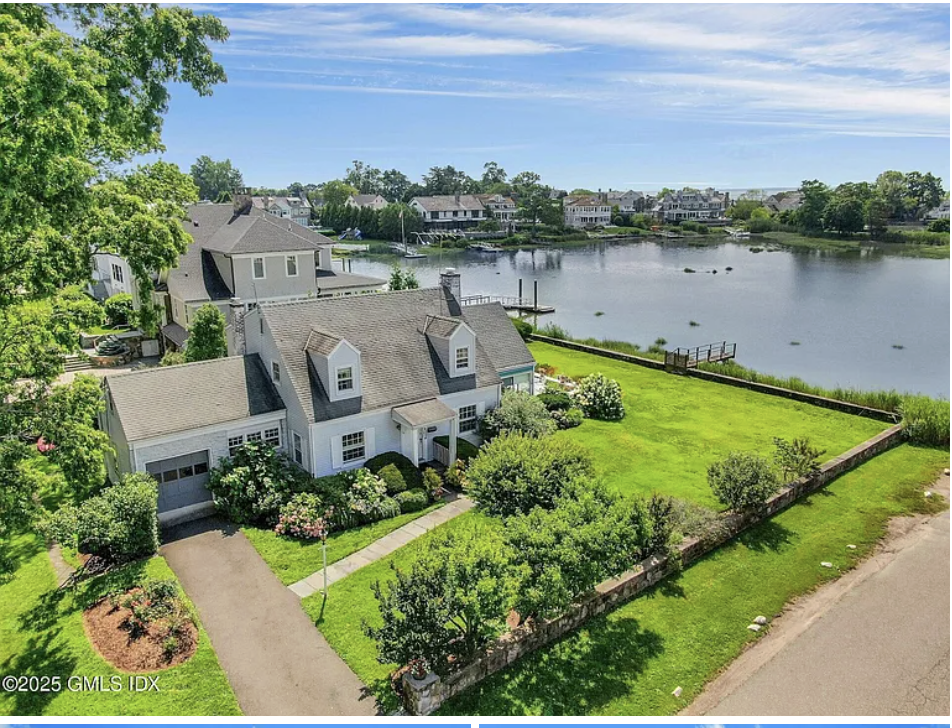
Peepers Hollow sale

Technically, 366 Riversville Road, 2.42 acres, sold for $1.5 million, asked $1.795. The previous owner optimistically looked for $1.950 million back in 2009 and kept looking until he finally sold to these owners for $1.275 in June ‘22.

There are two cottages on the property, including 22 Peepers Hollow which was or is available for rent for the astonishing sum of $3,095, plus utilities and fees. If memory serves, my older brother John rented one of these cottages back in the 1970s, or he did until he returned from work to discover that the propane delivery driver had set the place on fire and burned it down. I guess they rebuilt.

Lightning Quiz: How many Somalian Refugees were shot in the Lewiston Maine Massacre of ‘23?

for that matter, how many united way executives were injured?

Uh, that would be none, Bob, but they got a substantial piece of the pie anyway

Relief Fund Money for Lewiston Survivors Steered to Inter-Linked NGOs Instead of Victims, Residents Say

Too valuable to waste on victims

In the wake of the October 25, 2023 mass shooting in Lewiston, thousands of Mainers and donors across the country collectively contributed more than $6.6 million to support victims, families, and the community. More than two years later, questions persist about where almost a third of those funds have gone.

The Maine Community Foundation (MCF) was identified as the primary organization to collect and distribute the relief funds, which were promoted as a way to directly help those most affected by the tragedy. Its distribution of this money is what has led many to wonder aloud why a portion of the funds was sent to seemingly unrelated groups.

Financial records show that $4.7 million was eventually distributed to survivors and to the families of the deceased. However, approximately $1.9 million of the total went to nonprofit organizations rather than directly to victims. The decision to divide the funds in this way has raised questions from community members, survivors, and former state officials regarding transparency and oversight of the distribution process. 

The nonprofit portion of the funding was directed by a steering committee assembled as part of the recovery effort. The committee included leadership from United Way of Androscoggin County, Gateway Community Services Maine, the Somali Bantu Community Association, and Tree Street Youth. Each of those organizations later received more than $65,000 in relief funds. 

Although MCF publicly stated that part of the donation pool was intended to support long-term community recovery, the foundation has not provided detailed explanations of how potential conflicts of interest were identified or addressed during the allocation process. Survivors and family members have said that they believed the relief donations would primarily, and in some cases exclusively, support those directly harmed by the shooting.

Gateway Community Services Maine received more than $65,000, in addition to $42,000 it had already received from MCF earlier in 2023. The organization’s affiliated for-profit division has been involved in a reimbursement dispute with the Maine Department of Health and Human Services concerning more than $700,000 in questioned MaineCare billing. 

The Somali Bantu Community Association also received more than $65,000. Tax filings show payments from the organization to family members of its co-founder, and the group holds multiple state-funded service contracts. This Maine Wire reporter visited location on Monday, seeking comment on how the funds were used. I was told that the staff accountant would be in contact, the Maine Wire has not heard back.

United Way of Androscoggin County was awarded more than $65,000 from the relief pool, while also receiving $312,593 in donor-restricted contributions specifically designated for Lewiston shooting response. Records indicate that a substantial portion of these Lewiston-designated funds remained undistributed as of late 2024. Some survivors stated they have not been contacted by the organization regarding support services. 

Tree Street Youth received more than $65,000, in addition to the more than $1 million it receives annually through government grant funding. When the nonprofit awards were announced, Tree Street Youth director Julia Sleeper said, “These organizations are crucial to the fabric of our community and to the recovery process.” 

However, several survivors and affected family members reported that they did not recall receiving outreach or services from the group following the shooting. The Maine Wire also visited this organization on Monday, was told the CEO would respond to our questions, we did not hear back prior to publication.

Two other organizations, the AK Collaborative and Generational Noor, each received awards of more than $65,000 as well. Public filings do not show state charitable registrations for either group, and both appear to have had limited ongoing operations after receiving the funds. The AK Collaborative’s online presence ceased activity in 2024, while Generational Noor relocated its office into the same location as Gateway Community Services. 

The Maine Community Foundation has directed inquiries to its general public reporting and previous statements, but it has not released additional documentation addressing how committee members participated in allocation decisions related to their own organizations.

Former Maine Gov. Paul LePage (R) has publicly questioned how the $1.9 million in nonprofit-directed funds was allocated. LePage has sought a clearer accounting of how the organizations were selected, what criteria were used to determine funding levels, and what oversight was conducted after the awards were made.

“Victims and families should receive a full investigation into what was communicated both to them and donors by the Foundation, why these unconnected groups received cash, and how it was spent. These families deserve answers,” LePage said.

Jennifer Zanca, who was shot in the arm during the shooting, said she learned that nonprofits received more funding than she did while she faced an unpaid $93,000 hospital bill that her insurance denied.

“I am torn between gratitude for the support, then angered when I was facing a $93,000 outstanding hospital bill that was denied by insurance,” Zanca said.

Survivors and families have stressed that they are not asking for funds to be retracted from organizations at this time. Instead, they say they are seeking clarity about how relief funds were managed, whether donor intent was followed, and whether the steering committee’s process included sufficient safeguards to prevent conflicts of interest.

The central issue for many remains whether the distribution of nearly $2 million in nonprofit support aligned with the expectations of donors who believed they were contributing directly to victim recovery. Families and survivors continue to call for greater transparency, including a detailed record of how each nonprofit used the funds it received and what specific services were delivered as a result.

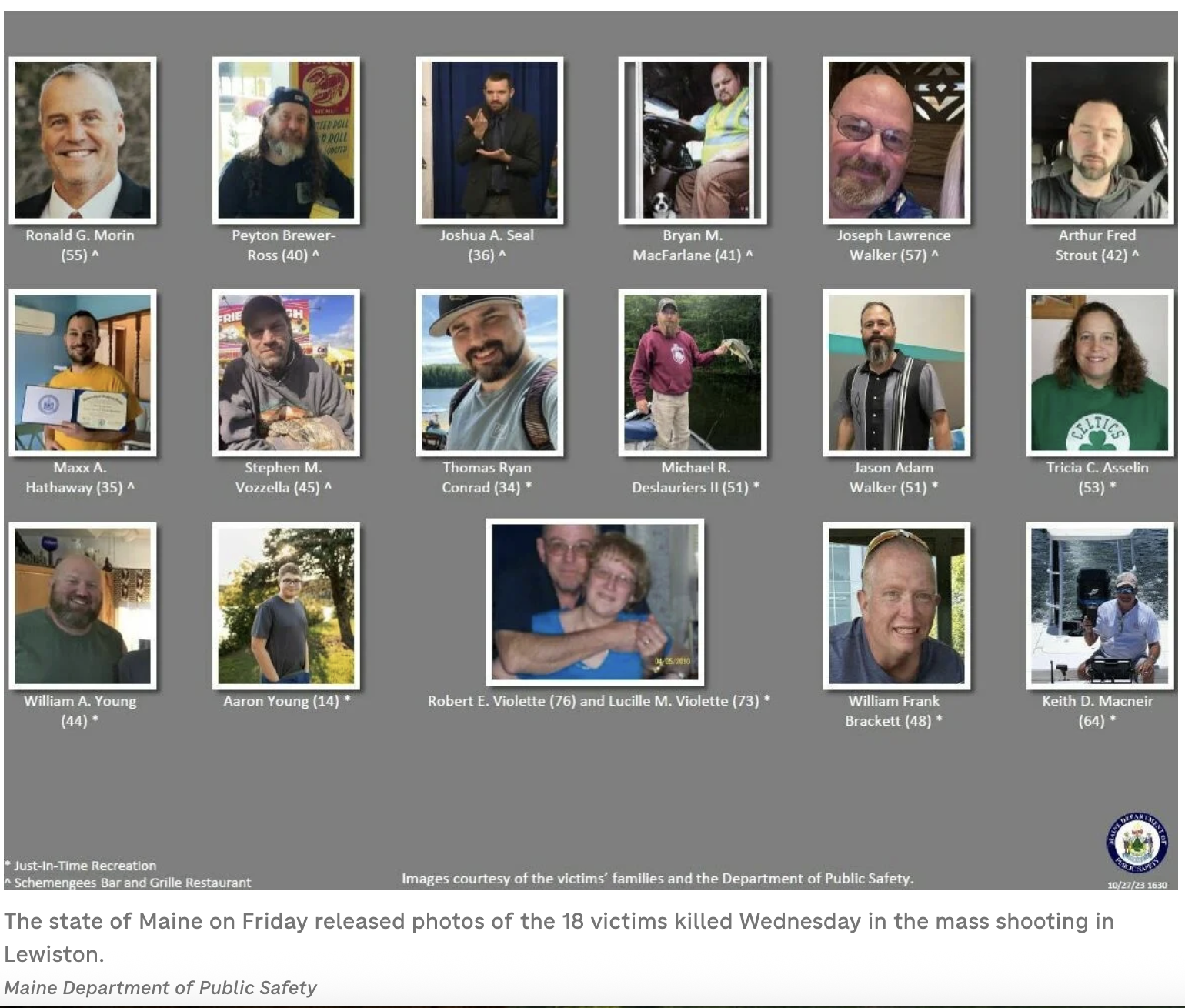
Here you go: see any Somalians here?

The following 18 people were the victims who died in the mass shootings in Lewiston, Maine, on October 25, 2023: 

At Just-In-Time Recreation (bowling alley):

  • Tricia C. Asselin, 53

  • Thomas Ryan Conrad, 34

  • Michael R. Deslauriers II, 51

  • Jason Adam Walker, 51

  • Lucille M. Violette, 73

  • Robert E. Violette, 76

  • Aaron Young, 14

  • William A. Young, 44 

At Schemengees Bar & Grille Restaurant:

  • William Frank Brackett, 48

  • Peyton Brewer-Ross, 40

  • Maxx A. Hathaway, 35

  • Bryan M. MacFarlane, 41

  • Keith D. Macneir, 64

  • Ronald G. Morin, 55

  • Joshua A. Seal, 36

  • Arthur Fred Strout, 42

  • Stephen M. Vozzella, 45

  • Joseph Lawrence Walker, 57 

Cognitive dissonance in North Mamdaniland

The Unicorn voters ushered in draconian rent control regulations in 2018, and already the effects are being felt as the existing available housing stock shrinks. Then they turned their destructive attention to new housing, with exactly the results you, but not they, would expect.

Portland Maine Housing Projects Stall as Costs Collide with ‘Inclusive’ Zoning Mandate

Despite dozens of approved projects and strong demand for new housing, several major developments in Portland are stalled as rising construction and financing costs collide with the city’s inclusionary zoning ordinance, developers and city officials said during a November 6 panel hosted by the Portland Regional Chamber of Commerce.

The ordinance, approved by voter referendum in 2020, requires housing projects with 10 units or more to set aside 25 percent of units for lower- to middle-income households or pay an in-lieu fee of $182,830 per unit. Combined with higher construction prices and interest rates, panelists said the mandate has made some projects financially unworkable.

Jonathan Culley, principal of Redfern Properties, said his company has roughly 800 units currently on hold, including a 327-unit project on Washington Avenue and a 500-plus unit development planned for Kennebec Street. Redfern, which has built nearly a thousand apartments and condominiums in Portland since 2013, completed its most recent project, the 263-unit Casco building, in 2024.

Culley said neither of the newer projects will move forward under current conditions. 

“It would cost us $15 million to the city right off the bat,” he said of the Washington Avenue development.

City planning director Kevin Kraft said Portland has approved more than 45 housing projects since 2020, including approvals for about 1,300 units this year. He pointed to recent zoning reforms under the city’s ReCode effort that allow greater density, height and flexibility for multifamily housing and accessory dwelling units.

“So ReCode has unlocked a lot of potential,” Kraft said, referring to the ordinance at the center of the debate.

Still, Culley predicted few new projects will break ground in 2026 or 2027 unless the inclusionary zoning ordinance is changed. The soonest the ordinance can be reviewed is early 2026, under terms of the referendum. Kraft said a state grant will support a data-focused review of the rule.

Panelists also cited ballooning financing costs as a significant barrier. Culley noted that when his firm closed on the Casco project, it secured a 12-year loan at 3.5 percent interest. Today, similar financing would be at more than 6 percent.

“That’s over a million dollars a year just in interest rate costs,” he said, adding that it would require a rent increase of roughly $350 per unit per month.

Other challenges include regulatory costs, building code requirements and rising pressure from neighborhood groups opposed to large developments.

Todd Morse, president of the Urbanist Coalition of Portland, said changes to building codes, including allowing more single-stair designs and increased use of mass timber, could help reduce expenses.

Culley, who serves on the city’s Social Housing Task Force, said Portland will continue to see strong housing demand driven by factors such as climate migration* and growth associated with the Roux Institute. He characterized the shortage of affordable and available housing as both an economic and humanitarian issue.

“We have people sleeping outside,” he said. “And it’s affecting our downtown business community. We’re actually hurting the people we’re trying to help.”

*”Climate Migration”? New to me, too, but you’ll be heartened to know that NGO’s and governments have identified the phenomenon and already pocketing money to address it. Who would have expected a flood of Floridian refugees swamping Portlandia? Our wise leaders, that’s who — hold on to your wallet.

AI Overview

Climate migration is the movement of people, both internal and international, who are forced or choose to relocate due to the impacts of climate change, such as sea-level rise, extreme weather, and drought. This movement can be temporary or permanent, planned or spontaneous, and it often involves people moving from rural to urban areas, though it also includes cross-border movement. Climate migration is already happening and is projected to increase, though it is complex and influenced by factors beyond environmental stressors, including economic and social conditions. 

Causes and drivers

  • Climate impacts: Climate change leads to a range of environmental changes that force migration, including rising sea levels, more frequent and intense storms, flooding, and worsening droughts.

  • Economic hardship: These climate events destroy livelihoods, particularly for those in agriculture-dependent regions, making it difficult for people to earn a living in their home communities.

  • Poverty: Poorer populations are often more vulnerable to climate impacts, as they may live in more hazardous areas and have fewer resources to adapt, making them more likely to move due to climate stressors.

  • Social networks: Existing social connections and family ties can also influence migration patterns, as people may move to join family or friends in other locations. 

Types of climate migration

  • Displacement: People are forced to leave their homes suddenly due to a specific disaster, like a flood or hurricane, and may be unable to return.

  • Migration: People move in anticipation of or in response to slower-onset changes like sea-level rise or desertification.

  • Planned relocation: Governments or other authorities can assist communities in moving from areas that are no longer habitable to new, safer locations. 

Challenges and implications

  • Vulnerability: Climate migrants often face significant challenges, including the loss of skills and assets, a higher risk of exploitation, and lack of access to essential services in their new locations.

  • Inequity: The impacts of climate change and the ability to move are not evenly distributed. The poorest populations and certain groups, such as women, are often disproportionately affected.

  • Legal and social status: The term "climate refugee" is not legally recognized under international law, which can complicate matters for those seeking protection and assistance across borders.

  • "Trapped" populations: Climate change can also prevent migration for some, as it erodes the assets needed to move, leaving them with no choice but to stay in increasingly dangerous conditions. 

Open borders

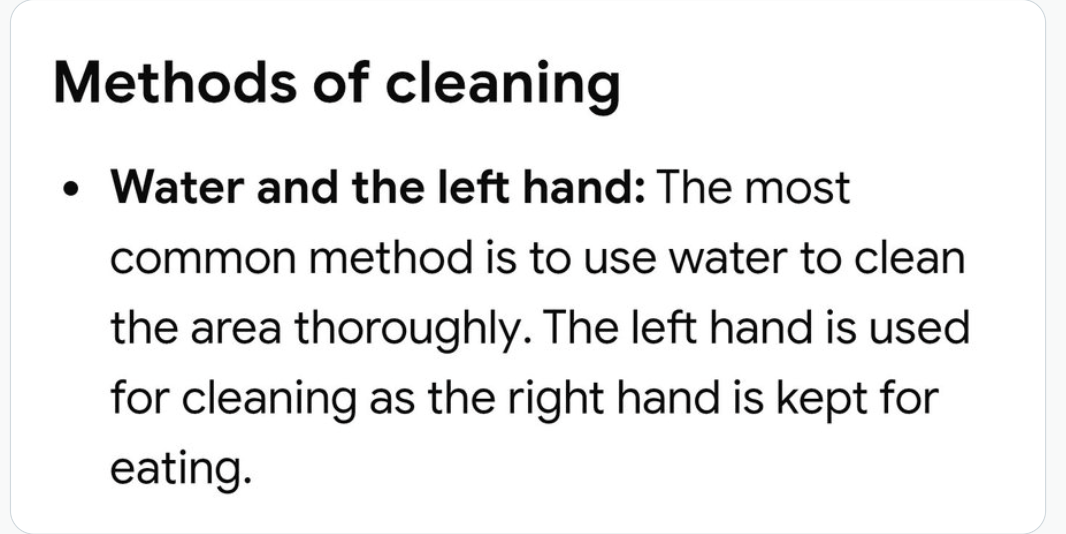
Muslim Preacher Says Americans Are So Uncivilized and Backward That They Use Toilet Paper “Allah sent us to civilize them because they are the lowest form of human nature.”

Remember the video of Mayor-Elect Zohran Mamdani sitting in the park eating a rice bowl with his hands? We felt compelled to check back and see if he was using his right hand (he was).

Here’s an example of what those civilized muslims — you know, the people who college students and Democrats so admire — are capable of:

Freed Israeli hostage reveals unthinkable horror during captivity: ‘Something even the Nazis didn’t do’

A traumatized Israeli hostage held captive for more than two years in Gaza revealed that he was sexually assaulted and tortured so sadistically by Jew-hating terrorists that he begged them to let him starve to death.

Rom Braslavski was kidnapped on Oct. 7, 2023, by the Palestinian Islamic Jihad, a Hamas ally, and subsequently stripped naked, starved and sexually abused until he was finally released earlier this year, he revealed in a chilling interview with Israeli media.

“I came back from a meeting with the devil,” Braslavski told Israel’s Channel 13. 

“It was sexual violence, and its main purpose was to humiliate me,” he said. “The goal was to crush my dignity. And that’s exactly what he did.”

He said the abuse was frequent — and worse than Nazi torture.

“It’s hard for me to talk about that part specifically. I don’t like to talk about it. It’s hard. It was the most horrific thing,” Braslavski added. “It’s something even the Nazis didn’t do. During Hitler’s time, they wouldn’t have done things like this.”

During his 738 days as a hostage, Braslavski was savagely beaten with a donkey whip and subjected to 20-minute-long torture sessions seven times a day, according to the Daily Mail.

His sadistic captors also forced him to dance and blindfolded him with stones in his ears for weeks at a time, the outlet reported.

“You just pray for it to stop. And while I was there — every day, every beating — I’d say to myself, ‘I survived another day in hell. Tomorrow morning, I’ll wake up to another hell. And another. And another. It doesn’t end.’”

He was so severely beaten by his captors that he begged them to let him starve to death, according to the Times of Israel.

“They tortured me for one reason: Because I am a Jew,” he told Channel 13. “That was why I went through what I did. Not [Israeli National Security Minister Itamar] Ben-Gvir, not [Prime Minister Benjamin] Netanyahu, not anything else. They beat me up because I’m Jewish. That’s it.”

In August, Palestinian Islamic Jihad released chilling footage showing Braslavski emaciated and crying, claiming he could not stand or walk due to pain in his feet.

It was the second video the PIJ released of the Jerusalem native. The group previously published a scripted video in which the captive, looking ill, said he was going through “hell.”

He was among the last Israeli hostages released during Hamas’ cease-fire deal with Israel last month.