As if to prove the point of the previous post on morons and liberals …

Powerful: Blindfolded Women Perform Protest Dance Aimed at Trump and Epstein

It was February when a troupe of dancers reenacted the shooting deaths of Renee Good and Alex Pretti in front of the Trump-Kennedy Center for the Performing Arts. The Washington Post just happened to have a cameraman there. Here it is again, if you missed it.

[I did miss it, but I don’t miss it — Ed]

Funny … The Washington Post's cameraman just happened to be passing by this week when he caught another troupe of dancers, this one a "protest dance" aimed at President Donald Trump and Jeffrey Epstein.

Engaging in futile performance art on an empty mall is as pleasant a way to spend a sunny Friday afternoon as any, I suppose; less productive than flossing one’s teeth, say, but certainly more fun than attending yet another 3-hour seminar discussing white racism/ceramic art at your college down the street, but who is supposed to be moved by this? Washington Post readers already believe that Donald and Melania ran Epstein Island under the supervision of Ronald Reagan, so a few gyrations and backflips won’t accomplish anything further with that crowd, and the rest of the country could care less about Caribbean goings-on from twenty years ago. To borrow from a different post I read this morning,

There’s a classic scene in “Hoosiers” where the interim coach offers to help Gene Hackman’s character. Hackman declines, and the coach delivers one of the most memorable lines in sports movie history:

“There’s two kinds of stupid in this world. One is the kind where a man gets naked and barks at the moon in the middle of the woods. The other is the man who does the same thing in my living room.”

Or in this case, in front of a memorial to a man who’s been dead even longer than Epstein has.

Desperate for funds, NPR resorts to immitating the New York Times

NPR CEO Miss Katherine, “facts can be a distraction” maher

Previous to moving to NPR in 2024, Mahere was CEO of Wikipedia. Let her tell you how that went:

NPR CEO: You Better Believe I Partnered With Gov't to Suppress 'Misinformation' About Pandemic, Elections

Christopher Rufo has done extensive digging into Maher's track record, none of which had anything to do with journalism until NPR made her its new CEO in January. Maher did work at Wikipedia as its CEO during the pandemic and the 2020 election, where she took an active role in content control. And by content control, Maher made clear in a remote address to the Atlantic Council in 2021, she means imposing censorship on any information or discussion to which the government objected on both topics (transcript via RealClearPolitics):

KATHERINE MAHER: We took a very active approach to disinformation and misinformation, coming into not just the last election, but how we supported our editing community in an unprecedented moment where we were not only dealing with a global pandemic but a novel virus, which by definition means we know nothing about in real-time. And we're trying to figure it out as the pandemic went along.

We really set up, in response to the pandemic but also the upcoming U.S. election as a model for future elections outside of the U.S., including as number happening this year.

The model was around how do we create a clearinghouse of information that brings the institution of the Wikimedia Foundation with the editing community in order to be able to identify threats early on, through conversations with government, of course, as well as other platform operators to understand what the landscape looks like.

Good news for CT ratepayers

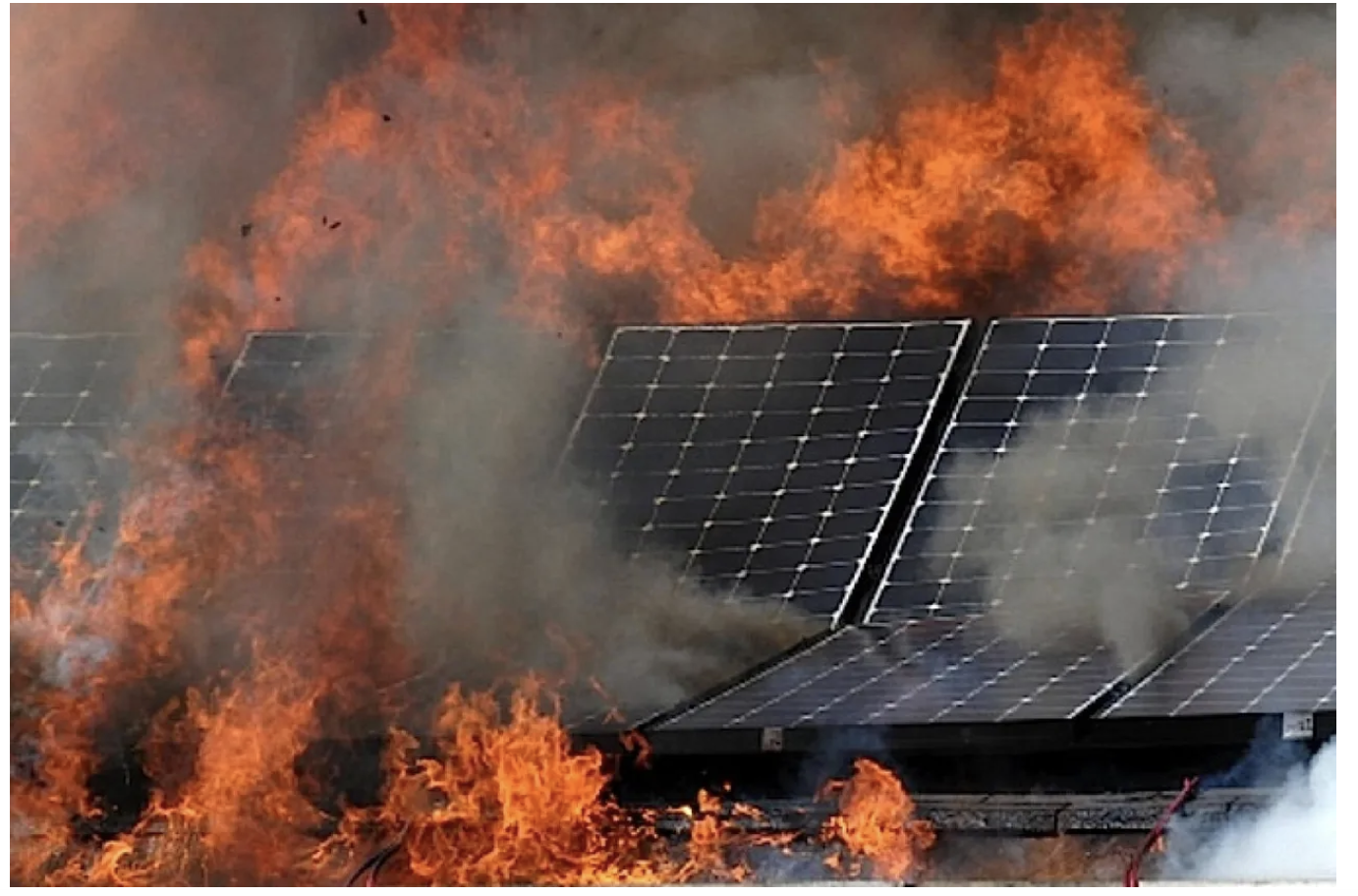
Eversource backs out of three solar projects supported by state

In a blow to Connecticut’s ongoing efforts to procure new sources of clean, carbon-free electricity, Eversource informed state officials last month that the utility company was opting out of three publicly-bid contracts to purchase 54 megawatts of solar power on behalf of its customers.

Eversource Deputy General Counsel Duncan R. MacKay sent a letter to the Department of Energy and Environmental Protection and legislative leaders on March 27, slamming the agency’s latest round of clean-energy purchases as overpriced and likely to result in an increase of the public benefits charge.

For those reasons — as well as what he described as the lack of “comprehensive” energy strategy in Connecticut — MacKay said the company would decline to enter into the contracts.

“The prospect of committing another $238 million of customer money over the next 20 years is concerning to Eversource and is a clear divergence from a much-needed affordability lens,” MacKay wrote. “Because the pricing for the contracts is over-market and the contracts do not add value to customers in terms of materially increasing available generation supply and offering a pathway to lower generation costs, contract execution does not appear to be in the customer interest.”

And then the usual bullshit from the DEP, including the endlessly-repeated lie that solar energy is cheaper than gas or coal

In an emailed statement on Monday, DEEP spokesman Will Healey called the company’s decision to back out of the contracts “surprising” given the need for new power supplies to meet growing demand on the regional electric grid.

“The solar projects selected in this procurement will lower costs for Connecticut ratepayers and scored the highest in our evaluation during the bid review process. Eversource was part of that bid review process and had voiced no concerns or objections at any point of the evaluation and selection process,” Healey said. “Additionally, Eversource has raised no objection to signing contracts with Massachusetts for the very same projects they claim are unaffordable or unsupportable in Connecticut.”

An Eversource spokesperson declined to comment further on the letter.

As well it should.

As we unwind from Europe, can we go ahead and end our involvement with the UN now?

Surrender: gradually, then suddenly.

singapore was just a warm-up exercise

Britain and western Europe have opened their borders of the Third World, destroyed their cultures and their energy infrastructures, and are now incapable of defending themselves even if they had the willpower to do so.

British General Admits [Again] That It Can't Deploy a Division Abroad

How pathetic is the British Army?

How about this: it cannot actually deploy a heavy (armored) division to Europe if required. 

It has no navy, it’s sole aircraft carrier has no planes, it’s air force is a weak joke, and the country has no willingness to do anything about those deficiencies. In fact, it’s joined its disarming friends, Germany, France and Spain in denying the United States’s to use their otherwise-unused bases and airfields, and even, in France’s and Spain’s case, fly through their airspace.

I read an article yesterday (somehere — can’t lay my hands on it now) by a European writer warning that the United States was withdrawing from Europe and creating it’s own sphere of interest — if it served our interests to go somewhere or do someting, we would; otherwise, the Europeans and the island lime eaters will be left to defend themselves as they see it and are capable of doing. That does indeed seem to be the case, and it’s a move long overdue.

This is hardly new news. A 2015 review of Britain’s military preparedness noted the country's inability to meet its basic NATO obligation to defend its allies; in 2026, the country still cannot deploy a fighting force. It’s in even worse shape, if possible, than it was in 2021, when the weakling still claimed it’d be capable of sending … something abroad to fight, if necessary:

Military Balance Blog

8th January 2021

British Army heavy division comes up light 

An ongoing House of Commons Defence Committee inquiry into British armoured-vehicle programmes has made the British Army’s shortfall in modern armour evident. The army’s war-fighting division, which it previously aimed to field by 2025, will be smaller, less ‘heavy’ and have less armour than set out in the 2015 Strategic Defence and Security Review.

The British Army will be capable of fielding a war-fighting division by 2025. However, it will be smaller, less ‘heavy’ and have less modern armour than originally planned. The shortfall in armour is the result of procurement problems compounded by inadequate funding: the outcome is that the army will deliver considerably less near-term capability than was the goal.

Just how short the British Army will fall of the divisional target established by the 2015 Strategic Defence and Security Review (SDSR) has been made apparent during an ongoing House of Commons Defence Committee inquiry into British armoured-vehicle programmes. During hearings, the Ministry of Defence (MoD) acknowledged it would not meet the aim of the 2015 SDSR. Rather than being able to field a division with three brigades – two armoured infantry brigades and a strike brigade – the division would only consist of two: a single armoured infantry brigade and an ‘interim manoeuvre support brigade’, the latter with some new Ajax vehicles and infantry travelling in Boxer and Foxhound armoured personnel carriers (APCs).

Missing the goal

The MoD said it was unable to meet the 2015 SDSR target because its budget ‘did not fully resource the army to achieve this output within this timeframe’. More simply put, it did not have enough money to fund what it said it was going to do. Development delays to the new Ajax medium armoured fighting vehicle and a very slow delivery rate for new Boxer APCs have further compounded the issue. There are also indications that the stockpiles of spares and ammunition needed to deploy more than one armoured infantry brigade have not been funded.

The army currently has one single heavy division: the 3rd Division. It is declared to NATO, but could also be employed on other missions, including with the United States. It is made up of three armoured infantry brigades, each with a single regiment (battalion sized) of Challenger 2 tanks and two armoured infantry battalions with Warrior infantry fighting vehicles (IFVs). Three armoured cavalry regiments are currently equipped with Scimitar light-armoured reconnaissance vehicles. The Scimitars are obsolescent, while the Challenger tanks and Warrior IFVs have undergone only limited upgrades and are approaching obsolescence by the army’s admission. Both require improvements to their firepower, including new guns, ammunition and turrets. Research and development work has been funded, but the Warrior upgrade has been greatly delayed. The MoD, army and the companies involved say some of the delay with Ajax and Warrior has resulted from weaknesses in managing the programmes. Both the Warrior and Challenger programmes are yet to receive ‘main gate’ approval – they must do so if they are to be fully funded. And even if approval is forthcoming, it is unlikely that the first modernised vehicles will enter service before 2025.

Further modernisation aims for the 3rd Division were set out in the 2015 SDSR. Two ‘strike brigades’ were to be formed to complement the retention of two of the three armoured infantry brigades. The new formations would include two mechanised infantry battalions equipped with new wheeled APCs (Boxer). An armoured cavalry regiment optimised for reconnaissance and a medium-armour regiment would both be equipped with the Ajax family of tracked scout vehicle, replacing the Scimitar. Ajax has been funded, with the first unit receiving its vehicles in 2020, albeit with production difficulties delaying delivery of the scout variant. Boxer is on contract, with the first vehicles to be delivered in 2023. However, delivery will be slow − spread over a decade. Although the United Kingdom’s Defence Secretary Ben Wallace has tasked the army with examining options to accelerate delivery of Boxer, there is no evidence that extra funds are being allocated to achieve this.

Five years on, Britain still can’t send a single armored brigade, let alone a division, onto a battlefield.