So sad

Eric Swalwell's week from hell just got a whole lot worse, and this time, the fire came from someone who called him family.

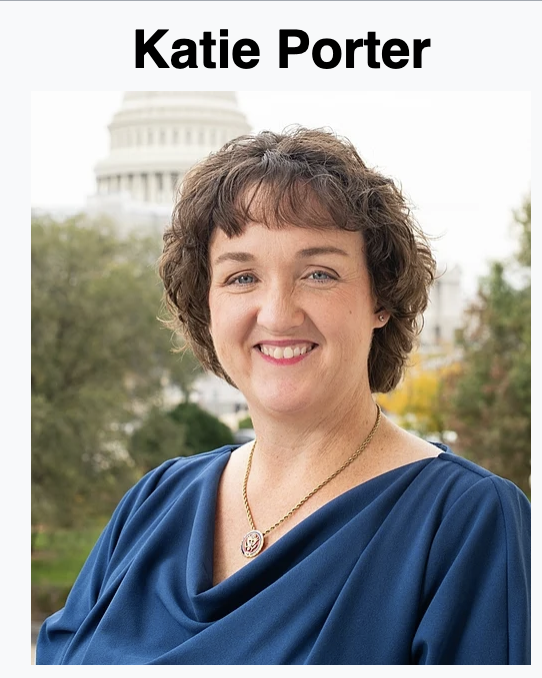
Stephen Cloobeck, a timeshare mogul, publicly nuked his relationship with the accused rapist California congressman on Sunday. Hours later, Swalwell quietly announced that he was dropping his bid for California governor.

Apparently, Cloobeck had been letting Swalwell crash at his 9,700-square-foot Beverly Hills mansion while the congressman battled mounting allegations of rape, sexual assault, and sexual misconduct from multiple women. Swalwell even filmed his denial video there on Friday.

By Sunday, Cloobeck had seen enough. He kicked Swalwell out.

>>>>>>

Just weeks ago, Cloobeck called Swalwell his “little brother” in an interview with Politico, and he scoffed in a previous interview with The Post when asked about rumors that Swalwell may have acted inappropriately with female staff and interns.

Cloobeck, who said he has been a Democrat for “almost 40-year plus,” is now unsure where the allegations will ultimately lead, but he said the controversy was enough to make him walk away.

“I don’t know where these facts are going to end up — you hear or read all this stuff,” he said.

When asked whether he believed Swalwell had been truthful with him, Cloobeck said: “I’m gonna have to investigate that. I don’t know the answer to that.”

Cloobeck, who gained more name recognition after briefly running for governor last year and making multiple appearances on the TV show “Undercover Boss,” has been extremely generous to Swalwell.

On top of letting the deeply-in-debt congressman frequently stay at his 9,700-square-foot mansion, Cloobeck gave the maximum $39,200 to Swalwell’s campaign and gifted the congressman a $31,000 trip to France in 2024.

Your house won't sell? Raise its price!

That’s the tactic adopted by the owners of 261 River Road in Cos Cob, on the market since March 2025; today they hiked its price $275,000 from $2.475 million to $2.725. I assume that the steady price reductions on this house finally produced results and a number of offers have been received, but rather than accepting the best offer and being thankful to get it, or going to a highest and best bidding process, they seem to have rejected all of the offers and are reaching for higher ones.

Not a strategy I’d have suggested.

New listing in Riverside

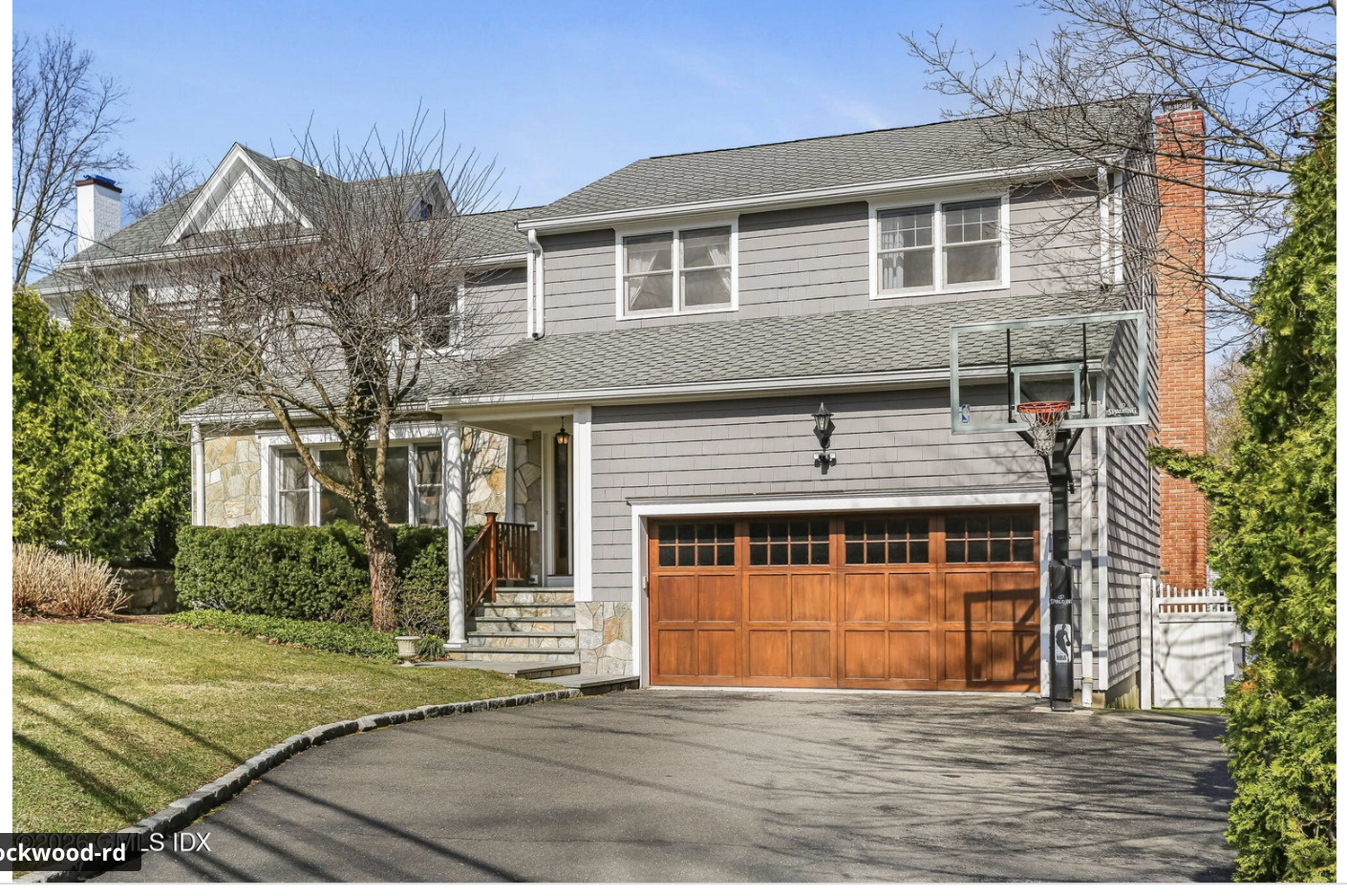
153 Lockwood Road, $2,589,000. Like other homes on this stretch of Lockwood Road and Linwood, children here are assigned to Dundee elementary school, rather than Riverside or Old Greenwich. There’s absolutely nothing wrong with Dundee, but if I were raising kids, I’d prefer that their peers/playmates in the neighborhood all attended the same school. As it is, a child living on Verona Drive, directly across the street from this house, will attend Riverside, while these children will be bused across the Post Road and over to Dundee. Not a huge deal in the long run, I suppose, but as a parent, I wouldn’t like that division.

For a very good reason: they have no intention of blowing up the world

Richard Fernandez asks:

Why Are Countries More Worried About Iran Than Japan?

…. [G]iven Japan’s advanced nuclear industry and technologically advanced space programs, there is little doubt that Tokyo is, as a practical matter, completely capable of building a nuclear arsenal in short order. “Chinese nuclear experts believe Japan could build nuclear weapons in less than 3 years.” Nor is Japan the only “latent nuclear” power. Germany, South Korea, and Taiwan could build one easily, with Canada, the Netherlands, Brazil, and Australia just a touch behind. Why are nations not staying up nights worried about the nuclear menace from Canada? Because it lacks a history of malicious intent. Each of these countries approached the nuclear weapons threshold as a byproduct of their general technological development, little caring about conquering the world.

By contrast, the Islamic Republic of Iran is developing nuclear weapons as an end in itself. Ironically, it was experience fighting other Muslims that convinced Tehran it must have a nuclear deterrent. If Canada never thought about conquering the world, the Middle East was a crucible where dictators thought about nothing else. “The 1980–88 Iran-Iraq War stands as the pivotal event for Iran's national security strategy, especially as it pertains to the country's controversial nuclear program.”

…. So in the late 1980s and 1990 …. Iran acquired key technology covertly, notably centrifuge designs and components from the A.Q. Khan network in Pakistan. Secret facilities were built: Natanz (uranium enrichment) and Arak (heavy-water reactor for potential plutonium path). By the early 2000s, Iran had a structured effort including uranium enrichment, weaponization studies, and missile delivery work. All these secret efforts have reportedly produced 440.9 kg of uranium enriched up to 60% (as of mid-June 2025, on the eve of Israeli-U.S. strikes) – less than 1% of the Japanese stockpile.

Less than 1%? So why are we worried? This highlights a key factor so often ignored in the media coverage of the issue of the danger of nuclear proliferation. It is not the possession of nuclear capability in itself that constitutes an international threat, but demonstrated hostile intent. The threat level depends overwhelmingly on who holds nuclear technology and what they intend to do with it — not the mere existence of the capability. It’s one thing for Canada to have nukes, another for Iran. Japan has had the technical ability to build nuclear weapons for decades. It has never demonstrated intent to do so. Its plutonium stockpile is a civilian legacy, kept under IAEA safeguards, and its security rests on the U.S. alliance. Iran, by contrast, has:

  • Openly called for Israel's elimination ("from the river to the sea" rhetoric and "wipe off the map" statements).

  • Built a network of terrorist proxies (Hezbollah, Hamas, Houthis, Iraqi militias) that attack U.S. forces, Israel, and Gulf states.

  • Launched direct ballistic missile and drone barrages at Israel, the GCC, and European possessions.

  • Funded and armed groups explicitly aiming at civilian targets, even in the Western hemisphere.

  • Maintained a nuclear program shrouded in secrecy with documented weaponization research (per IAEA and stolen archives).

Merely having nuclear capability is not an imminent threat. In the current conflict, two out of the three combatants are nuclear powers: the USA and Israel, yet ironically, no one worries either will nuke Iran [well, except for the Tucker Carlsonites — Ed] On the other hand, there is some debate over whether Iran would strike Israel or the USA even at the cost of their own destruction. Some feel that, given the Islamic Republic’s apocalyptic ideology, the first use of a nuclear weapon against the hated Jews is not impossible. But the mainstream consensus appears to be that the ayatollahs would employ nuclear weapons as blackmail, the way it currently uses the threat to block the Straits of Hormuz to wrest concessions, extort payments, or achieve impunity and thus dominate the region. 

Alternatively, it could supply nukes, as it does drones and missiles to proxies, creating a “nuclear Hezbollah,” theoretically allowing it to menace other countries without taking direct responsibility. Nuclear weapons are, in a way, like ordinary guns. Nothing to worry about in the hands of law-abiding individuals but a deadly menace in the possession of a fanatic screaming “Death to America”.

This is why analysts who focus only on "number of warheads" or "enrichment levels" miss the point. A nuclear Japan or Germany would likely be stabilizing today. A nuclear Iran almost certainly would not. The regime's ideology, its use of proxies, and its stated goals matter far more than kilograms of weapons.

Contract on Bramble Lane/Hendrie Avenue

Forty days after starting off at $5.995 million, 1 Bramble Lane, Riverside, reports a contract. Presumably, that lengthy stay on the market indicates a final selling price less than asked, but who knows? In any event, as I pointed out when this property first hit the hustings, it’s interesting to see that there was practically no price appreciation for this house (and many others) from 2008 to 2017; that’s changed.

Fog of War, as seen by a clueless armchair strategist (me)

First in news this morning is this story:

Trump says Iranian navy ‘destroyed’ as US preps for blockade

"Their military is destroyed. Their whole Navy is underwater. You know that 158 ships are gone. Their navy is gone. Most of their mine droppers are gone."

But then there’s this:

Majority of Iran’s fast attacks ships patrolling Strait of Hormuz still in tact [sic]

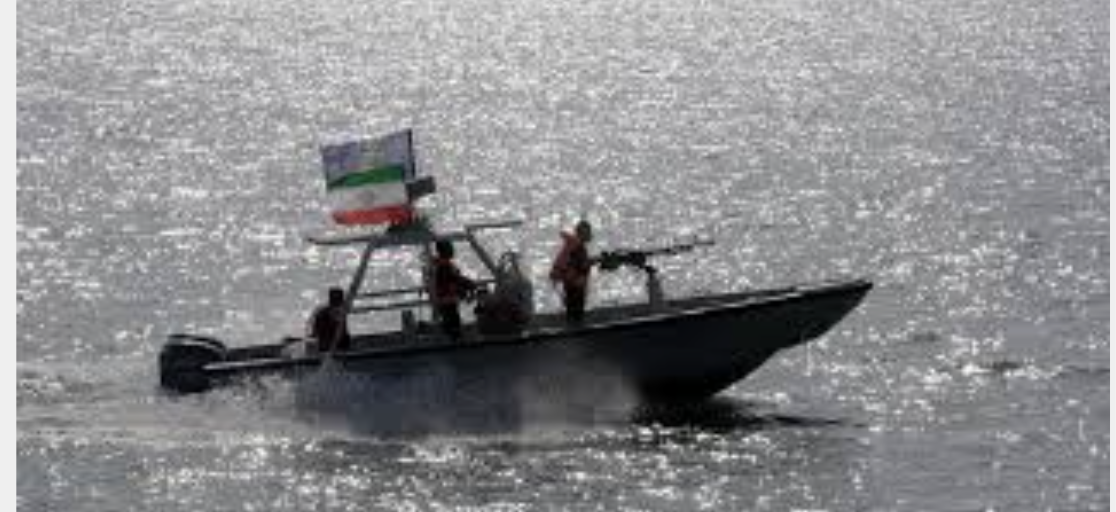
More than 60% of the Islamic Revolutionary Guard Corps’ fast attack ships in charge of patrolling the Strait of Hormuz are still intact despite six weeks of US-Israeli airstrikes on Iran’s navy, according to a new report.

While America has decimated Iran’s standard navy, sinking more than 155 vessels, the ships under the IRGC’s control are still largely operational and capable of policing the key water route President Trump has vowed to reopen, The Wall Street Journal reported.

The IRGC’s navy is vast, small, and speedy, allowing the attack vessels to evade satellite detection and hide in underground pens along the rocky coast of the 20-mile-wide strait, said Chris Long, a former British navy official in the Persian Gulf.

“It will be a long time before the US can take all those out,” Long told the WSJ.

The formation of the fleet was a direct result of the so-called Tanker War of the 1980s, when the US sank much of Iran’s active fleet in a single-day strike.

Since then, the Islamic Republic has pivoted to an asymmetrical navy, with the IRGC tasked with policing the Strait of Hormuz while Iran’s conventional navy patrols other waterways in the Gulf.

Iran previously showed off the speedy boats during live-fire military drills in February as a show of force against the US naval buildup in the Middle East prior to the start of the war.

The ships were shown to be armed with rocket launchers and able to lay mines in the strait, with the boats capable of moving at high speeds as they moved in and out of their underground pens.

The strategy appears to have paid off for Tehran, given the IRGC’s survival rate compared with that of the conventional navy, which US officials touted as completely destroyed in the first three weeks of the war.

And then there’s John Hinderaker, who says it doesn’t matter either way, because we’re pursuing a different strategy:

We’re Blockading Iran, Not the Strait

So we aren’t closing the Strait, we are blockading Iranian ports. This means that Iran won’t be able to sell any oil. Two countries will be hurt: Iran and China, which buys 80% of Iranian oil. The Gulf States will be able to ship their oil through the Strait as soon as they choose to do so.

Meanwhile, we are sending vessels to the Strait to try to dispose of the mines that Iran may or may not have laid there. Other countries may aid in that effort. Iran still has a lot of small boats that they have used to harass shipping, but they will be useless against our ships. And reportedly, a number of oil tankers have diverted from other courses and are heading to the Gulf of Mexico America to load up on American oil and gas.

Maybe I am missing something, but this seems like an excellent solution. In the short term, China will have an incentive to lean on whoever is left in the regime to open the Strait. In the meantime, we aren’t destroying Iran’s petroleum infrastructure, merely preventing it from selling any oil. That means that Iran’s supply will be added to the global total before long, one way or another, and if the Iranian people are able to throw off the yoke of Islamic tyranny, they will take over an intact oil infrastructure.

Medium term, the Strait will be rendered mostly irrelevant once the Israeli-Saudi pipeline that will connect the Gulf States to the Mediterranean has been constructed. At that point, I believe the only countries that will need Hormuz to ship oil will be Iran and perhaps Iraq.

Hinderaker’s final, optimistic point about “the Israeli-Saudi pipeline” being the “medium term solution” makes me question his entire post, because no such pipeline has even been designed, let alone begun construction.

April 2, 2026:

Gulf states consider bypassing Strait of Hormuz with new oil pipelines via Haifa - FT

The Financial Times reported that the Gulf states aim to create a new network of pipelines, roads, and railways to stop relying on the Strait of Hormuz.

A network like that, especially if, as has been proposed, it runs through Israel, is a long term solution, if at all, and probably a pipe dream, so to speak.

(Fun fact: In 2022, the Biden administration killed an earlier planned Mediterranean pipeline project on environmental grounds)

Just for fun, here’s a video about these fast boats, origin unknown, but I’d guess it was prepared or supplied to the mulahas for propaganda purposes. Still, it does provide a look at what they are, and the various models being deployed.


Shocker: Reparations funds go unspent while the grafters squabble over the spoils

Baltimore Reparations Fund Plagued by Infighting and Struggles for Control

“The City Hall says the mayor has final say, while commissioners maintain the body was created to independently manage the funds”

When the state of Maryland legalized marijuana for personal use a few years ago, it designated a percentage of sales to be put in a special fund, which would be used in part to pay reparations for slavery and to fund various social programs.

The fund now contains upwards of $35 million, but almost none of the money has been paid out because of an ongoing power struggle to control it between pretty much everyone involved in the program. Who could have predicted such a thing?

FOX News reports:

…. The Baltimore Beat reported that the $35 million in revenue from the recreational cannabis tax has not reached residents yet due to infighting between City Hall and the Community Reinvestment and Reparations Commission, a 17-member body established in November 2024 to oversee how the funds are distributed.

Since Maryland legalized recreational cannabis three years ago, “not a single dollar has reached the people it was meant to help, and the first round of funding may still be a year away,” the report said.

“The City Hall says the mayor has final say, while commissioners maintain the body was created to independently manage the funds,” the Beat reported.

“That holdup means that while Maryland’s legalization of cannabis in 2023 led to over $1.1 billion in sales over the following year alone, even as Black communities continue to be targeted by the drug war, none of it has helped repair that damage,” the article explained.

More from the Baltimore Beat:

Jumel Howard, chief of external affairs in the Baltimore City Office of Equity and Civil Rights, said in a statement to Baltimore Beat that City Hall is “committed to delivering meaningful investments to impacted communities” and is working with the commission to create a plan and timeline for distribution with public input.

“Funds can only be distributed after a formal plan is released and a public hearing is conducted,” Howard said.

But commissioners allege City Hall has begun allocating millions of dollars from the fund without their approval.

A taste of what’s to come: handouts to allies and friends

In a statement to the Beat on behalf of the commission, Commissioner Khalilah M. Harris (who briefly worked at The Real News Network with several people affiliated with the Beat) said the city has allocated over $5 million that “the Commission did not authorize.”

Howard disputed that characterization and said that the city designated the Office of Equity and Civil Rights to administer the $5 million in support of the commission’s work, including staffing and outreach.

And giving new meaning to “The Free State”, this graft program is about to statewide — why should the Baltimore thieves get all the loot, when there are needy politicians in every county and every town?

In 2025, amid the slow rollout of the cannabis repatriation funds across the state, Maryland lawmakers passed Senate Bill 894 that mandates counties to develop a formal plan for distributing the money, limit administrative costs, and report annually to the state on how the funds are being used.

It's long past time we returned to the tradition of placing non-lawyers on the bench

From Instapundit

Massachusetts High Court Rules Armed Robbery Not Violent Enough to Hold Suspects Until Trial.

We’ll wait; see if he kills anyone next time.

Bloomberg Law:

Vacancies Prime Top Massachusetts Court for Liberal Makeover

December 4, 2023, 5:00 AM EST

Massachusetts’ highest court is poised to become even more progressive on issues including reproductive rights, immigration, and criminal justice after Gov. Maura Healey (D) fills two impending vacancies just a year into her term.

Justices Elspeth Cypher and David Lowy’s early retirements from the seven-member bench give Healey an unexpected opportunity to put her liberal stamp on the Supreme Judicial Court, whose current justices were all appointed by her moderate Republican predecessor, Charlie Baker.

“This is an opportunity for Governor Healey to fashion a court that is maybe more left of center than it is,” and to cement the court’s liberal bent “if the political winds do change” in the legislature down the line, said Daniel Medwed, a professor of law and criminal justice at Northeastern University.