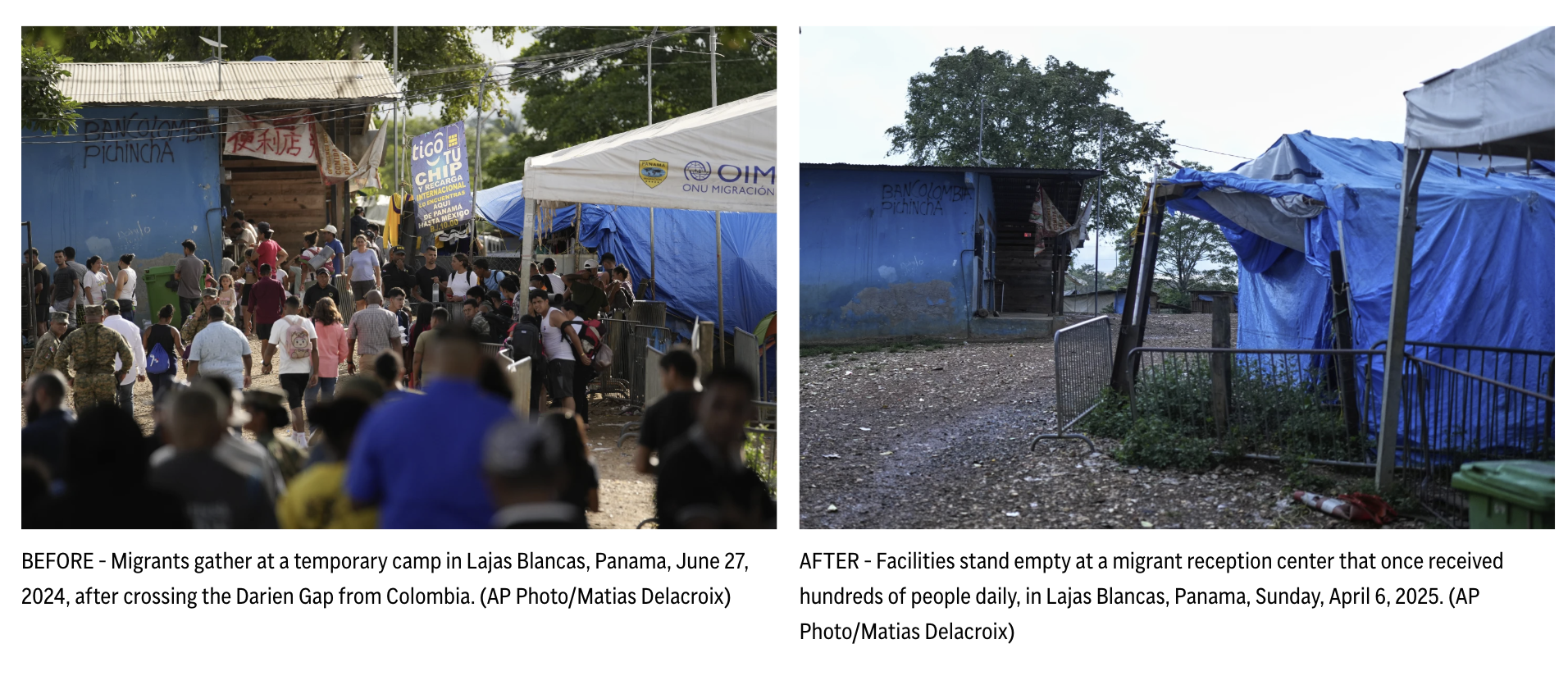
Trump closed the borders: from 10,000 immigrants day to zero. DC court says he must reopen them

It strikes me that there’s a battle going on — a war, if that’s not too hysterical a term — between those who would fundamentally transform America into a country of “citizens” guided and controlled by a select, wiser few, and those accept what the founding fathers achieved and want to keep it. It came into this country with Wilson and his fellow “progressives”, with their claim that the Constitution is a “living document”, one that is in steady improvement with new ideas replacing old, and has been slowly winning as that other Progressive, John Dewey, transformed our educational system into an incubator and breeding hatchery for new kind of citizen — peasants and serfs — who gladly accept their new subservient role.

We’re seeing the battle fought on all fronts - the end-around the Electoral College is just one example; our judicial system is another.

Appeals Court: Trump's Suspension of Asylum System is Unlawful

As everyone knows, President Trump has effectively shut down the U.S. border. As you can see in this chart, the number of border encounters so far this year is lower than any single month during Joe Biden's tenure.

But the way that Trump did this was, partly, by putting an temporary stop to people gaming the U.S. asylum system. Under that system, anyone who presented themselves at the border could claim asylum and then, if they passed the initial interview, be allowed to move into the country to await an immigration court decision on their claim. Because of the massive backlog in the system, the court decision might take 5-7 years. By that point, most people would simply stay, regardless of what the immigration determined. And so long as they didn't commit a felony, ICE was unlikely to ever come looking for them.

But Trump's decision to shut down the asylum system has been tied up in court and today an appeals court ruled his ban on such claims was illegal.

One of President Trump’s key assertions of presidential power over the southern border was ruled unlawful by a federal appeals court on Friday.

In a 2-to-1 decision, the U.S. Court of Appeals for the District of Columbia upheld an earlier ruling by a district court judge that Mr. Trump had to adhere to requirements outlined in the Immigration and Nationality Act and could not categorically deny asylum claims from people crossing from Mexico into the United States.

Existing immigration law “does not allow the president to remove plaintiffs under summary removal procedures of his own making,” Judge J. Michelle Childs wrote for the majority. She rejected the administration’s view of the law, which would allow it to “unilaterally and heedlessly return individuals even to countries where they will most certainly face persecution.”

The judges are essentially ending an approach that Trump put in place on his first day of his 2nd term.

On Mr. Trump's first day back in office, he directed his administration to suspend the asylum process for millions of people seeking to come to the U.S. due to potential torture or persecution in their native countries.

In his executive order, Mr. Trump said that there was an "invasion" into the U.S. and as a result, he was "suspending the physical entry" of undocumented migrants into the country until he determined "that the invasion has concluded."

On the heels of that directive, the Department of Homeland Security issued guidance informing immigration authorities at the southern border that individuals who cross between ports of entry are "not permitted to apply for asylum." The department also declared that people subject to Mr. Trump's executive order could be summarily removed under one of two new processes, "direct repatriation" or "expedited removal," without being allowed to request asylum.

Under the guidance, asylum officers were told not to ask specific questions about whether a migrant has a credible fear of persecution or torture.

“Immigrants rights groups sued and the case has been making its way through the courts ever since. Naturally, the ACLU is pleased and promises this won't result in open borders even though that's de facto how this program has worked for years.”

Here’s what the replacement faction, a faction that includes the new, radicalized Democrat Party, is fighting to undo:

“EXTRAORDINARY”: President Trump Drives Illegal Border Crossings to a New Historic Low

July 2, 2025

Border Patrol encountered just 6,070 illegal immigrants at the southern border in June — another record-setting low (15% lower than the previous record set in March) that underscores the effectiveness of President Donald J. Trump’s robust border enforcement policies and aggressive deportation measures.

It’s a stark contrast to the Biden Administration, when approximately 10,000 unvetted migrants were illegally crossing the southern border every day at the peak of the invasion — most of whom were released into the country with little or no oversight.

Here’s what you need to know:

  • Nationwide illegal immigrant encounters over the month were the lowest on record.

  • For the second straight month, no illegal immigrants were released into the country’s interior.

  • On June 28, Border Patrol hit a single-day record low number of illegal immigrant encounters at the southern border (just 137).

  • The number of “gotaways” — illegal immigrants who escaped into the country undetected — was 90% lower compared to the same month last year.

  • This fiscal year is on track to see the fewest illegal immigrant encounters in five decades.

A quick price cut produced quick, and good results

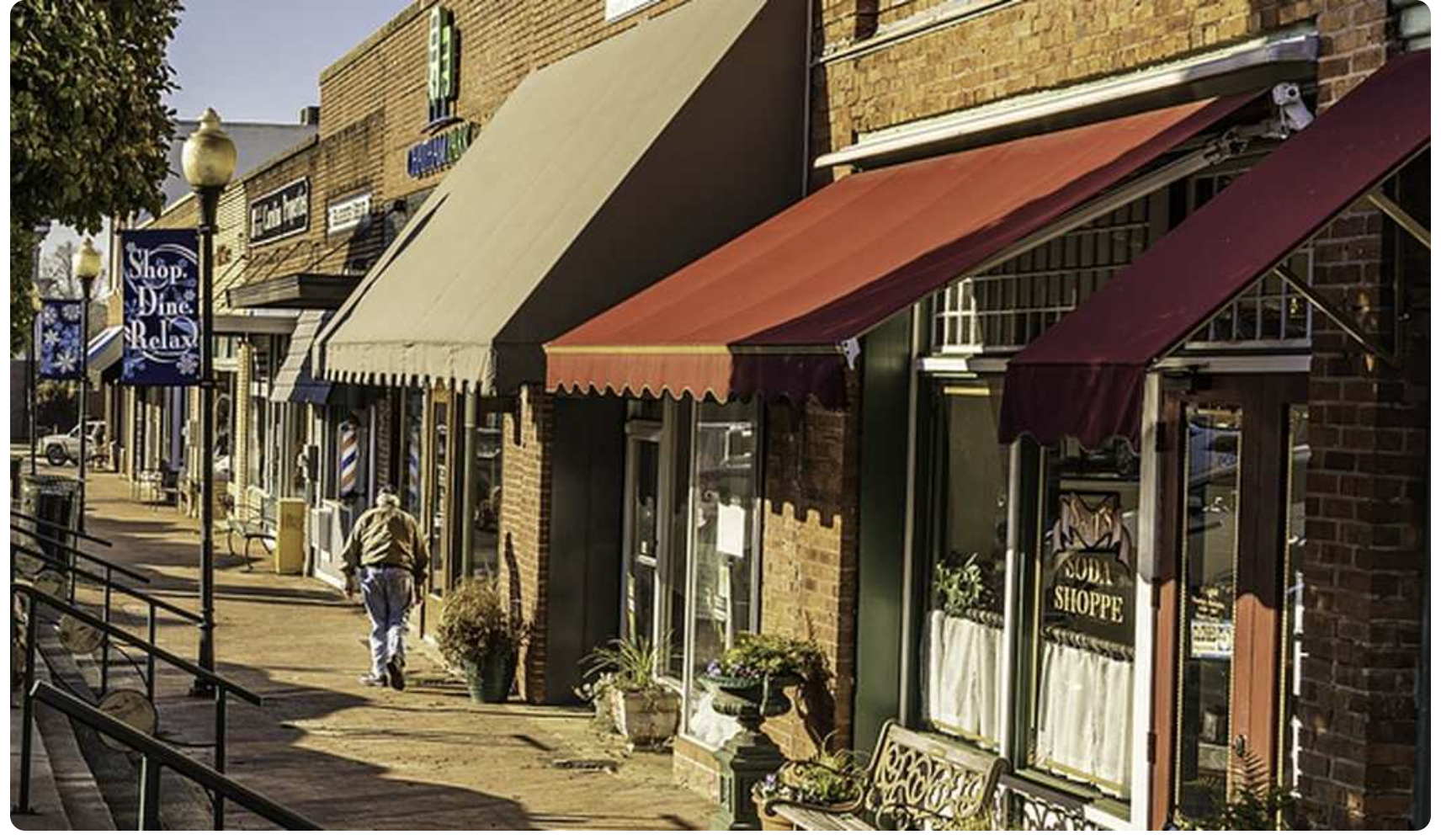
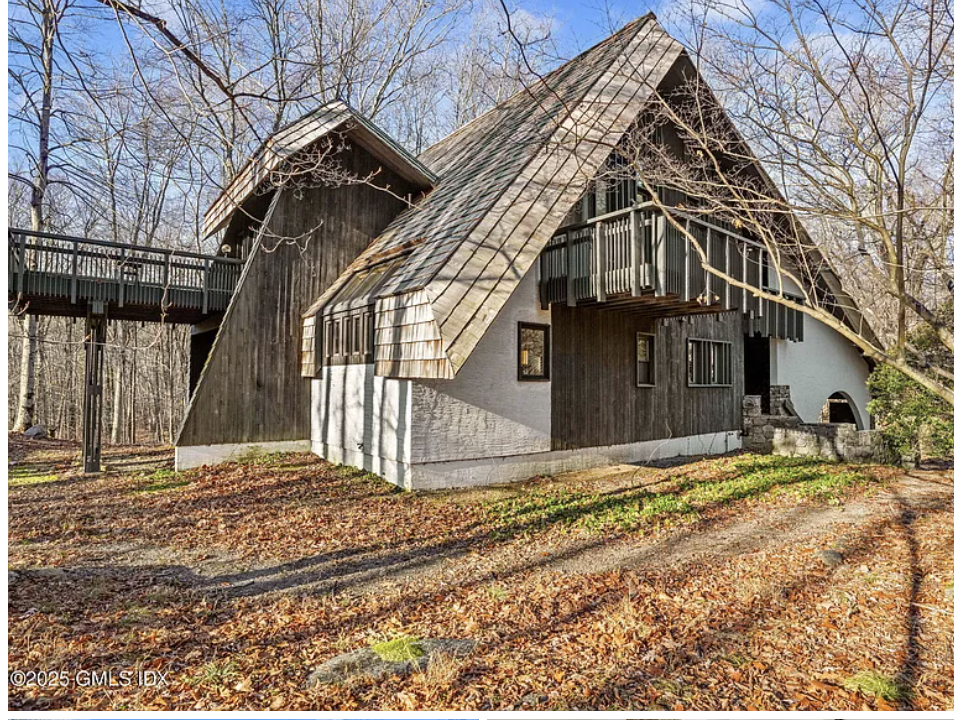
14 Pinecroft Road hit the market February 24 at $5.795, and when listing agent Martha Jeffrey cut its price to $5.450 a week later I applauded her swift reaction to market signals rather than wait, as some buyers and agents do, for “the right buyer” to show up (they rarely do, and the listing merely grows stale instead.) A contract followed the cut almost immediately, and it closed yesterday at $5.5 million. That Martha’s a shrewd character, eh?

Five months ago, Jamie Wilson wrote the story of those displaced workers the MSM still won’t cover or mention

November 20, 2025:

 'Jobs Americans Won't Do': The Lie That Broke a Nation and the Economic and Social Devastation It Hid

Charlotte, N.C., is making headlines this week because dozens of construction sites have gone silent. ICE swept through the region, and the labor force evaporated almost instantly. A major American city discovered, in real time, that its building boom was being held together by workers who couldn’t legally be there. Watching that footage hit me hard, because I’ve seen it before — not on the evening news, but in the slow collapse of my own childhood community.

I grew up forty miles north of Louisville, Ky., in a one-stoplight town held together by tobacco, construction, and the kinds of gritty jobs that built the region’s character. My dad ran a small construction contracting business and held a small tobacco base, which gives you the legal right to grow a certain weight of tobacco. My brothers and I worked tobacco as teenagers, starting at 12 or 13, and my brothers did construction with Dad as soon as we were old enough to hold a hammer. 

Those jobs weren’t easy. Tobacco paid around $10 an hour in the early-to-mid 1980s, the equivalent of $30 today, and you earned every penny. The work was filthy, exhausting, and dangerous: Sticky sap soaked into your skin, July sun cooked you alive, and harvest season meant hatchets, long metal spikes, and dark, dusty barn lofts where one bad step could break a leg. But we did it gladly because the pay was good and the work meant something. Every kid I knew in high school worked tobacco, along with a good share of the adults. It was the backbone of the community. 

Then illegal labor arrived, and things began to shift. The first wave hit the tobacco farms. Farmers who had paid teenagers and local laborers fair wages realized they could hire adults from Mexico and Central America for far less and house them in the kinds of conditions Americans would never tolerate: eight men to a sagging, leaking trailer with no electricity, no running water, no insulation. They were paid in cash, they didn’t complain, they worked year-round, and they had no leverage because they knew their employers could always get them deported. Within a few seasons, American teenagers were no longer hired. Within a few more, the full-time local farmhands, many of whom had been in the area for generations, were gone, too. My parents saw exactly what was happening when one neighbor proudly moved an entire illegal crew into a run-down trailer on their property on a hillside, right in the center of a dairy cow pasture. They thought they had found a clever solution to their labor costs. My parents were disgusted, because they understood what it meant: the beginning of the end for the community’s economic life.

How the Native-Born Labor Market Collapsed, One Job at a Time

The second wave hit construction. Illegal workers who came for tobacco began taking roofing, concrete, and general contracting jobs. My father watched his own bids get undercut again and again by contractors who weren’t paying insurance, taxes, workers’ comp, or legal wages. He played by the rules. They didn’t. His bids were honest. Theirs were impossible. And the impossible bids kept winning. Small local contractors began collapsing one after another, and with them went the trades that had once provided steady work for generations.

The third wave hit Louisville’s meatpacking plants, dangerous but decently paid jobs that could support a family. After illegal labor penetrated the industry, wages plummeted. Locals stopped applying because they couldn’t survive on what those jobs now paid. The companies didn’t care. Illegal crews would fill the shifts at half the cost.

The fourth wave was quieter but devastating: the wives and older kids of the new arrivals began filling fast-food, restaurant, and service jobs. Those jobs disappeared for American citizens as quickly as the farm and construction work had. Suddenly, teenagers couldn’t get any jobs at all. The ambitious ones left for the cities; the rest were stranded with no path into adulthood. That drained the cultural lifeblood from the town. When you lose your youth, you lose your future.

The social collapse followed the economic one. Welfare, once nearly nonexistent, became a survival mechanism. A government housing complex went up, something unimaginable a decade earlier. Property crime increased as people stole scrap metal, tools, and anything they could sell.

When I attended high school, even the worst troublemaking kids mostly drank beer and maybe smoked a joint around a bonfire at midnight. They were idiots, but they were harmless and generally got over it. But the flow of foreign labor brought in something new: meth and harder drugs, carried in through the same illicit channels that brought the new labor north. Families began to fracture. Kids were raised by grandparents. Churches thinned. Schools struggled. The town didn’t implode all at once. It simply withered, season by season, job by job, until it became a pale version of what it had been.

Politicians Blame the Workers

And through all of this, politicians, pundits, and corporate lobbyists kept repeating the same line: “Americans just won’t do these jobs.” That phrase infuriated me from the first time I heard it. I knew it was a lie. I had done the tobacco work myself. My brothers had. Every teenager we knew had. Every adult performed the hard labor that kept the region alive. Americans didn’t suddenly lose their work ethic. The jobs were taken from them — not by immigrants directly, but by American employers who built a business model on illegal labor and by a federal government that looked the other way for forty years.

What Americans “won’t do” are jobs that have been made illegal in everything but name — jobs where wages have collapsed to exploit desperation, where safety standards are ignored, where workers are paid off the books, where insurance and taxes are bypassed, and where living conditions violate every regulation on the books. When the floor is lowered that far, legal workers cannot enter the market at all. That isn’t laziness. That’s math.

Kentuckians know this dynamic intimately because our parents and grandparents lived through the company-store era, when the coal companies controlled the whole lives of their employees and paid in scrip instead of dollars to maintain economic power. Kentuckians recognize exploitation when they see it. When elites say “jobs Americans won't do,” we hear the truth hiding underneath: “jobs Americans won't do under company-store conditions.” And no one should.

Besides, it's not the fault of workers, not at all. That rests squarely on the politicians, in the one bill President Ronald Reagan said he regretted signing.

1986: The Amnesty That Changed Everything

In 1986, Congress passed the Immigration Reform and Control Act (IRCA), a sweeping bill that granted amnesty to more than 2.7 million illegal immigrants already living in the United States. It was sold as a grand bargain: a one-time legalization now, paired with strict employer enforcement later. With this combination, lawmakers promised, illegal immigration would finally be solved “once and for all.”

Congress only upheld half of the bargain.

The amnesty happened.

The enforcement never did.

The employer-verification system was toothless from the start — underfunded, weakly enforced, and politically inconvenient. Businesses quickly discovered that hiring illegal labor remained a low-risk, high-reward strategy. The message traveled fast: The United States had demonstrated that if you arrived illegally and stayed long enough, Congress might eventually reward you with legal status.

And from the perspective of those considering the journey north, this wasn’t irrational behavior. It was economically logical. Enforcement was inconsistent. Work was plentiful. Employers preferred illegal labor because it was cheaper and more compliant. The United States had inadvertently (one hopes) created a massive incentive pipeline: Come illegally, stay quiet, get rewarded.

IRCA didn’t reduce illegal immigration. It normalized it, then supercharged it.

The price was paid not by politicians or lobbyists, but by workers like the men and women and teenagers in my town. What happened to us in rural Kentucky — tobacco collapsing, construction undercut, meatpacking wages falling, youth jobs disappearing, communities crumbling — was the predictable outcome of a federal policy that left the borders loose, the incentives warped, and American workers unprotected.

>>>>

Illegal labor isn’t a solution. It’s a dependency — one that corrodes wages, destroys skill pipelines, hollows out communities, and leaves entire sectors vulnerable to collapse. If we want a strong and resilient country, we must confront that reality now. The alternative is more Charlottes, more hollowed-out towns, and more lost generations, all sacrificed on the altar of a system that was never sustainable in the first place.

Where were the stories on the 100,000 blue collar workers laid off when Biden killed the XL Pipeline?

Because the media flying monkeys swing to the tune called by the DNC and its chief propaganda organ, the day after the NYT profiled the woes of USAID employees (and NGO workers who fed on its grants) laid off after Trump eliminated the agency, NBC rushed to produce its own version:

NBC Tells DOGE Layoff Sob Stories on Behalf of the DNC

UPDATE:

Wait for the inevitable law suit and injunction to issue

$1.5 million vs $301,000,000, weeks instead of years: how un-Washingtonian!

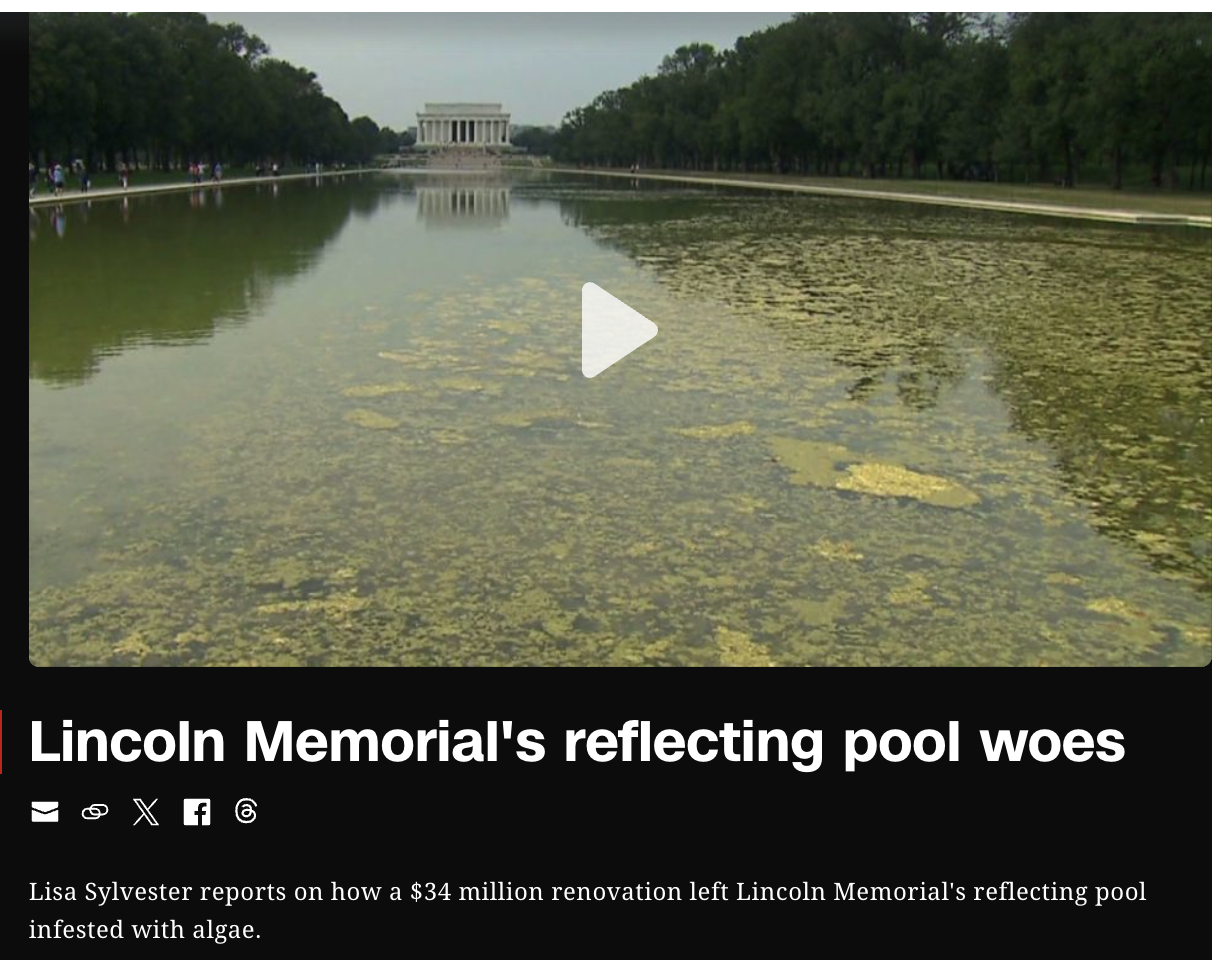
AP: Lincoln Memorial Reflecting Pool gets a blue coating as Trump tackles renovation project

(Or as David Manney, PJMedia puts it):

Trump Restores a Landmark and Saves Millions

WASHINGTON (AP) — President Donald Trump is having the Lincoln Memorial Reflecting Pool coated in a swimming pool surface hued in “American flag blue,” covering up a decades-old granite surface that he said was “leaking like a sieve” and would take years to replace.

The president announced the renovation at an Oval Office event Thursday, saying the coating had already begun. He was inspired to tackle the project after a friend visited from Germany and lamented that the water was filthy and looked disgusting, Trump said.

“And I went over there with Secret Service in tow, and I said, isn’t that a shame? That’s terrible,” Trump said, showing reporters a photo of the site as it undergoes work.

The project is one more makeover refashioning the nation’s capital to Trump’s liking, following others such as the demolition of the White House’s East Wing to make room for a new ballroom.

In Trump’s telling, the reflection pool project is a case study in business acumen. The president said he scrapped plans to have the granite replaced, which he said was estimated to cost $301 million and would take at least three years.

Instead, Trump said he called a few pool contractors he knows from past real estate projects — “I have a guy who’s unbelievable at doing swimming pools up the road,” Trump said.

The president went with a plan to clean the granite and lay down a new “industrial grade pool” surface for $1.5 million, he said. All told, it would take a few weeks. Trump noted it would be ready well before July 4, when the nation celebrates the 250th anniversary of its independence.

Trump brought up the project unprompted and spoke about it for several minutes at a White House event on efforts to reduce drug prices. He said he initially wanted a turquoise-colored surface “like in the Bahamas” but was sold when a contractor suggested “American flag blue.”

“You’re going to end up with a beautiful, beautiful reflecting pool,” Trump said, “the way it’s supposed to be, much better than it ever was.”

Manney:

As you can imagine, TDS hit critics who are pushing back, with some questioning the color. Others wonder about the method, yet none of those complaints change the basic outcome. The pool no longer leaks, keeping costs low, with a short timeline. Visitors will see a clean and functioning landmark instead of a worn and failing one.

Burgum has overseen the project through the Interior Department and has worked to keep it moving without delays. He's supported a practical approach that avoids construction and unnecessary spending, an approach that stands in contrast to the earlier proposal that would've drained hundreds of millions of dollars and tied up the site for an extended period.

Trump said U.S. Secretary of the Interior Doug Burgum told him there have been "a lot of problems" with the pool, adding that it hasn't worked properly for "many years."

The president said the pool is "decaying" and plagued by leaks, adding that the renovation could be completed more quickly and at a lower cost than traditional reconstruction. He has framed the effort as part of a broader push to improve the appearance of Washington, D.C., and prepare for the nation’s 250th anniversary celebrations.

"We scrubbed the existing granite that's been there since 1922," he said. "We then grouted all of the granite, fixed it it -- took about two weeks, and now we have a nice, clean surface on which we're putting an industrial-grade swimming pool topping. And they said, 'What color would you like, sir? It's called American Flag Blue.' I said, "That's the color I want. I want American Flag Blue.'"

Mamey:

Washington has seen plenty of projects stall, drag on, or balloon in cost, a pattern that has become familiar. Trump's approach breaks from that pattern by setting a goal, funding it, and completing it without unnecessary delay. The reflecting pool now stands as an example of how quickly a problem can be resolved when leadership chooses action over process.

The broader point reaches beyond a single landmark. Government often promises improvement and delivers paperwork. In this case, the work is visible, measurable, and complete within a short window. 

The pool holds water, the surface looks clean, and the setting matches the importance of the memorial it serves.

While critics keep talking, renovations keep standing.

A bit of history here: They’ve been trying to fix it for decades

Originally built during the 1920’s—without any pilings to support it—the iconic pool had sunk about a foot.

This slow sinking caused significant cracking and leaking, which required the city to provide roughly 30 million gallons of water per year—nearly 600,000 gallons per week—just to replenish the loss. The Reflecting Pool, originally built with an asphalt and tile bottom, had deteriorated over the years, causing the pool to leak 500,000 gallons of water per week.

And seven years later:

May 30, 2019

The Reflecting Pool At The Lincoln Memorial Is Being Drained For Repairs

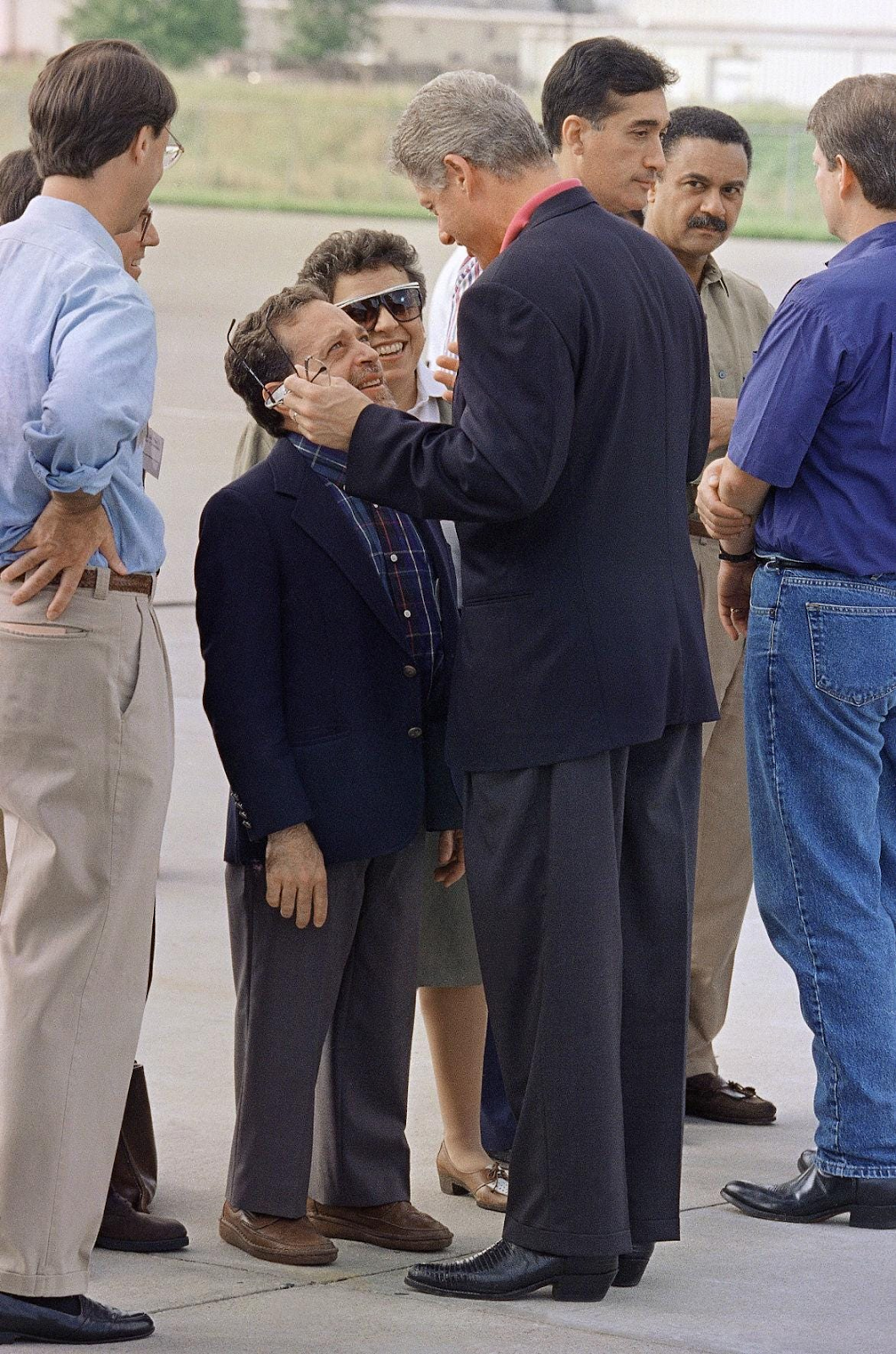
Funny, I don't remember the Democrats ridiculing Robert Reich

(Bill Clinton is 6’2”)

Twitchy:

This is who the Democrats are. They still have time to delete this, but they won't see a reason to. 

In any case, FactPost, which is run by the people who used to run the KamalaHQ social media account before that flamed out, posted an "unearthed" photograph of President Donald Trump's new Acting Navy Secretary, Hung Cao, posing with former Virginia Gov. Glenn Youngkin. The Democrats must have thought it was pretty funny that the 5'8" Cao was standing next to Youngkin, who's 6'7". They reposted the "unearthed" photo with a "tiny penis" emoji.

FactPost says its mission is to post facts. The fact is that Trump's new Acting Navy Secretary is much shorter than Youngkin. And?

Here are some other facts about Cao:

Not so difficult: a six-year-old could probably accomplish that with almost any senator

Stephen Green: “We could outsource the rabies office to the Maytag repair guy to handle in his spare time.”

I’d ask, staffed or not, why do even have an office of Rabies at all?

Seven is the New Thirty

No so long ago, and for years back, the average time between listing and contract seemed to be around 30 days. I haven’t actually looked up that stat, but that was my impression. Right now, seven seems to be the number. Here’s today’s crop:

Mind you, there are laggards in any crowd, such as this one:

And here’s a sale that’s the exception that proves the rule; or it would, but this one went to contract way back in February - different time

Imagine the lifespan of EV chargers* when (well, if) they start installing them on public streets

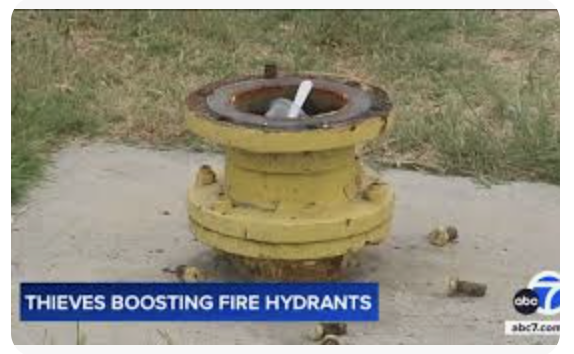
The New Hotness? Thieves destroy nearly 75 Detroit fire hydrants to steal metal parts, putting lives at risk.

Thieves have destroyed nearly 75 fire hydrants on the west side of Detroit in the last 48 hours, stealing parts and putting lives at risk.

Crews with the Detroit Water and Sewerage Department are racing to repair the broken hydrants along Southfield Road and across the west side after thieves tore through dozens in about two days.

“We think the number is about 75 so far,” DWSD Deputy Director Sam Smalley said.

The thieves are targeting metal nozzles and stems on top of the hydrants, which are worth about $600.

Executive Fire Commissioner Chuck Simms said the vandalism is a serious and unacceptable situation that puts lives at risk.

“No matter how fast we get to a fire, if we don’t have an operable fire hydrant, it takes seconds, sometimes even minutes away from maybe us saving lives,” Simms said.

And not just in Detroit, naturally:

2024:

Thieves are now targeting fire hydrants across Los Angeles County

"The theft rate is alarming and getting worse. GSWC is taking serious steps to mitigate the problem by installing locks and working with local fire and law enforcement authorities. GSWC has also written letters to local scrap yards reminding them that receiving stolen hydrants is a federal offense," the company said in a statement.

*There’s only about five bucks of copper in an EV charger, but that hasn’t stopped thieves

A new report from CBC News in Canada has looked into a spate of EV charging cable thefts that has rocked provinces north of the border. The attacks on EV charging stations have seen vandals cut into the charging cable to swipe the copper metal inside, which they then attempt to sell in order to turn a profit.

While that might sound like an easy way to make a few bucks, there's just one problem: most EV chargers only contain about $5 worth of copper metal. So if you're hoping to become a millionaire via this scheme, you'd need to raid 200,000 EV chargers, which is more than you'll find in both the U.S. and Canada combined.

"The charging cable is typically copper inside, but it's not much," William York, president of the EV Association of Alberta, told CBC News. "So for it to be theft, I think it's a misconception on behalf of the person that's perpetrating it. They think there's a lot more value in those cables than there actually is, it's only a couple of dollars, but that cable to the owner of the charging station to replace is in the hundreds to thousands of dollars.

The spate of attacks on EV charging stations isn't limited to Canada either. According to the U.S. Department of Energy, instances of copper theft across the country have spiked as the cost of the metal has soared. While the cost has risen from its low in 2022, the cost of copper still only sits around $3.80 per pound here in the U.S.

"This is not a good way of getting metals," Travis Allan, chief legal and public affairs officer at FLO, told CBC News. "It's not a good way of making money, it's dangerous, it's not worth the costs or the risks."