Sale on Horse Hockey Lane

12 Stallion Trail, $3.6 million, began at $3.950 million May, 2025. Owner paid $3.150 in 2007, and did some remodeling, including ripping out the indoor pool, which was probably wise.

Stallion Trail was never one of my favorite developments — Merritt Parkway and modern designs — and if memory serves even its developer tried to burn down a couple of the newly-constructed houses (but memories are fickle things, so …)

The buyer has a Yale P.O. Box, and that doesn’t surprise me.

Pictures have been removed from the internet — I’d be ashamed, too —but a video’s still posted on Instagram as of this writing.

D.C. Jurisprudence

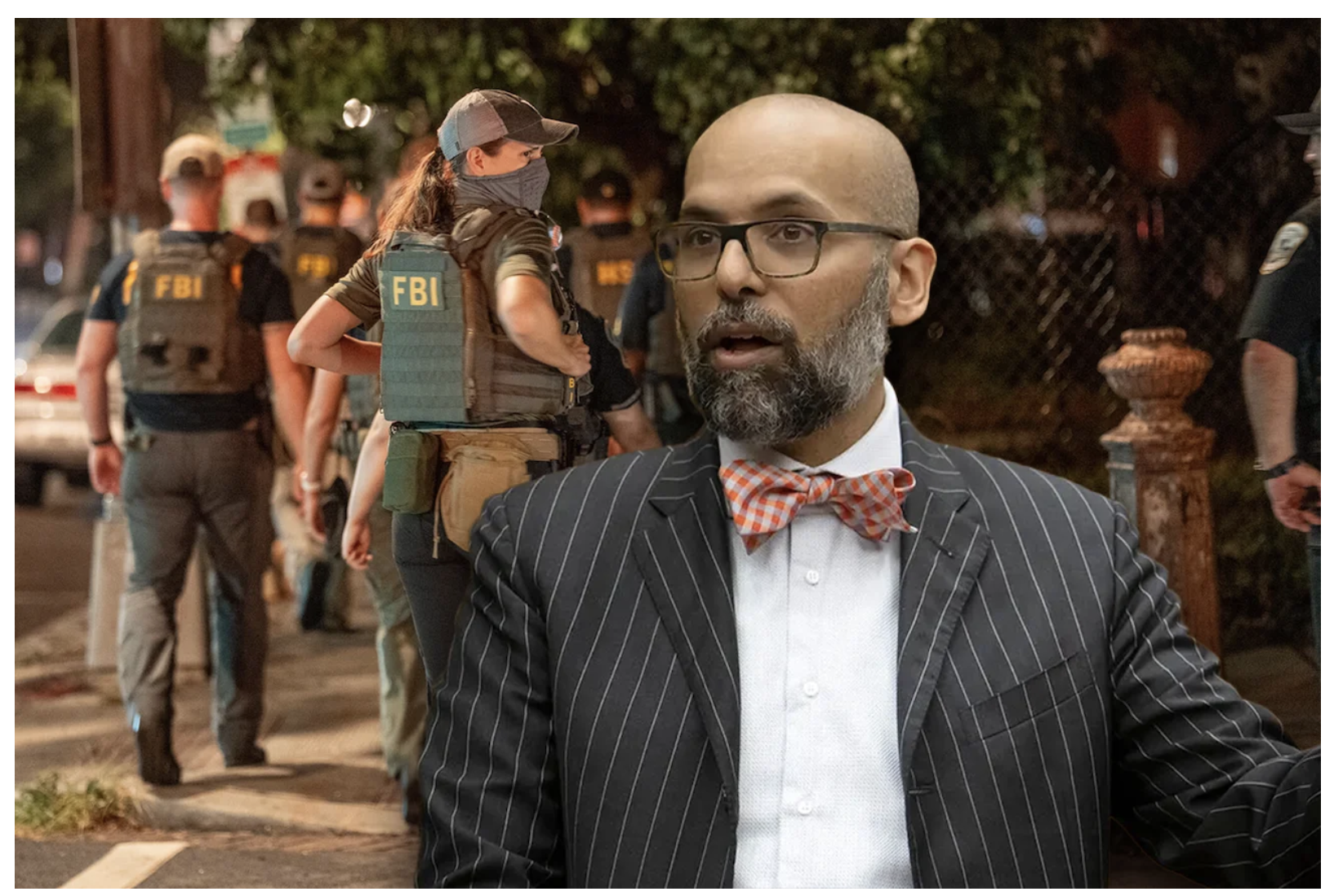
So who is this magistrate? From a hagiography published by the American Khani, whose editors admit, “This story was aggregated by AI from several news reports and edited by American Kahani’s News Desk.”:

The Judge Who Won’t Bend the Knee: Pakistani American Zia M. Faruqui’s Lonely Stand Against Trump’s Justice Department

October 2, 2025

As federal prosecutors bring a wave of questionable cases under Trump's crime crackdown, one magistrate judge—a former prosecutor himself—is publicly calling out what he sees as the erosion of legal norms and justice.

In the ornate courtrooms of the E. Barrett Prettyman Federal Courthouse, where the weight of federal justice has been dispensed for decades, U.S. Magistrate Judge Zia M. Faruqui has emerged as an unlikely—and increasingly vocal—critic of his former employer: the U.S. Attorney’s Office for the District of Columbia.

Week after week, as President Trump’s crime crackdown floods Washington’s federal courts with arrests made by National Guard troops and federal agents, Faruqui has watched with growing alarm as prosecutors bring cases he believes violate constitutional rights and abandon long-established legal principles. His response has been extraordinary: a series of scathing written orders and pointed courtroom remarks that accuse the Justice Department of breaking “decades-long norms and the rule of law.”

“There’s no credibility left,” Faruqui declared from the bench in early September, according to The Washington Post, as he upbraided prosecutors for their handling of the deluge of cases stemming from Trump’s local policing surge.

The most dramatic confrontation came Monday, September 30, when Faruqui pre-emptively refused to accept an indictment after learning that prosecutors had performed what he described as an “end run” around the normal course of justice, according to The New York Times. After failing to secure an indictment from a federal grand jury, prosecutors took federal charges to a local grand jury in Superior Court, which returned an indictment.

In a scathing order filed in Federal District Court, Faruqui wrote that he had never heard of such a thing, saying that what appeared to be grand jury forum shopping had broken “decades-long norms and the rule of law.”

“At a minimum, this is very unseemly,” Judge Faruqui wrote, according to the Times. “More than likely, it is unlawful.”

The case involved Kevontae Stewart, who was arrested on September 17 after authorities approached him in a parked car and smelled what they described as marijuana. When officers asked Stewart to exit the vehicle, he allegedly fled, dropping a black pistol. A federal grand jury declined to indict Stewart on charges of being a felon in unlawful possession of a firearm—an extremely unusual outcome, as grand juries typically go along with prosecutors.

What happened next shocked even the experienced jurist: Rather than trying again with another federal grand jury or dropping the case, prosecutors took the federal charge to a local grand jury and secured the indictment they had failed to obtain the first time.

“Typically, when a federal grand jury refuses to return an indictment in a case, either the government takes the message as a warning to go no further or, hopefully in only the rarest of cases, presents the indictment again to another federal grand jury,” Faruqui wrote in his order. “To this judge’s knowledge, what has never happened before is doing an end run around the federal grand jury completely. Yet that is what has happened today.”

>>>>

Judge Faruqui has accused prosecutors of overcharging people ensnared in Trump’s local crime initiative and bowing to pressure to bring criminal cases at the expense of protecting defendants’ legal rights, according to the Times. He said prosecutors are routinely bringing cases that don’t belong in federal court and needlessly keeping defendants in jail, The Washington Post reported.

The Man Behind the Gavel

Faruqui’s willingness to speak out carries particular weight given his background as a career federal prosecutor. According freelance journalist Elaine Pasquini, he was appointed as U.S. Magistrate Judge on September 14, 2020, becoming the first Pakistani American to serve in that role. He received both his BA and JD from Georgetown University.

Following law school, he worked as a litigation associate at the law firm Willkie Farr & Gallagher in Washington, focusing on government investigations and general commercial litigation. He then served for twelve years as a federal prosecutor in the U.S. Attorney’s Offices in St. Louis and Washington, D.C.

During his prosecutorial career, according to the Muslim Bar Association of New York, he handled some of the most complex and high-profile cases imaginable: terrorists’ use of cryptocurrency, North Korean weapons proliferation, darknet sites dedicated to child exploitation, and theft of antiquities. He represented the Department of Justice at numerous conferences across the globe on financial crimes, cryptocurrency, and national security issues.

This deep prosecutorial experience makes his current criticisms all the more significant. He knows the system from the inside, understands the pressures prosecutors face, and recognizes when those pressures are leading to constitutional violations.

Faruqui is also a member of the Board of Advisors of the Muslim Americans in Public Service organization and serves on the Advisory Board of Georgetown Law School.

The Pirro Pushback

U.S. Attorney Jeanine Pirro has not taken the criticism quietly. In a statement responding to Faruqui’s rebuke about the grand jury forum shopping, she said: “Instead of being an activist judge, Judge Faruqui should spend more time focused on his cases, so that he doesn’t get overruled so often. The submission of an indictment to the court is a ministerial act over which Judge Faruqui has no additional powers of judicial review,” according to the Times.

After Faruqui’s broader criticisms of her office’s handling of the surge cases, Pirro told The Washington Post that the judge “has allowed his politics to consistently cloud his judgment.” Fox News reported that Pirro fired back at Faruqui’s remarks, defending her prosecutors’ work.

The public dispute between a sitting magistrate judge and the U.S. Attorney represents an extraordinary breakdown in the traditional collegiality between the bench and federal prosecutors—a relationship that typically operates on what Faruqui described as “the presumption of regularity,” the trust courts have long conferred on government lawyers.

“This only deepens the growing mistrust of the actions of prosecutors,” Faruqui wrote in his order, according to the Times. “That is a sentiment that was once unthinkable, but the irregular is now the regular.”

…. Faruqui—one of four magistrates at the district court in Washington—finds himself in a difficult position. As The Washington Post reported, he is a former prosecutor criticizing his former colleagues, a Pakistani American judge appointed during a Democratic administration now challenging a Republican president’s law enforcement priorities, and a magistrate judge potentially at odds with district court judges who may ultimately review his decisions.

Yet he appears undeterred. As a curative measure in the Stewart case, Faruqui asked prosecutors to file papers by Friday explaining their actions and telling him whether he even had the legal authority to accept an indictment on federal charges from a local grand jury, according to the Times.

A Lonely Stand

What makes Faruqui’s position particularly notable is that he appears to be largely alone among federal judges in Washington in speaking out so forcefully and publicly. While other judges may share his concerns privately, he has been willing to put those concerns in written orders that become part of the public record and to make pointed remarks from the bench that reporters can quote.

This willingness to speak truth to power comes with risks. Pirro’s accusations of political bias could influence how appellate courts view his rulings. His relationship with prosecutors who regularly appear before him has been strained, potentially complicating the day-to-day administration of justice. And his public profile makes him a target for criticism from those who support Trump’s law enforcement approach.

Yet Faruqui seems driven by a conviction that silence in the face of what he views as constitutional violations and erosion of legal norms would be a greater betrayal of his judicial oath than any discomfort caused by speaking out.

>>>>

As Trump’s crime crackdown continues and more cases flood the federal courts, the confrontation between Faruqui and the U.S. Attorney’s Office seems likely to intensify. The fundamental questions he has raised—about constitutional rights, prosecutorial overreach, and the proper limits of law enforcement power—will only become more pressing.

Whether other judges will join Faruqui in speaking out publicly remains to be seen. But his willingness to put his concerns in writing, to demand answers from prosecutors, and to refuse to rubber-stamp indictments that he believes violate legal norms has already made him a central figure in one of the most significant confrontations between the federal judiciary and the executive branch in recent memory.

For now, Zia M. Faruqui sits in his courtroom in the E. Barrett Prettyman Federal Courthouse, making his lonely stand for what he believes are the fundamental principles of American justice—principles he fears are being sacrificed in the rush to prosecute cases that may generate headlines but lack constitutional foundation.

“The irregular is now the regular,” he wrote. It is a warning that resonates far beyond his courtroom, a challenge to all those who believe the rule of law should mean more than the rule of those in power.

There: now do you feel better about the men and women interpreting our laws?

The Bee returns to straight reporting

And now on to the rest of the country:

Rashida Tlaib's new 'Unhoused Bill of Rights' would protect homeless camping

Resolution would also require $168B in defense spending be redirected to end homelessness and grant rights to internet access and panhandling

Rep. Rashida Tlaib, D-Mich., introduced legislation last week that would significantly expand rights for the homeless and overhaul how the government treats Americans living on the streets by siphoning billions from defense spending.

The "Unhoused Persons Bill of Rights" calls for government-led intervention to end homelessness over the next three years and introduces more than a dozen protections for homeless people.

If passed, Tlaib's legislation would include freedom of movement for homeless people in public spaces, affordable housing, "livable" wages, universal healthcare and panhandling.

Under the resolution, homeless individuals would have the "right to uninhibited access" to public parks, transportation, facilities, sidewalks, buildings, restrooms and other spaces — meaning they could legally set up camp in such public spaces.

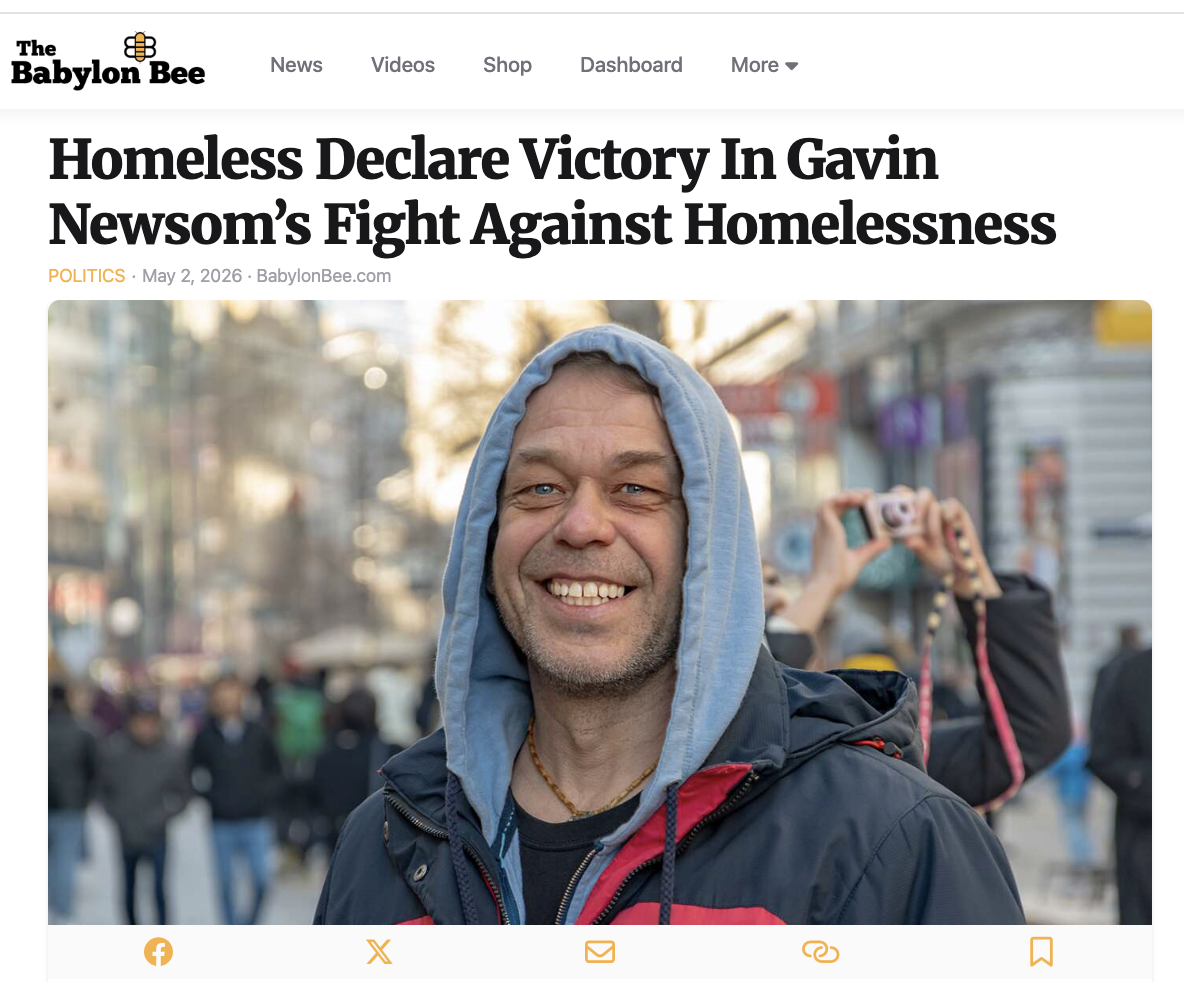
They’re just one election away from achieving this.

UPDATE — AND IT’S NOT THE BABYLON BEE

Is this something similar to Senator Aiken’s suggestion on ending the war in Viet Nam back in 1966: “Declare victory and go home”?

Unfortunately, and just like all politicians, he knows his constituents are stupid enough fall for this, because they keep re-electing him

Stupid is as stupid does

So, he’d suspend the gas tax (not repeal, just hide it in the closet for the moment, ready to come roaring back) and tax consumers the same amount, or more, but pretend that a so-called “windfall profits” won’t be passed on to customers.

Connecticut’s own politicians discovered just how stupid their voters were way back in 1980 when they too passed a windfall profits tax with a provision that they knew would be struck down barring oil companies from passing it along. That provision is long gone, of course, but tax is still with us, 46 years later.

Here’s Grok’s summary:

No, Connecticut’s so-called windfall profits tax on oil companies has never been repealed. It remains in effect today as the Petroleum Products Gross Earnings Tax (codified in Connecticut General Statutes Chapter 227, §§ 12-587 et seq.).

Here’s the history that matches what you described:

  • The tax was enacted in 1980 as part of Public Act 80-71 (effective in 1981 during the second oil crisis). It was originally a 2% tax on the gross earnings of companies distributing, refining, or importing petroleum products in the state (the rate has since risen, with adjustments and caps over the years, currently around 7–8.1% on certain products with some exemptions).

  • The original legislation included (or was accompanied by) a provision explicitly intended to prevent oil companies from passing the tax through to consumers in the form of higher prices. Lawmakers framed it as a way to make the oil companies absorb the cost.

  • As predicted at the time, that anti-pass-through restriction was quickly struck down by a federal district court (1980 ruling by Judge M. Joseph Blumenfeld) as an unconstitutional interference with interstate commerce.

    Despite the court ruling invalidating the pass-through ban, the legislature never repealed the underlying tax itself. Instead, it has kept the tax in place for over 45 years, expanded its scope in some ways, added various exemptions (e.g., for certain heating fuels, biodiesel blends, aviation fuel), adjusted the rate and base over time, and continued to collect revenue from it. It now helps fund the Special Transportation Fund, among other things.

  • There have been occasional legislative proposals to repeal or replace it (e.g., converting it to a straight per-gallon tax or eliminating it outright), but none have succeeded. The tax remains on the books and is still being collected.

Hartford legislators to their D.C. betters: "hold our beer"

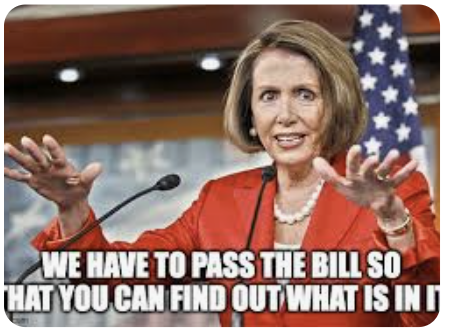
channeling their inner pelosi

Sweeping labor legislation gains final passage, heads to CT governor’s desk

Over 200 pages, 75 sections, nobody had time to sort through it and find all the buried provisions put in by the labor unions and other favored constituencies, but what’s knowledge got to do with it? Besides, we’ll all find out what’s been hidden away once the effects come alive and start whacking us chumps on the head.

The Connecticut Senate gave final passage to H.B. 5003, sweeping labor legislation that would address wage theft in the building trades, job protection of services workers, compensation for workers assaulted on the job, and require companies to present position wage ranges on job applications.

Senators voted 28-7, sending the bill to the governor’s desk for his signature.

It’s difficult to believe that after surviving without them for over 200 years, Connecticut suddenly has a need for 200 pages of new labor laws to be enacted in just one year.

Diversity is our strength

July 11, 2019

By Elizabeth Warren

Immigrants have always been a vital source of American strength. They grow our economy and make our communities richer and more diverse. They are our neighbors, our colleagues, and our friends — and every bit as much a part of America as those who were born in the United States.

President Trump sees things differently.

May 3, 2026:

Michigan Pharmacy Tech Pleads Guilty to $5.6M Medicare Fraud and Selling Oxycodone to Drug Traffickers

A Michigan man pleaded guilty earlier this week to defrauding health care benefit programs, including Medicare and Medicaid, by billing for prescription medications that he never dispensed and providing unlawful prescriptions of oxycodone to drug traffickers in exchange for cash.

According to court documents, Ali Naserdean, 32, of Dearborn Heights, Michigan, was a pharmacy technician at three metro-Detroit pharmacies. 

From 2019 through 2022, Naserdean and his co-conspirator submitted false and fraudulent claims to health care benefit programs for prescription drugs that were not ordered by a doctor and never dispensed to the patient. 

Naserdean and his co-conspirator used forged prescriptions from doctors to hide their scheme, when the patient had never seen the listed doctor and the medication had never actually been prescribed. 

Naserdean and his co-conspirator caused over $5.6 million of loss to Medicare, Medicaid, and Blue Cross Blue Shield of Michigan. 

And here’s your Paul Harvey “Rest of the Story” moment: Not all of these criminals are “from away” — just most of them.

July 2, 2025:

Federal court cases in Michigan

Usman Ahmad, 66, of Lake Orion, Durand Dynum, 46, of Canton, Ebony Daniels, 33, of Eastpointe and Allen Satawhite, 37, of Detroit, are charged with conspiracy to distribute and distribution of controlled substances. Investigators allege that Ahmad, a pharmacist who owned Detroit Hoover Pharmacy, used his business to illegally distribute drugs that doctors used at a clinic in Southfield. Dynum, Ebony Daniels and Satawhite are accused of recruiting fake patients to the Southfield clinic.

Wahid Makki, 62, and Zainab Makki, 62, both of Dearborn Heights, are accused of filing false claims to Medicaid and Medicare for prescription drugs for two pharmacies they operated. They agreed to pay the U.S. and Michigan $1.5 million to resolve a lawsuit. Additionally, Wahid Makki agreed to be barred from Medicaid, Medicare and other federal health care programs for 10 years.

Dr. Mohmmed Al-Shihabi, 55, of Northville, is charged with conspiracy to commit health care fraud and four counts of health care fraud. Authorities allege that Al-Shihabi submitted $450,000 in false and fraudulent claims to Medicare for services for beneficiaries. In exchange, he allegedly falsely certified the beneficiaries as homebound, resulting in $1.5 million in false claims for unnecessary home health services.

Dr. Priti Bhardwaj, 55, of Bloomfield Township, is charged with conspiracy to commit health care fraud and three counts of health care fraud. Bhardwaj is accused of accepting referrals of Medicare beneficiaries and submitting $1 million in fraudulent claims for services, receiving about $249,000. In exchange, Bhardwaj falsely certified the beneficiaries as homebound, allowing home health agencies to submit $790,000 in fraudulent claims.

Ali Naserdean, 32, of Dearborn, is charged with conspiracy to commit health care fraud and three counts of health care fraud. Investigators allege Naserdean, who owned a pharmacy, billed Medicare, Medicaid and Blue Cross Blue Shield of Michigan more than $6 million for medications that they say were not were not prescribed or considered "medically unnecessary." Federal authorities seized $1.1 million in cash, a Range Rover and watches and bags, valued at about 1.2 million.

Paul Eric Lyons, 41, of Fraser, and Tiffany Nicole Childs, 35, of Sterling Heights, are charged with conspiracy to commit health care fraud in connection with a $1.4 million scheme. Lyons was also charged with identity theft. According to the Attorney's Office, the pair allegedly submitted claims of dental services at clinics where Lyons worked. Investigators say Lyons eventually created fake dental clinics and stole the information of actual patients where he worked and billed their insurers.

In addition to the individuals charged in federal court, Villa Financial Services LLC, Villa Olympia Investment LLC and six other Southeast Michigan Villa nursing homes agreed to pay $4.5 million to the U.S. and the state of Michigan to resolve a lawsuit. The businesses are accused of failing to provide services to nursing home residents, violating the False Claims Act.

Another option for Mr. Cole: enroll him in Canada-Kare

Canadian Hospital to Catholic Priest With Hip Injury: Drop Dead

Robert Spencer:

Even after all these years of Obamacare, it’s still easy to find “experts” who will insist that government-run, single-payer healthcare, such as the system that is in place in Canada, is preferable to a system in which everyone pays for the medical attention he needs instead of paying the government for medical attention for everyone. And we’re likewise told that Canada’s Medical Assistance in Dying (MAiD) program is a truly compassionate solution for people who have nothing to look forward to but a life of pain and misery. But as is so often the case with programs that leftists favor, the reality is considerably uglier than the hype, as a 79-year-old Canadian Roman Catholic priest has just discovered.

The Daily Caller reported Saturday that Fr. Larry Holland “fractured his hip after falling in his bathroom on Christmas Day 2025.' That sort of thing is going to happen when you’re getting on in years, and so when Fr. Holland “subsequently went to Vancouver General Hospital to seek treatment for his injury,” he wasn’t expecting anything except routine medical procedures. Instead, he was in for an ugly surprise.

A physician at Vancouver General Hospital “raised the possibility of him taking his own life through Canada’s taxpayer-funded and government-run Medical Assistance in Dying (MAiD) program in the event his injury worsened.” Now, it’s common enough for elderly people to fracture or break their hips, but doing so is generally not fatal. Was this doctor simply tired of setting fractured hips? Or is there some massive manpower shortage in Canada’s socialist healthcare system, such that doctors are recommending assisted suicide to people who are neither in tremendous pain nor suicidal, solely to relieve some of the pressure upon that system? Or is there an even more insidious reason involved here?

>>>>

….[The] callous doctor told Fr. Holland that MAiD is “something they have to discuss with someone who’s been given a terminal diagnosis.” Mind you, Fr. Holland had not been given a terminal diagnosis, and “had at the time known made his moral opposition to euthanasia — which Catholic doctrine explicitly forbids.”

And that wasn’t all. “After weeks passed, a nurse would also offer MAiD to Holland,” out of what he thought to be a “sense of ‘false compassion.’” And maybe it was. Nowadays Canada and the entire Western world is filled with people who think that helping someone commit suicide is compassionate, and that dismembering a baby in the womb is just part of “reproductive services,” and that forcing productive people to hand over money to enrich people who have not worked for it is justice.

Vancouver Coastal Health, the government agency that pours Canadian taxpayer money into Vancouver General Hospital to pay, among others, the people who told Fr. Holland to kill himself, readily owned up to the veracity of Fr. Holland’s account of events. Hospital staff, said a Vancouver Coastal Health official, “may consider bringing up MAiD based on their clinical judgment, provided they possess the necessary knowledge and skills to do so.”

See? There’s no problem. Only people who “possess the necessary knowledge and skills” will bring up the suicide option. Nothing to see here. Move along.

The Roman Catholic Church, however, is less than impressed with even the sharpest and most skillful practitioners of MAiD. The Catechism of the Catholic Church says that “intentional euthanasia, whatever its forms or motives, is murder. It is gravely contrary to the dignity of the human person and to the respect due to the living God his Creator.”

Indeed. And it also shows up in vivid relief one of the fatal weaknesses of any government-run, single-payer healthcare system: Ultimately, if the government is paying, the government will be making the decisions. The Canadian government has already decreed that suicide is acceptable when done in a clinical environment with medical approval. It’s just a short step from there to the government deciding who will live and who will die, based on its own assessment of available resources and its own priorities.

That can’t happen in Canada, much less in the United States, right? Just watch.