The man can troll like no other

We covered this a few weeks ago, but there have been developments since.

Trump Dropped an ICE Rebrand — and Democrats Are Absolutely Losing It

Last month, President Donald Trump endorsed rebranding Immigration and Customs Enforcement as National Immigration and Customs Enforcement — NICE — and on Tuesday, the White House unveiled updated branding for the agency, complete with a new patch mockup. DHS amplified the rollout on its own X account, and the trolling was, well, quite effective.

The idea didn't originate in the Oval Office. Comedian Adam Carolla first floated it back in September.

Then in March, conservative influencer Alyssa Marie wrote on X, “I want Trump to change ICE to NICE (National Immigration and Customs Enforcement) so the media has to say NICE agents all day everyday."

Trump promptly endorsed it on Truth Social, calling it a "great idea."

Then on Tuesday came the onslaught. 

Trump posted what many believe to be a potential rebrand on Truth Social, which the Department of Homeland Security reposted on X.

And then posted a patch concept:

Democrats are not amused — boo hoo hoo

Matt Margolis adds context:

This all sounds great, and the reactions from the left are so worth it. But officially changing the agency’s name from ICE to NICE would require an act of Congress to amend the statute that created the agency. Still, the NICE rebrand is a perfect piece of political judo. It reframes the public conversation around an agency the left has spent years trying to demonize. 

Democrats want the word "ICE" to conjure fear and cruelty. Trump wants the media to be forced to say "NICE agents" every single day, in every single broadcast. It's hard to run a "Defund NICE" campaign with a straight face. The left knows it, which is exactly why they're reacting with such theatrical fury.

Will ICE officially become NICE? Probably not anytime soon. But the mere suggestion has Democrats tying themselves in knots, and that alone is worth it. Sometimes the point of a move isn't to execute it — it's to watch your opponents trip over themselves reacting to it. On that score, this one is already a win.


Good advice for a lot of residents of many states, many cities

And for Los Angelinos …

Privateers and pirates, maybe, but no one in the history of the world has ever made money sailing hobby boats; that's why most of us look to “OPBs"— Other People's Boats — for our sport

No, he did not “make a fortune on the seas as a sailor” — just sayin’.

What took so long?

Two of Ellen Mosher’s listings are reported under contract today; one went in six days, but the other languished on the market for a full seven, so perhaps the market’s finally cooling off.

Fun historical note: back in 2015, a different agent listed 151 Stanwich for the aspirational price of $4.495 million before finally settling for $2,386,805 many months later. Even that price was no bargain, because these owners, represented by Ellen, paid just $2.285 million in 2020.

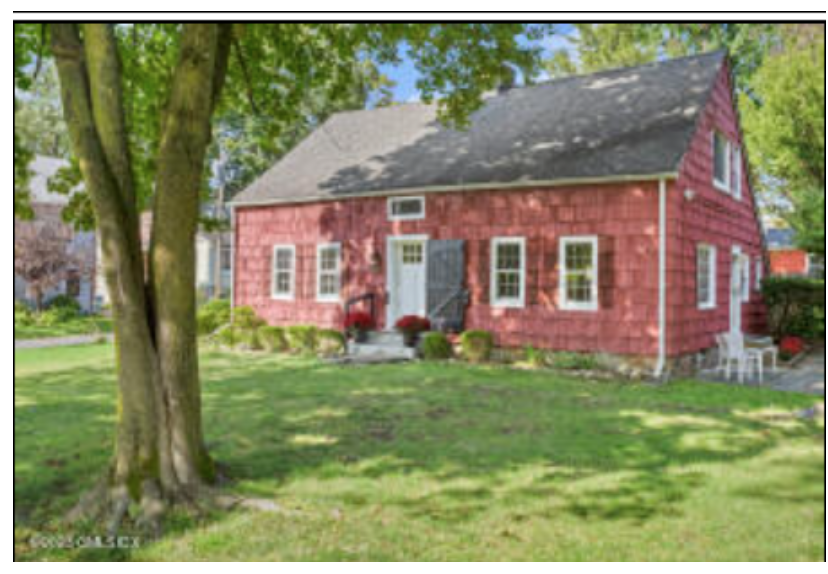
Cary Road, visited

1 Cary road, pre-renovation

Last week I posted on the preservation of the oldest house in Riverside, The Samuel Ferris House 1 Cary Road, and the oldest house in all of Greenwich, the Elizabeth Feake House at 181 Shore Road at the entrance to Tod’s Point (or, originally, “Elizabeth’s Neck”). Both properties were saved from the wrecker’s ball by the combined efforts of Martin Waters and the Greenwich Point Conservancy, headed up by Chris Franco.

Last evening, Mr. Martin held an open house for members of the various Historic groups in Greenwich, and graciously extend an invitation this way. I was unable to attend, but we dispatched the FWIW Hysterical Reporting team — Gideon and Miss Susie — to the location, and Gid reports that “it’s really, REALLY cool”; it’s that kind of professional writing and descriptional skills that keeps Gid on the staff.

Read the original post for details of how these two houses were able to be saved even as the properties they sat on were converted to modern, practical use. A win-win, and residents of Greenwich: this generation and those that follow, owe a debt of gratitude to the people who came together and made it possible.

As renovated (Doug Vanderhorn, architect)

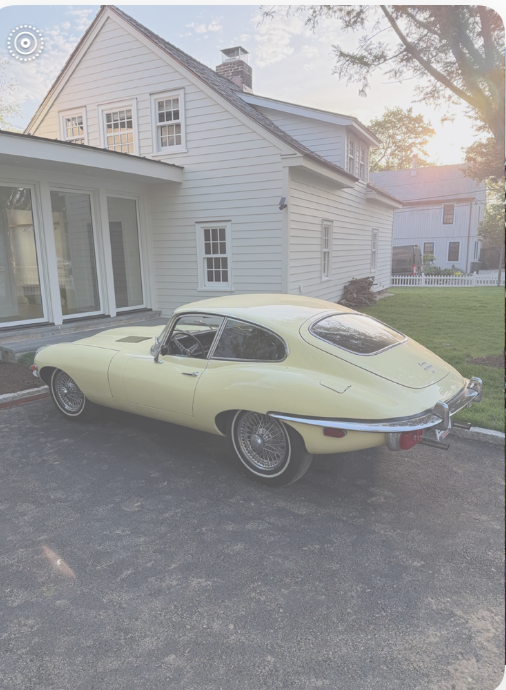
Gideon took some pictures too:

Despite what Gideon thinks, this 1966 XKE belonging to Martin Waters is not original to the original builder/owners; pretty cool, though.

Where have we heard this before?

Mr. Tong is running for national office, and has just released his first campaign poster:

I’ve said all along that this fraud isn’t confined to just a few outliers like Minnesota, Maine and California; multiply by 50. Here are two of Ohio’s own entries:

Billions, trillions of dollars passed out to criminals, and few, if any state and federal employees care; certainly their bosses don’t. California’s first response to the exposure, by a private citizen, of just one of the frauds operating in the Golden Shower State: The wife of California’s Attorney General introduces the “Stop Nick Shirley Act” to prevent further exposure.

Rinse and repeat.

Luke Rosiak’s Medicaid Exposé Part 2 Drops: Single Landlord Owns 288 Medicaid Shell Companies in Ohio

Yesterday, we told you about Luke Rosiak's deep dive into MASSIVE Medicaid fraud. Today, he dropped even more information and it's stunning and not in a good way. Make sure to pay special attention to the list of names.

Here’s his report from May 4th — different building, different (?) people, same scam:

How many of these global warming celebrities flew jets to NYC for the party? Asking for a friend

sarah paulson (R) and her partner, one Taylor Holland. Never heard of either these two old dykes, or seen any of their tv shows, but then, I don’t watch tv. I’m sure they’re very good

Context: I checked with Google to see whether tickets to this event really cost $100,000 per, and they do. The tabs picked up (and written off) by corporate big shots, but it’s still money that could have gone to tear down the star’s fences and convert their front lawns to homeless encampments.


AI Overview

Yes, according to reports surrounding the event, individual tickets for the 2026 Met Gala increased to $100,000 per person, up from roughly $75,000 the previous year. Tables for the event started at around $350,000.

Key Details on the 2026 Ticket Pricing:

  • Record High: The $100,000 price point marks the first time in the event's history that tickets have reached this six-figure mark, as noted by BBC.

  • Invite-Only: Despite the cost, tickets cannot simply be purchased; all attendees must be approved by Anna Wintour.

  • Who Pays: While tickets are $100k, most celebrities do not pay for their own tickets. Major fashion houses and brands purchase tables and invite celebrity guests, bearing the cost.

But we'll soon be in the running (Updated)

Ron DeSantis brands NYC Mayor Zohran Mamdani ‘realtor of the year’ for driving taxpayers to Florida.

A brief glimpse of coming attractions:


AI Overview

Yes, Connecticut lawmakers have proposed measures targeting wealth and high incomes, including a statewide property tax on high-value real estate and a capital gains surcharge in 2026. These proposals, part of a "tax-the-rich" agenda, specifically included a $3 million+ home "mansion tax" and increased taxes on high-earner investment earnings, following earlier similar efforts.

Americans for Tax Reform +2

Key Wealth and High-Income Tax Proposals in Connecticut:

  • Statewide Property Tax (SB 101, 2026): A proposed tax on residential real estate valued at over $3 million, described as a "mansion tax".

  • Capital Gains Surcharge (SB 104, 2026): A proposed surcharge on investment earnings for taxpayers in the top income brackets.

  • Corporate Tax Proposals (2025/2026): Proposals to implement a CEO-pay ratio tax and to treat carried interest as income.

  • Increased Income Tax: Proposals from legislative leaders to raise income tax rates on high earners, particularly if federal tax breaks for the wealthy take effect.

    Connecticut Senate Democrats (.gov) +3

Contextual Factors:

  • Active Debate: These proposals are part of ongoing efforts by some Democrats and progressive groups to increase revenue from high-wealth residents and address tax fairness.

  • Status: While many of these specific proposals have been introduced and debated, they have historically faced challenges in passage, though Connecticut already has a high estate tax.

Reforming Connecticut's tax structure and generating new revenue

Regulation of marijuana
If cigarettes and liquor are legal, then marijuana should be too. Colorado just passed the $500 million mark for revenues raised in nearly three years. Let’s focus on how to deal with how to enforce DUIs and ensuring that marijuana doesn’t get into the hands of children, not whether to legalize.

Increased taxation on the wealthy
In the past 30 years, the top 1 percent of Connecticut income earners have obtained 84 percent of all income gains, while everyone else’s wages have stagnated or declined. In the richest state in the wealthiest country, we should be asking our top-earners to pay their fair share. If you earn $165,000 or more, you pay at most 8 percent of your income to state and local taxes, and those who make $75,000 or less pay at minimum 14 percent. We need to establish a tax structure where everyone pays their fair share.

Property tax reform
Greenwich’s property tax rate is set at 11 mills, Hamden residents pay a tax rate of 47 mills, and Hartford comes in at 75 mills. We can equalize property tax rates by having a single, statewide property tax which would be used for equitable funding of our public education system.

Eliminate property tax exemptions
Each year, $750 million is lost to property tax exemptions for education systems, religious institutions, and government-owned property. A large chunk of this loss is in New Haven and Hartford alone. I believe all property should be taxed the same.

Large employer fee
When big box stores open a branch in Connecticut, oftentimes, its workers are underpaid and profits are siphoned out of the state. Wal-Mart has protocols to direct its workers to apply for state aid. This means the average Connecticut taxpayer is subsidizing these large businesses to underpay its employees. By instituting a large employer fee, we would offset this cost.

CEO-pay ratio tax
As average CEO pay explodes to over 200 times their average employee, we need regulations to help our labor force. As a company pays its CEO more, they should pay a higher corporate tax rate.

No subsidies for companies with high executive pay
If a company’s Chief Executive Officer earns more than 100 times the average Connecticut income – around $71,000 – the company should be ineligible for subsidies and grants from the state.

Closing the carried interest loophole
Hedge fund and equity fund managers pay the federal capital gains rate, not the federal income tax. Since these hedge funds are providing a service, the money they make should be treated like income, not capital. This misclassification is costing the state over $500 million a year.

UPDATE:

(Text continued: “Communism collapses if there are free markets to flee to.”

Update II: