"Thanks for the Mammaries"; Vinnie Musetto may have passed on to that great topless bar in the sky, but his spirit still lingers at the NY Post

Hooters closes every single location in multiple states

Thanks for the mammaries.

New York and Massachusetts have just joined the ranks of US states that no longer have any Hooters outlets amid the breast-centered burger and wing chain’s ongoing battle with bankruptcy.

I never went to one — not my cup of tea, and now I guess I never will. How deflating.

I was going to mention this last week, but I forgot: Alzheimer's and the amyloid plaques hypothesis

I coulda been president. wait, what?”

In fact, the debate over whether amyloid plaques are the cause or a symptom of Alzheimer’s has been going on for decades, and I've posted on it a number of times, but this link appeared on InstaPundit today, so I thought I’d repost it, if for no other reason than its tale of the scientific establishment’s suppression of alternative and contradictory theories is very much akin to its treatment of global warming skeptics and Wuhan Flu critics. “Trust the science”? Not hardly; not as it’s conducted and reported today.

The maddening saga of how an Alzheimer’s ‘cabal’ thwarted progress toward a cure for decades

In the 30 years that biomedical researchers have worked determinedly to find a cure for Alzheimer’s disease, their counterparts have developed drugs that helped cut deaths from cardiovascular disease by more than half, and cancer drugs able to eliminate tumors that had been incurable. But for Alzheimer’s, not only is there no cure, there is not even a disease-slowing treatment.

The brain, Alzheimer’s researchers patiently explain, is hard — harder than the heart, harder even than cancer. While that may be true, it is increasingly apparent that there is another, more disturbing reason for the tragic lack of progress: The most influential researchers have long believed so dogmatically in one theory of Alzheimer’s that they systematically thwarted alternative approaches. Several scientists described those who controlled the Alzheimer’s agenda as “a cabal.”

In more than two dozen interviews, scientists whose ideas fell outside the dogma recounted how, for decades, believers in the dominant hypothesis suppressed research on alternative ideas: They influenced what studies got published in top journals, which scientists got funded, who got tenure, and who got speaking slots at reputation-buffing scientific conferences.

This stifling of competing ideas, say a growing number of scholars, is a big reason why there is no treatment for Alzheimer’s. (The four approved drugs have no effect on the disease, providing only a temporary memory boost.)

The scientists described the frustrating, even career-ending, obstacles that they confronted in pursuing their research. A top journal told one that it would not publish her paper because others hadn’t. Another got whispered advice to at least pretend that the research for which she was seeking funding was related to the leading idea — that a protein fragment called beta-amyloid accumulates in the brain, creating neuron-killing clumps that are both the cause of Alzheimer’s and the key to treating it. Others could not get speaking slots at important meetings, a key showcase for research results. Several who tried to start companies to develop Alzheimer’s cures were told again and again by venture capital firms and major biopharma companies that they would back only an amyloid approach.

“The amyloid hypothesis has been one of the most tragic stories [in] disease research,” said neurobiologist Rachael Neve of Massachusetts General Hospital.

Tall Ships, balloons, and puppy dogs will dock in Greenwich Harbor this Sunday

She’ll be in Greenwich, but her captain insists, “I’d rather be in Holland, wooden shoe?”

Historic Dutch Tall Ship to Anchor Greenwich Historical Society Celebration of America’s 250th

Greenwich Historical Society will host a major community celebration of
America’s 250th anniversary during a signature weekend of events culminating on June 28, 2026, with Sunday at the Park with George, bringing together history, culture, music, education, and civic pride for one of Connecticut’s signature America’s 250th celebrations.

The celebration will center on the arrival of the historic Dutch tall ship Oosterschelde in Greenwich Harbor at Delamar Greenwich Harbor and a free public festival at Roger Sherman Baldwin Park on Sunday, June 28, from 10:00am to 4:00pm.

The Oosterschelde, the largest restored Dutch sailing ship in operation and one of the world’s most celebrated historic tall ships, will dock in Greenwich Harbor as part of its international voyage. The vessel will serve as the centerpiece of the celebration and will be open for free public tours throughout the day.

That sounds like fun, but the Greenwich Historical Society press release reprinted in Greenwich Free Press offers no explanation of why the Oosterschelde is considered “historic”, which is annoying to anyone with a spark of curiosity about old sailing ships. I initially guessed that its fame might be attributable to Old Greenwich’s Daphne Lamsvelt-Pol’s great-grandmother having used it to smuggle tulip bulbs, chocolate, and stinky cheese to these shores long ago, but checking with ChatGPD, I learned that was not the case — there are additional reasons:

The adjective "historic" is not just travel-brochure puffery in this case. The Oosterschelde is genuinely one of the most significant surviving Dutch sailing ships.

Here are the main reasons.

She is the last of her kind

Built in 1917 in Rotterdam as a three-masted topsail schooner, the Oosterschelde is the last surviving original Dutch three-masted topsail schooner. Around the time of the First World War, hundreds of similar sailing cargo vessels worked the North Sea and Baltic trades, but virtually all were scrapped, converted beyond recognition, or lost. She is the sole authentic survivor of that once-common fleet.

She was a real working cargo ship

Unlike many "tall ships" built specifically for sail training or as replicas, the Oosterschelde spent more than seventy years earning her living. She carried everyday cargoes including:

  • clay

  • timber

  • stone

  • potatoes

  • straw

  • herring

  • even bananas

In other words, she represents the last generation of commercial sailing ships that coexisted with steam and diesel vessels.

She had several lives

Her career mirrors much of 20th-century northern European maritime history.

  • 1917–1939: Dutch cargo schooner Oosterschelde.

  • 1939: Sold to Danish owners and renamed Fuglen II.

  • During the Second World War she struck a magnetic sea mine but survived after being towed to safety.

  • 1954: Sold to Sweden, renamed Sylvan, and rebuilt as a modern motor coaster with much of her sailing rig removed.

  • 1988: Returned to the Netherlands after her working life ended.

That sequence explains why her survival is rather remarkable: most vessels that underwent such extensive conversions were eventually broken up.

She was restored instead of scrapped

From 1988 to 1992 she underwent what was then the largest ship restoration ever attempted in the Netherlands. The work aimed not merely to make her look old, but to recreate her original 1917 appearance using historical plans, photographs, surviving fittings and advice from former sailors. Princess Margriet recommissioned her in 1992.

She still sails the world

Unlike many historic ships that become museum exhibits, the Oosterschelde remains an active ocean-going vessel. Since her restoration she has:

  • circumnavigated the globe more than once,

  • visited more than 50 countries,

  • sailed to Antarctica, South Georgia and the Arctic,

  • rounded Cape Horn under sail,

  • and recently completed the ambitious DARWIN200 voyage, retracing much of Charles Darwin's voyage aboard HMS Beagle while supporting science and youth education.

That's an unusual combination: a ship that is both an authentic artifact from the age of commercial sail and a fully operational ocean voyager.

So if your local paper simply calls her "historic," it's understating things a little. She's not just old—she's effectively the last surviving representative of an entire class of Dutch merchant sailing ships, preserved in working order rather than as a static museum piece.

If you have the chance to go aboard, one thing to notice is the rigging. A topsail schooner like Oosterschelde combines fore-and-aft sails with square topsails on the foremast, a rig that gave merchant captains a useful compromise between speed, cargo capacity, and a crew small enough to be economical. It's a type of vessel that was once a familiar sight in the North Sea but has almost completely disappeared.

Update:

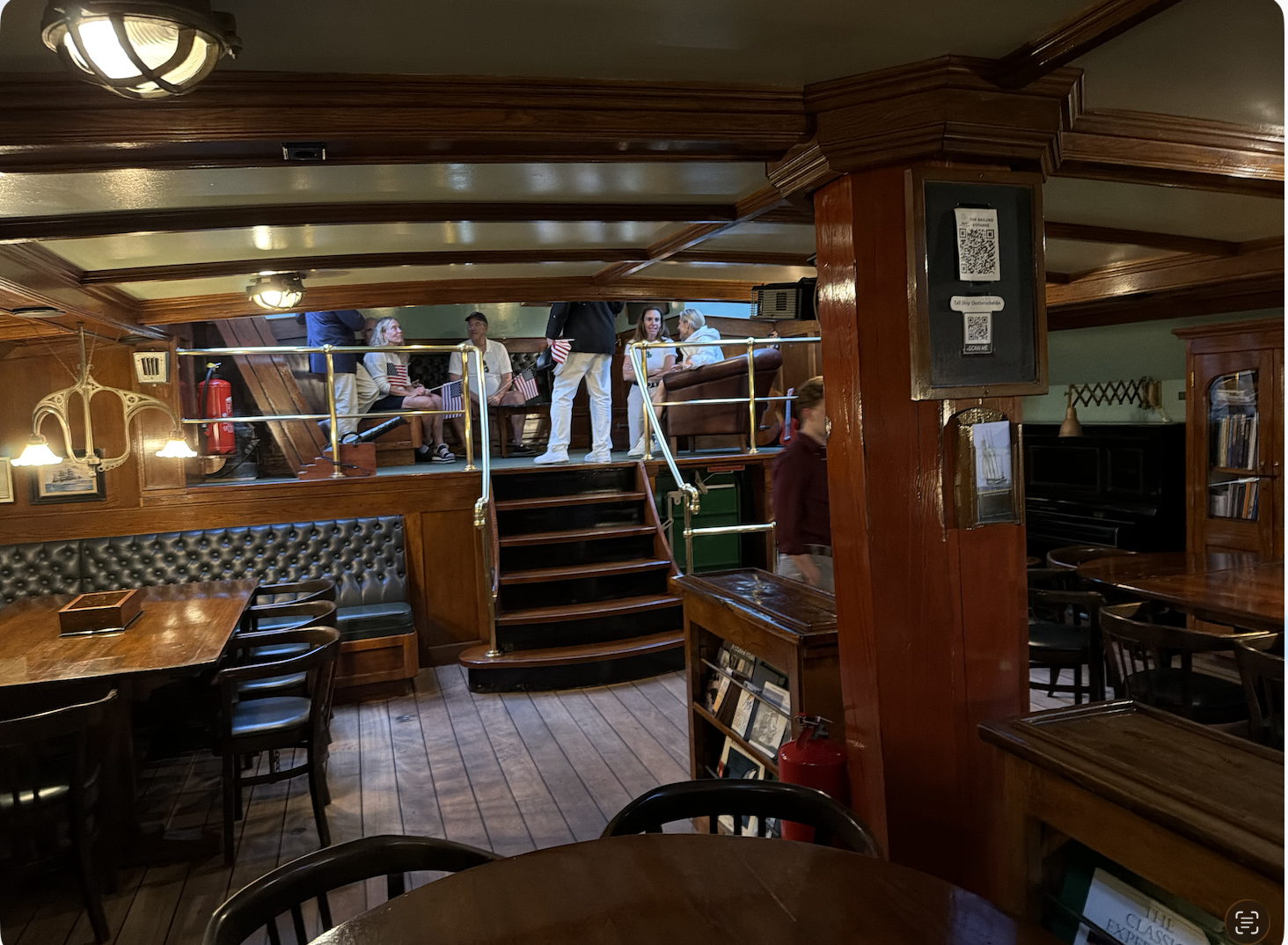
As it turns out, Oooosterschelde (not “Oystershell” as spelled by an illiterate drunken Dutchman, as one might assume) is already in port. Gideon was there last night moonlighting as a canape server — chocolate chip Gouda and jalapeno spread and hardtack – and snuck a photo with his Minox spy camera.


Bonus material:

Back when Holland was a fierce trading rival of England and a world-power, it generated the same jokes we tell, or used to tell, about Poles, blondes, and rednecks, and similar to those told by Swedes/Finns and Norwegians about the other (the Irish are in a seperate class; everyone tells jokes about them, and deservedly so).

I know a number of the slurs, but I asked ChatGPD for a compilation, and it obliged. Brush up on them, then visit the Oosterschelde and try them out on her crew; they’ll be delighted, surely.

Expression/Original meaning

Dutch courage Courage inspired by alcohol.

Dutch treat / Dutch date Everyone pays for themselves.

Dutch uncle Someone who scolds or lectures sternly.

Dutch comfort Comfort that isn't comforting ("Things could be worse.").

Dutch bargain A bargain sealed while drunk.

Dutch concert A noisy chorus in which everyone sings a different tune (or snores!).

Dutch feast A party where the host gets drunk before the guests.

Dutch gold/Dutch metal Brass or other cheap metal.

Dutch leave Leaving without saying goodbye ("French leave" is the more common version).

Dutch reckoning An inflated or dishonest bill.

Dutch widow A prostitute (now obsolete).[Who says? — ED]

Dutch nightingale A frog.

Dutch defense A sham or inadequate defense.

Dutch auction Originally, an auction where the asking price starts high and is lowered until someone accepts. Unlike most of the others, this term lost its derogatory flavor and is still standard.

Double Dutch Gibberish; incomprehensible speech.

I'm a Dutchman if..."I'll be damned if..."—expressing disbelief.

To talk like a Dutch uncle To admonish bluntly. [I’d define it as “a mean son of a bitch”, but Chat is so discrete — Ed]

There were also colorful but now almost forgotten ones:

  • Dutch headache — a hangover.

  • Dutch cap — a type of contraceptive pessary (medical usage).

  • Dutch cheese — a person's head (slang).

  • Dutchman — in printing and carpentry, a patch inserted to hide a flaw (this one is still used technically, without any obvious ethnic slur intended).

Interestingly, the English weren't the only ones who played this game. Many European languages pinned undesirable traits on neighboring peoples:

  • French leave (English) = leaving without permission.

  • English leave (French: filer à l'anglaise) means exactly the same thing.

  • In German, a Polnische Wirtschaft ("Polish economy") meant disorder or mismanagement.

  • In several languages, diseases acquired national labels: "French disease," "Spanish disease," "Neapolitan disease," etc., depending on who was doing the blaming.

Oh, the irony: P&Z approves plans to preserve “historically significant” 1906 building, “but can you stick some solar panels on the roof?”

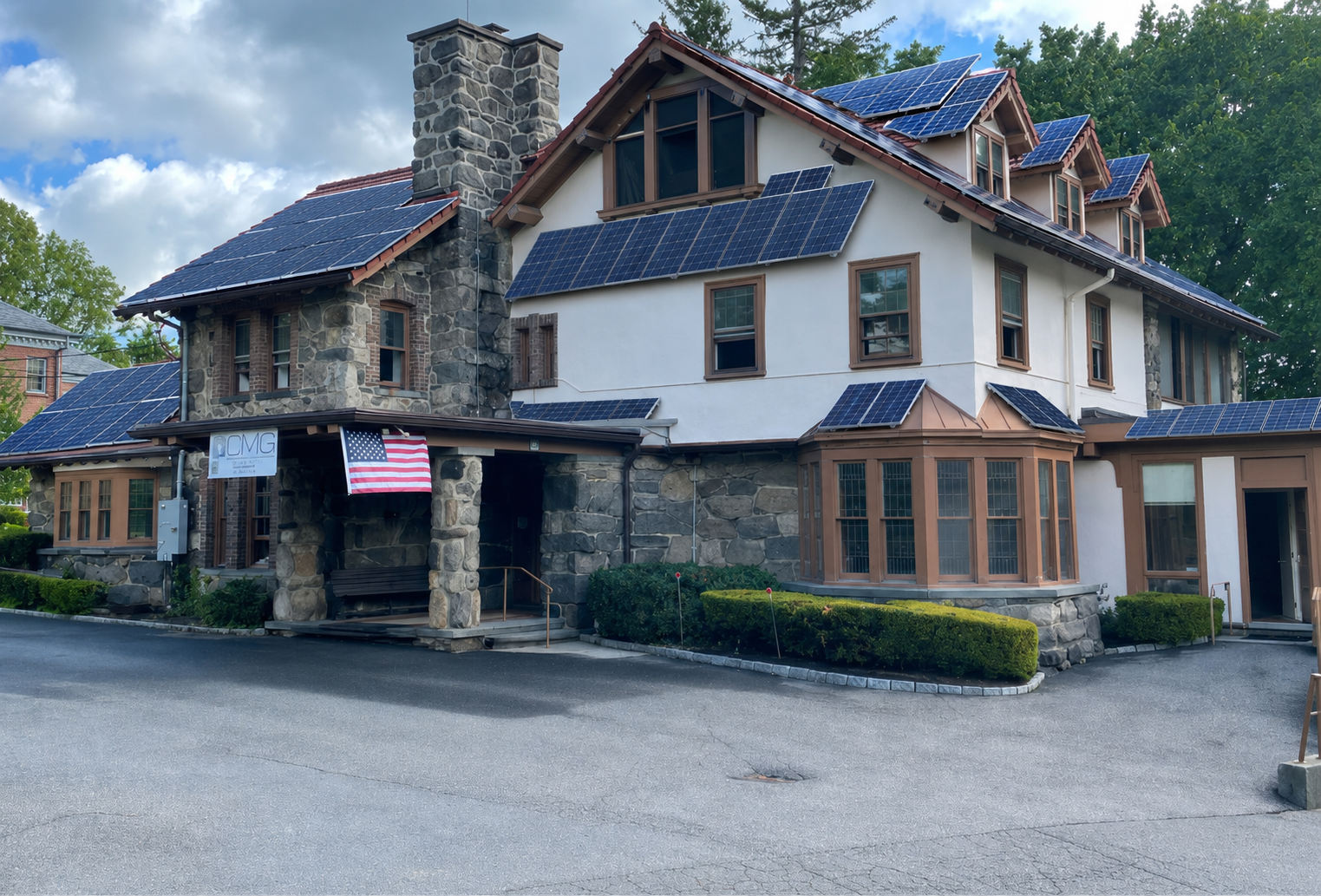
As envisioned by the guardians of greenwich’s historic buildings. “Call it the green house!”

We’ll leave it to someone else to explain how solar panels are any business of the meddling members of the Greenwich Planning & Zoning Commission, and just note that such features were rare in 1906; in fact, I don’t believe any existed at all. Change my mind™

Historic Greenwich building approved for apartment conversion

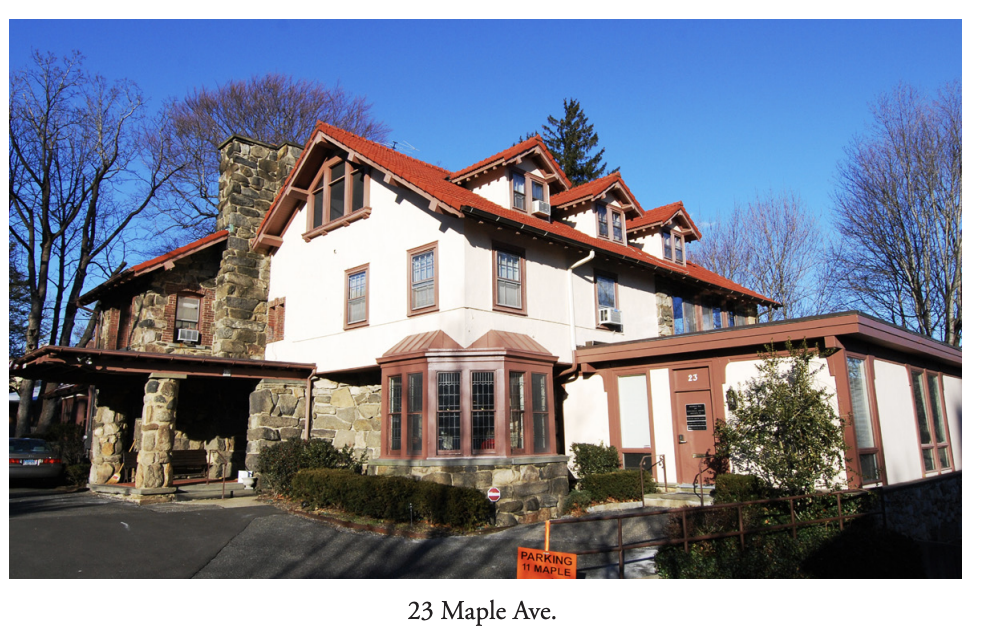
GREENWICH — Plans to convert two former dental offices on the first floor of 23 Maple Ave. off East Putnam Avenue, which has been deemed historically and architecturally significant, into residential apartments have been approved.

The site currently contains three apartments, two dental offices and 13 parking spaces. The dental offices would be turned into dwellings for a total of five units, and another parking space would be added.

As a condition of the special-permit approval, the commission recommended that the developers of the property add landscaping at the site and explore the possibility of adding solar panels to the roof.

A previous Greenwich Time article published in Mat offers more details of the project:

Historic Greenwich house would swap dental offices for apartments

By Robert Marchant, Staff WriterMay 10, 2026

GREENWICH — Dental offices in a house at a prominent location in central Greenwich, with a significant repository of local history attached to it, are set to be converted into apartments. 

The recently submitted plan would convert two former dental offices on the first floor at 23 Maple Ave. off East Putnam Avenue into residential apartments.

The plan calls for the larger office on the south end of the property to be turned into a three-bedroom apartment, and the smaller one on the east side would be made over as a one-bedroom unit.

…. According to the attorney representing the owners of the site, Michael Thomason, the dental practice there had ceased, and the building’s owners “have been unable to re-lease the dental offices.” The site’s ownership is listed as Coleman Business Holdings LLC, associated with the family of a dentist and oral surgeon who worked at the site. 

The plan calls for the larger office on the south end of the property to be turned into a three-bedroom apartment, and the smaller one on the east side would be made over as a one-bedroom unit.

…. The house has some history and is known in historical records as the “Hyde House.” The home was initially owned by Dr. Fritz Hydeand his wife, and fellow physician, Dr. Harriet Baker Hyde. Those two doctors were among the principal founders of Greenwich Hospital, which opened in 1906. The hospital is a short distance away from the structure.

But wait, there’s more!

(ArchitecturalTrust.com, February 2010)

Around the corner, at 23 Maple Ave., is the Dr. Hyde House (c.1906), an amalgamation of three different architectural styles. The stone walls and double-bay corner window with leaded glass suggest the Tudor Revival style, while the orange clay roof tiles and stucco walls are Spanish Colonial Revival elements. The stone porte-cochere – with its nearly-flat, cantilevered roof – calls to mind the contemporary Prairie Style houses of Frank Lloyd Wright.

I know how I’d choose between the two alternatives

Cost of new Greenwich High School pool estimated at $57 million [Before the inevitable overruns]

Kathy Smith at her blog GreenwichWise has the details

On Thursday, June 11, the Greenwich Board of Education (BOE) had its first official read of the NaTCAD (Natatorium, Tennis Courts and Access Driveway) project proposed for Greenwich High School. Under the primary plan being considered, the district would tear down the aging 1968 pool and rebuild directly on its existing footprint, a move that will require relocating GHS aquatics activities for 1 to 2 years during construction.

The GHS pool is well past its prime. Between structural water seepage, non-compliant drain codes, and a ceiling layout so low that divers aren't safely allowed to use the 1-meter boards, a new pool is desperately needed.

Let's Be Honest About the Size of the Natatorium

“While the BOE frames this option as a necessary rebuild within the pool's existing footprint, the data shown in the meeting's presentation tells a completely different story. We aren’t just swapping out an old pool for a modern version of the same thing.

“The plan is to vastly expand the footprint to fit in modern competitive water polo space, elevated spectator seating, expanded locker rooms, and the high vertical ceilings required for safety-compliant diving. The presentation specs reveal that the proposed facility is actually jumping from the original 10,212-square-foot footprint to a massive 35,059-square-foot premier aquatics complex—over 3 times its original size.”

Putting the $57 million Price tag into Perspective

“The current conceptual cost for the new natatorium complex sits around $47 million, and it balloons to $57.4 million when you add the tennis courts and access driveway work.
To understand the scale of this capital investment, it helps to look at how this stacks up against other highly-debated town infrastructure overhauls:

  • Dorothy Hamill Rink Rebuild: At over $57 million, this single high school sports project costs significantly more than the entire $41.2 million rink rebuild project in Byram.

  • Central Middle School: It commands more than half the budget required to build the entire brand-new, 125,000-square-foot Central Middle School campus from scratch.

Fast Track

“This project is moving exceptionally fast. A special meeting is scheduled for this Monday, June 22, to refine the educational specifications for the project ahead of the final fall push. You can view the agenda here.”

Also from Kathy Smith and very much related:

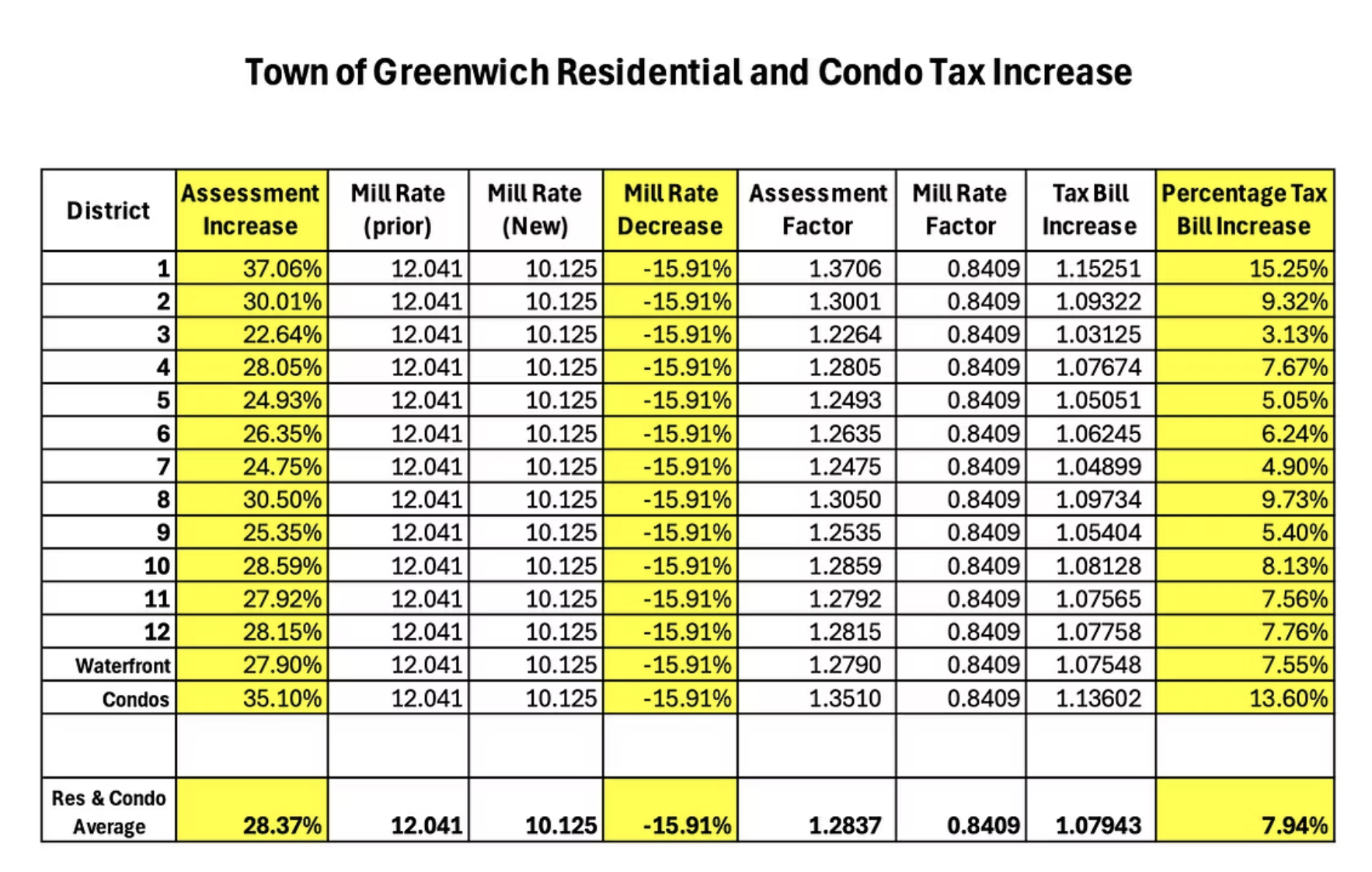
The Dreaded Greenwich Property Tax Bill Has Arrived

As we highlighted in our May 19, 2026 blog (Let's Be Honest About the Greenwich Mill Rate), a combination of high town spending and lagging commercial office valuations, has heavily shifted the financial burden onto local homeowners.

Residential and condo owners in Greenwich are bearing the brunt of this shift:

  • Average Residential Rise: An increase of almost 8%.

  • Condo Owners: Facing a steep 13.60% increase.

  • District 1 Residents: Seeing a massive 15.25% spike.


Don't be Fooled

When you see your higher tax bill, you won't feel any better being told that Greenwich maintains the "lowest mill rate in the State of CT." Because our property values are so high, Greenwich residents already pay among the highest property taxes per capita in the entire state.

Why are our bills climbing so fast? Just look at the mismatch in town spending:

  • School Spending Up, Enrollment Down: Our local population is growing at a modest crawl of less than 1% per year, but our public school enrollment has actually been shrinking. Over the last three years, Greenwich Public Schools lost 843 students, yet, the school operating budget just grew to a record $207.1 million. We are educating fewer kids, but spending millions more to do it.

  • Capital Spending Out of Control: This year, the town’s capital spending plan hit an unprecedented total of over $100 million (combining a record $66 million in cash levies and nearly $70 million in new debt). While officials frame these figures as necessary "investments," the real issue is green-lighting projects without tightly controlling their size and scope. For example, the Dorothy Hamill Rink project was supposed to be a simple replacement of an aging 21,000-square-foot building. Instead, it ballooned into a 40,000-square-foot ice emporium, carrying with it the massive cost of fully redesigning a 13-acre park.

Between the Lines: When the Greenwich population is barely growing and the public school enrollment is actively declining, you have to ask why town spending levels are rising so aggressively. There is no such thing as a free lunch—and right now, Greenwich taxpayers are picking up a very expensive tab.

Disbarment for Miko, jail time for all

hard landing in denver

Denver City Council blocked Denver International Airport from leasing space to Key Lime Air, because the airline worked with ICE.

There was just one problem… It violates FAA rules.

So what did they do? City attorney Miko Brown allegedly urged the airport to fabricate an investigation into the airline’s safety record to cover up for illegally discriminating against the airline for political reasons.

When word got out, Brown and Mayor Mike Johnston flat out denied it. However CBS just obtained an internal airport memo appearing to reveal the entire thing was true.

City officials conspired to discriminate against a private company for political reasons then lied about it to cover it up

The Justice Dept should investigate.

Here’s the CBS report:

Local News

Internal Denver International Airport memo appears to corroborate claims city officials called false

By

Brian Maass

Updated on: June 25, 2026 / 6:50 PM MDT / CBS Colorado

An internal Denver International Airport memo obtained by CBS Colorado appears to corroborate key details of a closed-door meeting that city officials have been publicly disputing.

The memo, written days after a January 6 meeting among city and airport officials, documents a conversation at the center of a federal lawsuit filed by a former airport attorney. That lawsuit, in part, accuses City Attorney Miko Brown of pushing airport officials to investigate a charter airline's safety record -- not because of genuine safety concerns, but to create legal cover for a city council vote that put $90 million in federal grant money at risk.

The dispute over Key Lime Air

The episode began with a routine-seeming request. Key Lime Air, a charter air service, sought to lease 1,200 square feet of office and storage space at the airport last year — the kind of agreement Denver International Airport regularly enters into with airlines.

But the Denver City Council voted overwhelmingly against the lease last December, after learning Key Lime Air had contracted with federal immigration authorities to transport detainees.

That vote created a legal problem. Federal Aviation Administration rules bar cities from treating airlines unequally, and the council's action put $90 million in federal grant funding in jeopardy, according to one council member.

According to multiple sources with direct knowledge of the matter, City Attorney Brown attended a meeting on January 6 with the airport and Mayor's Office officials to address the fallout from the council vote. Attendees included airport Chief Executive Phil Washington, airport attorney Everett Martinez, the mayor's interim chief of staff Emily Garnett, and other senior airport and mayoral staff.

A lawsuit and a denial

What happened in that meeting might never have become public, except that Martinez was later placed on administrative leave and filed a federal lawsuit against the city in March. According to the suit, Brown suggested at the January meeting that Denver International Airport investigate Key Lime Air's safety record -- not because of legitimate concerns, but to retroactively justify the council's vote. Martinez said Brown was effectively asking the airport to fabricate an investigation, calling the proposal likely illegal and unethical.

When CBS Colorado asked Mayor Mike Johnston's office about the lawsuit in March, a spokesperson answered it as coming from "a disgruntled employee" and said, "The city attorney did not say the things listed here. No one called for a fake investigation on Key Lime."

The following day, Brown sent a memo to her own staff stating "The alleged claims are untrue."

The memo

Last month, CBS Colorado obtained an internal airport memo written by Martinez on January 13. The memo was sent to the Denver airport's vice president of airline affairs, who signed off on it -- an acknowledgement that the executive considered it an accurate account of what was said. The memo names all eight people who attended the meeting.

According to the document, Brown told airport officials: "Well you all should investigate Key Lime yourselves. If the FAA comes knocking, I want to be able to have in my back pocket that council was also voting because of safety issues but ran out of time to get to talking about that before voting."

Two sources familiar with the memo confirmed both its existence and its accuracy to CBS Colorado.

The memo also states that Denver International Airport lawyer David Steinberger met with Brown again on January 9, and that she wanted him to once more raise the safety scrutiny she had recommended at the first meeting. It further recounts that Brown emailed Steinberger with "continued questions about investigating Key Lime's safety record" after the January 6 meeting, and " told him to relay to the group that they should continue considering safety violation inquiries into the Key Lime." According to the memo, Brown told Steinberger that "a bad argument is better than no argument."

Legal questions

Denver attorney Steven Zansberg, who specializes in First Amendment law reviewed the memo, the timeline of events, and the city's denials. He said the memo appears to document an attempted scheme that ultimately did not move forward.

"It does appear to be a plot, a scheme, to generate information after the fact to justify an improper decision by the city council," Zansberg said.

Zansberg said it is the denials -- not the original proposal -- that create the greater liability for the administration.

"There's obvious political exposure for being caught red-handed in an outright lie," he said. Asked whether the memo amounted to officials being caught in that position, Zansberg said: "It certainly appears so from the memo."

He said unresolved questions remain about how far up the chain the matter went.

"How high up did it go? The mayor? Was the mayor aware, and who else in the mayor's office -- who knew and who authorized a categorical denial?" he said.

Were it still Biden’s DOJ, we’d never know; as it is, perhaps we will. Fun times.

Here’s Miko Brown from a few years ago, lecturing on, what else, DEI:

So long to Tiny Tots; I'd had hopes they'd preserve it as the historical site of the Fountain Boyz nursery school, but alas ....

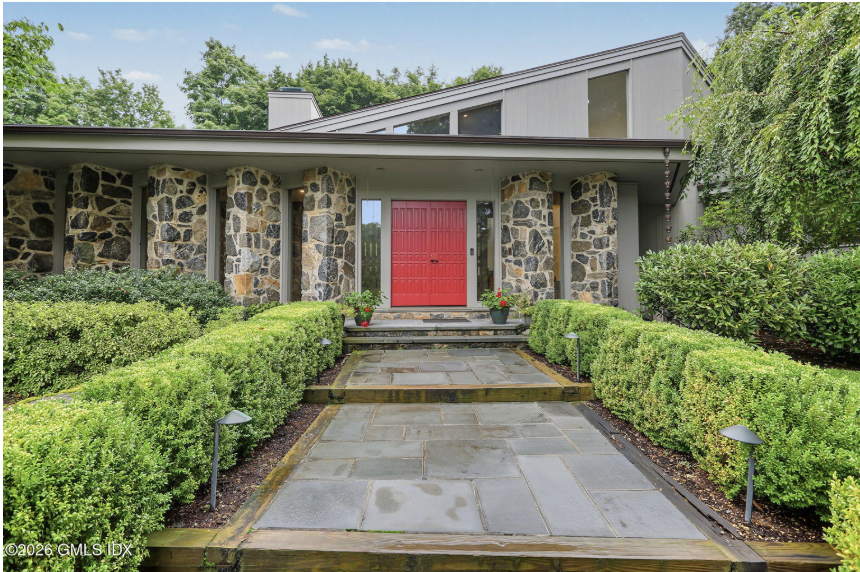
97 Riverside Avenue, the location of Tiny Tots Nursery school for many decades stretching back at least as far as 1950, was very nicely redone some years ago and has now been sold for $3.375 million. The sellers had asked for $3.495, but accepted this offer in mere days, so they must have been satisfied with what they got.

It’s possible this 1900 home will survive — certainly it’s in great condition — but I notice that sales report was followed immediately by a $20,000 rental listing; that often means the new owner wants to generate a cash flow as a new building application wends its way through our P&Z and building departments. We’ll see.