A follow-up to the previous post on frozen popsicles, previously known as children, riding in EV school buses
/
But if it save even one polar bear ….
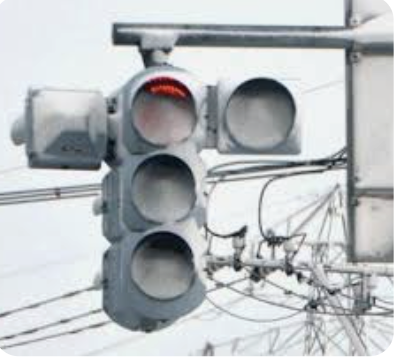
Some years ago, I read about problems with snow buildup on LED traffic lenses, and today I asked AIChat whether they’d fixed the problem yet. Nope.
As of 2025, the problem of snow and ice accumulating on LED traffic light lenses remains a significant challenge in cold climates because LEDs do not naturally emit enough heat to melt snow.
While the core efficiency of LEDs still causes this issue, several specialized solutions have been developed and are currently in use by municipalities:
1. Active Heating Solutions
Integrated Heating Elements: Some newer LED signal modules feature built-in heaters that activate only when freezing temperatures or snow are detected.
Remote-Operated Heat Tape: Departments like the Utah DOT have successfully implemented "heat tape" installed on the underside of signal visors, which can be turned on remotely via a central management system during storms.
Smart Heated Shells: Certain advanced models use sensors to measure ambient conditions and automatically trigger a heated front shell, preventing ice formation while maintaining overall energy efficiency.
2. Passive Design Modifications
Aerodynamic Shields: Products like the "
Snow Cone
" utilize a patented cone-shaped design to channel wind and airflow across the lens, preventing snow from sticking without using additional electricity.
Specialized Visors: Angled or scoop-shaped visors are often used to deflect blowing snow away from the lens face, though results can vary depending on wind direction.
3. Maintenance and Coatings
Hydrophobic Coatings: Applying advanced water-repellent (hydrophobic) or anti-icing coatings to the lens helps snow slide off more easily, though these require periodic reapplication.
Manual Clearing: In many regions, manual removal remains the standard; crews must still use tools like compressed air, specialized brushes, or ice scrapers to clear blocked signals after heavy storms.
Safety Tip: In 2025, transportation authorities still advise that if you approach an intersection where the traffic light is obscured by snow, you should treat it as a four-way stop.