Liars, liars, pants on fire
/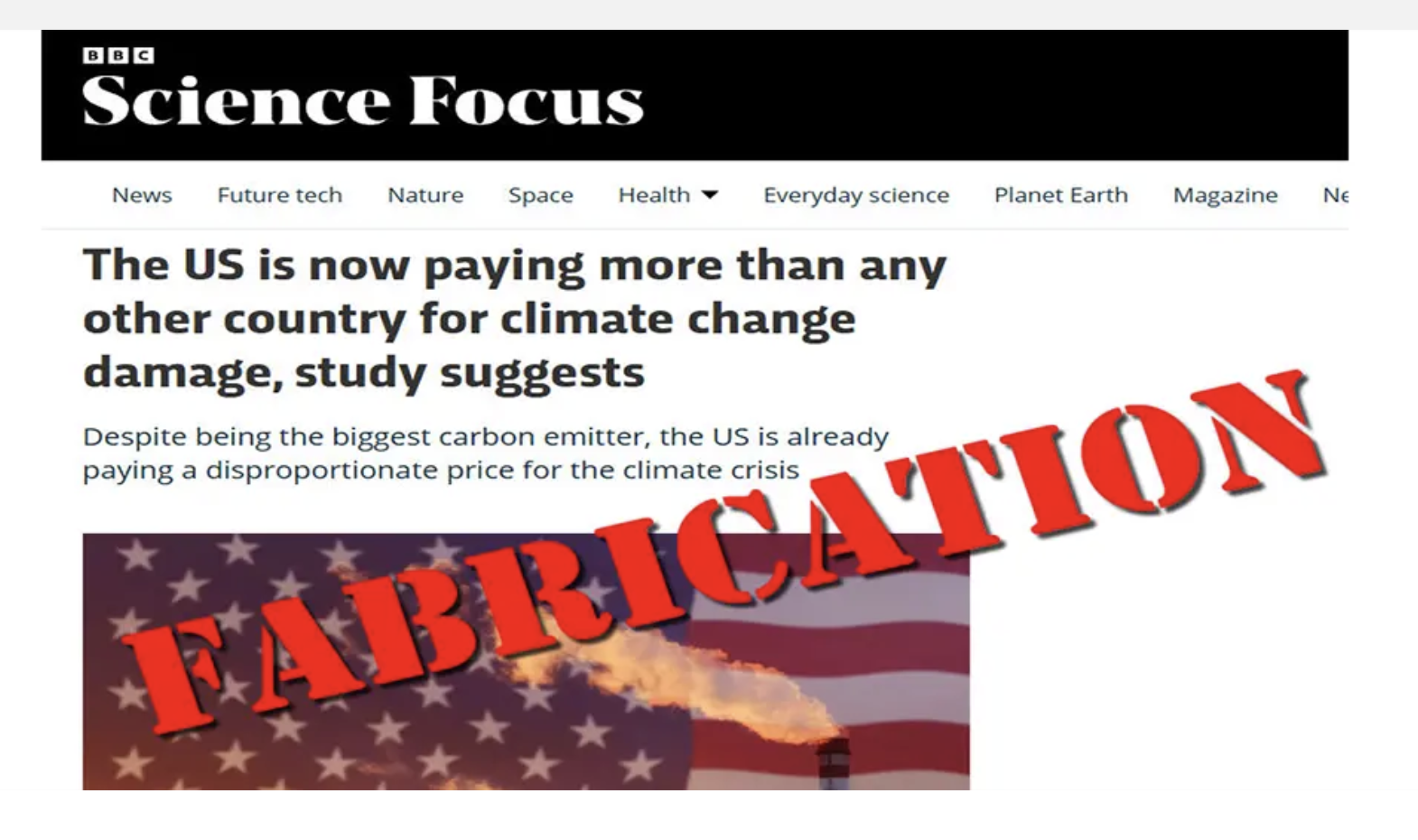
Right off the bat, the BBC is lying: the US is not the biggest carbon emitter, China is, by a huge margin:
(We’ll ignore their Fox Butterfield lead)
AI Overview
China is the world's largest annual emitter, producing over 12 billion metric tons (Gt ) in 2024—more than double the U.S.. While China's emissions continue to rise, U.S. emissions are declining, with roughly 4.9 Gt
Key Comparative Metrics
Annual Emissions (Current): China accounts for ~32.9% of global emissions, while the U.S. accounts for ~12.6%.
Per Capita Emissions: U.S. per capita emissions (approx. 14-17.6 tons) remain roughly double that of China (approx. 8-10 tons).
Cumulative Emissions (1850–2024): The U.S. has released significantly more historical
(approx. 500-532 Gt) compared to China (approx. 258-312 Gt).
Trends: U.S. emissions peaked in the 2000s and are trending downward, while China's emissions have surged over the past two decades.
Source Drivers: China's emissions are heavily driven by industrial coal consumption, while U.S. emissions have a higher proportion from transportation.
So, after kicking off with a false premise, the BBC builds upon it a tower of prevarication:
No, BBC, Disaster Losses Can’t Be Tied to Climate Change
The recent British Broadcasting Corporation (BBC) Science Focus publication “The US is now paying more than any other country for climate change damage, study suggests,” claims that the United States is “now paying more than any other country for climate change damage,” citing a study estimating $16.2 trillion in U.S. losses since 1990. This is a fabricated falsehood. Decades of peer-reviewed research on disaster losses show no detectable long-term trend in normalized weather-related losses attributable to human-caused climate change and the BBC is wrongly conflating weather with climate.
The BBC based its story on a study from researchers at Stanford University, who write “[c]limate change is causing measurable harm globally.” They admit that no research links loss and damages from extreme weather to climate change; a gap in knowledge they attempt to remedy by applying politically motivated, flawed social cost of carbon estimates to econometric models tying carbon dioxide emissions to aggregate economic output in simulations of what output might have been had the Earth not warmed slightly.
The study’s model-derived GDP estimates don’t, as the BBC story implies, represent documented observed damages. There is a critical distinction between econometric modeling and real-world loss data.
Roger Pielke Jr., Ph.D., in his 2023 comprehensive review “Climate Change and Disaster Losses,” surveyed the peer-reviewed normalization literature and found overwhelmingly that increases in reported disaster losses are explained by increased exposure, wealth, and development—not by climate change.
That is not a fringe claim. It reflects the dominant conclusion in existing scientific literature.
So:
We are not the world’s largest CO2 emitter — China beats us, 33% to 12.6%, and while our emissions are dropping, China’s building 2 new coal-fired power plants a week
Climate change is not tied to “severe weather”
The US has seen increased monetary damages from hurricanes because a storm or wildfire blowing through a developed area has more to destroy now, than when those same areas were Florida swampland and empty forests.
Other than that, the BBC’s produced a fine piece of reporting.