As the dangers of THC are exposed, CT Democrats respond by ...?
/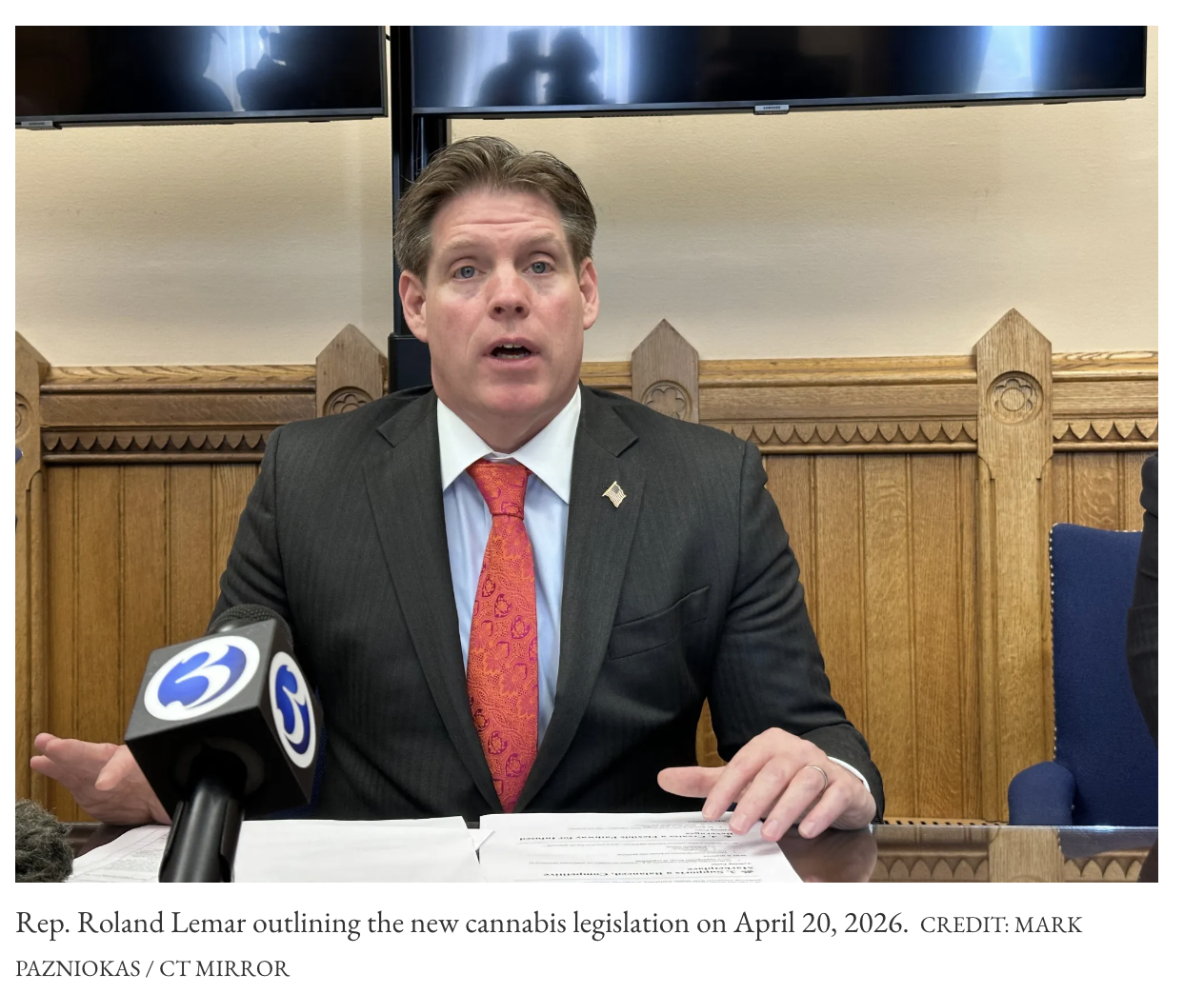
House passes bill removing limits on THC in cannabis products
The bill would eliminate caps on THC concentration in cannabis flower, raise THC limits in infused drinks.
A bill revamping regulations around the cannabis market passed the House of Representatives Monday night after a debate over what some lawmakers saw as a loosening of important restrictions on cannabis sale, and what others saw as logical modifications to a system that was placing barriers in front of a growing market.
“What this does is, it modernizes our cannabis and hemp laws to reflect today’s market realities,” said Rep. Roland Lemar, D-New Haven, during the debate.
It would be interesting to see the lobbyist cash that’s been pocketed by these people.
AI Overview
The human brain continues to develop until the mid-20s, making it particularly vulnerable to the effects of tetrahydrocannabinol (THC). Regular THC use during this critical period can disrupt natural neurodevelopmental processes, potentially leading to long-term or permanent changes in brain structure and function.
Cognitive and Developmental Impacts
THC affects the parts of the brain responsible for high-level executive functions, including the prefrontal cortex, which is among the last areas to fully mature.
Impaired Learning and Memory: Regular use is linked to deficits in attention, concentration, and both short- and long-term memory.
Reduced Intellectual Ability: Research suggests that persistent, heavy use starting in adolescence may cause a significant decline in IQ (up to 8 points) that may not be fully recovered even after quitting.
Executive Functioning Issues: Teens may struggle with problem-solving, decision-making, and impulse control.
Academic and Social Consequences: These cognitive shifts often manifest as lower grades, a higher likelihood of dropping out, and reduced life satisfaction in adulthood.
Centers for Disease Control and Prevention | CDC (.gov) +7
Mental Health Risks
Using THC before the brain is fully developed significantly increases the risk for several psychiatric conditions:
Psychosis and Schizophrenia: Early and frequent use of high-potency THC products is strongly linked to an increased risk of developing permanent psychotic disorders, especially in those with a family history.
Depression and Anxiety: Adolescents who use cannabis are more likely to experience increased symptoms of depression, anxiety, and suicidal ideation.
Addiction (Cannabis Use Disorder): Approximately 17% of those who start using in their teens will become addicted, a higher rate than for those who begin in adulthood.
Rutgers University +5
Physical and Structural Brain Changes
The National Institute on Drug Abuse (NIDA) and other researchers have identified physical alterations in the brains of young users:
National Institute on Drug Abuse (NIDA) (.gov)
Connectivity Disruptions: THC can overwhelm the Endocannabinoid System, which is vital for building healthy neural connections.
Tissue Thinning: Studies using MRI scans have shown thinning of the prefrontal cortex and damage to white matter, which is essential for communication between different brain regions.
Dopamine System Dysregulation: Long-term use can negatively impact the brain's reward system, leading to lack of motivation and a reduced ability to feel pleasure.
PubMed Central (PMC) (.gov) +5
Cannabis and Brain Health - CDC
Feb 15, 2024 — Key points * Cannabis affects brain development. * Cannabis use directly affects brain function — specifically the parts of the br...
Centers for Disease Control and Prevention | CDC (.gov)
Cannabis and Brain Health - CDC
Feb 15, 2024 — Key Points. Cannabis use directly affects brain function — specifically the parts of the brain responsible for memory, learning, a...
Centers for Disease Control and Prevention | CDC (.gov)
Marijuana and the developing brain
Nov 1, 2015 — Marijuana and the developing brain. More states are legalizing marijuana, but concerns remain about its long-term effects on the a...
American Psychological Association (APA)
Cannabis and Brain Health
Centers for Disease Control and Prevention | CDC (.gov)
https://www.cdc.gov › cannabis › health-effects › brain...
Feb 15, 2024 — Cannabis affects brain development. Cannabis use directly affects brain function — specifically the parts of the brain responsible for memory, ...Read more
Effects of Cannabis on the Adolescent Brain - PMC - NIH
by J Jacobus · 2014 · Cited by 410 — Teens who engage in heavy marijuana use often show disadvantages in neurocognitive performance, macrostructural and microstructural brain development, and ...Read more
Cannabis and the Brain
https://hms.harvard.edu › publications-archive › cannabi...
Gruber is especially excited about her team's research on medical cannabis and its effect on cognition, brain structure, function, and quality of life.Read more
And …
’ALL THE BEST PEOPLE ASSURED ME THAT WEED WAS HARMLESS: Over 40% of Fatal Crash Drivers Had THC in Their Blood – Far Above Legal Limits.
Posted at 6:00 pm by Glenn Reynolds on Oct 9th, 2025 56
UP IN SMOKE: Nearly half of drivers killed in crashes had THC in their blood.
New study findings show that over 40% of drivers who died in motor vehicle collisions tested positive for active delta-9-tetrahydrocannabinol (THC) in their system, with average blood levels far exceeding those considered to cause impairment. The research highlights a significant and persistent public health risk that is unchanged by the legalization of recreational cannabis, the authors said.
The research will be presented at the American College of Surgeons (ACS) Clinical Congress 2025 in Chicago, October 4-7.
Flashback: How Weed Became the New Oxycontin: “Prior to legalization, marijuana plants were bred to produce higher and higher concentrations of THC, a naturally occurring chemical compound in the plant that induces euphoria and alters users’ perceptions of reality. In the 1960s, the stuff the hippies were smoking was less than 2% THC. By the ’90s, it was closer to 5%. By 2015, it was over 20%. ‘It’s a freak plant that resembles nothing of what has existed in nature,’ said Laura Stack, a public speaker who has advocated against the industry since her son, Johnny, killed himself three years ago at 19 years old after years of cannabis abuse drove him into psychosis.”