Questions that must be asked
/
Commenting on our newest residents’ piscatorial practices, reader Hank wrote:
Reminds my when I was a kid a few of us would take one of our Skimmars, go under the Mill St. bridge over the Byram River at night, catch pigeons, stuff them into a burlap bag and sell them to the China Lang restaurant in Port Chester for a quarter each.
I don’t know what stirs your mind at 4:00 AM, but Hank’s anecdote got me wondering about a critical side issue, so I asked ChatGTP:
Q. A reader of mine mentioned that, back in the early 60s, he and his friends would capture pigeons under a local bridge, "stuff them in a burlap bag" and sell them for a quarter to the local chinese restaurant around the corner. Ah, good times, but the thought occurred to me: what happened to burlap bags? Seems to me that we always had a few of them hanging around in our (suburban, not rural) garage, and put them to use for a variety of purposes. Obviously, or I assume it is, they were replaced by plastic sacks and packaging, but when did that occur, and is there still a burlap bag industry?
A.
Yes—your memory is tracking a real and fairly abrupt change in American material culture. Burlap sacks were still utterly ordinary in the early 1960s, and then largely disappeared from everyday American life during the late 1960s and 1970s. They didn't become obsolete, though. There is still a substantial jute/burlap industry; it just migrated out of the suburban garage and into some fairly specific commercial niches.
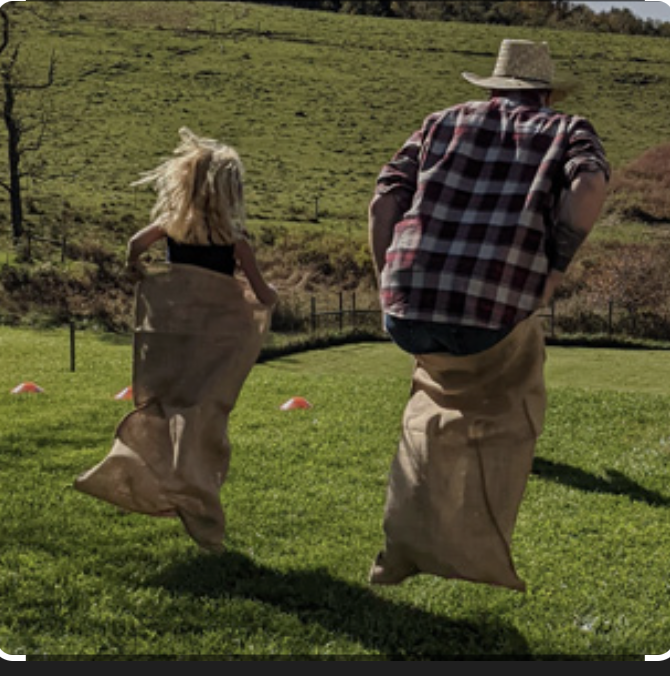
The important distinction is that burlap wasn't primarily a household product. Those sacks accumulated in garages and basements because enormous quantities of ordinary goods arrived in them: potatoes and onions, feed, seed, nuts, coffee, various agricultural products, industrial materials, etc. A sack would enter the local economy as packaging and then acquire a second life. Hence the garage supply. People used them for leaves, garden work, protecting shrubs, hauling junk, storing things, sandbags, Halloween costumes, sack races—and, evidently, pigeon commerce.
The disappearance happened mostly from about 1965 to 1980
There wasn't a single moment when America "switched from burlap to plastic." In fact, paper got there first. Multiwall kraft-paper sacks had already taken a substantial portion of jute's traditional packaging market in the 1950s. Plastic film began competing seriously with jute in the early 1960s. Then woven polypropylene—the familiar tough woven-plastic sack—became the real killer in the late '60s and '70s.
A remarkably good contemporary snapshot comes from a World Bank study of the American jute market. It says that polypropylene manufacturers entered the commercial packaging business "in full strength" around 1969. U.S. consumption of burlap and cotton for bags then fell sharply in 1969–71, while polypropylene-bag material went from about 70 million square yards in 1970 to an estimated 150 million in 1972. At the same time, disruptions in imported burlap supplies and rising jute prices made the old sacks increasingly uneconomical.
An EPA study from essentially the same period describes the transition as it was happening: disposable paper and plastic bags were replacing textile sacks because they were cheaper, strong, and moisture-resistant; woven polypropylene was also lighter, stronger and more resistant to rot and chemicals than burlap.
So if somebody remembers burlap sacks everywhere in 1962 but hardly at all by 1978, that isn't just nostalgia playing tricks. He lived through the transition.
There was another, less visible change too: bulk handling eliminated the sack altogether. Grain, fertilizer and other commodities increasingly traveled in bulk trucks, railcars, bins, pallets and larger containers rather than being divided into scores of individual sacks. A later World Bank survey found North American burlap imports dropping from roughly 250,000 tons annually in 1964–66 to about 80,000 tons in the early 1980s. It attributed the decline both to paper/plastic substitution and to the move toward bulk handling.
That's probably the missing piece in your recollection. Plastic didn't simply replace every burlap sack with a plastic sack. A lot of sacks vanished because the distribution system stopped requiring sacks at all.
Burlap is still very much alive
"Burlap" is essentially the American name for the coarse woven fabric usually made from jute; "hessian" is the term you're more likely to encounter in Britain and international trade. Jute remains a very large agricultural and manufacturing business centered particularly in India and Bangladesh.
And surprisingly large. India reports producing about 1.28 million metric tons of jute goods in FY 2025–26, with about 1.2 million tons consumed domestically. It has 120 composite jute mills and roughly 370,000 people directly employed in mills and diversified jute manufacturing, in addition to millions of farming families dependent on the crop.
A great deal of that production is still sacking. Indian industry figures for 2024–25, for example, record about 933,000 metric tons of sacking versus only about 101,000 tons of the lighter fabric classified as hessian.
And you've probably encountered genuine burlap sacks recently without thinking much about them. Green coffee beans are still commonly shipped in jute sacks, as are cocoa and some other agricultural commodities. There are American companies today selling traditional burlap coffee sacks alongside modern polypropylene bulk bags. In fact, the European coffee and cocoa industries issued a new specification for food-contact jute bags just this year.
So I'd date the phenomenon you're remembering approximately like this: ubiquitous through the 1950s and early '60s → rapid displacement beginning in the later '60s → conspicuously disappearing during the 1970s → largely a specialty/commercial material in America by the 1980s.
And there is a nice irony to the story. Burlap lost because the new disposable materials were cheaper, lighter, cleaner and more convenient. Half a century later, jute is being promoted again precisely because it is natural, biodegradable and reusable, while its plastic replacements have become an environmental problem.
The burlap bag didn't really die. We just stopped bringing its contents home in one—which meant we stopped getting the bag for free.