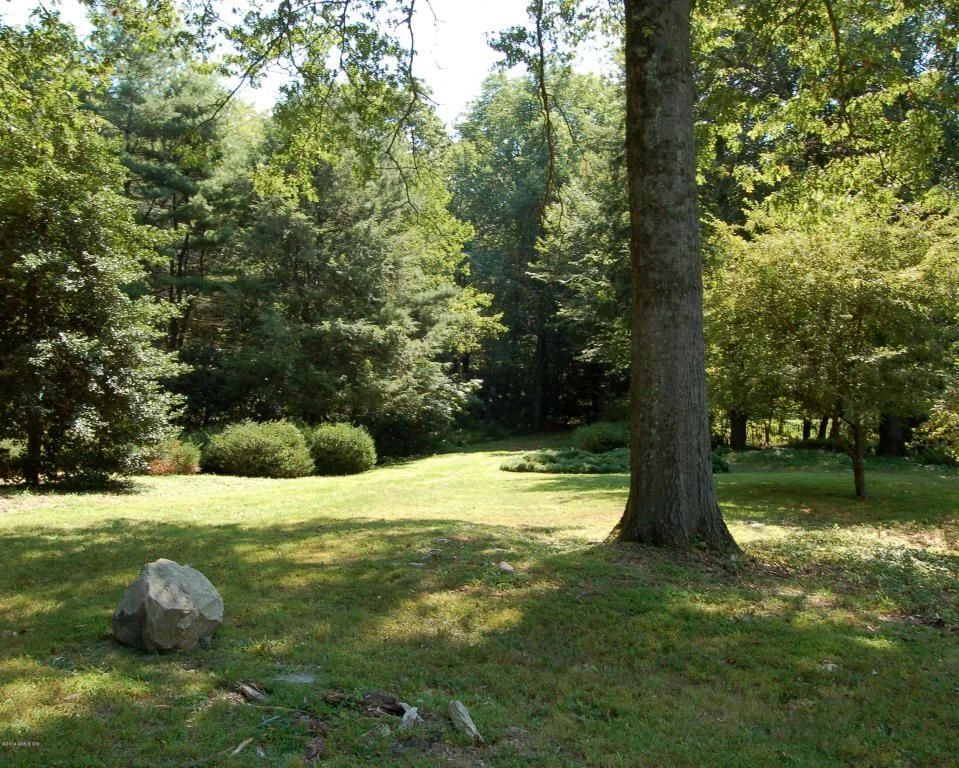
Gorgeous land on Lower Cross, with house plans

lower cross.jpg

70 Lower Cross Road, ten fantastic acres bordering the Babcock Property's 300, has been marked down to $2.795 million, and my guess is that, notwithstanding the owner's paying for the design of a Doug Vanderhorn home, 10,000 sq. ft., all permitted, he'll end up settling for less than the $2.725 he paid for the land back in 2015. It's my understanding that the owner decided to stay put in Riverside, so the plans and the land are now superfluous, but this could be a very nice package deal; it's ready to go, saving you two years of P&Z delay.

Doug does a (very) nice house, and this land was once owned by a local nursery family (Vaissiloff? Readers correct me), and is loaded with mature specimen trees — it's a real gem. I drooled over this property back when it was first put up for sale in the early 2000s, and still do. 

As for the seller: John, I am still waiting for you to properly thank me for being such a lousy little league baseball coach. Had I been better, you might never have given up on the sport and turned to football where, ahem, you've done rather well (It probably didn't hurt that you grew from 4'4" to 6'4", but still ...)

So, did I get a pair of tickets to a Vikings game? No! Or, now, a Ram's game? I've checked the mailbox daily, and am still waiting. Cough 'em up, pal, and I'll bring your high school pal and my daughter Kat to the stadium, so that you can witness how time diminishes some of us and enhances the luckier.  : )


If a tree falls in a forest and no one hears ....

Moving services out of the main hospital on Perryridge Road, and downsizing the administrative suite there, will allow for a reconfiguration of the building. A total of 56 private rooms will come out of the reconstruction process, making almost every room a private room at the hospital, for one patient only.
“It really is the standard of care — it’s better for patients who are ill, infection control, families, noise,” the hospital president said. The semi-private rooms will be phased out, with only eight patients to be housed into those rooms after the work is done.


It appears that most of the money is earmarked for expanding our hospital's fiefdom down at 500 West Putnam Avenue, by the dump, but the conversion of our local hospital into a full concierge operation of deadly medical care did catch my eye. If you're at all interested in why health care costs are out of control in this country, click on the article link and see how medical profit centers metastasize. 

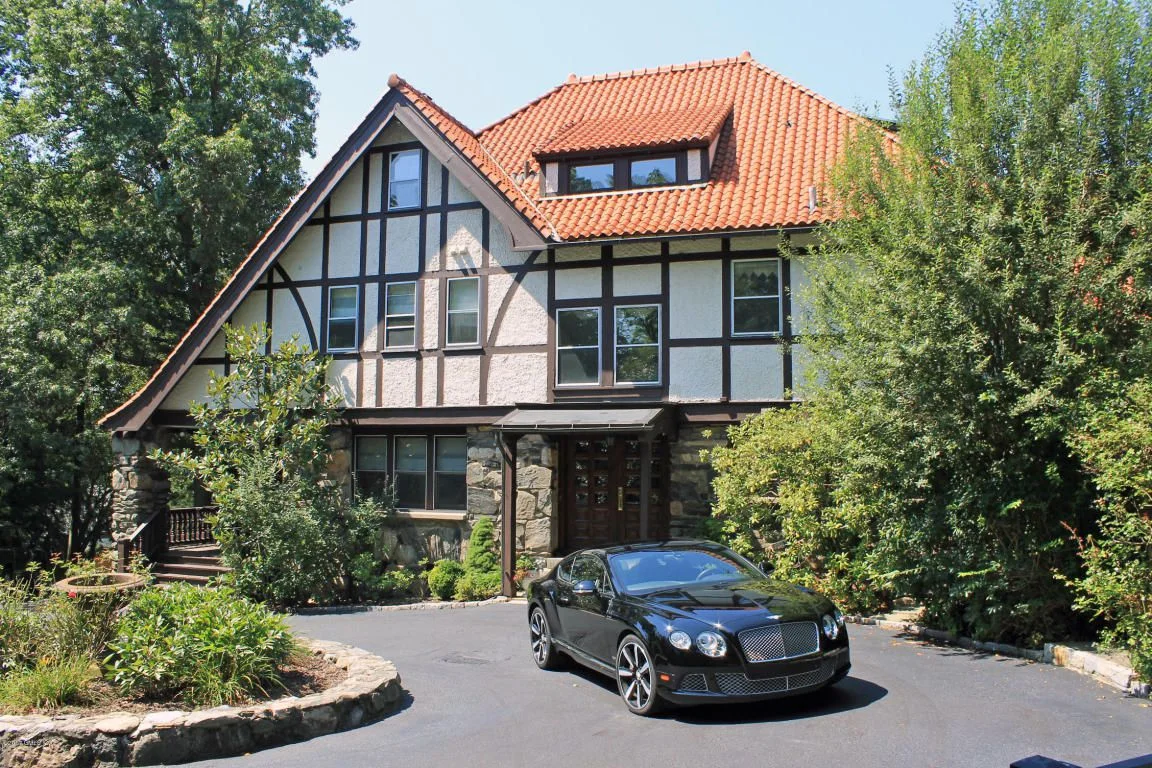
The big bucks are still landing in town

oakley.jpg

9 Oakley Lane, a spec house  priced at $11.995 million one broker and two years ago and currently looking for $9.475, is reported as pending. Me myself, I'd expect a least a slate roof for all that money, but owners of these places rarely stay for the full ten-year life cycle of cedar, so I suppose they don't care.

I do find it amusing that, while both the original and current listing claim 14,000 square feet (town tax card pegs it at 10), the first agent acknowledges that 4,000 of that space, minus the four-car garage, will be found in the basement, while the new one blithely describes the house as "three-story". Ah, that Tamar; such a card!

With its population now ten per cent Muslim, Denmark, population 5.7 million, reacts

Banning Burkas won't stop the infidels, but it's a start.

One of Inger Stojberg’s most popular ideas is for migrants who have lived in Denmark for more than three years to pay for translators’ services when visiting a doctor, rather than relying on the State.

She says: ‘Unless we dare to make demands on foreigners, we will fail to address the serious problems of parallel societies where people neither work nor speak the language and don’t have Danish values.

‘A good place to start is to give back responsibility to those who have come here: learn the language or pay for your interpreter.’

In a poll by the newspaper B.T., 93 per cent of Danes questioned agreed with the minister’s plan.

....

‘People are afraid of the consequences,’ said Annette Bjerregaard, 54, who works at the church. ‘If they feel people are integrating, they are positive. If not, they are not so positive.’

Annette’s son went to what was known among local Danes as ‘the white school’, where all the pupils were ethnic Danes. In this part of town there are neat privately owned homes, shops and pavement cafes.

Yet a mile away in a poorer part of Hvidovre it is very different. Here 5,000 people, both foreigners and Danes, live together in a sprawling council-run housing estate.

Larry Ellis, a debonair 65-year-old resident with a shock of white hair, works as a gardener at the local university. Having finished his shift, he is relaxing with friends outside the estate’s community centre.

They all agree there are too many migrants coming to Denmark. ‘That is the problem and it has not been addressed for years,’ he says.

‘Even here, we are housed in different parts of the estate to the migrants. The council has put ethnic Danes in blocks on one side of the road and Muslims in blocks on the other. We just don’t mix, and religion is part of it.’

This does not bode well for the Government’s efforts to encourage integration. And indeed, some Danes want to crack down against migrants still harder.

As the mainstream politicians react to a growing sense of disillusion about mass migration, a new party led by a 42-year-old architect called Pernille Vermund has seized the moment.

The divorced mother of three, who lives far from the Copenhagen ghettos, hopes her party — the New Right — will gain seats in elections next year on a hardline anti-migrant manifesto.

It calls for the residence permit of any ‘foreigner convicted in court’ to be withdrawn and for no more welfare benefits, housing subsidies and other state payments to anyone except Danish citizens.

She told me: ‘Politicians for decades have let people into our country who do not share our values. They do not assimilate. Now the politicians make a patchwork of rules to try to correct their own mistakes. Forcing Muslim mothers to deliver their toddlers into state-run daycare is not going to make them Danish, or less Muslim. It simply will not work.’

Her views would have been condemned as xenophobic extremism in liberal Denmark a few years ago. But mass immigration has hardened attitudes.

...

Back in Mjolnerparken, where 1,752 people of 38 nationalities live cheek by jowl, I meet one of the community elders.

An Iraqi Kurd by birth, smartly dressed Taher Mustafah, 59, came to Denmark in 1985. He has worked for years as a civil servant and helped run an Islamic charity.

We stand on a busy street corner to chat, as Danish girls in skimpy shorts cycle past women with veiled faces shepherding children along pavements, closely watched over by their husbands. Truly, it is a stark clash of cultures.

Taher looks at one of the veiled women and shakes his head.

‘I know her,’ he says. ‘She is Tunisian and her husband is an Iraqi. My view is that if you live in a country, you should show respect for the society in which you live. She should not wear the burka here in Denmark and soon she will not be allowed to.’

Yet nearby, in an Iraqi-owned cafe, I hear a different opinion from an Iraqi migrant father called Jaber Saleh, 40, who is eating a pitta bread-and-hummus lunch with his wife Farah, 29, and son Hassan, six.

The Salehs are angry with the Danish Government. Despite living and working here as a truck driver for 17 years, Jaber has still not been granted citizenship.

Since the day he arrived, he has clung to his roots. He sent his son to an Arabic school in Copenhagen until it was closed by the Government, which accused some staff of having links to terrorism.

‘The Government was wrong,’ says Jaber. ‘It was a good school where Hassan was taught in the Arabic language, not Danish, and he learnt the Koran. He speaks Arabic at home and has no Danish friends, and I am pleased about that. I don’t want him to learn from them bad things, the swearing, the low moral code of Denmark.

‘This society is too lax. I will do anything to avoid my son learning the values of Denmark.’

As I help Hassan write his name in the English alphabet in my notebook, I wonder what life will bring for this bright, well-behaved child, growing up torn between two cultures.

His family are not preparing him for life as a Dane and, in a rapidly changing country, he may never be accepted as one even if he wishes to be.

And that surely spells trouble for him and his adopted nation.

"Adopted nation"? It seems not.

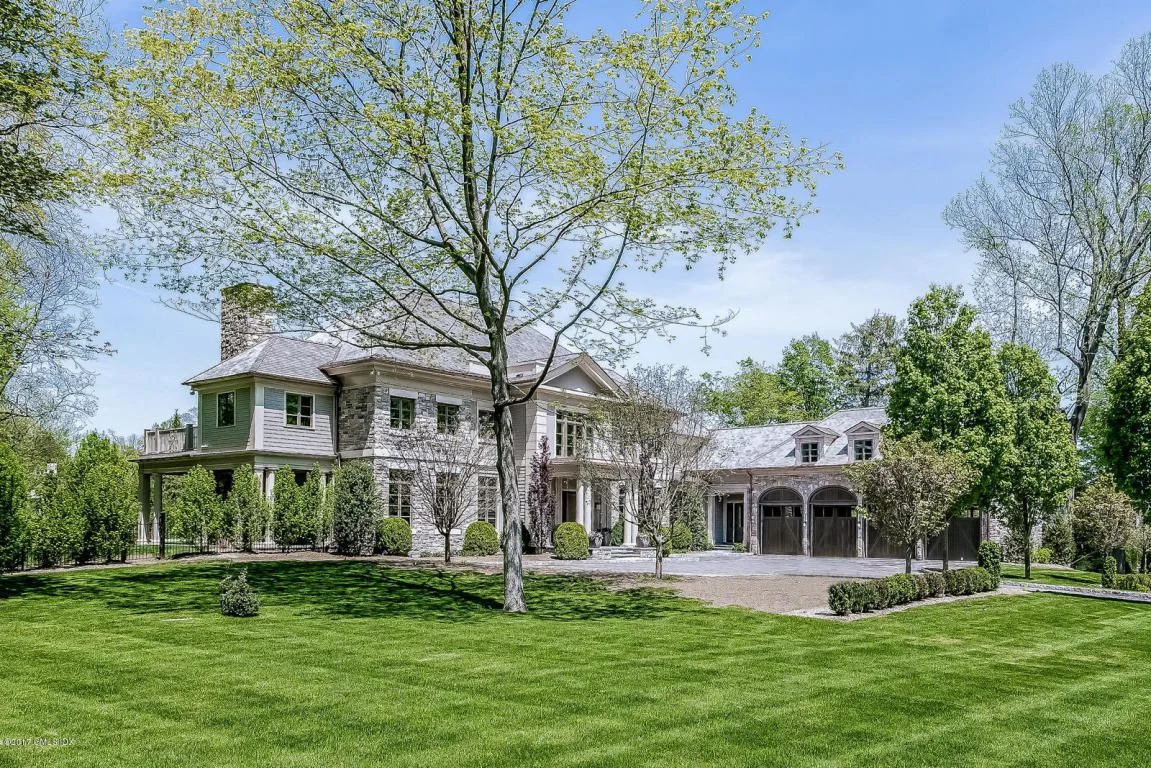
Sex doesn't necessarily sell at a premium in Old Greenwich

7 ford lane.jpg

The owners of 7 Ford Lane "won" a bidding war for it in 2012, paying $5.6 million for what had been listed at $5.495, and then converted its interior from traditional to NYC chic, "as designed by Sex  and the City's decorators". 

As long ago as March, 2017, I poked fun at these owners' refusal to budge from their 2016 price of $6.749 million, but it  took another year before they accepted reality and threw in the towel. Sold today for $5 million.

Owie.

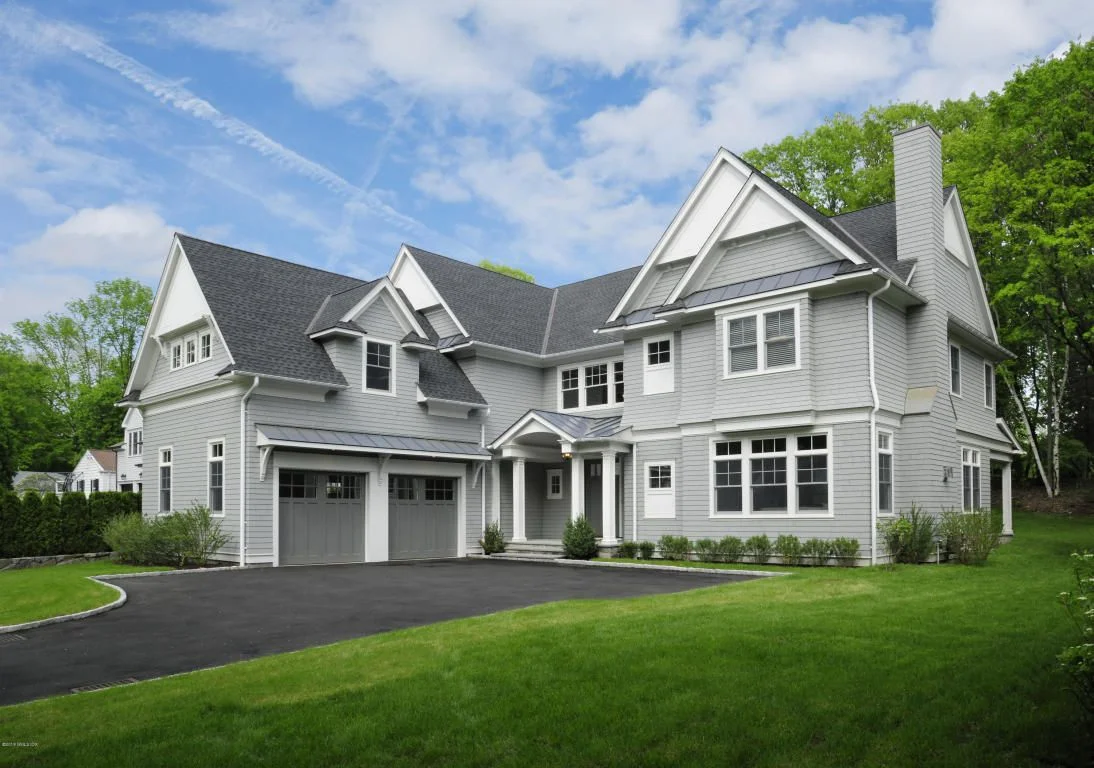
Well, you just never know what will appeal to Westchester buyers

50m sumner.jpg

50 Sumner Road, which failed to sell for $3.6 million from November through May of this year, has now been relisted at a new. improved price of $3.849 million. The ad copy is mostly devoted to the attractions of nearby Armonk and the proximity of the Westchester airport, but also claims that the home's only 12 minutes from downtown Greenwich, just in case potential Westchester buyers might want to travel to foreign climes. The former owner of the property, which was partially torn down and replaced by this iteration, almost made it back here from there in approximately that time span, but he crashed his Mercedes and lost his license;  I'd advise a slower pace, especially after dining.

So-so land, obscure location, I think that the previous owner did well to sell the place for a loss at $1.575 in 2015, after paying $1.650 for it in 2010. This builder may not be so fortunate.

Once the parlor was discarded, could this appendage last long?

The Curse of the Vestigial Dining Room

For a recent study, UCLA-affiliated researchers in fields ranging from anthropology to sociology used cameras to record in great detail how 32 dual-income families living in the Los Angeles area used their homes. Their findings link real data to something about which I have been yelling into the void for years: Nobody is actually using their formal living and dining rooms. Families actually spend most of their time in the kitchen and the informal living room or den.

Yet we continue to build these wastes of space because many Americans still want that extra square footage, and for a long time, that want has been miscategorized as a need.The ironic inefficiency of hyper-exaggerated high-end entertaining spaces belies a truth: These spaces aren’t really designed for entertaining. They’re designed for impressing others. 

I live in a ’70s-era house, one that doesn’t have a lot of room, but does have one of these formal dining rooms. It’s a stupid waste of space — but you know, the last house I owned, a 1990s-era house, had the same thing (we used it as a home office). I really hate these rooms. What a waste! If I were able to design my own house, I would combine the dining room with the kitchen, and make it a larger than usual space. In our current house, we have what is called a “breakfast nook” attached to our kitchen. It’s not big enough for all of us to gather there to eat, but we spend way, way more time as a family in the kitchen and breakfast nook than we do in the formal dining room, which functions pretty much as a storage facility for books (on bookshelves) and a dining table.

Most people I know have formal dining rooms in their houses. I’m trying to think if any of them actually use it more than a few times a year. In our house, you have to leave the kitchen and take a few steps down the hall to the dining room. It’s such poor design, but it’s common.

(Via The Browser, which you should be reading daily.)

Just as a parlor reserved for visits from the minister and the occasional afternoon tea became obsolete, the stand-alone dining room is pretty much a luxury today. A fine place for formal dinner parties, and if you have 10,000 sq. ft. to play with, then why not indulge, but otherwise, there are probably better ways to spend that space.

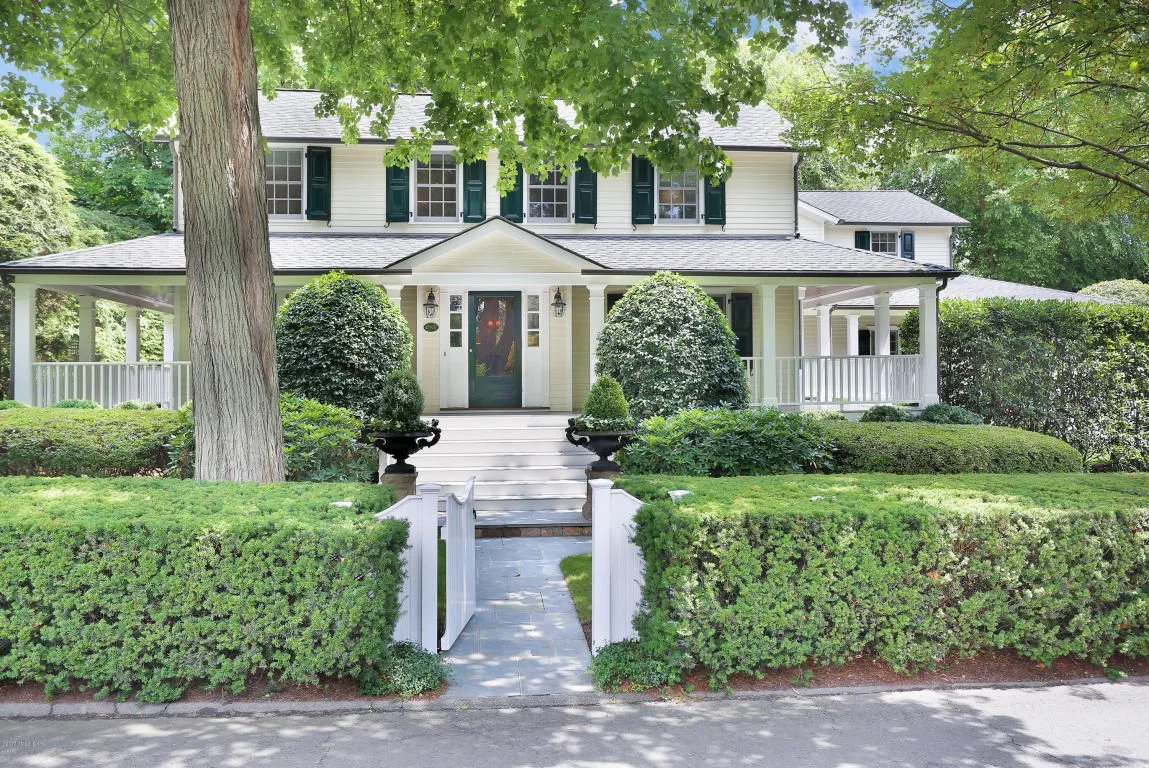
Sale price reported (way up) on Lake Avenue

851 Lake.jpg

851 Lake Avenue, $3.775 million. It's been on the market since February, 2015, when it was initially pegged at $5.5, and I imagine the owner was delighted to be rid of it, even at this discounted price. I'll confess that I always hated the property itself: it's a narrow, stretched sliver of land, which, to me, defeats the whole purpose of living in the back country — why live in an alley? — but this sale just shows, once again, that at the right price, there's LWAYS A BUYER.