Gut feeling on the market? It will continue down

Attention shoppers: special deal on falling knives!

Attention shoppers: special deal on falling knives!

Not very long ago I received a call from a prospective client, who was considering selling the house he’d bought new in 2017, and wondered what he might sell it for now. I remembered the property but not what it had sold for, so I was shocked when I saw that the caller had paid a tad over $5 million for the place. Shocked, because my instant, top-of-the-head opinion was that it was worth, at best, $3.5 today. Further, when I went through our current MLS inventory to back up my estimate, I found an almost identical house on the same street that sold new in 2007 for $4.755 million. It’s been on the market 390 days now, and js currently asking $3.475 after starting at $4.9.

The street in question is, in my opinion, an A- or B+ one, so a better street might support a better price, but I was really surprised by my instant reaction to that 2017 purchase price, which was disbelief. I’m sure I would have cautioned against paying so much two years ago, but still, the difference between what might have been slightly unreasonable then and wildly overpriced today is, er… informative.


Depreciation starts when the builder leaves your driveway

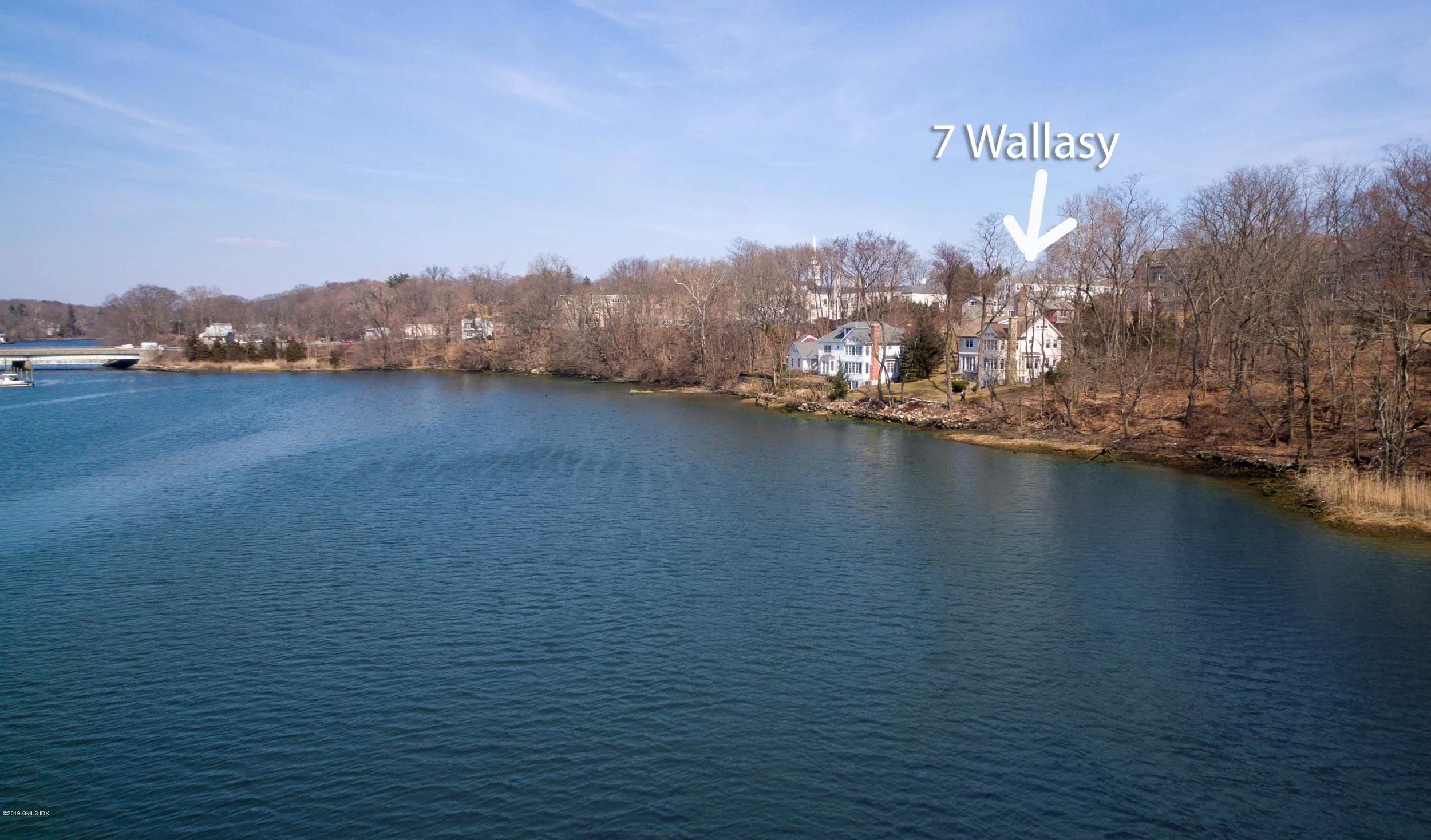
7 wallasy.jpg

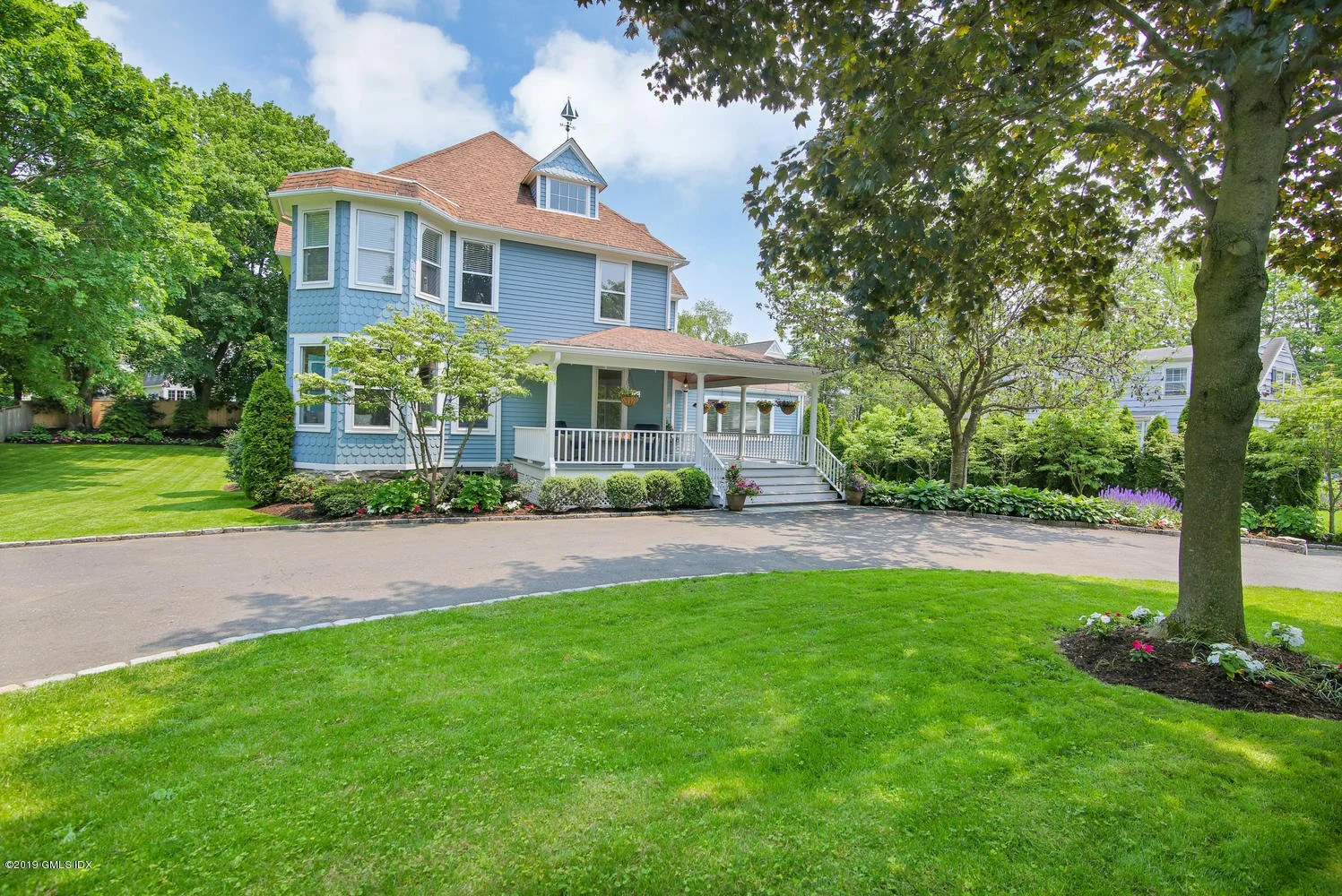
Like the Dubling Hill house discussed below, 7 Wallasy Lane, Riverside, has lost a big chunk of its value when it was new. Owners paid $2.875 for it in 2007, and though they tried for $2.950 this time, have sold it for $2.385.

Which strikes me as a decent buy for the new owner, even discounting for the traffic noise from the Post Road/Mianus bridge (which is actually worse here than that provided by the I-95 bridge up harbor). Of course, ten years from now the house will be 22-years old, not 12, and it will have lost whatever premium attaches to homes of recent build, and will instead just be part of the average inventory. But that’s down the road; the buyers can enjoy their house now, and worry about the future when it arrives.

wallasay map.jpg

The madness goes up another notch

Clearly racist, and a threat to all decent fairgoers

Clearly racist, and a threat to all decent fairgoers

Country band Confederate Railroad, founded and performing nationally for 32 years, banned from Illinois State Fair because of its name.

Confederate Railroad, a prolific and popular southern country-rock band, has been removed from the lineup at the Du Quoin State Fair in Illinois due to their name.

The decision was made by the state Department of Agriculture according to a statement in response to very little public outcry, creating a controversy where there had previously been none.

“The Illinois Department of Agriculture has removed Confederate Railroad from our 2019 Du Quoin State Fair Grandstand lineup,” State Fair Manager Josh Gross said.

“While every artist has a right to expression, we believe this decision is in the best interest of serving all the people in our state,” he added.

The Pinckneyville Press first reported on the ban, adding the assessment that it was due to “racial sensitivity concerns.”

The band has been active since 1987 and during that time has seen over twenty of their singles enter the Billboard Hot Country Songs charts.

Why the Controversy?

Reports suggest the move was made due to an inquiry made by a local political blogger named Rich Miller who asked a ‘Question of the Day‘ for Capitol Fax on June 17th.

“A band named Confederate Railroad. In Illinois. The Land of Lincoln. Playing at a state-owned facility,” Miller said aghast. “I’ve never heard anyone claim that the group has Confederacy-loving song lyrics or anything … It’s just… well… Allow me to turn this one over to you…”

Miller also notes the band has a song called “I Hate Rap” (which clearly means they’re racist) and that the group’s latest album features Confederate flags on the cover.

Saving Country Music writes however, “Confederate Railroad has no songs that could be considered or construed as racist.”

Here’s my favorite CR song:

Puzzling price

Georgian with a blister pack?

Georgian with a blister pack?

The 55 Perkins Road listing has moved with David Ogilvy to Sotheby’s, but its price remains unchanged: $12.8 million. This is a piece of relatively new construction — 2006, that was purchased new from its builder in 2008 for almost full price, $8.561 million. Why anyone would pay so much for a house on Perkins eludes me, but the Ogilvy agent representing these owners was not known for sharp bargaining, belonging as she did to a generation that frowned on such unladylike behavior. And the builder was represented by Jean Ruggiero, who brings a more modern, robust attitude to the negotiating table.

Whatever the reason, there seems no rational explanation of how this property could have gone up nearly 50% from its value at the apex of our real estate bubble, just as it burst. Certainly the town doesn’t think it has, and appraises it at $6.4.

And to add to the price woes of this house, its elderly owners have decorated it to their taste, which is entirely understandable, of course — they’ve been living in it, but I think it would show better empty, or at least stripped of most of its wall accessories and window treatments. But there’s no hope of that until the owners move out, and that’s unlikely to happen until the price drops to, say, $4.5?

Over the river, and through the woods, to great-grandmother’s house we go! (With a welcoming zebra)

Over the river, and through the woods, to great-grandmother’s house we go! (With a welcoming zebra)

Ward and June Cleaver aren’t here: the producer relented and let them move into the bedroom with a double bed.

Ward and June Cleaver aren’t here: the producer relented and let them move into the bedroom with a double bed.

(Laura and Rob weren’t so lucky)

(Laura and Rob weren’t so lucky)

Gimme shelter

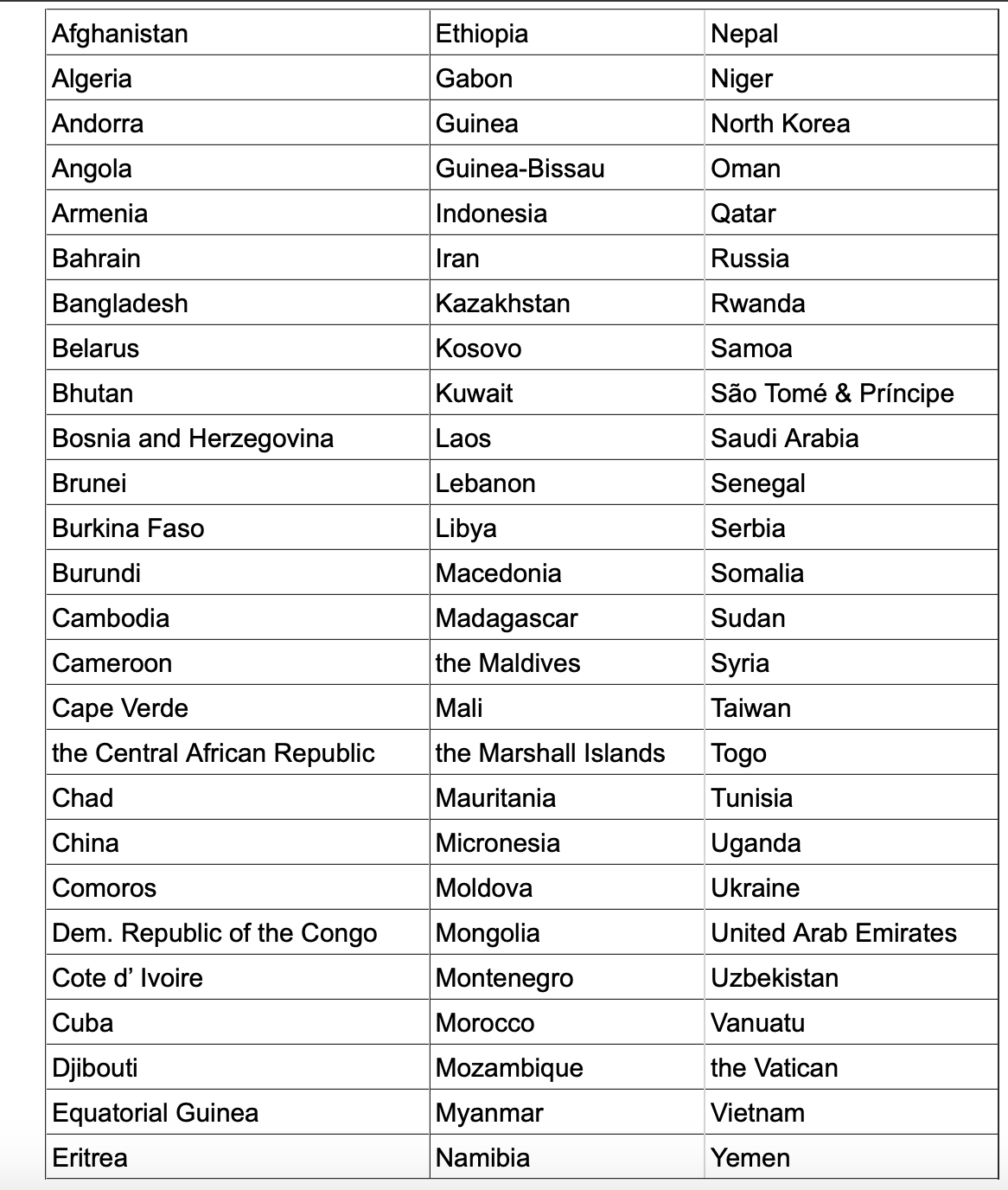
The discovery of child porn in Jeffrey Epstein’s apartment may well land him in prison for the rest of his life, and surely he’d like to fly away from that prospect, permanently. But fly away to where? Here’s an article on the general topic, and the prospective sanctuaries, while certainly better than joining Bernie Madoff in his cell block, don’t sound appealing (Taiwan might be fine, but they don’t have to grant asylum, and in this case, I doubt they would).

But extraction treaties generally require that the crime the fugitive has committed in one country is also illegal in the other. I haven’t looked, but it’s possible that there are places where possession of child pornography and even sex with children is perfectly legal — I’d look to our brothers in Islam as a starting point — and Epstein might find one of them more playable than a lifetime spent in, say, Bangladesh.

Screen Shot 2019-07-09 at 12.50.13 PM.png

Equal pay for women's soccer? There's a problem with that

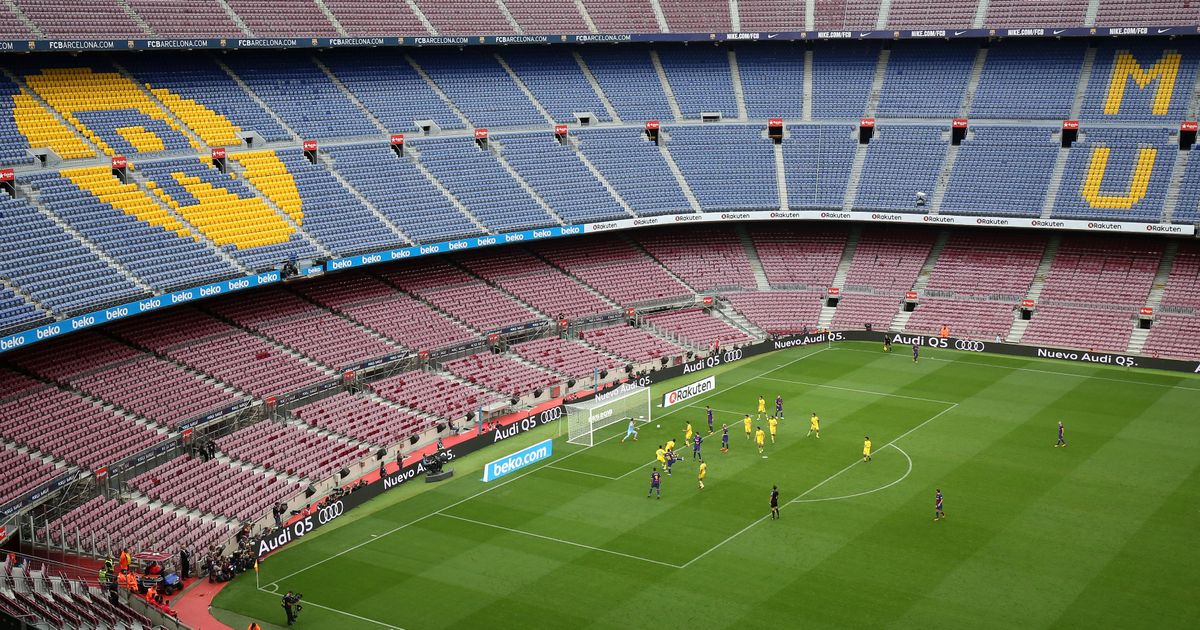
If balls are kicked in an empty stadium, will anyone feel it? Or pay to see it happen?

If balls are kicked in an empty stadium, will anyone feel it? Or pay to see it happen?

No revenue.

In reality, relative to the men’s World Cup, it was actually the women’s teams that were being paid a much larger share of what they brought in. While these articles noted that the U.S. women’s team brings in more money than the men’s team, they all managed to ignore the more-relevant disparity in revenue: The men’s tournament brought in over $6 billion in revenue in 2018, while the women’s tournament is estimated to only have brought in $131 million in 2019. The prize pools are taken from those revenue totals. In other words, the women’s prize pool was approximately 23 percent of their total revenue, while the men’s prize pool consisted of approximately 7 percent of revenue.

….

What’s truly relevant is the fact that the women’s league pays out 23% of its total revenue into the prize pool. The men’s league, by comparison, puts just 7% of its revenue into the prize money. The reason for this is that the men’s league attracts a vastly larger global audience, hence bringing in far more ad revenue and endorsement deals. If you started paying the women’s league teams the same amount as the men’s teams in the interest of “fairness,” the women’s league would soon be bankrupt and there would be no games.

….

But a string of victories by the American women isn’t going to do much to keep the rest of the world eagerly tuned in. Unless and until you can figure out a way to drive up revenue in the women’s league, you’re not going to solve the “gender pay gap” in professional soccer.