Okay, Task Rabbiting too much of an intellectual strain? Now you can become a Blue State science teacher instead

Teachers Will No Longer Need To Pass Basic Reading, Writing And Math Test For Certification In New Jersey.

Joins New York, California, and Arizona

A New Jersey law that removes a requirement for teachers to pass a reading, writing and mathematics test for certification will go into effect on Jan. 1, 2025.

The law, Act 1669, was passed by Democratic New Jersey Gov. Phil Murphy as part of the state’s 2025 budget in June in an effort to address a shortage of teachers in the state, according to the New Jersey Monitor. Individuals seeking an instructional certificate will no longer need to pass a “basic skills” test administered by the state’s Commissioner of Education.

“We need more teachers,” Democratic Sen. Jim Beach, who sponsored the bill, said according to the New Jersey Monitor. “This is the best way to get them.”

Gotta love this: “New Jersey is especially in need of math and science teachers, according to an annual report from the state’s education department.”

Just months earlier, Murphy signed a similar bill into law that created an alternative pathway for teachers to sidestep the testing requirement. A powerful teachers union, the New Jersey Education Association, was a driving force behind the bill, calling the testing requirement “an unnecessary barrier to entering the profession.” Teachers in the state are paid an average of $81,102 annually, according to the National Education Association.

New Jersey followed the example of New York, which scrapped basic literacy requirements for teachers in 2017 in the name of “diversity.” (RELATED: How Democrats Lost The Plot On Education)

Other states such as California and Arizona also lower requirements for teacher certification by implementing fast-track options for substitute teachers to become full-time educators and eliminating exam requirements in order to make up for shortages in the field that were worsened by Covid, according to the National Conference of State Legislatures.

Who knew? An entire new industry has emerged, and Ivy Victimhood Studies and DEI grads now have an alternative to career baristaing.

from brown to broadway

“Task Rabbits” — $20 an hour for standing in line for celebrities and other very important people.

If you want a table at Lucali, you’ve got to wait — or hire someone to do it for you.

The acclaimed Carroll Gardens pizzeria — which is cash-only, BYOB, doesn’t take reservations and is beloved by celebs such as Jay-Z and Beyonce — tops the list of a recent report from TaskRabbit on the most popular restaurants in the city for hiring Taskers to wait for a table.

After Taylor Swift and Travis Kelce dined there in September, requests for line-waiters at the pizza hotspot went up 30%, according to a TaskRabbit spokesperson.

“The most popular request by far is for reservations at Lucali,” a Tasker who goes by Tanya B on the platform told The Post. She charges $20 an hour to line up and has waited as long as three hours at the pizzeria.

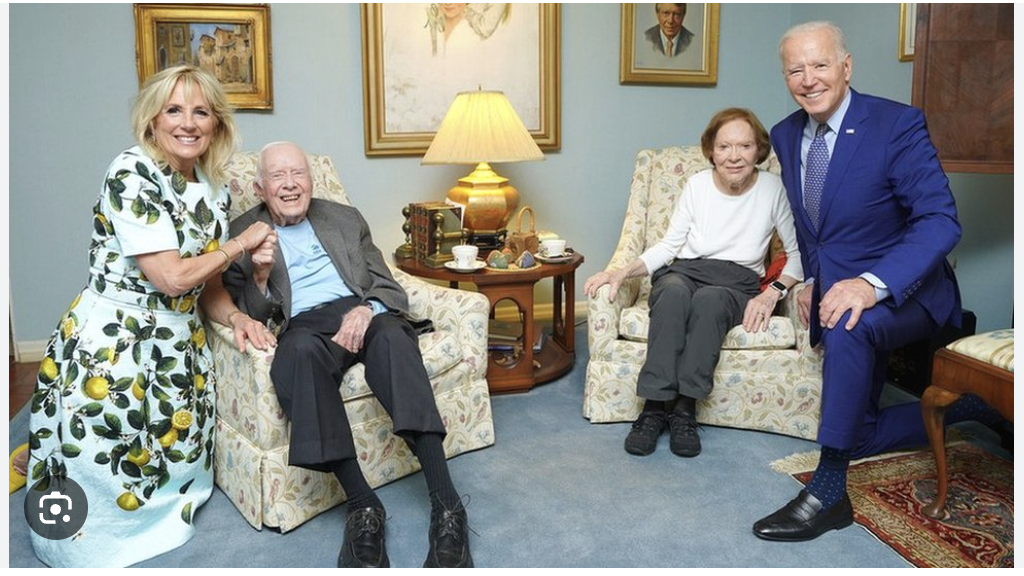
Hmm. It seems that Carter and Biden had more in common than just incompetency

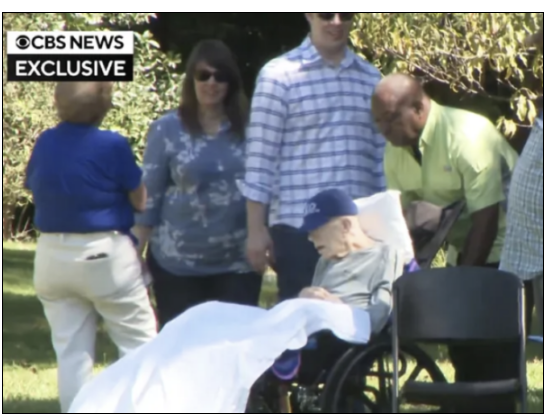
The public appearance last fall of a senile Jimmy Carter was one of the worst cases of public elder abuse I’ve ever seen. It was ghoulish of his family to wheel him out in such an undignified condition in service of a political stunt on behalf of the Democratic Party, even if Carter wanted to bask in the glow of knowing that soon he would no longer be regarded as America’s worst modern president after Joe Biden’s ignominious end.

Steven Hayward, quoted above, has a different take on Carter than the version presently being served up by the mainstream media.

The Under- and Over-Estimated Jimmy Carter, RIP

…. I’ll leave to another time evaluating both his presidency and ex-presidency, and for the moment reflect merely on how Carter’s character and capacities were both underestimated and overestimated from the very beginning and continuing to this day.

… In the early stages of Carter’s extraordinary campaign for the presidency in 1976, a common response to his candidacy was, “Jimmy who?” In some respects, we are still asking that question today, 50 years after he emerged suddenly on the national stage.  He had a Jekyll and Hyde quality unlike almost any other American politician.  He is certainly a better person than Bill Clinton; at least Carter only lusted after women in his heart.

Carter presents layer upon layer of difficulty to untangle. Carter’s one-time speechwriter Patrick Anderson observed that in Carter’s hometown of Plains, Georgia, neighbors said of him that after an hour you love him, after a week you hate him, and after ten years you start to understand him.  (Anderson added that anyone who didn’t have a personality conflict with Carter, didn’t have a personality.)  Anderson also described him as a combination of Machiavelli and Mr. Rogers.  The Washington Post’s Sally Quinn observed: “The conventional image of a sexy man is one who is hard on the outside and soft on the inside.  Carter is just the opposite.”  Fellow Southern Baptist Bill Moyers said “In a ruthless business, Mr. Carter is a ruthless operator, even if he wears his broad smile and displays his southern charm.” Part of the mystique of Carter was his careful and successful positioning as someone “above politics.”  He gave off an air that he is too good for us, or certainly better than the rest of his peers in politics.  Carter exemplified the paradox of taking pride in denouncing the sin of pride.  He also displays a talent for combining self-pity and self-righteousness, sometimes in the same sentence.

He was a maddeningly contradictory figure. He first achieved statewide office in Georgia with a cynical race-baiting campaign, and then immediately proclaimed that the time had come for the South to repudiate its racist ways.  An avatar of morality and truthfulness, Carter bent the truth and had a singularly nasty side to his character that ultimately helped cost him the presidency in 1980. David Brinkley observed of Carter: “Despite his intelligence, he had a vindictive streak, a mean streak, that surfaced frequently and antagonized people.” Eleanor Randolph of the Chicago Tribune wrote: “Carter likes to carve up an opponent, make his friends laugh at him and then call it a joke. . .  [He] stretched the truth to the point where it becomes dishonest to call it exaggeration.”  New York Times reporter James Wooten called Carter “a hyperbole addict.”  And Gary Fink, author of a generally favorable study of Carter’s governorship, notes that “Carter usually claimed the moral and ethical high ground” but “practiced a style of politics based on exaggeration, disingenuousness, and at times outright deception.” Carter seldom if ever repented of his nastiness or asks forgiveness.  Instead, when called out for an egregious personal attack, Carter displayed the advanced skills of evasion that made him such an effective presidential candidate, at least until the public caught on in 1980.

The man with the legendary smile could be unfriendly and cold.  “There were no private smiles,” said one disgruntled campaign aide in 1976.  His personal White House secretary, Susan Clough, recalled that Carter rarely said hello to her as he walked by her desk.  Not a “Happy Thanksgiving,” or a “Merry Christmas.”  Nothing, she says.  Arthur Schlesinger Jr. judged Carter to be a “narcissistic loner.”  “Carter was never a regular guy,” Patrick Anderson observed; “the sum of his parts never quite added up to that. . .  Carter talked his way into the presidency, yet in some profound way he never learned the language of men.”

His campaign autobiography, Why Not the Best?, proclaimed that he was “optimistic about America’s third century,” but he became a tribune of “limits to growth” pessimism, diminished expectations for the future, and a national “malaise.” Margaret Thatcher, among others, noted the trouble with this, writing that Carter “had no large vision of America’s future so that, in the face of adversity, he was reduced to preaching the austere limits to growth that was unpalatable, even alien, to the American imagination.”

He campaigned on the slogan of giving us “a government as good as the people,” and then, at the climactic moment of his presidency, complained that the people were no good.  As a champion of human rights and critic of autocratic dictators while president (at least so long as they were pro-American), ex-President Carter compiled a record of meeting with and subsequently praising some of the world’s most loathsome dictators, often strengthening their political stature.  Yet he was always quick to criticize anyone else who treated with dictators.  He remains the only person elected to the presidency who filed a UFO-sighting report with the Air Force.  “I don’t laugh at people anymore when they say they have seen a UFO because I’ve seen one myself,” Carter said at a 1975 press conference. He is the only president to ever to come close to provoking the resignation of his vice president because of a loss of confidence.

Self-righteousness was another obvious hallmark of Carter. Biographer Betty Glad noted that as governor, Carter “seemed to experience opposition as a personal affront and as a consequence responded to it with attacks on the integrity of those who blocked his projects.  He showed a tendency (which will become even clearer as other facets of his career are explored) to equate his political goals with the just and the right and to view his opponents as representative of some selfish or immoral interest.”

This aspect of Carter’s character cannot be unraveled without looking deeply into the self-proclaimed sources of his political thought, and especially his political religion.  There was an alarming superficiality to his political religion that journalists and biographers noticed but did not analyze with sufficient seriousness. Biographer Kenneth Morris wrote that “when he became governor and then president, Carter continued to show himself bereft of a solid intellectual foundation for his political views.”  Betty Glad reached a similar conclusion: “He lacks, it seems, a well-thought-out conceptual framework to guide his concrete political choices. . . Carter’s political views rest on a simplistic moralism.” Some of Carter’s critics thought he was a religious charlatan.  Reg Murphy, editor of the Atlanta Constitution during Carter’s years as governor, called Carter “one of the three or four phoniest men I ever met.”


Assuming the leverage of 80% financing, not too bad, I suppose

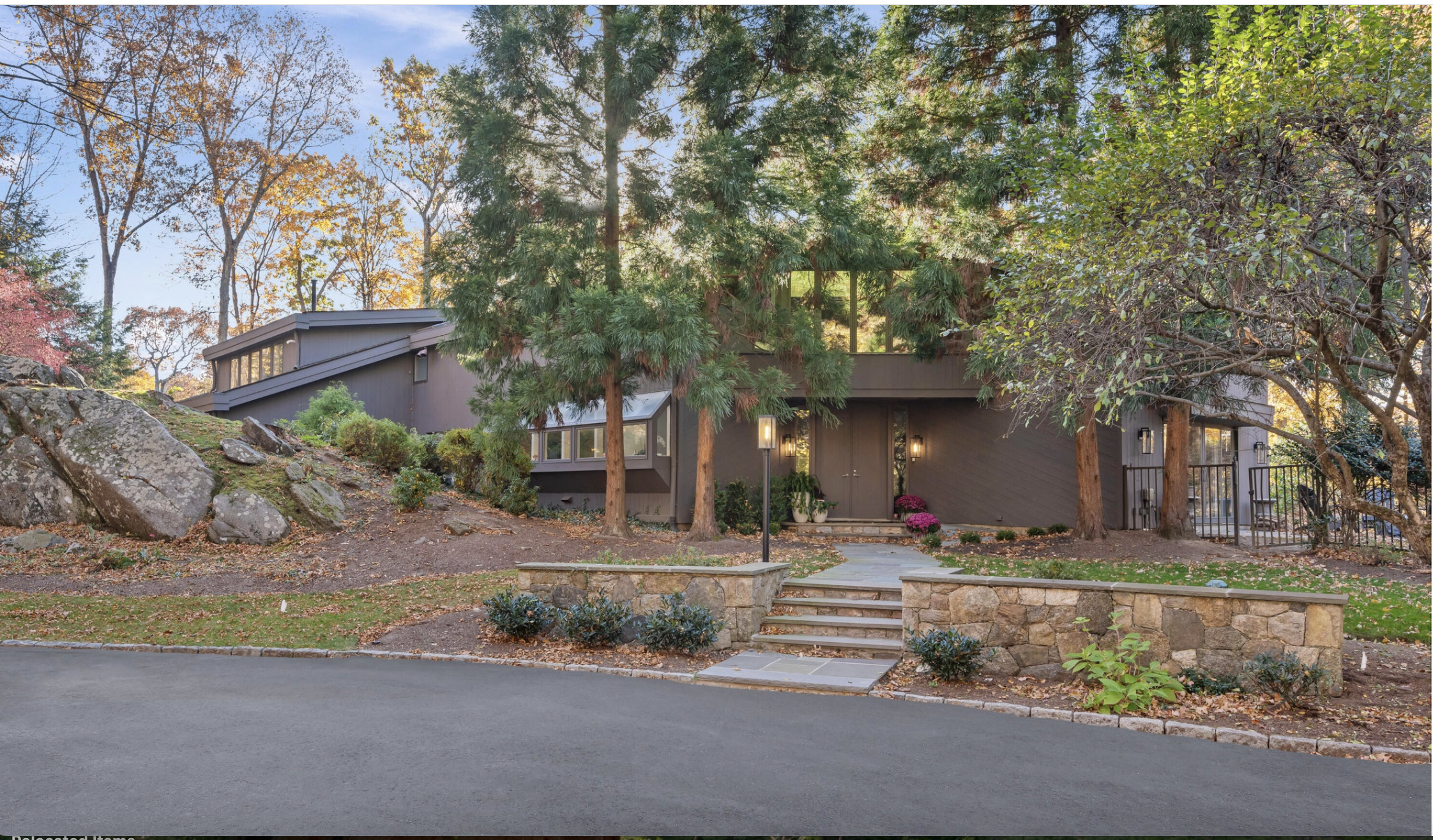
The owners (until today) of 26 Valleywood Road in Cos Cob paid $1.465 million for it in 2022 in a bidding war that had started at $1.395. They put it back on the market this past June, marked up to $1.795, and finally found a buyer in November. Closed today at $1.7. If they had $293,000 (20%) of their own money into this deal, and got that back, plus another $116,000 (assuming estimated transaction costs of 7%) it looks as though they came out pretty well for such a brief period of ownership.

Still, it seems like a lot of work to go through when an index fund would have done better, with no effort on their part.

(Obviously, these are just some top of the head numbers; I’m just always curious to see whether the sort-term stays of so many Greenwich residents is worth the candle and so far, I’m not convinced they are.)

"Underreported"? The Democrats' media branch played a far more active role than merely turning its eyes aside from the ongoing trainwreck

Biden’s Decline Wasn’t ‘Underreported’—It Was Covered Up

From the very start of the basement campaign of 2020, corporate media lied about Biden’s unfitness for office. A “reemergence of a childhood stutter” was used to explain hs mumbling, incoherent ramblings, “unexpected boxes” caused him to fall off podiums and stumble down steps, and when the actual video’s proved too damning to ignore, they were falsely dismissed as doctored. Yet suddenly, these same flying monkeys want to “confess” to not seeing the obvious. It’s not unreasonable to question their sincerity here.

… {d]uring a year-end panel, Major Garrett asked about the year’s “undercovered or underreported” stories, and CBS News legal correspondent Jan Crawford acknowledged that major media outlets significantly downplayed Biden’s cognitive decline.

“Undercovered and underreported, that would be, to me, Joe Biden's obvious cognitive decline that became undeniable in the televised debate,” she said, without hesitating.

She means no longer deniable, “despite our best efforts over the past four years”. “Gambling! There was gambling going on in the casino!”

“And it's starting to emerge now that his advisers kind of managed his limitations—which has been reported in The Wall Street Journal—for four years,” Crawford continued. “And yet he insisted that he could still run for president.”

….

“We should have much more forcefully questioned whether he was fit for office for another four years which could have led to a primary for the Democrats,” Crawford lamented.

No, honey, you should have more forcefully questioned whether he was fit to serve those first four years. Your only regret over your lack of journalist integrity — as oxymoronic as that term is — is that your coverup proved impossible to maintain, and that allowed Trump to return to office.

Powerline’s John Hinderaker is not impressed by this sudden emergence of mea culpas* from the nedia branch:

….Biden has been exactly like this for years. His incapacity has been obvious to anyone who paid attention.

The pretense that he suffered a precipitous decline in recent months may be absurd, but it is necessary. Without the myth of a late-term decline, the national press, the White House and Congressional Democrats would have no plausible defense to the charge that they sacrificed national security and well-being for partisan advantage.

PJ Media’s Matt Margolis has it exactly right: it’s all about getting ready for a renewed assault on Trump

I’ve said before we shouldn’t fall for this mea culpa. By admitting now that they should have covered Biden’s cognitive decline more aggressively, they’re merely setting the stage to wage future attacks on Donald Trump’s mental fitness in his second term. It’s not like they haven’t tried to push the narrative that Trump is “too old” or cognitively impaired before. The liberal media questioned Trump’s mental health during his first term without any reason to, and then, during the campaign, they countered questions about Biden’s cognitive health by questioning Trump’s.

This pivot also serves to rewrite history, allowing the media to obscure their failures in vetting Biden during the 2020 election, when there were plenty of signs that he wasn’t physically or mentally capable of handling the presidency. Instead of taking responsibility for covering up his decline, they’re now framing themselves as having learned their lesson just in time for Trump to take office, hoping the public won’t remember how they spent years gaslighting voters in order to stop Trump from returning to office.

*(A totally irrelevant, but fun discussion of how to pluralize mea culpa can be found here.)

At least he lived long enough to be now considered only the second-worst president in our country's history (UPDATED)

Checked out of hospice, and it’s off to the the great peanut farm in the sky

UPDATE: Classy to the end: Biden uses death of Carter to bash Trump, and claims that his “fondest memory” of the late president was when the Peanut Farmer (and Corn Pop, presumably, asked him for help in Carter’s election campaign.

Biden takes jab at Trump while applauding Jimmy Carter's decency, shares fondest memory with late president

Biden said his fondest memory of Carter happened in the 1970s when the then-Georgia governor asked Biden for help with his presidential campaign.

"He grabbed me by the arm and said, ‘I need you to help with my campaign,'" Biden recalled. "I said, 'I've only been around a couple of years, Mr. Governor.' He said, ‘No, it’ll make a difference.'"

"I said, 'I'm not sure it will," Biden added. "When I endorsed him for president, I told him why [I] was endorsing him and that it was not only his policies but his character, his decency, the honor he communicated to everyone."

How rich: this politician, who was a vicious, prevaricating fraud his entire political career and who used his political office to enrich himself and his family, hypocritically praises Carter’s decency and honesty, then invents a self-aggrandizing story about Carter begging him for help. I’m surprised that AmTrak conductor wasn’t brought in to confirm the story.

Carter truly was, by most accounts, an honest decent fellow; those qualities alone are not sufficient to make a good president, but they're a start. Biden was the exact opposite in every way, except for the incompetence: there, he exceeded even Carter.

Millbrook contract

220 Overlook Drive, 2010 construction, $5.995 million asking price, has a contract after 150 days on the market. Nice house, though, as the street’s name implies, it “overlooks” Milbrook proper; still, it is part of the association and enjoys all the privileges thereto.

It’s sits below the cliff that separates Quarry Knoll from Milbrook, and how the expansion of that housing project to 275 units will affect this location is unknown, though the usual neighborhood tranquility is sure to be restored once construction is completed.

no zebra, but the tipi and a weasel pelt are included

I have a better idea: concierge crosswalk service

Petition Seeks to Restore Police to Greenwich Ave Intersections

A group of Greenwich residents have started a petition to restore police to the intersections on Greenwich Avenue.

This week they have over 1,000 signatures.

They propose the 230-member Representative Town Meeting consider a Sense of the Meeting Resolution (SOMR) that talks about how Greenwich Ave has become a destination where drivers and pedestrians are confused at the intersections.

The petition mentions “hazardous conditions and impeded visibility.”

There may still be a few posh towns using police officers to escort pedestrians across the street — although when our own cops were first pulled from the Avenue, opponents claimed that their presence was what “distinguishes and sets Greenwich apart from other (lesser, presumably) towns” — but what a waste of limited resources. If some residents feel that they need assistance in traversing these two intersections, why don’t they use their own personal funds to set up a private concierge operation, where nervous nellies can reserve valet service in advance and thus be assured of safe passage, all at no cost to other taxpayers?