
Contract on Riversville
/568 Riversville Road, presently asking $5.475 million. Started off at $5.775, and was originally purchased new by these owners in 2007 for $6.490.
Greenwich, Connecticut real estate, politics, and more.
Greenwich, Connecticut real estate, politics, and more
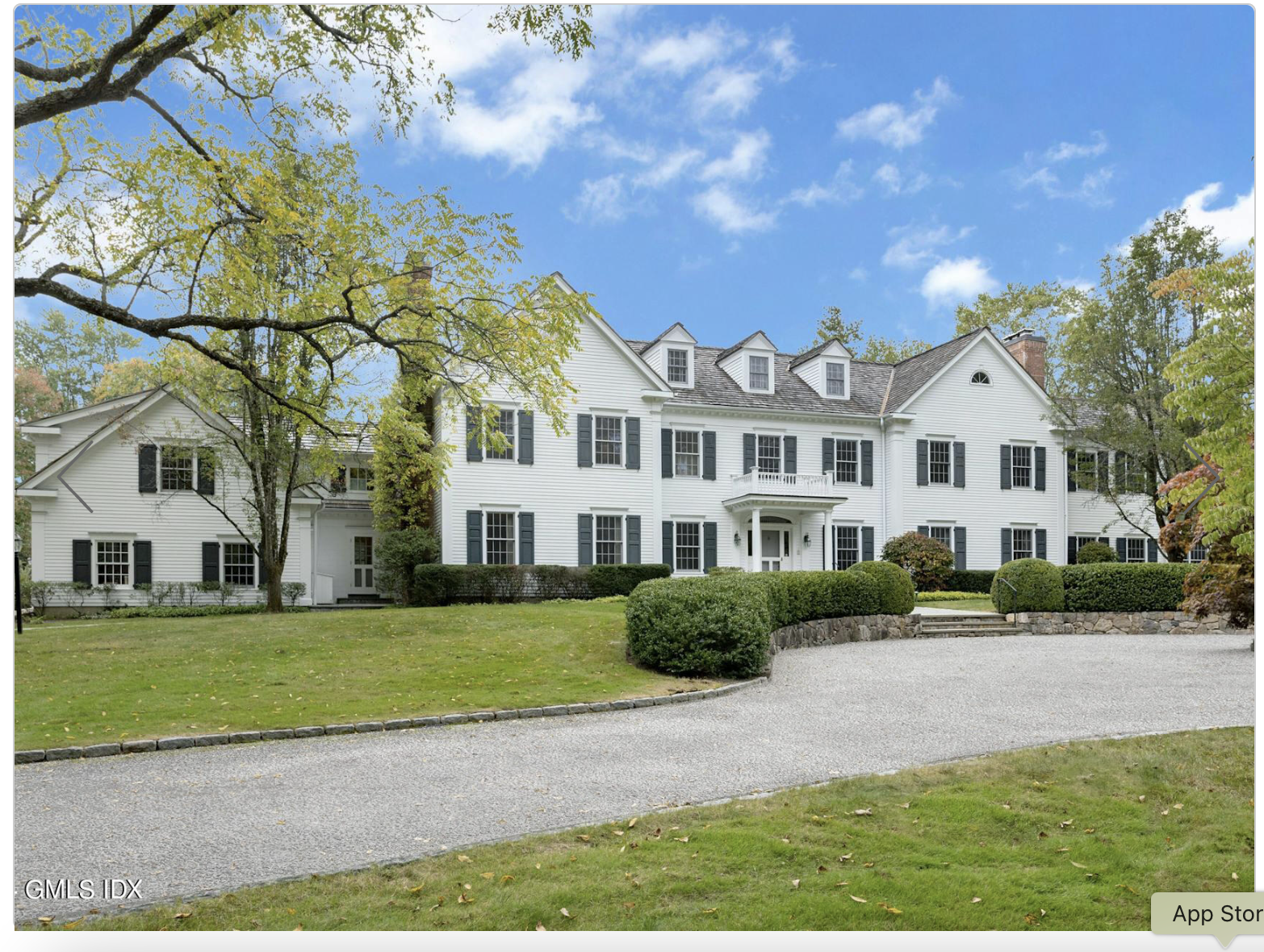
568 Riversville Road, presently asking $5.475 million. Started off at $5.775, and was originally purchased new by these owners in 2007 for $6.490.

16 Weaver Street, priced at $1,099,000, is reported under contract after 34 days on market. According to its listing it is presently rented out at $6,200 per month through July 2026.
Gosh.

A bit off the beaten path, that’s true, but it’s bound to have a certain appeal to Cos Cobbers looking to move west:


59 Lancer Road, $1.350 million, 16 days on market. The split-level houses in this development went up in 1963 and reflect that era’s sensibilities and design. Then again, they’re still cheap.
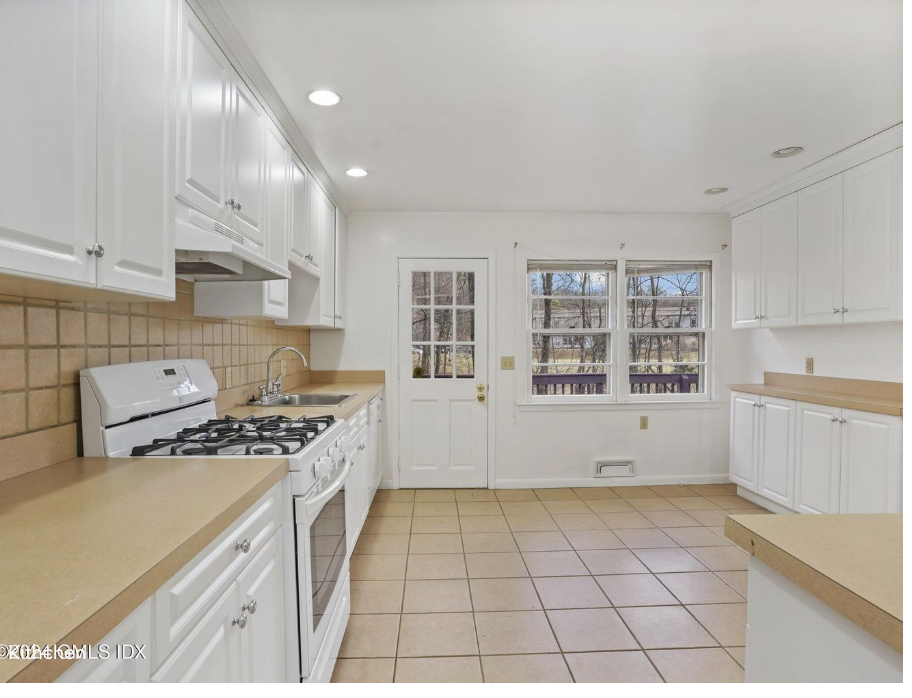



42 Loughlin Avenue, $3,250,001 million. It started off October 9th at $3.485 and dropped to $3.250 October 28th. The owners would have accepted that lower price, but brother Gideon, sensitive soul that he is, threw an extra buck on top of his clients’ bid so that the sellers could feel fully happy and content. What a guy.
Video here, still working as of this posting, though these are often deactivated soon after sale.

slashing his "torso, arms, back and neck."
… You may have seen this story in the news. You may have seen a headline that said something like "Woman charged with murder after postal worker stabbed to death in Harlem deli" or "NYC woman in custody for stabbing US Postal Service worker to death in dispute at deli sandwich line." But the fact of the matter is that it was no woman who committed this heinous crime.
The suspect in custody was initially reported as a 24-year-old woman named Jaia Cruz, but many sources have uncovered the truth: The suspect is actually a 24-year-old man named Alvin Cruz who claims to be a "transgender woman." However, the media seems intent on keeping up the charade.
All these media outlets are spreading misinformation. The person who k*lled a postal worker is not a woman. It’s a mentally ill man who dresses up as a woman. pic.twitter.com/Yb7bHyce0o
— Libs of TikTok (@libsoftiktok) January 5, 2025
In the days since the alleged murder occurred, even more information has come out about Cruz, and you have to wonder why this man was even allowed to walk the streets. According to the New York Post, he has a history of knife violence and has been arrested at least five times in the past. In 2020, he was caught waving a box cutter at someone and shouting, "I’m going to cut him."
…. And it wasn't just the media who got it wrong. According to journalist Andy Ngo, the NYC Department of Corrections booked the six feet four inches tall Cruz as a female.

diamond on a dung heap
What do Stamford, Bridgeport, New Haven and Waterbury have in common? They’re each “hidden gems” according to Zillow. Uh-huh.
Zillow reports that four of the Top 10 most sought-after cities in the U.S. are located here in the Nutmeg State. The city of Stamford ranks third, followed by Bridgeport at fifth, New Haven at eighth and Waterbury taking ninth place. They join Manchester, New Hampshire, which was the No. 1 most popular city for real estate searches in the Northeast market for the second year running.
“In another year of higher mortgage rates, areas of affordability and opportunity were center stage in 2024,” said Skylar Olsen, Zillow’s chief economist in a news release. “With the rise of hybrid work models, more people are discovering hidden gem cities they might have previously overlooked when daily commutes were the norm.”
I understand that these cities are affordable, but there’s a reason for that, and to describe them as “hidden gems” is to stretch the meaning of that term beyond what even a realtor would dare try. Manchester, New Hampshire, No.1 on Zillow’s list, a prized jewel? With a third of its population subsisting below the poverty line, and an open air fentanyl market and shooting gallery that attracts New Hampshire’s and Maine’s finest citizens, the Queen City may be slightly more alluring than, say, Waterbury or Bridgeport, but it wouldn’t be my choice for the title of No. 1 city in America; I might prefer LA’s Watts, or even Detroit, thank you.
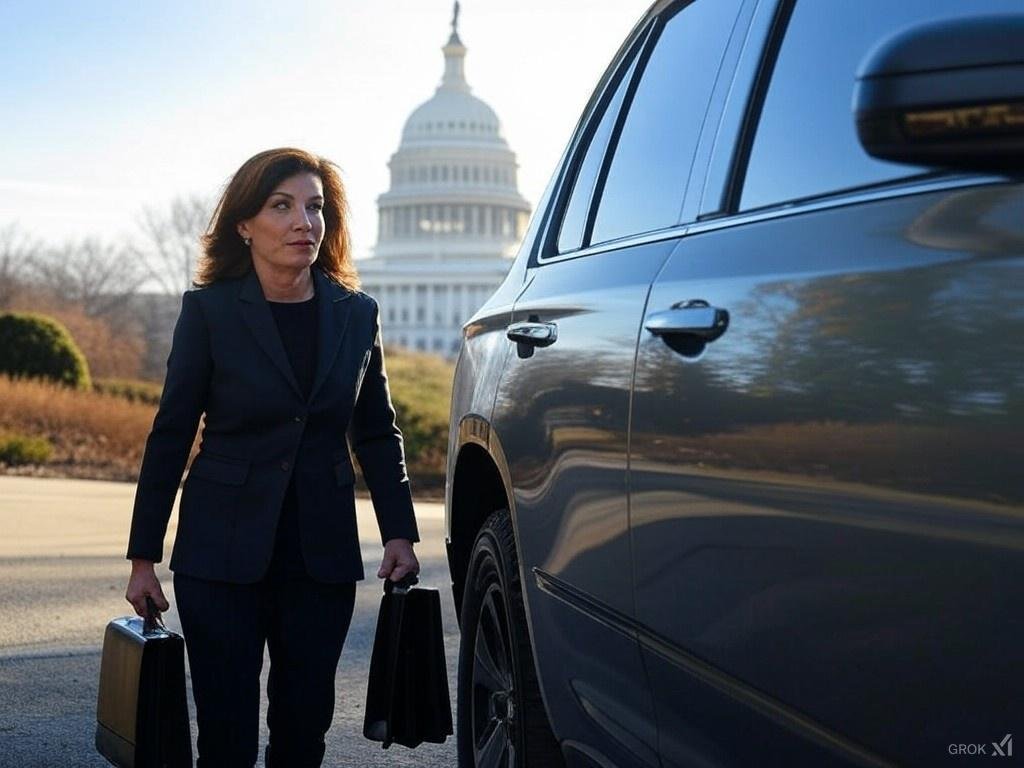
off to the bank
Uber and Lyft poured millions of dollars into efforts to legalize congestion tolling — and they stand to be among the biggest winners.
Uber spent $2 million alone from 2015 to 2019 to promote congestion pricing, roughly $1 million of which went to some of the city’s top lobbyists, the company confirmed to The Post in 2019.
Since then, both and Uber and Lyft have continued to hire top lobbyists to help persuade key state and city officials to approve the controversial levy, including Gov. Kathy Hochul and the Metropolitan Transportation Authority, records show.

July, 1944, Hungary: A young George Soros points gestapo to his fellow jews’ hiding place
President Joe Biden will be has been directed to award the Presidential Medal of Freedom to billionaire George Soros and former Secretary of State Hillary Clinton, plus 17 others, in a ceremony on Saturday.
Soros, the controversial Hungarian-born billionaire, supported Democrats in the 2022 midterm elections to the tune of $175 million, according to Federal Election Commission records.
The New York Post reports that in 2024 he gave another $60 million to various left-wing causes and to House and Senate Democrats through his Democracy PAC.
In addition, according to the outlet, Soros has moved "tens of billions of dollars of his personal net worth over to his Open Society Foundations, which funds a multitude of progressive projects around the world, has also heavily invested in races to install far-left district attorneys in major American cities." Among those DA's are Alvin Bragg and George Gascon.
UPDATE: Powerline’s John Hinderaker is also appalled by what he calls Biden’s final insult to America (after pointing out, though, that there are 16 days left for Biden’s advisors to top it) and adds this concusion:
Many have assumed that the decrepit Joe Biden didn’t really decide on this year’s Presidential Medal winners. But it doesn’t matter: Soros’s influence is universal within the Democratic Party. There is not a single influential Democrat who would dissent from honoring a vicious anti-American. The Democrats are George Soros’s party.

The NIH claims it is going to conduct a replication study*
Via Science.org
Earlier this year, the National Institutes of Health (NIH) made an unusual offer to many of its 37,500 principal investigators: If you have a laboratory study you think could have a major impact on health—such as a mouse experiment testing a possible heart disease drug—we may pay for a contract lab to repeat the work to make sure it’s solid.
Only a few people applied to the pilot phase of NIH’s initiative [surprising no one — ED] which is finalizing its picks for the first handful of studies this month. But its leader at NIH says it has enough participants to study the feasibility of the program, which has the support of Congress and President-elect Donald Trump’s nominee to head NIH, Stanford University health economist Jay Bhattacharya. He recently told The Wall Street Journal that replication studies should be “a centerpiece of what the NIH does.”
For years, concerns have mounted that many basic biomedical experiments don’t hold up when another lab attempts them, casting doubt on plans to translate the work into a treatment. Cases of apparent scientific fraud, such as work underlying Alzheimer’s disease drugs that Science investigated, have added to worries about the integrity of these preclinical studies.
Sounds good, right? But then comes the (silent) kicker:
The initiative comes with a big caveat: The agency has no plans to make the resulting data public. That “limits the appeal and value,” says Tim Errington of the Center for Open Science (COS), a nonprofit that supports replication studies. Still, he says, the pilot “is a step in the right direction.
PJMedia’s Ben Bartee has his doubts about the sincerity of the NIH in this matter:
In what world is a publicly-funded agency like the NIH allowed to hide publicly-funded research from the public that would potentially expose its malfeasance — and this from the Most Transparent Administration in History™?
Good question.
*How much of a problem is this? It’s huge, and longstanding: here’s a BBC article dated February 22 2017:
Science is facing a "reproducibility crisis" where more than two-thirds of researchers have tried and failed to reproduce another scientist's experiments, research suggests.
This is frustrating clinicians and drug developers who want solid foundations of pre-clinical research to build upon.
From his lab at the University of Virginia's Centre for Open Science, immunologist Dr Tim Errington runs The Reproducibility Project, which attempted to repeat the findings reported in five landmark cancer studies.
"The idea here is to take a bunch of experiments and to try and do the exact same thing to see if we can get the same results."
You could be forgiven for thinking that should be easy. Experiments are supposed to be replicable.
The authors should have done it themselves before publication, and all you have to do is read the methods section in the paper and follow the instructions.
Sadly nothing, it seems, could be further from the truth.
After meticulous research involving painstaking attention to detail over several years (the project was launched in 2011), the team was able to confirm only two of the original studies' findings.
Two more proved inconclusive and in the fifth, the team completely failed to replicate the result.
"It's worrying because replication is supposed to be a hallmark of scientific integrity," says Dr Errington.
Concern over the reliability of the results published in scientific literature has been growing for some time.
According to a survey published in the journal Nature last summer, more than 70% of researchers have tried and failed to reproduce another scientist's experiments.
Marcus Munafo is one of them. Now professor of biological psychology at Bristol University, he almost gave up on a career in science when, as a PhD student, he failed to reproduce a textbook study on anxiety.
"I had a crisis of confidence. I thought maybe it's me, maybe I didn't run my study well, maybe I'm not cut out to be a scientist."
The problem, it turned out, was not with Marcus Munafo's science, but with the way the scientific literature had been "tidied up" to present a much clearer, more robust outcome.
"What we see in the published literature is a highly curated version of what's actually happened," he says.
"The trouble is that gives you a rose-tinted view of the evidence because the results that get published tend to be the most interesting, the most exciting, novel, eye-catching, unexpected results.
"What I think of as high-risk, high-return results."
The reproducibility difficulties are not about fraud, according to Dame Ottoline Leyser, director of the Sainsbury Laboratory at the University of Cambridge.
That would be relatively easy to stamp out. Instead, she says: "It's about a culture that promotes impact over substance, flashy findings over the dull, confirmatory work that most of science is about."
She says it's about the funding bodies that want to secure the biggest bang for their bucks, the peer review journals that vie to publish the most exciting breakthroughs, the institutes and universities that measure success in grants won and papers published and the ambition of the researchers themselves.
"Everyone has to take a share of the blame," she argues. "The way the system is set up encourages less than optimal outcomes."
“Less than optimal outcomes” — that’s a nice euphemism for fraud and sloppy science. And that’s for hard-science studies; the reproducibility record for psychology and other social science studies gives a new meaning to “dismal science”.
Be notified of new posts! Sign-up here:
Want to comment without registering?
