
No inventory
/6 Cos Cob Avenue, listed at $1.350 January 8th went immediately to highest and best, and is now pending.
Greenwich, Connecticut real estate, politics, and more.
Greenwich, Connecticut real estate, politics, and more

6 Cos Cob Avenue, listed at $1.350 January 8th went immediately to highest and best, and is now pending.

BBC blasted after hiring new boss from Canada who told journalists not to call Hamas ‘terrorists.’
And: Biden’s handlers strike again
[T] he Biden administration will remove the communist regime from the State Sponsors of Terrorism (SSOT) list. …[T]he decision came directly from the Democratic administration at the White House, not the State Department.
The decision comes just six days before President Biden will relinquish power and President-elect Donald Trump will be sworn in on Jan. 20

11 Valleywood Road, priced at $2.650 million but reported pending after just 5 days, so probably going for more. Built in 2018, when it sold for $1.865 (some unspecified improvements were added in 2022).

“You’re gonna love the way you look”
"It has been an honor to lie to you everyday, but I've decided to leave my job lying to the press and go back to my old gig lying to normal everyday people as a salesman for Men's Wearhouse," Jean-Pierre said in a final press conference in which she invited colleagues to visit her at the Men's Wearhouse on 6th Avenue in Manhattan. "When God closes a door, He opens a closet."
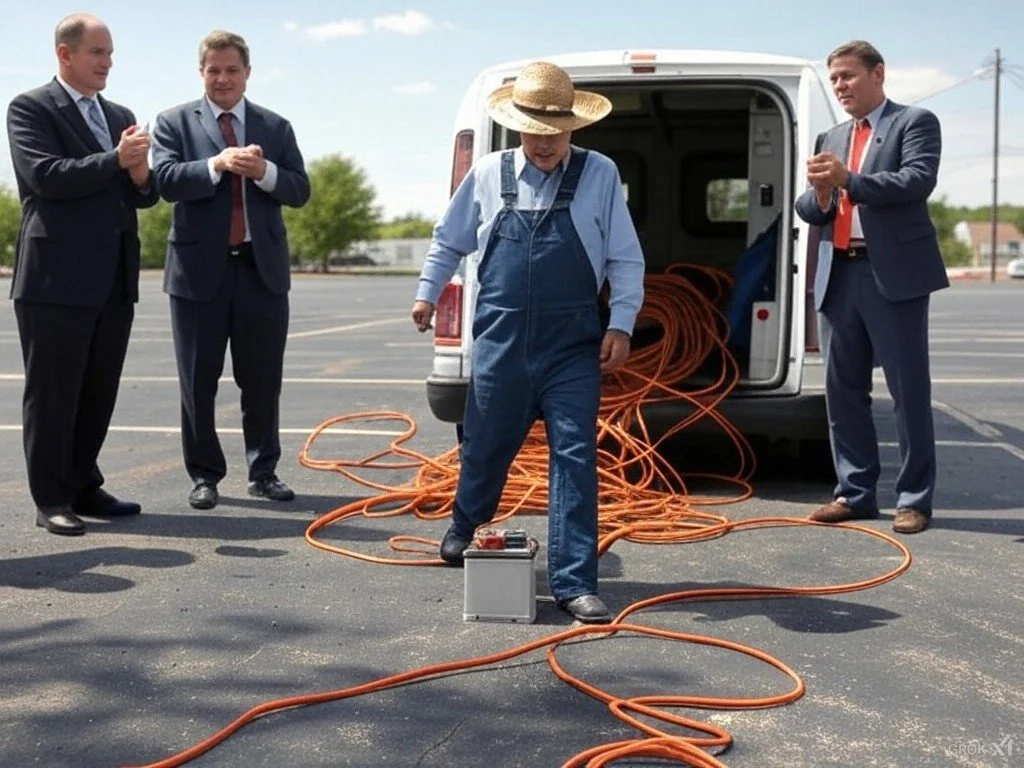
(The picture above is real; the picture below may not be, although it certainly appears to be authentic)


7 Cobb Island Drive, 10 acres and an oldish — 1962 — house, is currently priced at $18.5 million and is reported pending today. It began at $20 million in March ‘22. Purchased for $15.2 million in 2016.

BUT OF COURSE: San Diego State University Pride Center says ‘fatphobia’ is ‘rooted in anti-Blackness,’ calls on students to champion ‘fat bodies.’
Glenn Reynolds points out a rude truth:
”Nobody is afraid of fat people. People just find them unattractive. That’s what all this is about: If you won’t date me you’re a bigot!
The woman below doesn’t appear to be of the colored persuasion, but I’m sure she frightens some small-minded persons anyway:


26 Tomac Avenue, $3,906,000. Complete with a one-bedroom guest cottage, which is unusual for Old Greenwich, and nice to have. The sellers started at $4.375 million back in July, but they’d paid “just $2.610 for it in 2015, so I’m sure they weren’t too disappointed in the outcome here.

local delivery
extended range
The company behind the United States Postal Service's all-electric mail trucks has said it would be prepared to switch to gas vehicles.
Oshkosh Corp., which provides the so-called 'Duck' mail trucks, has said it is prepared to U-turn if USPS cuts back orders for EVs under the second Trump term.
Trump, who takes office on January 20, has long criticized funding brought in by the Biden administration to transition to an electric mail fleet.
President Biden's Inflation Reduction Act (IRA) provided $3 billion over a decade for the Postal Service to become all-electric, including both trucks and charging stations.
USPS said in October last year that it plans to buy more than 100,000 mail trucks through 2028, of which at least 62 percent will be EVs.
Oshkosh has received its first order from USPS for 50,000 electric trucks, valued at $2.98 billion.
But John Pfeifer, CEO of Oshkosh, said the company would be prepared to make the switch back to gas if necessary.
'We'll do what they want us to do - supplying either gas or electric,' he said in an interview at the CES trade show in Las Vegas, Bloomberg reported. 'A new Congress could come in and repeal, I guess, part of the IRA that hasn't been spent.'
Before finally bowing to overwhelming pressure from Congress and professional enviro grifters, the USPS Postmaster General Louis DeJoy fiercely opposed converting the entire truck fleet to electric due to the huge cost not only of buying the vehicles themselves, but also the necessary upgrading the electrical service to the nation’s 35,000 post offices. Congress has printed $3 billion to pay for converting half the fleet, leaving the rapidly failing USPS (when was the last time you mailed paid a bill by mail? Sent a letter?) to come up with another $3 billion to buy the rest of the trucks, and billions more for those electrical upgrades and charging stations.
It’s understandable that Trump will see this as an irresistible target for elimination, and Oshkosh is smart to realize this.

DNC members leave off electioneering to assist in Los Angeles cleanup efforts.
At least, I assume they’re Democrats.
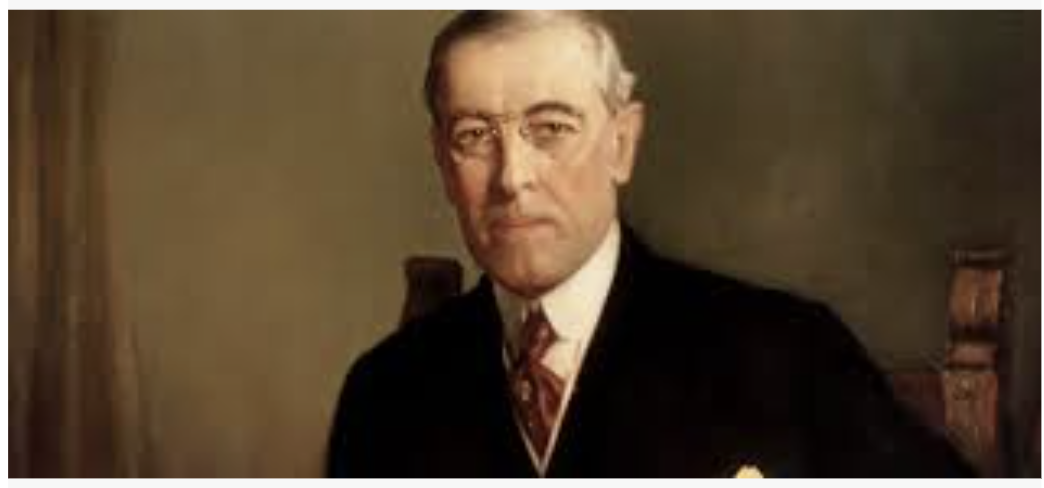
Woodrow Wilson: the root of (almost) all evil
I’VE CALLED FOR ABOLISHING THE CIVIL SERVICE BEFORE. MORE JUSTIFICATION HERE:
The massive federal bureaucracy, an unconstitutional 4th branch of government, will do everything possible to thwart the will of the people! https://t.co/sTON1eXii5
— Elon Musk (@elonmusk) January 13, 2025
Here’s a portion of Reynold’s article he refers to: well worth reading in its entirety.
Oct 15, 2023
….. Prior to the adoption of the Pendleton Act in 1883, government employment operated according to the “spoils system,” which meant that hiring in the executive branch was controlled by the Executive. When a new administration came in, everyone’s job was up for grabs, at least potentially. This “rotation in office” had several advantages, which were widely appreciated at the time, and propounded by presidents from Jefferson to Jackson to Lincoln.
“Jackson argued that one serving in government for too long would inevitably lose sight of the public interest and come to use office for personal gain. He also maintained that government was or could be made simple enough for men of ordinary ability and experience, so ‘more is lost by the long continuance of men in office than is generally to be gained by their experience.’”[i]
Contrary to popular belief, though, the arrival of a new president didn’t mean that everyone left. Even Andrew Jackson, upon taking office, replaced only about 10% of the federal work force with his own people. Every president understood the value of continuity, and hiring new people is hard work.
But under the spoils system, the fact that the president could replace anyone mean that everyone worked for him. And that meant both that everyone was responsible to the president, and that the president was responsible for everyone in the government, and everything the government did. This is consistent with the Constitution’s vesting clause, which provides that “The executive Power shall be vested in a President of the United States of America.” If the executive branch does it, it’s an executive power, and if it’s an executive power it should be controlled by the president.
Contrast this to a “professional” civil service, in which the president does neither the hiring nor the firing, except with regard to a comparatively small number of senior officials. The civil service doesn’t think of itself as working for the president, really, and will happily drag its feet when it doesn’t like the president’s priorities. And when the bureaucracy misbehaves, or fails to perform, the president can, at least to a degree, blame its recalcitrance for the trouble or lack of results that occurs.
Congress is also let off the hook, yet simultaneously weirdly empowered. Congress can blame “the bureaucracy” for bad things, even when those things result from laws that Congress has passed. Then it can turn around and “help” constituents by intervening with the bureaucracy it has rendered dysfunctional, earning gratitude that may be deserved in a narrow sense, but not in terms of the big picture.
Under a spoils system, on the other hand, nobody gets off the hook. If the bureaucracy misbehaves, the president can fire the misbehavers. If Congress is unhappy with what bureaucrats do, they can demand that the president fire them, and make an election issue out of it if they want.
So why did we wind up with a civil service? As is typical, the fantasy of a neutral, efficient, expert civil service was laid next to the reality of a messy functioning government. But, as is also typical, the fantasy in practice turned out to be considerably less appealing than as proposed.
The big objection to abolishing the protected civil service is that government by “expertise-driven civil service”would be gone. The response to this objection is twofold. First, we don’t have an “expertise driven civil service.” At least the record of our civil service in addressing problems has been pretty unimpressive, and not particularly marked by expertise. From government nutrition guidelines, which were based on politics and bad science, to the Covid fiasco, to energy policies and education, it’s hard to think of very many significant areas where neutral, technocratic expertise has carried the day. Looking on this record, I’ve commented in the past on the “suicide of expertise,” and I think it’s pretty obvious now that the expertise has often been a sham. (Or, even when it existed, has been subordinated to politics: Released emails, etc., have revealed that Anthony Fauci et al. knew that what they were telling the public wasn’t true, and in fact were saying the opposite in private, but lied to the public anyway.)
The modern civil service system (post-Pendleton Act) – like so many calamities of the 20th Century – sprang from the brain of Woodrow Wilson, a political scientist before he was president, who wrote of the importance of separating politics from administration. In his view, cool, technocratic administrators would execute the policies chosen by politics – though with the suggestion that politics should generally defer to their expertise. That theory may have seemed beguiling in the late 19th Century, but by the 21st Century it has become clear that that’s not how any of this works.
All of this would be true even if the civil service was nonpartisan, or at least divided along partisan lines that resembled those of the nation at large. This is, of course, not the case at all. The civil service is effectively a left-liberal monoculture, with its primary loyalty being to the Democratic Party. (And donations from federal employees heavily favor Democrats). The politicized behavior of the Department of Justice, FBI, IRS, and other federal agencies during the Obama, Trump, and Biden administrations has made that obvious.
So the question isn’t whether we’re going to have a nonpartisan, expert civil service or a partisan nonexpert one. The question is whether we’re going to have a calcified, one-sided partisan nonexpert service or a partisan nonexpert service that changes its composition and is subject to democratic supervision….
Be notified of new posts! Sign-up here:
Want to comment without registering?