Quelle horreur!

CNN Analyst on Deportations: Just You Republicans Wait Until Women Can't Get Their Blueberry Smoothies!

A “Democrat strategist” — snicker — attempts to defend open borders by asserting a … peculiar argument:

ARNOLD: Farm, picking strawberries. I mean, like, I can't wait --

STEPIEN: These building trades guys are being hurt by labor that shouldn't be here.

ARNOLD: I can't wait until American women can't get blueberries for their smoothies. I cannot wait until there is a full crackdown on all small businesses as if that's going to be the solution to the immigration problem. It is just going to put immigration related issues further into the darker corners. We're not going to see them. It's just going to become even harder to solve the problem. It doesn't make sense to punish individuals and people when there is a broken system.

Mary Katharine Ham is no more impressed than the rest of the not brain dead voter pool:

Essential Spending (UPDATED)

Chuck Schumer (D-NY) today released the following statement on the Trump Administration's recent decision to freeze all federal grants:

“Congress approved these investments and they are not optional; they are the law. These grants help people in red states and blue states, support families, help parents raise kids, and lead to stronger communities.

“Donald Trump’s Administration is jeopardizing billions upon billions of community grants and financial support that help millions of people across the country. It will mean missed payrolls and rent payments and everything in between: chaos for everything from universities to non-profit charities.”

Schumer’s talking about all those federal grants dreamed up by individual congressmen and senators for the benefit of their campaign donors and future employers and slipped into 1,780-page continuing resolution spending packages read by no one and passed by huge majorities.

Spending like this, discovered by PJ Media’s Stephen Green testing out a new database search tool for federal spending:

I thought, "What is the most boring thing in the world and how much taxpayer money is Washington giving away on it this year?"

"Yarn," I immediately decided. "Yarn is the most boring thing in the world." To me, that is — knitters, please take no offense. I'm sure you'd find my collection of Polish LEGO-knockoff WWII warships boring as heck, too. 

As it turned out, Americans — unbeknownst to 99.99% of us, I'm sure — will spend $16,500,001 on three yarn-related projects this year. The bulk of it, an even $15 million, went to something called The Industrial Commons on NSF engines.

UPDATE: Turns out, we’ve also been sending Schumer Simoleons to left-wing journalists opposing Hungary’s conservative government.

"There are some very fine people on both sides — I don't mean journalists, who are all morons, and horrible examples of human evolution."

Erasing the Past: ‘Journalist’ at The New Yorker Can’t Remember the Last Five Years

From time to time, ‘journalists’ pop into your life to remind you how ignorant they are. Some days we lose count because it’s such a competition. Tuesday, Susan Glasser of The New Yorker was the big winner. Congrats, Susan! Woohoo! You did it! Glasser thought she was a making a point, but ended up only pointing out what a monumental hack she is.

Here’s the proof. (READ)

He's a great deal more than a "former reality TV star", but this is the Daily Mail, and the editors know (most of ) their readers

Former reality TV star Sean Duffy confirmed as transportation secretary

A former Republican Wisconsin congressman, Duffy, 53, received bipartisan support in the Senate, which voted unanimously to push his nomination through before voting in his favor 77 - 22. 

Wisconsin Democrat Sen. Tammy Baldwin, who introduced Duffy at his confirmation hearing, gave the Trump pick glowing reviews, saying he is 'the right person for this job.'

'Sean has been a tremendous and well-liked public servant,' Trump lauded the former Fox host when announcing his nomination. 

The president has noted Duffy's experience representing the interests of rural residents and his economic and legal expertise. 

Duffy will replace Pete Buttigieg as secretary of the Department of Transportation. 

His appointment to the role comes at a busy time for the department. 

The Department of Transportation (DOT) has recently dealt with the fallout from Hurricane Helene and Milton. 

The agency has been tasked with rebuilding downed bridges, roads and other critical transportation infrastructure in North Carolina and Georgia where the storms took out entire communities. 

DOT is also now dealing with the total destruction of California communities impacted by deadly wildfires. 

Having served five terms in the House before later lobbying, Duffy knows his way around Washington and can be expected to rely on his old connects from Congress to help him smoothly transition into leadership in Trump's Cabinet.

At first glance, it might seem that this father of nine and accomplished person would have nothing in common with his mewling, incompetent gay predecessor, Pothole Pete Buttandcheek, but Duffy is a 3X winner of the World Lumberjack Championship, and I think we know what that means: he’s okay.

Busted deal in Riverside NoPo

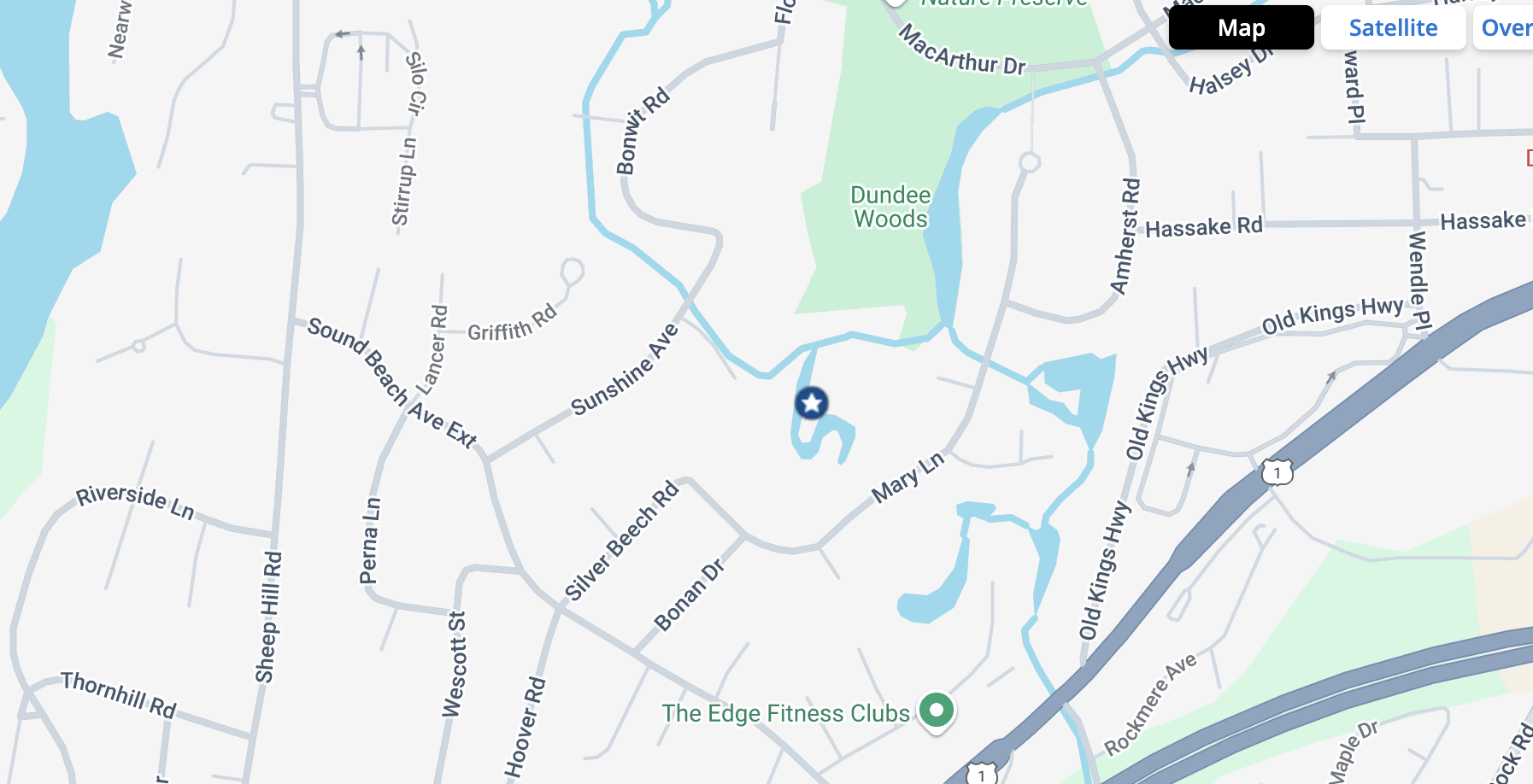
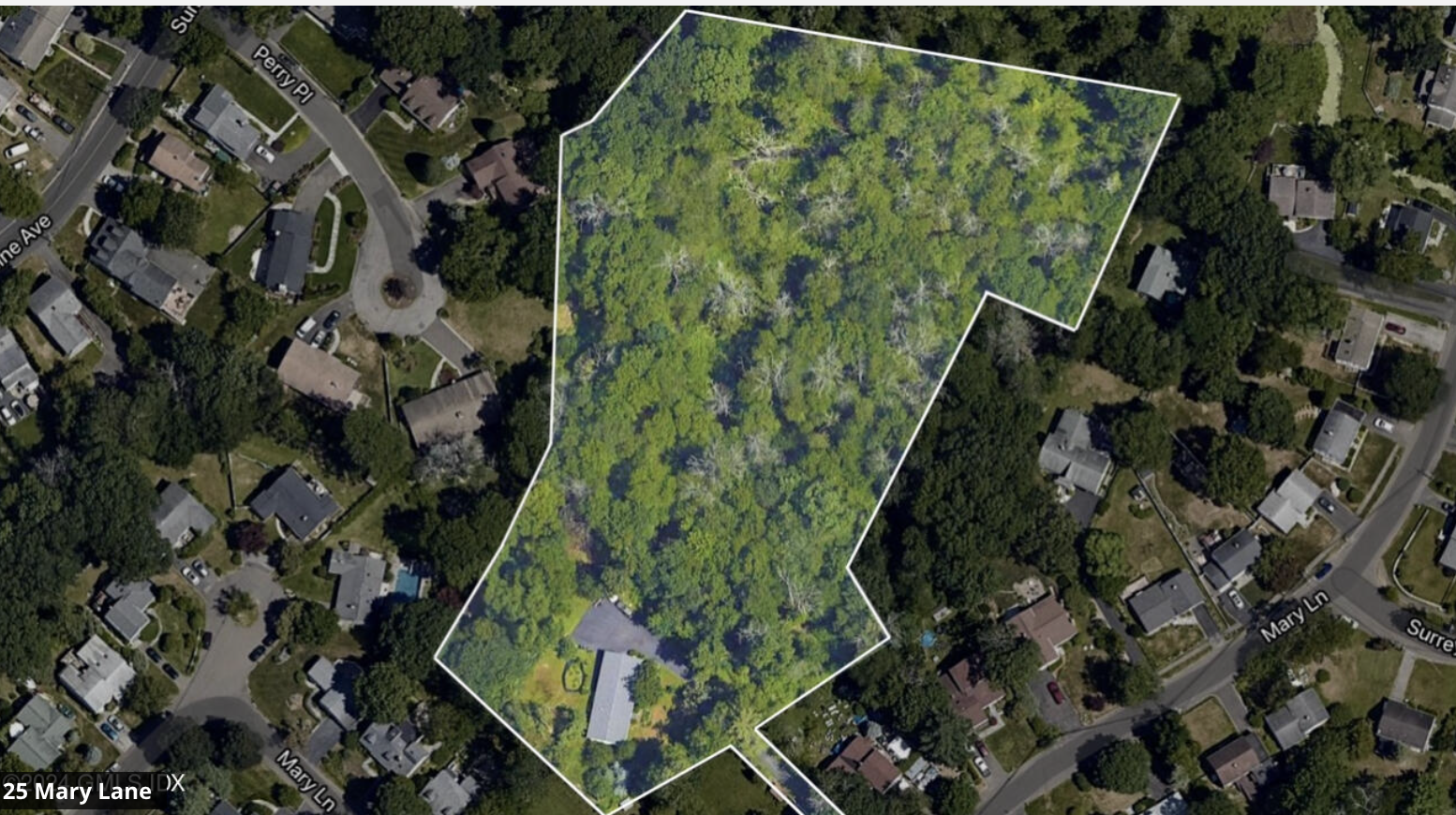
25 Mary Lane, listed at $1.997,500 last summer, went to contract in October, but is back on the market today. The lot is 4.6 acres, but with wetlands and conservation “issues”, so the listing’s description that mentions “a rare opportunity for possible 3 lots” may have raised false hopes. Public gas and sewer on the land, so something can be done here, but, it seems, not as much as was envisioned.

Commies and the power of projection

A long time ago in a galaxy far, far away (November 2022), the folks at Wired Magazine warned their readers that a new totalitarianism was coming to the Land of the Free. They were right, although not in the way they wanted the sheeple to imagine:

When Your Neighbor Turns You In

Authoritarian societies depend on people ratting each other out for activities that were recently legal—and it’s already happening in the US.

“There’s a knock at the door. Local authorities have received a tip that you’ve broken the moral code—a new set of laws banning your once-accepted lifestyle. You’re being called in for questioning, and it’s unclear when you’ll return home.

“In an authoritarian state, neighborhood trust is a thing of the past. Citizens are often encouraged to report any perceived wrongdoing in their communities to the government. There are countless examples of this in history—and around the world today. It happens in Russia, and there’s even an app for it in Saudi Arabia.

“The United States appears to be creeping toward this culture of community surveillance. Texas’ SB 8 deputized everyday Americans to sue anyone who has had an abortion or assisted with one. Texans are reporting the parents of transgender children to authorities. Virginia Governor Glenn Youngkin set up a tip line and encouraged parents to report teachers who are teaching “divisive” subjects. Florida’s “Don’t Say Gay” law encourages parents to monitor teachers. With the Republican Party increasingly embracing authoritarianism, this is likely just the start.

Tom Ginsburg, a professor of international law at the University of Chicago, says these kinds of policies are an American version of what you might see in authoritarian states.

“It incentivizes private enforcement of moral norms,” Ginsburg says. “That’s very corrosive. It’s a process that is undermining the ability of society to function in the traditional way that societies do.”

“…. Consuelo Amat … says those who support the new regime can essentially become informants for it.

“When that starts happening, the dynamic for communities and neighborhoods is extremely bad,” Amat says. “The distrust that people have is huge, so people start not sharing information at all. One of the cores of democracy is neighborhood trust. You need to trust others in your society and in your community for democracy to work. Period. When there’s a very high level of distrust, you will see a fracturing of community.”

“If the US moves further toward authoritarianism, you can imagine states passing more laws to disempower, criminalize, or otherwise marginalize certain groups. Anyone you encounter on a regular basis who doesn’t agree with politically could be encouraged to report you for violations of these laws as some sort of act of civic duty. They’ll have more ways to do it than ever before, considering modern technology allows us to monitor people’s social media feeds, watch them through Ring cameras, report them through community-watch apps like Citizen, and more.

“If the rule of law starts breaking—and especially if there’s a regime that is supportive of those actions—that’s really giving space for people to take actions that are illegal,” Amat says. “Knowing you will not be prosecuted is a big thing.”


”All of these sorts of things create a culture of fear in authoritarian countries. People are afraid of their neighbors, afraid to speak freely, and afraid of what might happen next.”

Okay, that was Wired, then. This is reality, now:

January 28, 2025

“NEIGHBORS SNITCHING ON NEIGHBORS IS A HALLMARK OF LIFE UNDER TOTALITARIAN REGIMES. That’s why it’s so concerning that these bias response hotlines have leaked out from college campuses and are quickly being adopted by state and municipal governments.”

Bias reporting systems were a nightmare on campus — and now they’re everywhere

“Neighbors reporting neighbors for speech that is protected under the First Amendment is textbook totalitarianism, and it must not be tolerated

“Additionally, Washington Free Beacon journalist Aaron Sibarium has also published a piece on bias reporting systems with examples you wouldn’t believe if they weren’t corroborated by links, screenshots, and even quotes from bias reporting system administrators themselves:

“In January 2020, the top law enforcement agency in the state of Oregon launched a “Bias Response Hotline” for residents to report “offensive ‘jokes.’”

Staffed by “trauma-informed operators” and overseen by the Oregon Department of Justice, the hotline, which receives thousands of calls a year, doesn’t just solicit reports of hate crimes and hiring discrimination. It also asks for reports of “bias incidents”—cases of “non-criminal” expression that are motivated, “in part,” by prejudice or hate.

Oregonians are encouraged to report their fellow citizens for things like “creating racist images,” “mocking someone with a disability,” and “sharing offensive ‘jokes’ about someone’s identity.” One webpage affiliated with the hotline, which is available in 240 languages, even lists “imitating someone’s cultural norm” as something “we want to hear” about.

It is not entirely clear what the state does with these reports. While the hotline cannot “sanction a bias perpetrator,” according to its website, it does share “de-identified data” with the Oregon Criminal Justice Commission, a body that develops “public safety” plans for the state, and connects “survivors” with “resources” like counseling and rent relief.

“You read that last part right. In Oregon, the purveyors of these systems are using taxpayer money to provide “victims” of these “non-crime hate incidents” with “resources” that include therapy, help buying security cameras, and even assistance with paying their bills. Sure sounds like setting up a number of very tempting incentives to snitch on your fellow Americans for protected speech, doesn’t it? What could possibly go wrong?

“It gets worse, too. Bias reporting systems in some states, like Connecticut, let you report things you weren’t even there to witness yourself. In Philadelphia, bias reporting systems literally collect your personal information and reach out to you to recommend sensitivity training:

Connecticut’s system lets users flag “hate speech” they “heard about but did not see.” Vermont tells residents to report "biased but protected speech" directly to the police. Philadelphia has an online form that asks for the "exact address" of the "hate incident," as well as the "name" and gender identity of the offender—information the city uses to contact those accused of bias and request that they attend sensitivity training.

“If it is not a crime, we sometimes contact the offending party and try to do training so that it doesn’t happen again,” Saterria Kersey, a spokeswoman for the Philadelphia Commission on Human Relations, told the Washington Free Beacon. The offender is free to decline, she said.

“One more section from Sibarium’s article:

California, Illinois, and New York all set up systems to report not just hate crimes but “bias incidents,” defined as any expression of bias against a protected class that does not rise to the level of a crime. Washington state will launch its own system this year. Local-level systems exist in Westchester County, N.Y., Montgomery County, Md., Eden Prairie, Minn., and Missoula, Mont.

By the end of 2025, nearly 100 million Americans will live in a state where they can be reported for protected speech.

“I encourage you to read Sibarium’s piece in full to get all the frightening details, but suffice it to say that this campus cancer has metastasized into our country as a whole, and it is a free speech killer.”

Pending in Central Greenwich

66 Ridge Street, priced at $7.295 million, final selling price to be revealed at closing. A similar house at 62 Ridge Street sold for $6.625 million in November ‘22 and was then put back up for sale in February 2024 at $7.595 million before selling for $6.7 last May.

Like No. 62, this one encompasses five bedrooms and seven baths — that strikes me as excessive for an in-town house that, I wouldn’t think, will see a large family occupying it, but maybe with domestics about to become scarce, wealthy homeowners are having to upgrade the servants’ quarters to attract legal citizens; who knows?

One of the classics has passed (funeral location corrected – I think)

Jean Ruggiero, dead at 87.

Anyone and everyone involved in the Greenwich real estate scene over the past, what — five decades? Six? – knew Jean. I first met this spark plug when a part of my law practice practice comprised real estate, and that relationship continued when I went into real estate myself and joined her at William Raveis. Jean was a tough, determined force, and sometimes it could be a challenge not to be angry at her, but I always considered her a good friend, and she reciprocated. One thing about Jean: once she committed to your offer, she held the deal together no matter what, fending off all other comers. I benefited from that determination many times, and sometimes didn’t; even in the latter cases, I held no hard feelings.

She was one colorful character, and a fun person to know and work with. Her funeral is Saturday at St. Paul’s in Riverside, and I expect the church to be packed. God speed, Jean.

Correction: Brother Gideon informs me that, Greenwich Time notwithstanding, the funeral will be held at St. Paul Catholic Church on King Street (The Hamburger Church), and not the Episcopalians’ hangout at St. Paul’s Riverside. . I never knew Jean to be particularly Riverside/yachty, so this seems more likely.