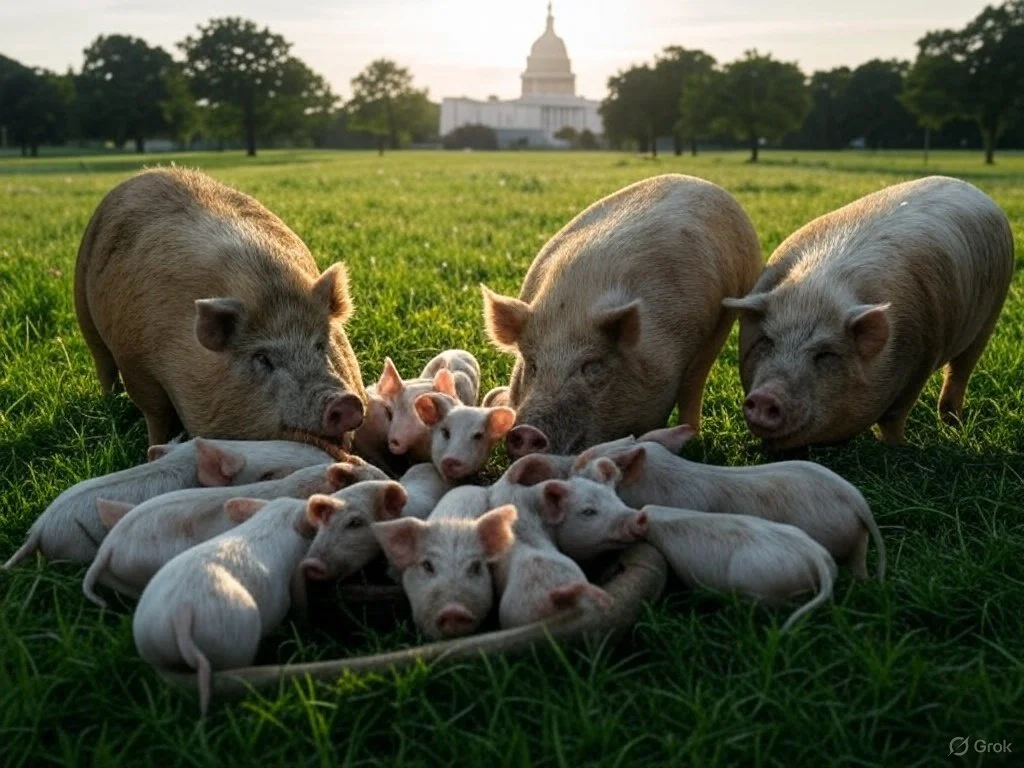
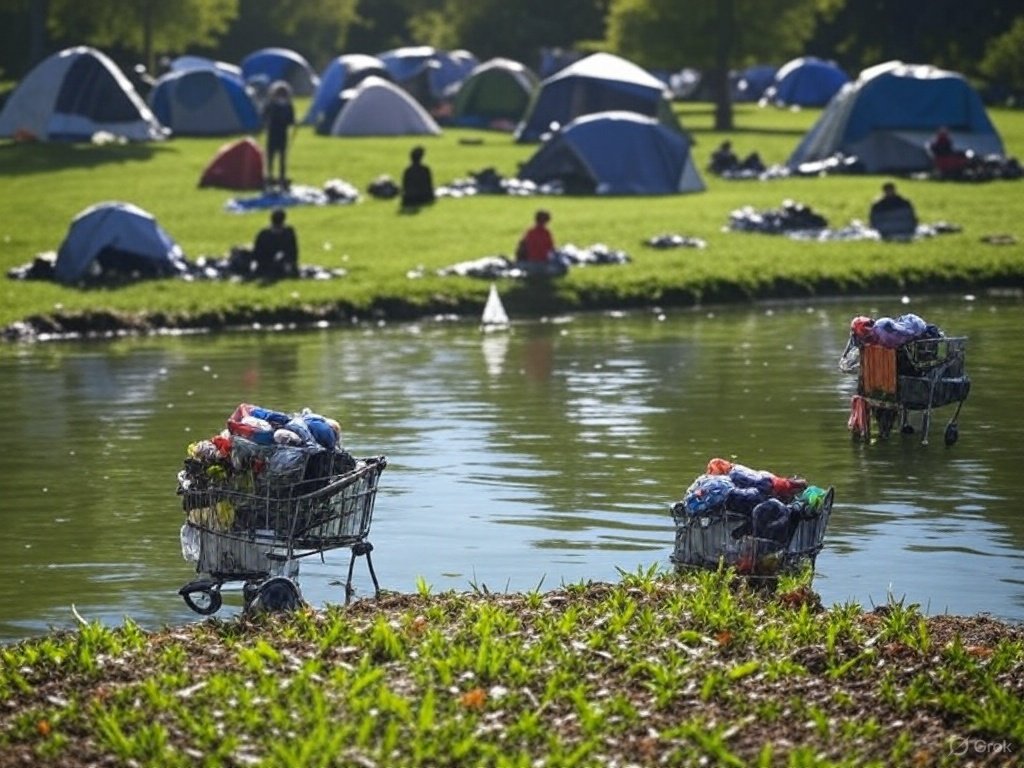
It’s mischief season, and our Nutmeg Nutcases, otherwise known as your elected representatives in Hartford, have been busy. Greenwich Time has the story:
From ‘just cause’ to zoning reform, these CT housing proposals move closer to becoming law.
Following a marathon meeting Thursday lasting more than 12 hours, the Connecticut legislature's Housing Committee advanced several dozen bills on subjects ranging from tenant protections to zoning reform.
So what’s in those bills? All the usual attacks on landlords and municipalities’ rights to control their zoning regulations and determine the nature and character of their neighborhoods, of course, so nothing new here, just a continuation of the assault on property owners and ordinary citizens. But even if you’re not a landlord, and even if you don’t care whether high rise low income apartment complexes pop up along our rail corridor, those of you who shop in public places or visit town parks might find this particular component of the the package of bills interesting: despite laws like this having proved to be a disaster, ruining towns and cities, and despite those laws being repealed in cities from Portland Maine to Portland Oregon and all points in between, Hartford wants to bring it all home — to you:
Protections for homeless people
Another bill that drew at least modest support from Republicans was a proposal to guarantee homeless people the right to sit, sleep, eat and otherwise live on public land and in public spaces.
The proposal has drawn support from an array of homeless advocates and service providers, who say unhoused people shouldn't be arrested, ticketed or harassed just for trying to live.
"It's time to stop treating homelessness as a crime and start addressing it as the complex, multifaceted issue that it is — one that requires compassion, empathy and systemic change," testified Stephanie Boyce, director of homeless prevention, outreach and food access programs for HandsOn Hartford.
Opponents say the bill inconveniences communities and their residents by granting the homeless too much free reign. Connecticut's transportation commissioner was among those to testify against the proposal, citing the "dangers of allowing unregulated use of public spaces."
Democrats on the Housing Committee broadly supported the proposal, while several Republicans waffled on it. Sampson said the bill had "a lot of promise" but needed to be tweaked to be more specific. Scott said he was "torn" on the proposal before ultimately voting to advance it.
Here’s the proposed law, and what the Democrats have in mind for our towns:
AN ACT PROHIBITING A MUNICIPALITY FROM IMPOSING ANY PENALTY ON HOMELESS PERSONS FOR PERFORMING LIFE SUSTAINING ACTIVITIES ON PUBLIC LAND.
Be it enacted by the Senate and House of Representatives in General Assembly convened:
Section 1. (NEW) (Effective July 1, 2025) (a) As used in this section:
(1) "Homeless person" has the same meaning as provided in 42 USC 3 1130 [*] as amended from time to time;
(2) "Motor vehicle" has the same meaning as provided in section 14-1 5 of the general statutes;
(3) "Public land" means any property that is owned or leased, in whole or in part, by any state or local government entity or any property upon which there is an easement for public use and that is held open tothe public, or any federal land where local law enforcement has jurisdiction to enforce local laws, including, but not limited to, plazas, courtyards, parking lots, sidewalks, public transportation facilities and services, public buildings, shopping centers, underpasses and lands adjacent to roadways and parks;
(4) "Recreational vehicle" has the same meaning as provided in section 14-1 of the general statute. ….
(5) "Life sustaining activities" includes, but is not limited to, moving, resting, sitting, standing, lying down, sleeping, protecting oneself from the elements, eating, drinking and storing such personal property as needed to safely shelter oneself; and
(6) "Adequate alternative indoor space" means a space that is legally and physically accessible to an individual and that does not require such individual to sacrifice any other personal right afforded to such individual under federal, state or local law.
(b) No municipality may enact any ordinance and no individual may take any action that infringes upon the right of homeless persons to use public spaces without discrimination based on housing status in accordance with this section, including the right to:
(1) Conduct life sustaining activities on public land, provided such activities do not obstruct the normal movement of pedestrian or vehicular traffic in such a manner that creates a hazard to others, or on private property with the permission of the property owner, unless sufficient adequate alternative indoor space is available to the homeless persons in a given jurisdiction and has been offered to the individual, including transportation for the individual and such individual's belongings;
(2) use and move freely in places of public accommodation without discrimination based on actual or perceived housing status;
(3) be free from civil or criminal sanctions for soliciting, sharing, accepting or offering food, water, money or other donations in public places;
4) privacy of one's personal property stored in public places to the same degree of privacy as property in a private dwelling, which shall not be subject to unreasonable search and seizure;
(5) pray, meditate, worship or practice religion in public spaces without discrimination based on housing status; and
(6) occupy a motor vehicle or a recreational vehicle, provided such vehicle is parked (A) on public property and is not parked in a position that obstructs the normal movement of traffic or creates a hazard to other traffic upon the highway, or (B) on private property with the permission of the private property owner.
(c) Any person or municipality that violates any provision of this section shall be assessed a civil penalty not to exceed ____ dollars, to be fixed by the court, for each offense. The Attorney General, upon the request of any aggrieved person, shall institute a civil action in the Superior Court to recover such penalty.
This act shall take effect as follows and shall amend the following sections: Section 1 July 1, 2025
New section Statement of Purpose: To prohibit a municipality from imposing any penalty on homeless persons for performing life sustaining activities on public land. [Proposed deletions are enclosed i
*42 USC Definition, in part:
(1). an individual or family who lacks a fixed, regular, and adequate nighttime residence;
(2) an individual or family with a primary nighttime residence that is a public or private place not designed for or ordinarily used as a regular sleeping accommodation for human beings, including a car, park, abandoned building, bus or train station, airport, or camping ground;