
Drug traffickers?
/420 Davis Avenue was reported pending this afternoon. $3.350 million, 21 on days on market. It’s a lovely house, built in 1929, but, probably, any dreams of its seeing another century will be up in smoke by the end of summer.
Greenwich, Connecticut real estate, politics, and more.
Greenwich, Connecticut real estate, politics, and more

420 Davis Avenue was reported pending this afternoon. $3.350 million, 21 on days on market. It’s a lovely house, built in 1929, but, probably, any dreams of its seeing another century will be up in smoke by the end of summer.

Oakland just elected a new mayor who thinks a $50 minimum wage will solve inflation pic.twitter.com/SKz70z8pj8
— End Wokeness (@EndWokeness) April 22, 2025
UPDATE Let David Strom break the news to her and to her believers:
What is important is that money is an abstraction, and it is abstracted from value. Ultimately, the value of money is tied to the goods and services that can be purchased with it, so if you expand the money supply without expanding the goods and services, the only thing that changes is the dollar's value. Nobody gets any richer unless more actual wealth is created.
That's why increases in the minimum wage are a fool's solution to a perennial problem: some people make more money than others, and people whose labor or contribution is low on the value scale--say, fry cooks whose sole skill is being surly while making fries--will not make sufficient money to satisfy their desires.
People in Oakland are not poor because they aren't paid enough. They are poor because they produce little of value compared to those around them in one of the wealthiest places in the world--San Francisco and the Silicon Valley region. When you are competing with Googlers for resources, being a minimum wage worker is a real problem. You are competing for limited resources with people who can outbid you by a wide margin.
That doesn't make you a bad person--although there are LOTS of bad people in Oakland, which truly IS a s**thole--it just means that you live in the wrong place and have the wrong skills and likely temperament to thrive there. Economically speaking, Oakland's land would be put to better use providing housing for people who are more productive, but economics is not the only factor in this world, nor should it be.
Poor people have to live somewhere, and Oakland is where poor people live in the Bay Area. But their poverty will not be relieved by magic bullets like an increase in the minimum wage. If the wage goes to $50/hour, those people will become unemployed tomorrow, and businesses will bail immediately.

64 Orchard Street asked for $1.849 million and has sold for $1,953,000. Seems a bit pricey to me, but unless someone out there was feeling exceptionally generous, it appears that at least two buyers didn’t think so.
And it does come with all the expected accoutrements.


Plus a Cos Cob Bidet:


Another Greenwich girl speaks:
MSNBC host Jen Psaki admitted Tuesday that her cable news network’s liberal-leaning audience only tunes in to watch coverage of President Trump that is “typically not going to be positive.”
Viewers of the embattled network don’t expect to hear favorable news coverage or commentary about the commander-in-chief, Psaki, the onetime press secretary for President Joe Biden, revealed during an appearance on “The Grill Room” podcast.
“There’s obviously a rooted value in the kind of … that MSNBC viewers expect of like we’re going to talk about the opposition, and we’re going to talk about what the opposing party is up to, in terms of the Democrats, and we’re going to talk about future leaders and things,” she told Dylan Byers.
“And we’re also going to talk about Trump, and it’s typically not going to be positive. I don’t think anybody watching expects it to be positive, right? There’s not like a North Star thing written on a card, and everybody does it slightly differently, but I think that’s fairly the vibe.”
What’s unfortunate, and what’s caused the unbridgeable chasm between left and right is that all of the “reporting” they read and watch is slanted this way: all negative, all the time, blended with outright lies designed to frighten them” “they’re cutting my VA benefits!”; “Social Security is ending!”, ad nauseum.
But Psaki’s right: her people expect this, want this, and will listen to nothing that contradicts it.

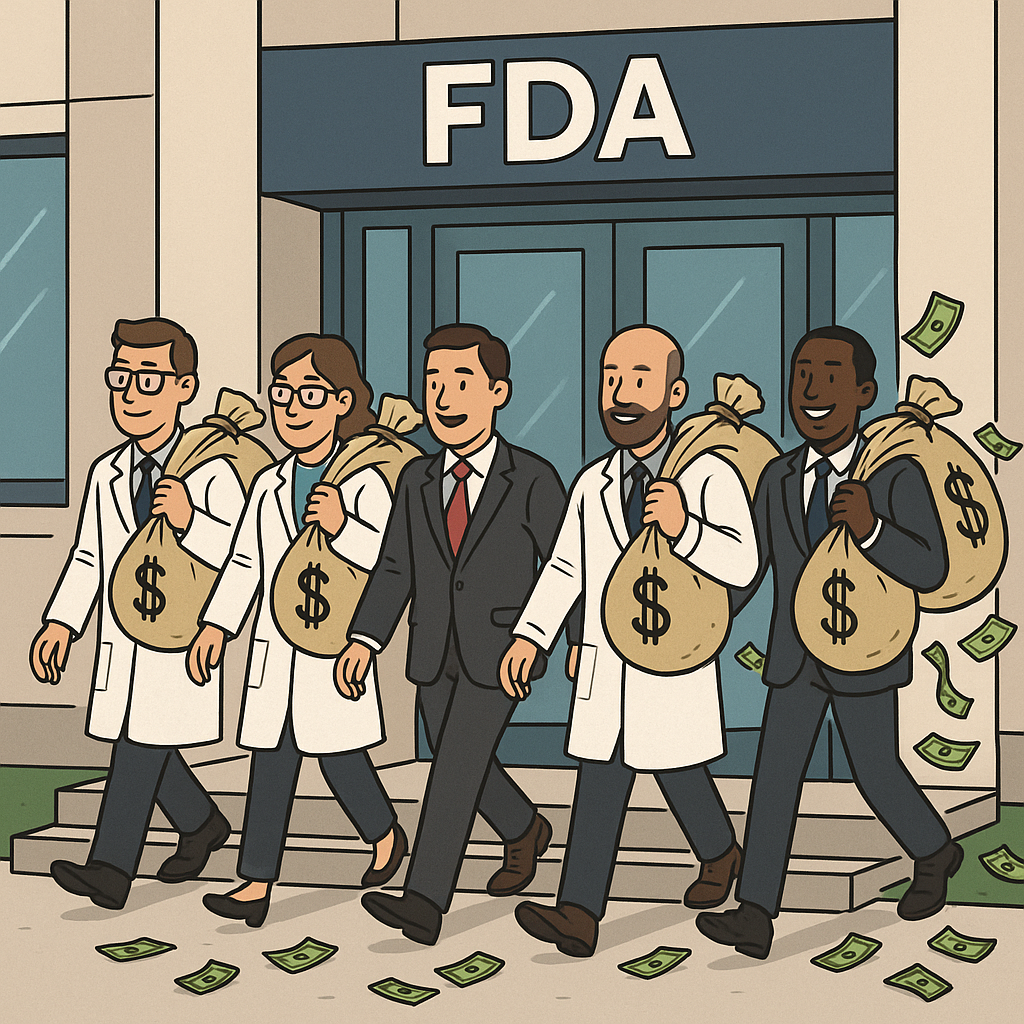
Unless your memory was washed away during the lockdown, you’ll remember the ridicule, even the prosecution of doctors who suggested that ivermectin be used in the treatment of COVID. Its efficacy against that disease had not, and still has not been proven, but the focus of the medical authorities and the media was on the supposed danger of administering a drug that had already been used by hundreds of millions of people in the Third World to treat other illnesses, with remarkable results. Here’s the AMA warning doctors and the public against the drug and recommending three entirely useless procedures instead:
September 2, 2021, American Medical Association:
While ivermectin is an FDA-approved prescription medication used to treat certain infections caused by internal and external parasites, it is not authorized or approved for prevention or treatment of COVID-19.
“Using any treatment for COVID-19 that’s not approved or authorized by the FDA, unless part of a clinical trial, can cause serious harm,” says the FDA’s consumer update.
Taking a drug for an unapproved use can be very dangerous and misinformation that says it is OK to take ivermectin for COVID-19—or in large doses—is wrong, the FDA consumer update warns. Even approved levels of ivermectin can interact with other medications such as blood thinners. Overdose of ivermectin can also cause nausea, vomiting, diarrhea, hypotension, allergic reactions, dizziness, ataxia, seizures, coma and even death.
The most effective ways to limit the spread of COVID-19 are to get vaccinated, wear a face mask, stay at least six feet from others in public places, wash hands frequently and avoid large crowds of people.
Learn more: It is vital that everyone get vaccinated against COVID-19. There are three COVID-19 vaccines currently available with two—Moderna and Johnson & Johnson—approved by the FDA through emergency use authorization.
The FDA recently granted full approval of the Pfizer-BioNTech COVID-19 vaccine. These COVID-19 vaccines are the safest, most effective way to protect against severe disease and death from SARS-CoV-2. Vaccination also helps protect individuals from the dangerous Delta variant.
Notwithstanding the AMA’s, Big Pharma’s and the rest of the medical establishments phony shouts of alarm about this “horse drug”, merits of ivermectin were known well before Dr. Fauci and his cohorts decided to cash in on more lucrative drugs:
February 15, 2017: Journal of Antibiotics:
Over the past decade, the global scientific community have begun to recognize the unmatched value of an extraordinary drug, ivermectin, that originates from a single microbe unearthed from soil in Japan. Work on ivermectin has seen its discoverer, Satoshi Ōmura, of Tokyo’s prestigious Kitasato Institute, receive the 2014 Gairdner Global Health Award and the 2015 Nobel Prize in Physiology or Medicine, which he shared with a collaborating partner in the discovery and development of the drug, William Campbell of Merck & Co. Incorporated. Today, ivermectin is continuing to surprise and excite scientists, offering more and more promise to help improve global public health by treating a diverse range of diseases, with its unexpected potential as an antibacterial, antiviral and anti-cancer agent being particularly extraordinary.
The unique and extraordinary microorganism that produces the avermectins (from which ivermectin is derived) was discovered by Ōmura in 1973 (Figure 1). It was sent to Merck laboratories to be run through a specialized screen for anthelmintics in 1974 and the avermectins were found and named in 1975. The safer and more effective derivative, ivermectin, was subsequently commercialized, entering the veterinary, agricultural and aquaculture markets in 1981. The drug’s potential in human health was confirmed a few years later and it was registered in 1987 and immediately provided free of charge (branded as Mectizan)—‘as much as needed for as long as needed’—with the goal of helping to control Onchocerciasis (also known as River Blindness) among poverty-stricken populations throughout the tropics. Uses of donated ivermectin to tackle other so-called ‘neglected tropical diseases’ soon followed, while commercially available products were introduced for the treatment of other human diseases.
Many excellent, eloquent and comprehensive reviews covering the discovery, advent, development, manufacture and distribution of ivermectin have been published by those intimately involved with the various stages.1, 2, 3, 4, 5, 6, 7, 8, 9, 10, 11, 12, 13, 14 It would be folly to replicate those here. Instead, it is the current status, beneficial global health impact and exciting future potential that ivermectin has to offer to human health worldwide that will be the focus of attention.
Today, ivermectin remains a relatively unknown drug, although few, if any, other drugs can rival ivermectin for its beneficial impact on human health and welfare. Ivermectin is a broad-spectrum anti-parasitic agent, primarily deployed to combat parasitic worms in veterinary and human medicine. This unprecedented compound has mainly been used in humans as an oral medication for treating filarial diseases but is also effective against other worm-related infections and diseases, plus several parasite-induced epidermal parasitic skin diseases, as well as insect infestations. It is approved for human use in several countries, ostensibly to treat Onchocerciasis, lymphatic filariasis (also known as Elephantiasis), strongyloidiasis and/or scabies and, very recently, to combat head lice. However, health workers are increasingly utilizing it in an unsanctioned manner to treat a diverse range of other diseases, as shown in Appendix 1.
Perhaps more than any other drug, ivermectin is a drug for the world’s poor. For most of this century, some 250 million people have been taking it annually to combat two of the world’s most devastating, disfiguring, debilitating and stigma-inducing diseases, Onchocerciasis and Lymphatic filariasis. Most of the recipients live in remote, rural, desperately under-resourced communities in developing countries and have virtually no access to even the most rudimentary of medical interventions. Moreover, all the treatments have been made available free of charge thanks to the unprecedented drug donation program.
Here was the real problem with ivermectin:
According to GoodRx, the price for ivermectin can range from approximately $33 to $91 for a course of treatment (the quantity of tablets will depend on the condition being treated and the prescribed dosage). The cost per individual tablet would then depend on the total number of tablets in the prescription.
Ask Gemini:
Q: What illnesses afflicting the poor in third world (or first world, for that matter) countries has ivermectin proved effective in treating?
A: Ivermectin has proven effective in treating several illnesses that disproportionately affect the poor, particularly in developing countries. These are often classified as Neglected Tropical Diseases (NTDs). Here are some key examples:
Onchocerciasis (River Blindness): Ivermectin is the cornerstone of onchocerciasis control programs. It effectively kills the microfilariae (immature worms) that cause the debilitating itching, skin lesions, and eventually blindness associated with this parasitic disease. Mass drug administration (MDA) programs using ivermectin have significantly reduced the burden of river blindness in endemic communities.
Lymphatic Filariasis (Elephantiasis): Ivermectin, often in combination with albendazole or diethylcarbamazine (DEC), is used in MDA programs to eliminate lymphatic filariasis. While ivermectin primarily targets the microfilariae of the Wuchereria bancrofti parasite, reducing transmission, the combination therapies can also affect adult worms.
Scabies: Ivermectin is an effective treatment for scabies, a highly contagious skin infestation caused by mites. Oral ivermectin is particularly useful in cases of crusted scabies (a severe form) and in controlling outbreaks in crowded settings like nursing homes. Topical treatments like permethrin are also common, but oral ivermectin offers a systemic approach.
Strongyloidiasis (Threadworm infection): Ivermectin is a first-line treatment for strongyloidiasis, an intestinal worm infection. It is generally more effective and better tolerated than older treatments like thiabendazole.
Soil-transmitted helminth infections: Ivermectin, often in combination with albendazole, is used in MDA programs to treat other common intestinal worm infections like ascariasis (roundworm), trichuriasis (whipworm), and hookworm infections, which are prevalent in areas with poor sanitation.
It's important to note that while ivermectin has shown promise in laboratory studies against certain viruses, including SARS-CoV-2, current evidence does not support its widespread use for treating or preventing COVID-19. Major health organizations have not recommended ivermectin for this purpose.
In summary, ivermectin is a crucial medication for treating several neglected tropical diseases that affect impoverished populations worldwide, significantly improving their health and quality of life. Its effectiveness against these parasitic infections has been well-established through extensive use in mass drug administration programs.
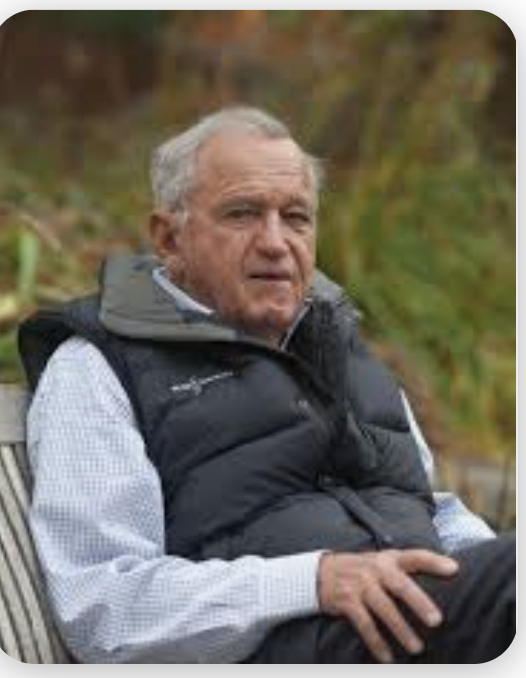
Over the past two decades, a reclusive Swiss billionaire has poured more than $800 million into left-wing causes across America, and now states are fighting back.
Hansjörg Wyss, 89, a Swiss national with an estimated net worth of roughly five billion dollars, has quietly become one of the most influential donors on the American left. He has spent more than $800 million bankrolling hundreds of left-wing causes across the United States, donating millions to climate change groups, abortion activists, and the Clinton Foundation.
Information about him is sparse [he spends much of his time in Wyoming — Ed] but his sister once wrote that Wyss seeks to “(re)interpret the American Constitution in the light of progressive politics.”
Foreign nationals are prohibited from contributing to candidates or PACs under federal law. Even though Wyss is not a citizen, or even a green card holder, he has developed a sophisticated system to become a “leading source of difficult-to-trace money to groups associated with Democrats,” according to the New York Times.
A report from election watchdog Americans for Public Trust (APT) reveals that Wyss created two nonprofits—the Wyss Foundation and the Berger Action Fund — which have funneled close to $500 million into a vast network of Democratic-aligned dark money groups. Much of this funding has gone to organizations managed by Arabella Advisors, the “mothership” of left-wing dark money.
The largest beneficiary has been the Sixteen Thirty Fund (1630), a key Arabella-affiliated group which The Atlantic described as the “indisputable heavyweight of Democratic dark money.” The Berger Action Fund alone has given over $200 million to 1630, which has in turn distributed it to hundreds of progressive organizations.
Though foreign nationals are barred from directly supporting candidates or super PACs, Wyss’ groups have exploited a loophole that allows foreign money to finance state ballot initiatives, according to APT. Namely, 1630 has spent more than $130 million on ballot campaigns in 25 states, advancing policies such as late-term abortion and drug decriminalization by embedding them directly into state constitutions—where they can only be reversed by another constitutional amendment.
In Michigan, 1630 spent over $33 million, where ballot initiatives recently enshrined a right to abortion and a right to no-excuse absentee voting in the state constitution.
The group also funneled almost $13 million into Missouri, where marijuana legalization and Medicaid expansion were recently written into the state constitution through ballot initiatives.
When foreign money flows into states, it is also used to support Democratic candidates. Earlier this year, APT uncovered that 1630 gave $1 million to a “progressive communications hub” that spent $9 million boosting the Democratic candidate in Wisconsin’s Supreme Court race.
Multiple states have passed legislation to stop foreign money from financing local ballot campaigns. Even though red states have taken the lead, Janae Stracke, Vice President of Outreach and Advocacy at Heritage Action for America, said the interest in this issue has been bi-partisan.
Five states have already passed bans — Kansas, Kentucky, Indiana, Ohio, and Wyoming — and several others have similar bills currently moving through their legislatures. Stracke expects more to follow.
…. Even though the foreign funding loophole has been exploited primarily by billionaire activists, millions of dollars from Chinese entities have gone to groups promoting progressive climate policies.
Why would anyone oppose this legislation?
“It’s the money,” Stracke said.

PRE-HISTORY: Human ancestors nearly went extinct 930,000 years ago.
Studying human evolution involves piecing together scattered clues about how we survived against tough odds. One of the biggest mysteries is understanding how large or small ancient human populations were. Typically, scientists rely on fossil records and ancient DNA to investigate these mysteries. But when it comes to periods as distant as the Pleistocene epoch—about a million years ago—such records become rare or nonexistent.
Now, a groundbreaking study published in the journal Science sheds new light on a dramatic event that nearly erased humans from existence. Researchers uncovered evidence that our ancestors survived a population crash that lasted over 100,000 years, leaving just around 1,280 individuals.

“Imagine my surprise,” writes left-of-Stalin-himself “comedian” Larry David in a New York Times op-ed Monday, “when in the spring of 1939 a letter arrived at my house inviting me to dinner at the Old Chancellery with the world’s most reviled man, Adolf Hitler.”
Although Larry has looked about 105 years old for the last couple of decades and could be even older, he wasn’t actually reporting on something that happened to him. He was mocking and indirectly excoriating his fellow leftist Bill Maher for meeting Trump and speaking honestly about the meeting, telling the world that Trump really wasn’t the evil monster of leftist propaganda.
Yeah, wow, what an amazing new comedic idea: Trump is Hitler! Larry, how did you ever come up with this fantastic analogy that no one on planet Earth has ever thought of before? As PJM’s own Scott Pinsker put it, Larry David’s op-ed was “astonishingly tone-deaf” as “became the 500 millionth member of the left to think it’s clever, witty, and daring to compare President Trump to Adolf Hitler.” …
It could, in fact, be the dopiest, sleaziest, most tone-deaf New York Times article of any kind since July 9, 1933, just over five months after Hitler became the chancellor of Germany, and years after his virulent antisemitism and propensity for violence had become notorious worldwide. On that day, the New York Times published a fawning puff piece on Hitler that rivals even today’s media adulation of Kamala Harris during her campaign and of Old Joe Biden during his presidency. …
Pulitzer Prize-winning “journalist” Anne O’Hare McCormick traveled to Berlin to become the first reporter from an American news outlet to interview the new chancellor, and she turned out to be an intriguing choice for the Times editors to make to conduct this interview, for she appears to have been something of a Hitler fan. In the presence of this man whose name has become today synonymous with evil, she was decidedly starry-eyed: “At first sight,” McCormick gushed, “the dictator of Germany seems a rather shy and simple man, younger than one expects, more robust, taller. His sun-browned face is full and is the mobile face of an orator. A shock of straight hair falls over his forehead.”
…. “His eyes,” she told the world, “are almost the color of the blue larkspur in a vase behind him, curiously childlike and candid. He appears untired and unworried. His voice is as quiet as his black tie and his double-breasted black suit.”
Hitler speaks “slowly and solemnly but when he smiles—and he smiled frequently in the course of the interview—and especially when he loses himself and forgets his listener in a flood of speech, it’s easy to see how he sways multitudes.” What’s more, “Herr Hitler has the sensitive hand of the artist.” He tells McCormick coyly: “Ah! Women! Why, women have always been among my stanchest [sic] supporters. They feel that my victory is their victory.” …
Little did Anne O’Hare McCormick realize, as Hitler’s blue larkspur eyes twinkled in her direction and his disarming smile made her heart flutter, that all these years later, the New York Times would publish an article attacking an American president on the basis of his supposedly being like the “shy and simple man” who was responsible for a world war and the deaths of eleven million people.
Larry David notwithstanding, Trump isn’t Hitler, but Hitler was Hitler, and the New York Times missed the truth by miles regarding both men. Anne O’Hare McCormick’s fawning over Hitler was as grotesque as Larry David’s crude and unfunny analogy is today. Both David and the Times should have known better than to publish his desperately unfunny and unoriginal screed, but of course, if they did know better, they wouldn’t be Larry David and the New York Times.

The Wolfe's Neck Center for Agriculture & the Environment has confirmed to Maine's Total Coverage that it has lost $35 million in grant funding from the U.S. Department of Agriculture.
The educational farm in Freeport said it received a termination notice from the USDA regarding its Partnerships for Climate-Smart Commodities (PCSC) grant, which was under contract to run from 2023-28.
“Climate-Smart Programs”
The PCSC program was started under the Biden Administration in an effort to incentivize farmers and other agricultural stakeholders to implement climate-smart production methods in order to reduce greenhouse gas emissions, improve soil health, sequester carbon, enhance productivity and build revenue.
Last week, U.S. Secretary of Agriculture Brooke Rollins announced the cancellation of the PCSC program and called it a "Biden era climate slush fund." According to Rollins, the majority of PCSC projects had high administration fees which provided less than half of the federal funding directly to federal farmers in many instances.
The USDA did state it would review existing PCSC grant agreements based on several policy priorities, including ensuring a minimum of 65% of funding going to producers.
The Wolfe's Neck Center said its PCSC-funded work included payments to farmers who were transitioning to climate-smart practices, its program also invested directly in other areas of agricultural support. Those areas included technical assistance, soil analysis and data systems and technology development. As a result, the Wolfe's Neck Center does not meet the USDA's new 65% direct-to-farmer payment threshold.
The USDA also announced that it has reformed and overhauled the PCSC program into the Advancing Markets for Producers initiative. The department said it has identified changes to align the initiative with the Trump administration's current priorities.
The Wolfe's Neck Center said it has the opportunity to reapply to the new Advancing Markets for Producers program and is currently working to evaluate the opportunity. The deadline to submit updated materials to the USDA is June 20.


10 Chieftans Road has sold for $3,989,050 million. A non-MLS sale — to the current tenant, perhaps? — but certainly an improvement over the $3.250 million the sellers paid for it in 2022. Of course, this development has a ways to go before it returns to the prices of twenty years ago: this unit sold for $4,649,000 in 2008, just at the beginnig of the crash. In current dollars, that would be $6,759,040.
Be notified of new posts! Sign-up here:
Want to comment without registering?