
Cat Rock Road listing
/18 Cat Rock Road, $3.599 million. Built in 2014. Owners paid $2.650 for it in 2023 in a bidding-war that began at $2.325.
Meh — these days, who knows?
Greenwich, Connecticut real estate, politics, and more.
Greenwich, Connecticut real estate, politics, and more
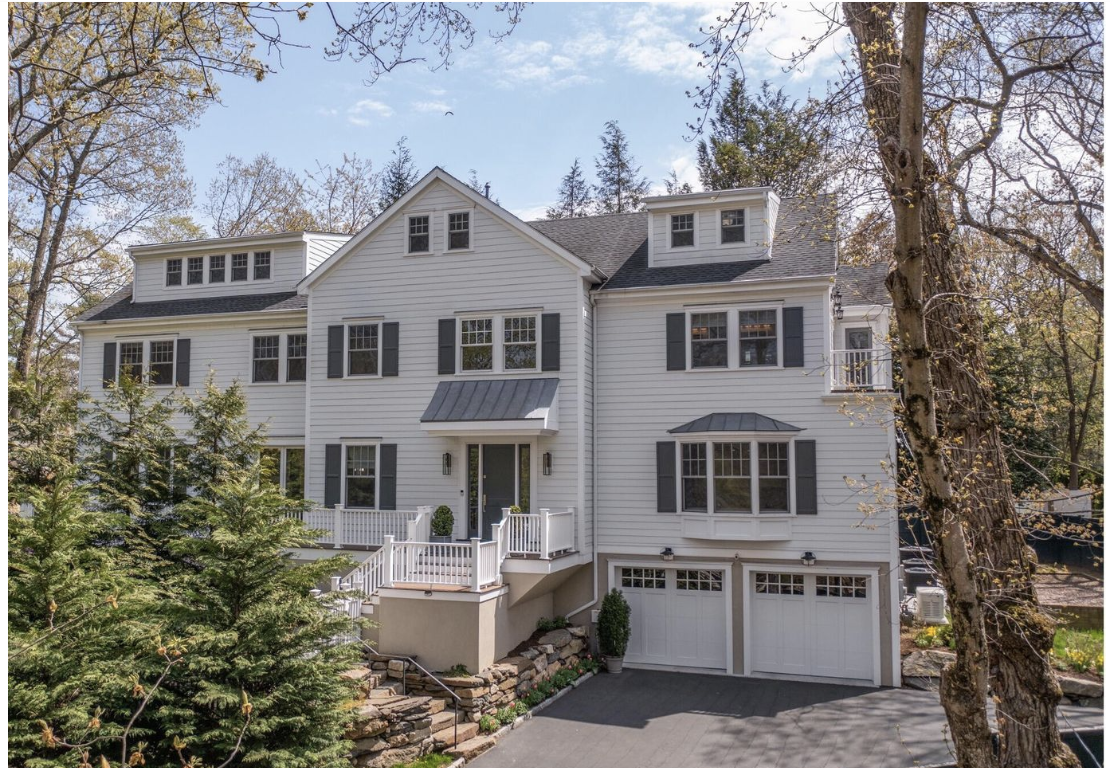
18 Cat Rock Road, $3.599 million. Built in 2014. Owners paid $2.650 for it in 2023 in a bidding-war that began at $2.325.
Meh — these days, who knows?
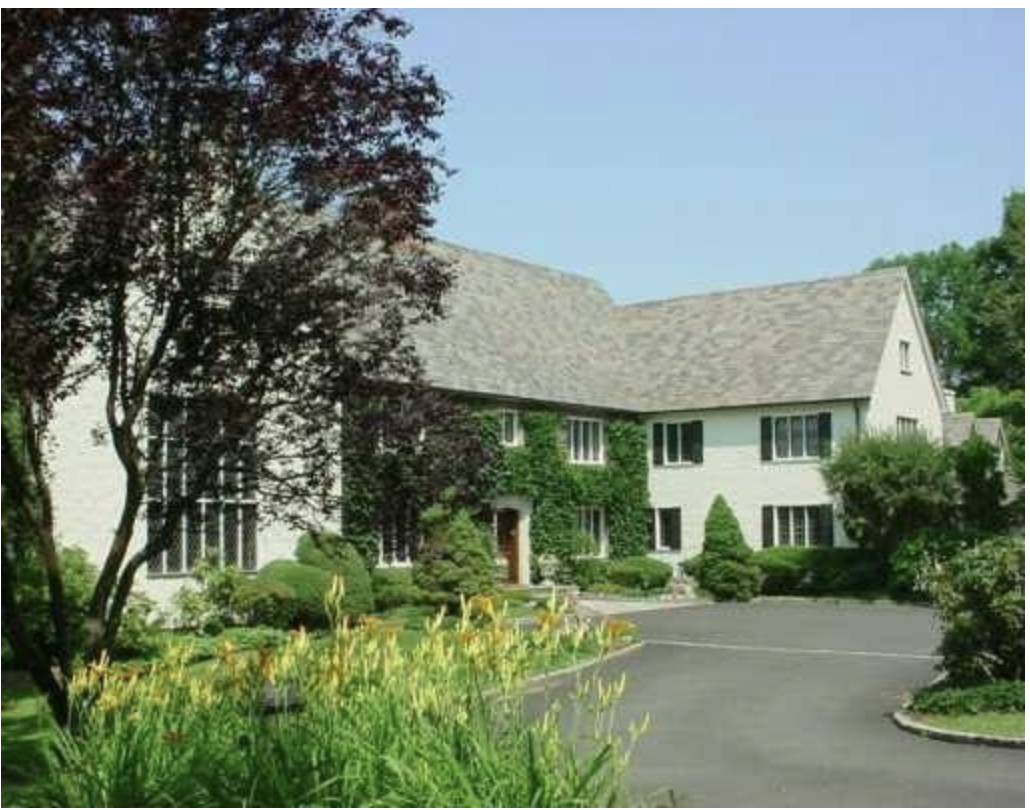
558 Lake Avenue has been listed today at $6.495 million.
It previously expired, unsold, at $6.350 million in 2023, suffered a similar fate in 2021 at $5.395, and $5.950 in 2018. The owners bought it, pre-renovation, for $4.4 million in 2016 from a seller who’d paid $4.425 in 2000 (which would be $8,383,356 in current dollars).

Just a suggestion
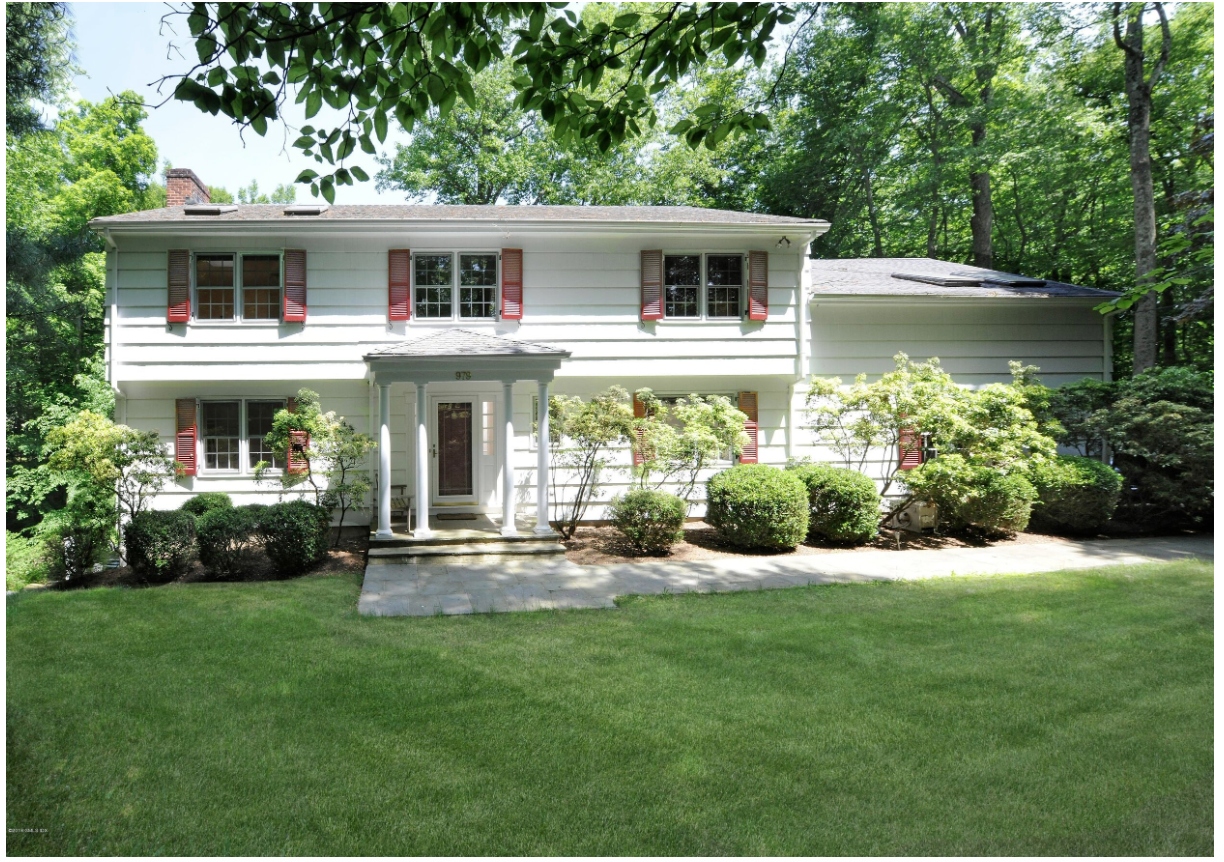
979 Lake Avenue, a/k/a Mary Lane, has taken a second price cut from its February opening price of $2.875 million and can now be yours for the (somewhat) improved price of $2.686. The present owners have improved the place considerably since I last saw it, but apparently not enough to justify that $2.875 price.
I wrote about the house back in November 2020, pre-renovation:
979 Lake Avenue (Merry Lane, actually, way up north), asking $1.099 million, has a contract, a year-plus after being listed at $1.450.
It’s a nice house, but needs work. The Mickster and I were asked for a price opinion back before this was listed and we suggested a price just below a million; the owners opted to go with an agent who advised a higher price. That happens frequently in this business, so no hard feelings, but ultimately, a house will sell for what it’s worth, not what some agent promises you it’s worth.
Update, 5/1/25: (It eventually closed at $910,000)

The Fall of constantinople
David Strom:
…. It's no secret that Great Britain and much of Europe are becoming Islamized, and that Islamists are not at all interested in diversity. That's not a dark accusation--hundreds of thousands of Muslims march in the streets calling for Jihad, demanding Sharia law, and bragging that these countries will become majority Muslim.
European elites probably hope that by embracing Islam, they can tame it, and with so many Muslims, it makes sense to get everybody else on board. Play along. If we cosplay Islam perhaps the migrants will cosplay Britons.
'There are so many people going to the events, they've outgrown the venues!'
— GB News (@GBNEWS) April 29, 2025
GB News Originals Editor, @NickDnng, exclusively reports that NHS leadership has urged staff to observe Ramadan fasting as a gesture of 'allyship' with Muslim coworkers.
Watch in full:… pic.twitter.com/XLi9zlcUQs
And there it is. Top Brass at the National Health Service endorsed the "Ramadan challenge," encouraging non-Muslim NHS employees to engage in the traditional Ramadan fast as a sign of "allyship."
…. In itself, the "Ramadan challenge" should be offensive to Muslims. Like the Jewish High Holy Days or Easter, for seriously observant Christians, Ramadan is not purely an expression of culture but deeply religious, and a bunch of people who aren't Muslim pretending to observe it cheapens it.
But it makes more sense, as seen in the light in which it was meant, preparing the ground for conversion.
'I have an issue with medics fasting while performing clinical procedures.'
— GB News (@GBNEWS) May 1, 2025
Bev Turner says it's 'mind-blowing' that non-muslim NHS staff were asked to fast for Ramadan.
This follows an investigation by @nickdnng, which found the NHS to have promoted conversion to Islam. pic.twitter.com/vOb8Lt8TRN
Muslims have lived mostly peacefully in Great Britain for years. Given that the British Empire had incorporated regions dominated by Islam, many Muslims have migrated there over the years. You could argue about …. the friction between the Muslim minority and the larger culture, and frankly, I don't know enough to say. But it does seem clear that there was nothing particularly threatening about Westernized Islam, and that any animosity was more racial than religious.
But the new wave of Muslim immigration is inherently Islamist, and proudly so. For the most part, the refugees from regional wars in the Middle East and South Asia adhere to the medieval version of Islam, characterized by strict attitudes, hostility to non-Muslims, and (ironically) a strongly colonialist attitude. Islam spread through conquest, and conquest seems to be the goal of the new migrants.
The elite reaction to this is partly driven by suppressed fear--covering up crimes, fighting cultural self-defense by calling it "Islamophobia," and placating the colonizers in the hope that they moderate and become more British.
But the new migrants are not interested in diversity; they aim for conquest. Rather than encouraging Britons to become more like the new migrants (cover your head! Don't show skin! Take part in Ramadan!), they should admit that the two cultures are incompatible.
Being super-nice and pretending to enjoy the (non)diversity is destroying Europe. Individual, Westernized Muslims--of whom there are many--present no threat.
Islamism does, and needs to be rejected.

Rye Playland was showing its age in the early 60s, when my family visited regularly, and it was positively decrepit by the mid-90s. In, the owner of the land, Westchester County, began what County Commissions described as a $30 million renovation of the park – nine years and $150 million later, the renovations remain unfinished, and now it appears that the project is delayed once agin.
Playland’s future is in question as Westchester County officials continue to feud with operators, Standard Amusements, who announced plans to terminate their contract to run the beloved Art Deco amusement park.
The park’s 280-acres of land is owned by Westchester County.
In 2022 then Westchester County Executive George Latimer, turned over management of Playland to Standard Amusements, a private firm.
Just three years into their 30 year agreement with Westchester County, Standard Amusements announced they were calling it quits, saying the County failed to meet construction obligations and missed contractual deadlines.
The Playland website has instructions for people seeking refunds for group visits or season passes purchased through Standard Amusements.
In a release at the end of January, Standard Amusements said, in part, “…fully realizing our vision required the County to meet the construction obligations necessary to complete improvements to the park. Despite spending over $150 million of taxpayer money— already surpassing their $125 million budget intended to cover completion of the entire project—the County has proven incapable and is nowhere near done.”
The county denied these claims and alleged that Standard Amusements mismanaged the park.
It’s possible, I suppose, that the County government is right, and for the first time in history a public project planned and overseen by incompetent government officials spending public money has the better side of an argument over who’s to blame for the project’s failure, but Westchester County has an unblemished history of both incompetence and corruption, so my bet’s on Standard Amusement being the aggrieved party here.
Here’s the history of the Donald’s role in rebuilding the Wollman Rink in Central Park, accomplishing in 3 1/2 months what the City couldn’t do in 6 years.
In 1974, the New York City Parks and Recreation Department started planning a renovation of the rink, including switching the refrigeration system from brine to liquid Freon to lower the operation costs at a time of rising fuel costs. In January 1975, a $4 million plan to renovate Wollman Rink at the park's southeastern corner was announced. By late 1975, the Central Park Task Force, an agency of NYC Parks, released a revised plan to dredge the Pond and redesign the landscaping in the park's southeastern corner for $2.5 million. All plans were deferred due to the 1975 New York City fiscal crisis.
The rink had to be closed in the winter of 1980 when its concrete floor buckled; at that time, the renovation was estimated to cost up to $4.9 million and take two years. Due to the necessity of soliciting bids for three separate contracts and a series of planning errors, construction mishaps, and flooding caused by heavy rains, the renovations had not been completed by May 1986 when the city reversed the decision to use Freon and decided on staying with brine in plastic pipes. By that time, $12.9 million had been spent, with an additional $2 to $3 million estimated to complete the work by the winter of 1987.
Donald Trump then publicly offered to complete the renovations at his expense within six months, in return for leases to operate the rink and an adjacent restaurant in order to recoup his costs. Instead, Mayor Ed Koch agreed to reimburse Trump for any costs up to an agreed limit, and Trump agreed to donate the profits of rink and restaurant to charity and public works.
Adrian Benepe, then the Parks Department's spokesperson and later its commissioner, stated the project was largely complete by the time Trump entered the picture, though this was untrue, the rink was largely in a complete state of disrepair when Trump took over. …. The work was completed two months ahead of schedule and $750,000 under the estimated costs.
Back before the media decided he was “literally Hitler”, it acknowledged Trump’s achievement:

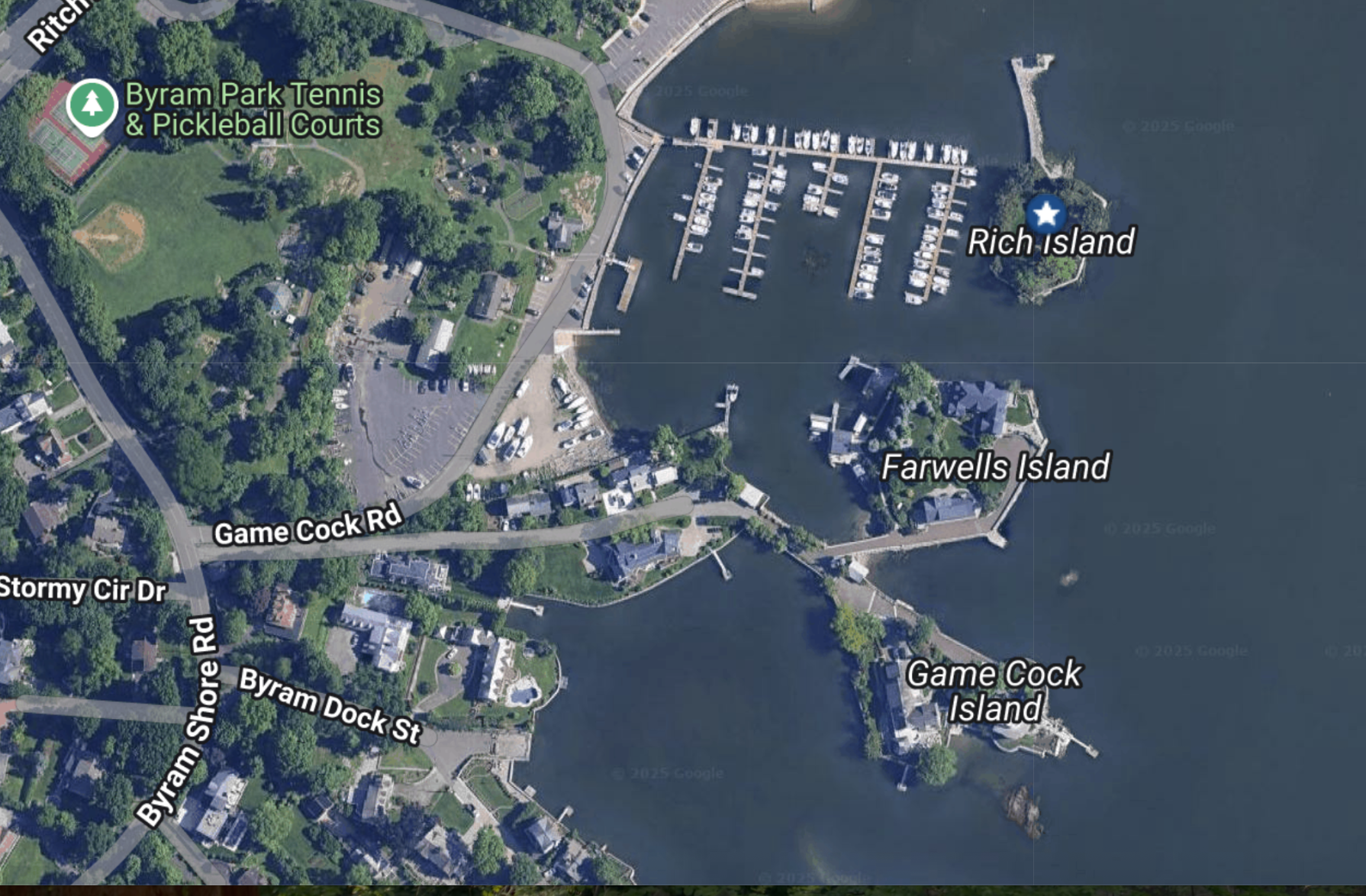
0 Rich Island, Byram, has dropped its price from $7.495 million to $6,500,000. The town appraises it at $4,861,000, so maybe it’s worth its new price, but it’s going to be a hard sell, I suspect.
The public listing description says this:
“Marrying quintessential coastal New England living with convenient proximity to NYC, this property offers a once-in-a-lifetime opportunity for a discerning buyer.”
That certainly sounds enticing; however, the agent-to-agent note adds this detail, which strikes me as an important one:
Property is only accessible by a short, 1-2 minute boat ride.
Update: Really, though, it may just take the right buyer

home from whole foods

12 Griffith Road, $1.250 asked, $1.360 got. Built in 1968, it may have reached its expiration date, but then again, you can’t get into eastern Greenwich for much less.
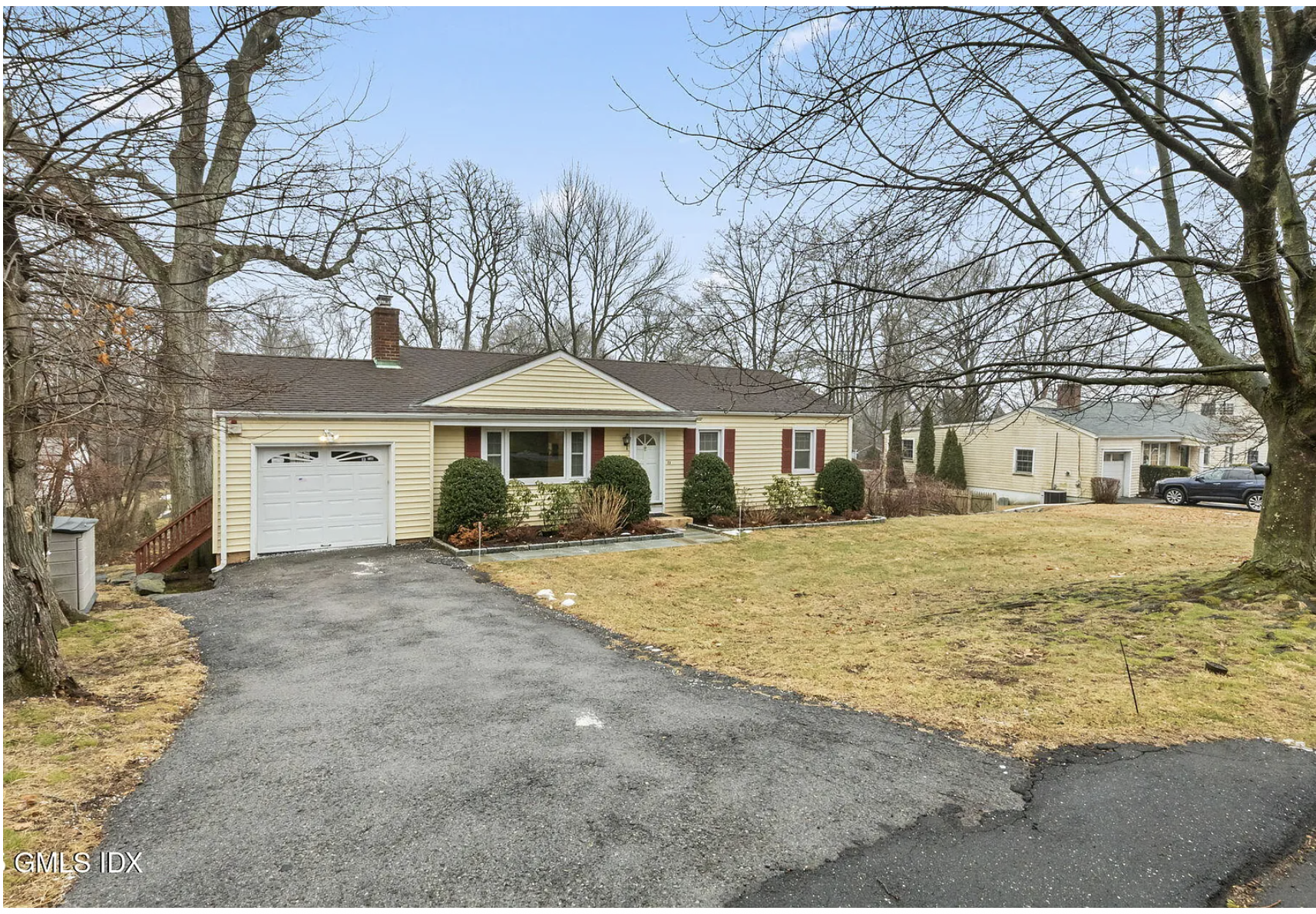
23 Old Wagon Road, listed in February at $1.495 million, has sold for $1,700,888

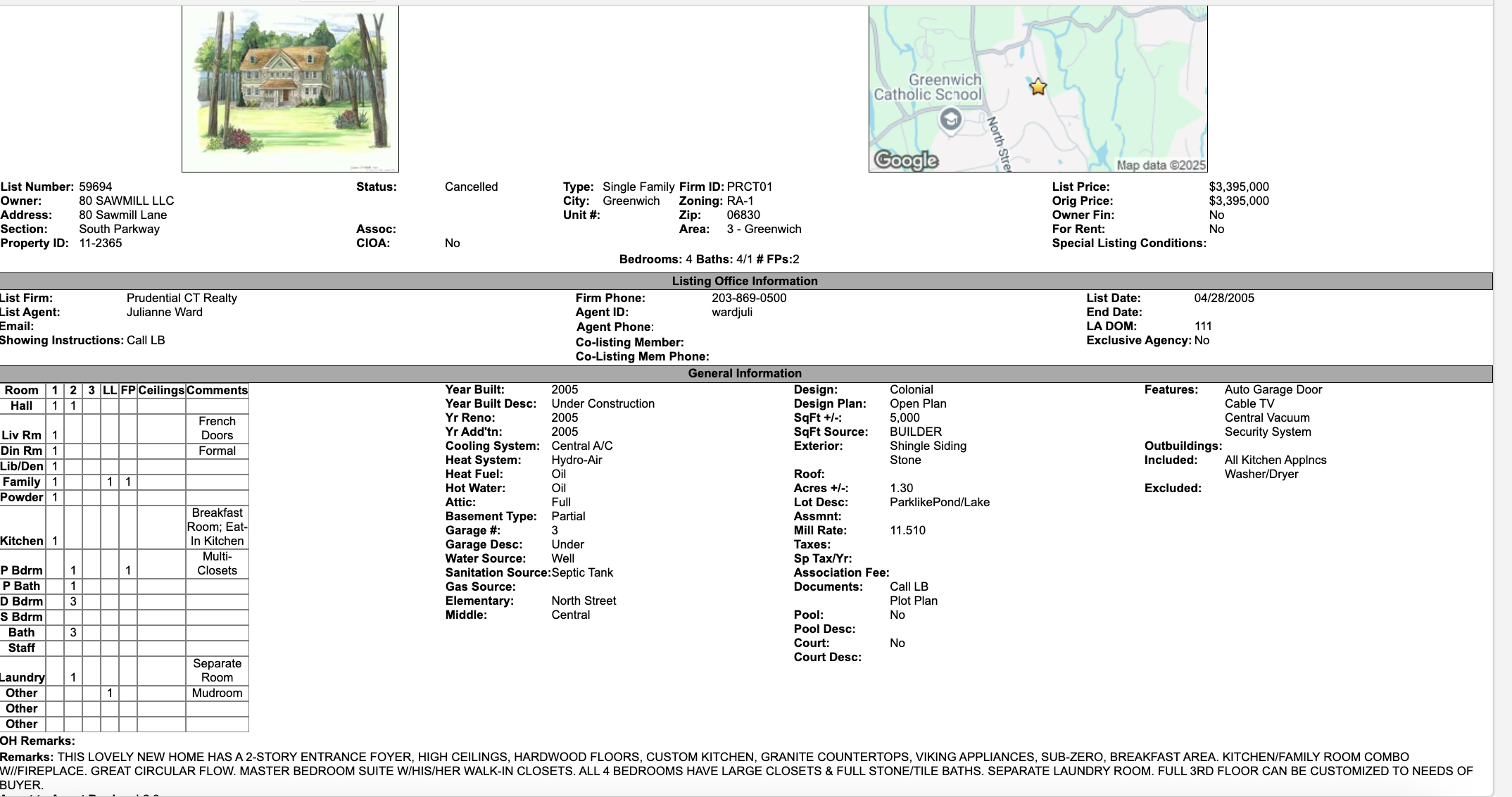
80 Sawmill Lane, $3.495 million, has a contract just 8 days after listing.

One more note: the current listing accurately gives the date of construction for this home as 1951, even though it was totally renovated and expanded in 2005. The listing back then claimed a construction date of 2005. That was a common practice in those days, but I, and more importantly, buyers, prefer Ellen Moger’s straightforward approach.

From the executive order:
“They should be able to read and understand traffic signs, communicate with traffic safety, border patrol, agricultural checkpoints, and cargo weight-limit station officers,” the order said. “Drivers need to provide feedback to their employers and customers and receive related directions in English.”
The HOTAIR article I link to above cites numerous fatal accidents caused by a truck driver’s inability to speak English, and feel free to go there and check, but here’s the thing: Trump is merely ordering that the English requirement that’s been on the books since 1937, and rigorously enforced until Obama took office, be enforced again.
Here’s a fair, in my opinion, discussion of what this order does, and doesn’t do, from an industry publication, FreightWaves:
Trump’s Executive Order For Trucking Revives a Rule Nearly 90 Years Old
…. On April 28, a second executive order targeted the commercial trucking sector. It directed the Department of Transportation to reinstate stronger enforcement of existing federal regulations requiring truck drivers to read, speak and communicate effectively in English. The order authorized federal and state roadside inspectors to once again place drivers out of service if they are unable to meet the English proficiency standards.
Although the executive actions have generated considerable attention, the core requirement for English proficiency among truck drivers has been law for nearly 90 years.
The requirement for English proficiency in commercial motor vehicle operations dates back to July 1937, when the Federal Motor Carrier Safety Regulations (FMCSRs) were established.
Under 49 CFR §391.11(b)(2), drivers must be able to “read and speak the English language sufficiently to converse with the general public, understand highway traffic signs and signals, respond to official inquiries, and make entries on reports and records.”
For decades, roadside inspectors have cited drivers for violating this rule, with the authority to place noncompliant drivers out of service. By 2014, English proficiency violations were a routine part of commercial enforcement activities across the United States.
That year alone, inspectors issued more than 101,000 English proficiency violations. Over 4,000 drivers were placed out of service for failing to meet the standard.
In 2014, during the Obama administration, the Commercial Vehicle Safety Alliance (CVSA) partnered with the Federal Motor Carrier Safety Administration to reclassify the enforcement of the English proficiency rule.
While the regulation itself remained intact, inspectors were instructed not to place drivers out of service solely for English language deficiencies. Drivers could still be cited, but they were allowed to continue operating their vehicles.
After the memo took effect, English proficiency violations dropped sharply, with enforcement data showing only 7,800 to 10,000 citations issued annually between 2017 and 2024. No drivers were automatically placed out of service during that period for English violations.
This shift effectively weakened the practical enforcement of a rule that remained formally required under federal law.
The first of the two 2025 executive orders emphasized English as a cultural and governmental standard, encouraging unity, civic engagement and consistency across federal agencies.
The second specifically returned focus to trucking safety and operational communication. It instructed the DOT to update roadside enforcement policies, allowing drivers to once again be placed out of service if they cannot communicate adequately in English.
Transportation Secretary Sean Duffy has been tasked with overseeing the update to inspection protocols and ensuring compliance with the revised enforcement approach.
The White House framed both orders as efforts to promote road safety, operational efficiency and shared civic values.
Supporters of the executive orders argue that the ability to read and understand road signs, respond to safety officials and navigate emergencies in English is fundamental to public safety. Groups like the Owner-Operator Independent Drivers Association have voiced strong support, citing the need for clear communication among drivers, enforcement personnel and the motoring public.
Advocates further note that language barriers can contribute to delays during inspections, misunderstandings in critical situations and difficulties in post-crash investigations.
Critics, however, caution that while English proficiency is important, it does not address the more urgent safety challenges facing modern trucking.
Some argue that the executive orders focus regulatory attention on a requirement that has long existed rather than addressing gaps that continue to impact crash rates and fleet safety outcomes.
Among the critical issues cited by safety advocates:
Continuous license monitoring is not universally mandated across fleets, leaving gaps in notification of suspended or revoked commercial licenses.
Thirteen states, including Arkansas, still allow beginner teen drivers to obtain a driver’s license without completing behind-the-wheel training hours. A few years later, they’re getting a commercial drivers license.
Distracted driving remains a growing threat, with federal regulations lagging behind advances in mobile technology.
Drug and alcohol testing, while federally required, still faces compliance challenges and inconsistencies in enforcement. Hair follicle testing is a great example.
Industry experts also raise concerns about the subjectivity of roadside enforcement. Determining sufficient English proficiency can be highly discretionary, potentially leading to inconsistent or inequitable outcomes across different jurisdictions.
Recent high-profile crashes highlight the complexity of highway safety challenges that extend beyond language proficiency.
In Colorado, a crash involving commercial driver Ignacio Cruz-Mendoza resulted in multiple fatalities along U.S. Highway 285. Mendoza was alleged to have been operating without a valid commercial driver’s license and had prior offenses on record.
In that case, language was not the primary contributing factor. Licensing compliance, training adequacy and operational fitness were the deeper issues.
Similar incidents across the country emphasize that failures in training, oversight and risk management, not language alone, remain primary contributors to preventable tragedies on the highway.
There is no question that the ability to communicate clearly in English is essential for truck drivers operating on American roads. Reading signage, responding to official inquiries and managing emergencies safely depend on basic language proficiency.
The emphasis on again enforcing a rule that has existed since 1937 has raised questions about regulatory priorities. While it is essential to reestablish clear enforcement guidelines, many in the industry argue that broader challenges, such as improved driver training, real-time compliance monitoring and enhanced sobriety initiatives, deserve equal, if not greater, attention.
The commercial vehicle safety landscape requires solutions grounded in comprehensive preparation, risk control and operational excellence, regardless of language. Truck drivers move America’s economy. The policies that govern them must be as practical, forward-thinking and evidence-based as the industry itself.
Reaction among Florida truck drivers is mixed, as shown in the video below. I’ll not that the driver interviewed who opposes the new enforcements says that he’s been driving for 15 years, and never had a problem with nit speaking English: he’s been in this country for 15 years and never bothered to learn the language? Time for that to change.
"IT'S AN AWFUL LAW."
— Breaking911 (@Breaking911) April 30, 2025
Spanish-speaking trucker in Miami says he knows drivers who are selling their rigs after Trump EO now requires them to learn basic English. pic.twitter.com/7kfxmY5j1a
Be notified of new posts! Sign-up here:
Want to comment without registering?