Contract on John Street

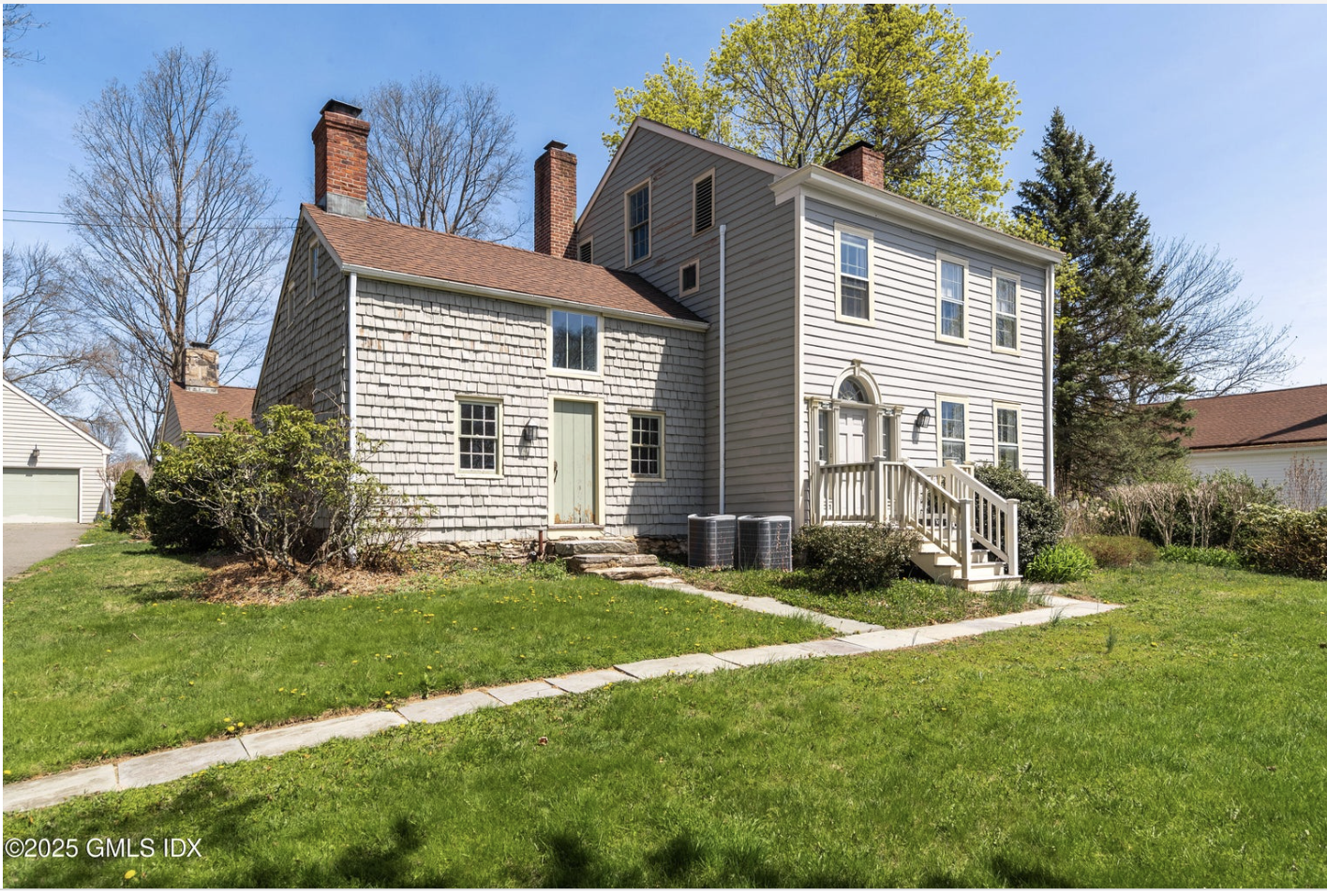
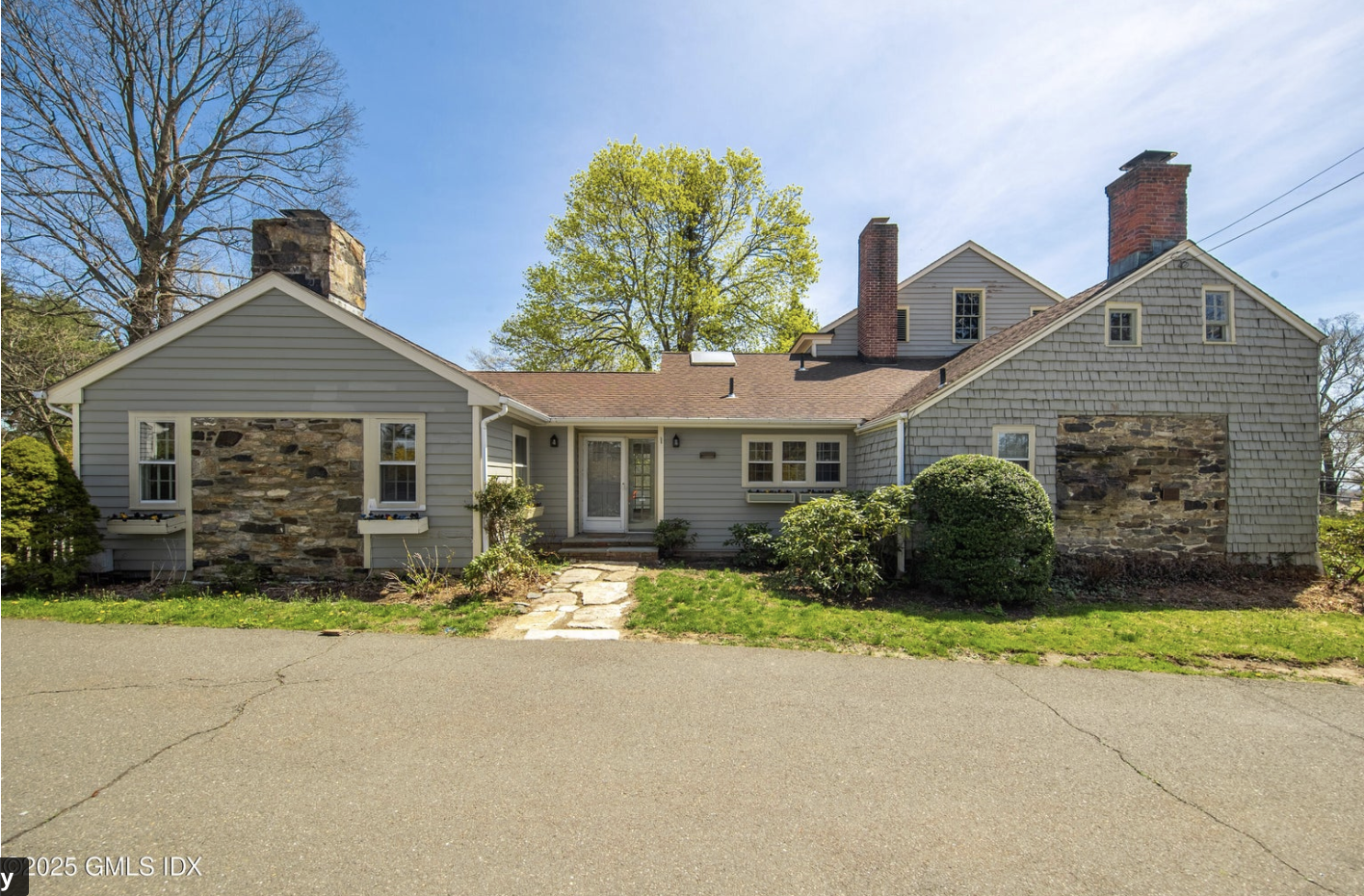
3 John Street, $1.750 million asked, is under contract after 28 days on market. Built “somewhere around 1728”, it’s the former parsonage of The First Church of Round Hill, and sits on 0.72 of an acre in the R-4 zone. Assuming the R-4 FAR rules apply, maximum size for a lot this size is 1,960 sq. ft, so the existing structure of 2,906 sq.ft. is very much maxed out; abandon all hope of an indoor pickleball court, ye who purchase here.

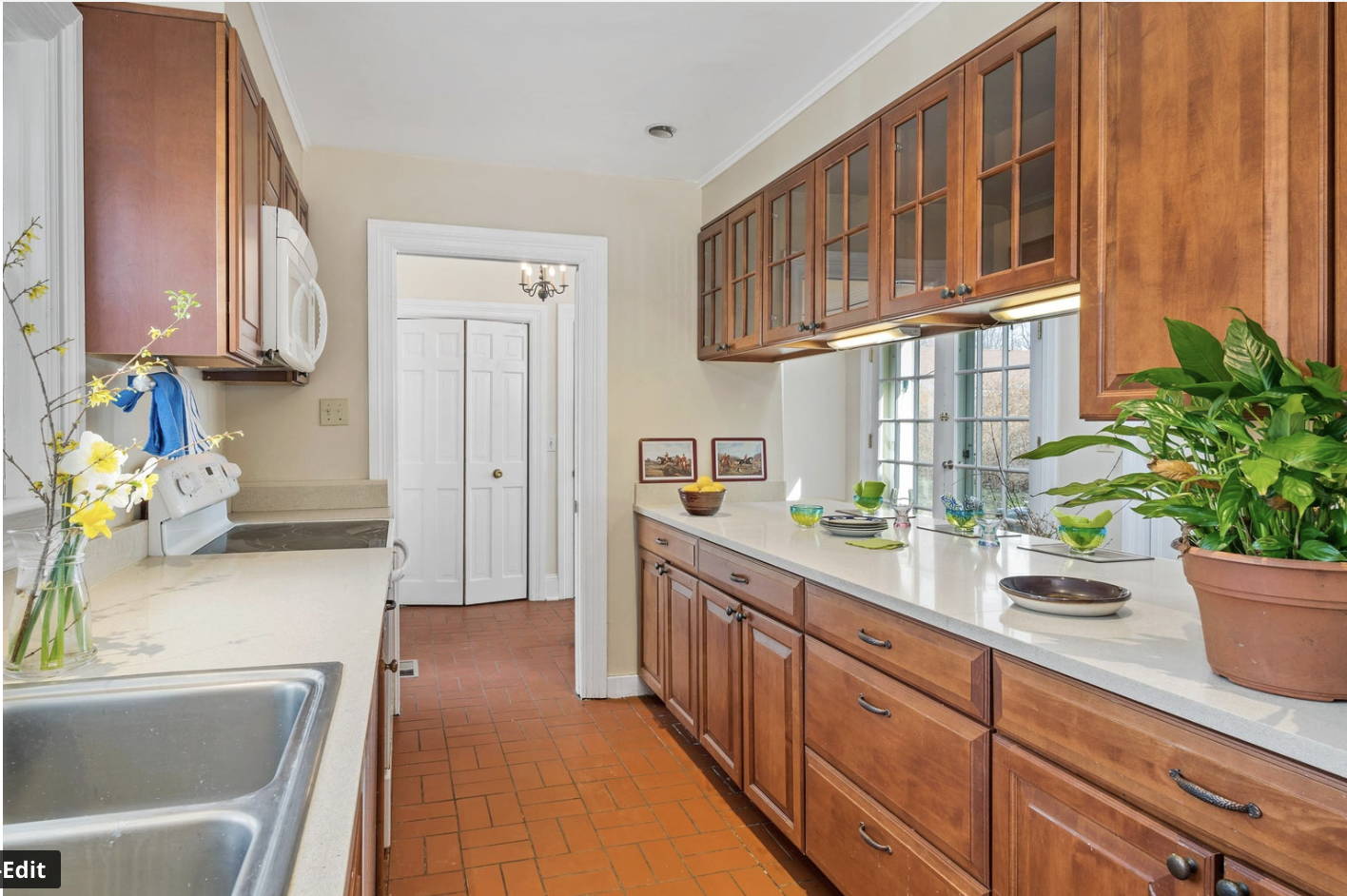
From the pictures available (although note, I haven’t actually seen the interior) there doesn’t seem to be all that much left of any 300-year-old charm there might have been, but perhaps this buyer can do something about that.

Speaking of cold weather …

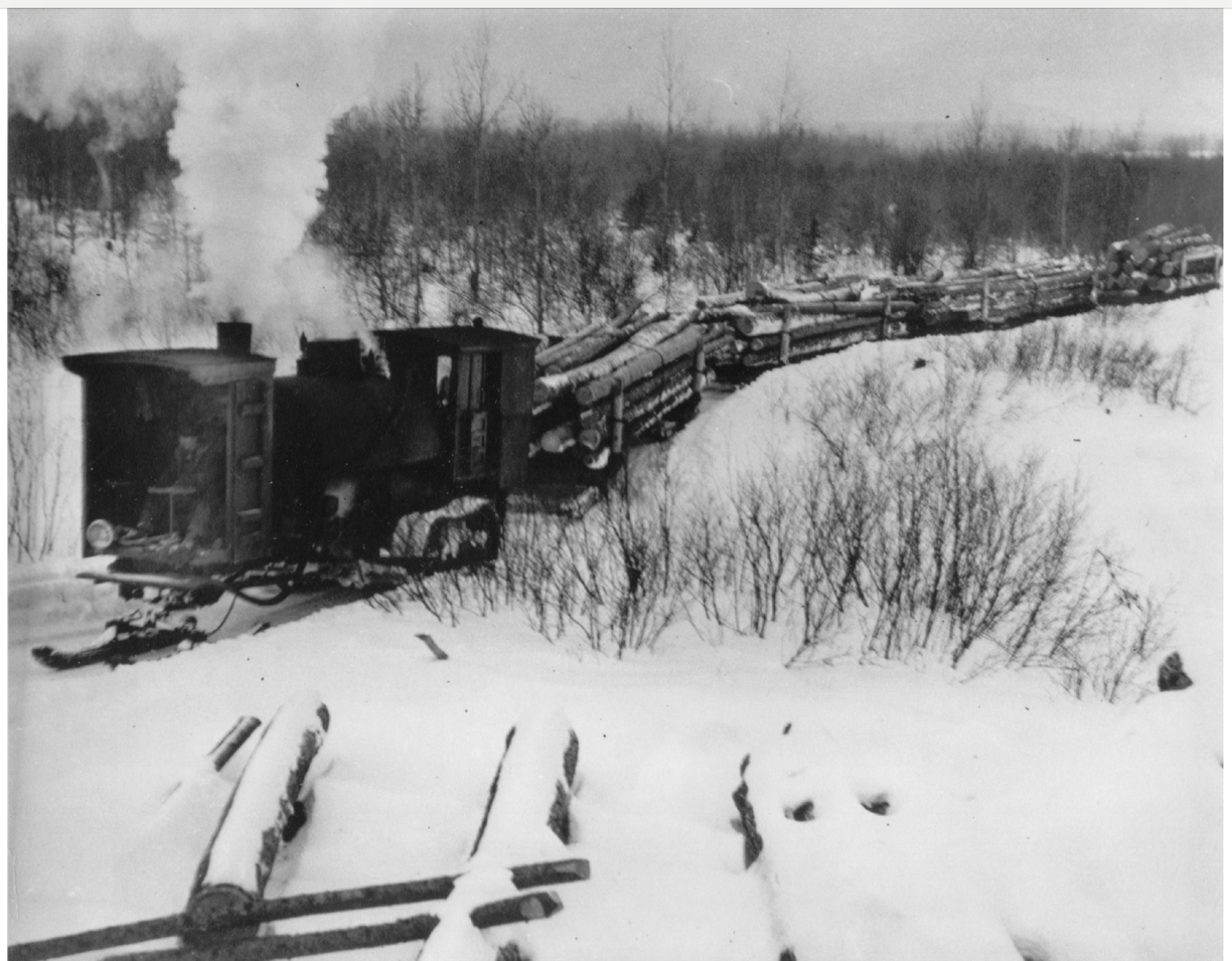
A steam-powered Lombard log-hauler helped revolutionize logging in Maine

How a Maine woodsman’s invention paved the way for snowmobiles and tanks

Bangor Daily News

This story was originally published in January 2024.

Maine ingenuity has brought the world everything from earmuffs, invented in the 1870s by Farmington resident Chester Greenwood, to life-saving medicine like insulin, discovered in the 1920s by a team that included Pembroke native Charles Best

It also helped spur the creation of a machine made to improve the ability of Maine woodsmen to move logs through the forest — the direct precursor to everything from military tanks to the snowmobiles that zoom down Maine trails today.

The Lombard steam log hauler, first patented in 1901, was the work of Alvin Orlando Lombard, who was born in the Penobscot County town of Springfield in 1856. His family owned a saw mill in Lincoln and he began working in it as early as age 8, when he also began tinkering with machines and building his own logging equipment. 

By the time Lombard had moved to Waterville in the 1890s, he and his brother Samuel had invented, patented and marketed several pieces of logging equipment. The big breakthrough came in 1901, when Lombard patented his steam-powered log hauler, which featured technology that was innovative at the time.

The massive, nearly 19-ton Lombard log hauler, powered by a locomotive-style engine, ran on Lombard’s greatest invention: a continuous driving track system, which made it the first vehicle of its kind to successfully run on a track. Other inventors, mostly in England, had developed versions of the continuous track throughout the 19th century, but it was Lombard — a second generation Italian immigrant from rural Maine — who perfected it.

The Lombard log hauler could tow up to 300 tons of lumber through the woods, eliminating the need for teams of up to 50 horses. The steam-powered version gradually gave way to a gas-powered version in 1914, and by the middle of the 20th century, Lombard’s log haulers had been replaced by bulldozers, tractors and skidders.

Lombard’s innovation helped revolutionize everything from outdoor recreation to the nature of modern warfare. American businessman Benjamin Holt — founder of one of the companies that became Caterpillar, Inc — bought the rights to Lombard’s patent in 1903 and began producing a wide array of tracked vehicles. Those vehicles led directly to the invention of the military tank during World War I, first developed in England. Tanks were one of the innovations that gave Allied forces the upper hand during the later years of the war, all based fundamentally on Lombard’s initial invention.

The Lombard log hauler also helped inspire the development of the first snow vehicles. In addition to its continuous track system, the hauler also had two pairs of skis affixed to a steering system at the front of the vehicle. It was an innovation that, years later, would inspire the very first commercially available snowmobiles, including Canadian inventor Joseph-Armand Bombardier’s first true snowmobile, patented in 1935. Bombardier would later found the company Ski-Doo, still one of the largest snow vehicle companies in the world.

…. [So] if you’re out this winter riding the trails on your snowmobile — or, for that matter, if you’re operating a Caterpillar-made piece of equipment, or even a tank in the army — remember that it was a guy from rural Maine who had the big idea that paved the way for all of it.

Sadly, it didn’t take long to move from forest to battleground

(the fountain boyz had a lot of fun on this model back in 1966 and ‘67 up in millinocket maine)

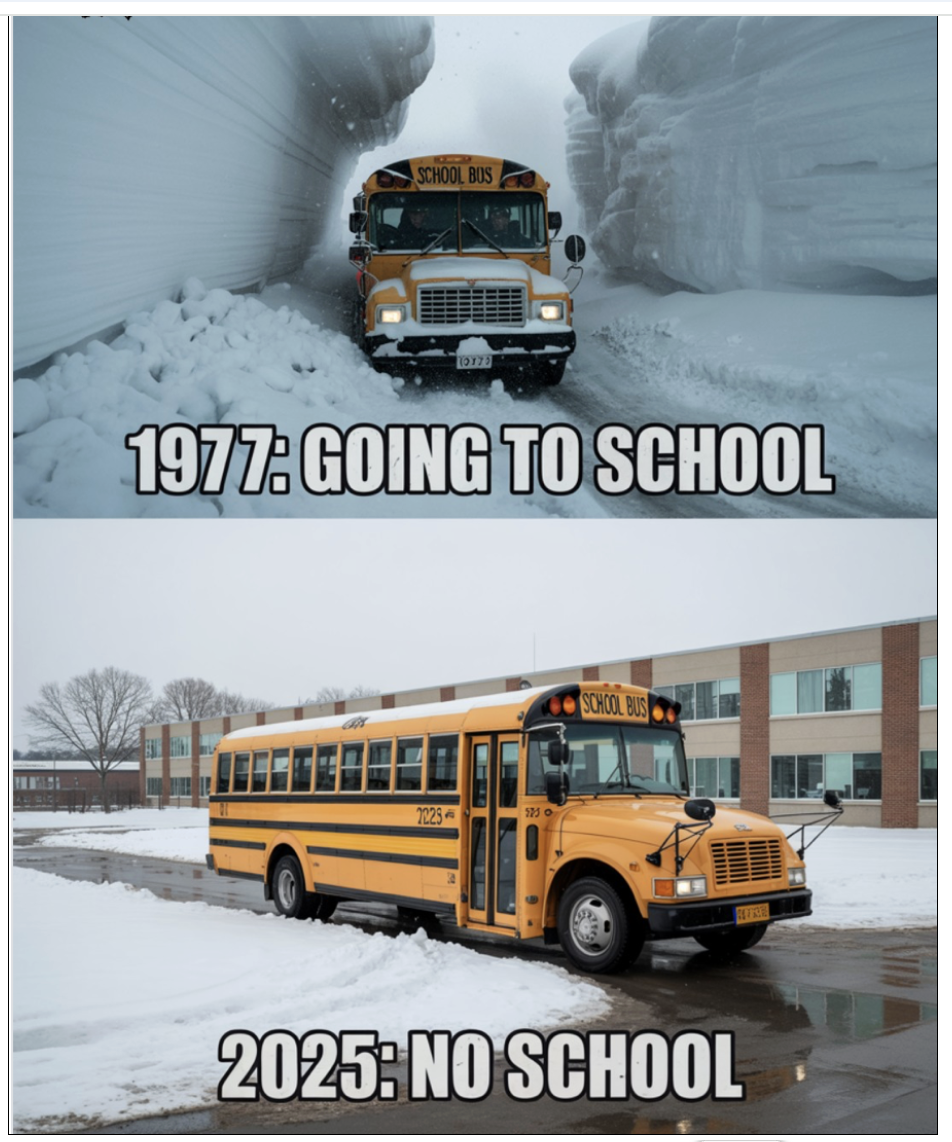
Greenwich schools announce two-hour delayed start time

Connecticut schools have delayed opening Monday amid deep freeze

As I write this at 5:45 AM, the temperature in Greenwich is 17°.

“It’s not so much for the students’ welfare,” School Superintendent Toni Jones explained to FWIW, “but because our teachers all live in far-away shitholes like Bridgeport, or Seymour — places like that — and in this extraordinary, unprecedented cold, their Teslas have a range of something like 3 miles; they just can’t get here. We expect to reopen when it’s warmer: in June, maybe, or July at the latest.”

The horrors of this past weekend just keep on coming

farewell

Brown University, Bondi Beach, now this, reminiscent of this summer’s murder of Old Greenwich’s Suzanne Adams. We could use a better week — I hope we get it.

LOS ANGELES — Legendary director Rob Reiner and his longtime wife have been found stabbed to death inside their Brentwood home and investigators are eyeing the couple’s troubled adult son as a person of interest, according to law enforcement sources.

David Strom, as usual, offers a good take:

R.I.P. Rob Reiner and His Wife Michelle Singer

…. In recent years, Reiner was probably best known for being a stinging critic of President Trump and the object of much disdain from conservatives, but Reiner was so much more than his political persona. 

He was, simply put, one of the greatest film directors to have ever lived. 

His father, Carl Reiner, is an acknowledged genius in the film world, but any fair evaluation shows that his son's talent eclipses even the father's. 

The Princess Bride? One of the most quotable films ever made, and a touchstone for millions of us who have watched it innumerable times. 

Misery? Probably the best film adaptation of a Stephen King story ever made, except perhaps for Stand By Me. Which, by the way, was directed by...Rob Reiner. 

A Few Good Men? I have used clips and made references to that film many times, including several in recent weeks. 

When Harry Met Sally? I fell in love with Meg Ryan watching that film

[And “This is Spinal Tap” — mustn’t forget Spinal Tap — Ed]

Reiner, for all his political fire, remained a human being who could, in his best moments, see beyond politics to the humanity of (most of) his political opponents. He was extraordinarily gracious after the death of Charlie Kirk, and so far it appears that Trump supporters are returning the favor (as we all should be.

Oops (Updated)

I recently made a lightning trip down to Greenwich, a distance of 245 miles, 4 hours of driving. Coincidentally, the mileage range of the average EV is, for 2025 model years, 280 under ideal conditions; the day I left for town, the temperature was 13°, so that range would have been reduced by at least 20-25% to, say, 210 miles, and even more if I’d used the car’s heater, but who needs heat when a fuzzy sweater, long johns and mukluks are handy?

We can adjust those number still further downward, mind you, because EV batteries should be charged to no more than 80% capacity, according to car manufacturers — 0-80% is relatively quick, but recharging slows dramatically after that, and gaining that remaining 20% will add hours to your wait and the waiting time of the driver in line behind you, — so we’re at 210 before deducting an additional 25% to account for cold weather — 157 mile range. For an amusing, if horrifying recounting of a Kelly Blue Book writer’s attempt to take a 1,000-mile road trip in an EV, see this one: How to Take an EV Road Trip:

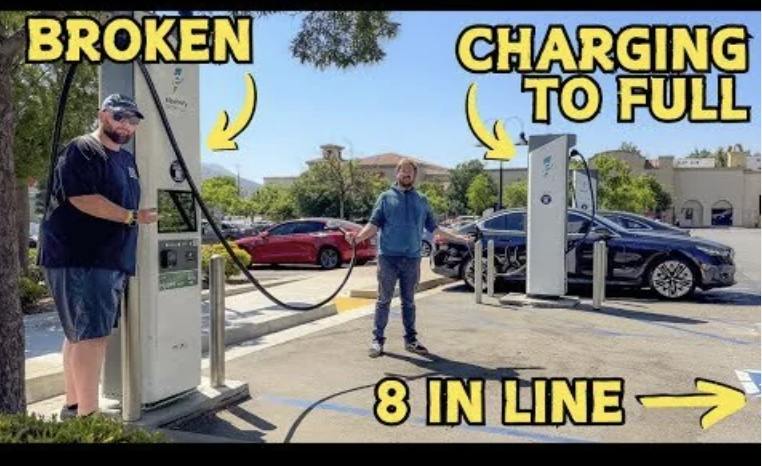
Our road trip was 1,082 miles long. The Leaf’s trip computer showed 26 hours of driving. By comparison, I spent about 13 hours connected to chargers or waiting to connect (11 hours of charging; two hours of waiting). We encountered one fast charger that was offline and had to drive 8 miles to another one.

Fortunately, I was driving a conventional ICE vehicle, so I wasn’t forced to stop for 1-3 hours at a highway charging station, nor did I arrive at Gideon’s house with a completely drained battery that I’d have to recharge if I wanted to return home.

My point being, EV’s are not suitable for those peasants who wish to leave their village and travel more than shank’s mare will take them. And that’s exactly what our would-be masters intend.The road to serfdom begins and ends at the serf’s village’s boundaries.

But I digress from the original intent of this post, which is this:

I ran across this not-so-old article in my browsing history, dated February 15, 2022. Let’s just say that word of the demise of gasoline dispensaries was, er, premature.

US: EV Chargers Will Eventually Outnumber Gas Stations

We don't really know when, but it could be by decade's end if the Biden administration's plans come to fruition.

[FWIW: A number of readers, including this one, pointed out one fundamental error back then, and that resulted in this editor’s correction which, of course, negates the entire claim. Oh, well]:

EDIT: It looks like the study we cited from Jerry is comparing individual charging stalls to entire gas stations, not individual pumps, thus making the information they presented inaccurate. While the information that there are up to 150,000 individual gas stations is true, they each have multiple pumps, so the number of pumps is many times higher than the number of EV charging outlets.

We have adjusted the story to reflect this.

The charging station infrastructure in the United States will catch up to and surpass traditional fuel stations for the number of individual pumps, or charging stalls if the Biden administration's plans to add 500,000 of them by 2030 is fulfilled. There are currently between 110,000 - 150,000 fuel stations (each with multiple individual pumps) and the number of EV charging outlets is around 110,000.

The number of gas stations has been going down for the last two decades, while increasing sales of electric vehicles has spurred constant and sometimes rapid expansion of the charging infrastructure. ….

One major challenge ahead will be for the charging infrastructure to keep up with the rapidly increasing number of EVs in the US. Projections say that by 2030 the country will have 30-million EVs on its roads, and according to the source, that would require the construction of 478 charger stalls per day for eight years in order to meet the need.

The study also notes which states are best when it comes to the ratio of charging stalls to EVs. North Dakota, Wyoming and West Virginia are the three states where you are most likely to find an empty charging stall, while the worst are New Jersey, Hawaii and Arizona. In the last three there is a higher chance that you may find all local public chargers are taken and you may have to wait or find a way to charge the EV at home.

…. According to a report from the U.S. Department of Energy, the ideal ratio of EVs to charging stations is 40 Level 2 charging ports and 3.4 DC fast chargers (DCFC) per 1,000 EVs. (A DCFC charger usually has 3 ports.) 

Currently, there are 41 Level 2 charging ports and 5.7 DCFC charging ports per 1,000 EVs, respectively, or about 21 EVs for every charging port. 

Conversely, there are 2,514 internal combustion engine (ICE) cars per gas station.

EVs are currently at a disadvantage compared to ICE vehicles when it comes to their average range - 259 miles versus 360 miles. And the time it takes to charge an EV is longer than simply filling up a gas tank, so vehicles will be occupying more of the available charging stalls for longer.

[FWIW: “Longer”; That would be 5 minutes to fill up with gasoline, 1-5 hours for a battery car]

Edmunds offers additional information on the topic:

EV ownership works best if you can charge (240V) at home or at work

  • If you can’t charge at home, charging at a charging station could take at least 10x longer than at a gas station

And still more from Edmunds: Key Details on EV Range

  • Average vs. Median Range: The average range of EVs sold in the US is approaching 300 miles. The median range (the midpoint of all available models) was 283 miles for the 2024 model year.

  • Typical Range: Most new EVs fall within the 200 to 300 miles range bracket, which is sufficient for most daily driving needs since the average American daily commute is around 41 miles round trip.

  • Longest Range Models: The maximum range for available models can exceed 500 miles. The 2025 Lucid Air Grand Touring sedan currently has the longest EPA-estimated range at 512 miles.

  • Factors Affecting Range: The actual range experienced by a driver can be impacted by several factors, including:

    • Driving Style: Aggressive acceleration and high speeds reduce range.

    • Weather Conditions: Cold temperatures can significantly decrease battery performance and range (sometimes by 20-30% or more), while hot weather and the use of A/C also consume extra energy.

    • Use of Climate Controls: Running the heater or air conditioning uses battery power.

    • Battery Degradation: Batteries naturally lose a small amount of capacity over time, typically around 2% per year. 

UPDATE (actually, it’s old news, but it’s hit the press again, so …)

THE EV BUBBLE CONTINUES TO DEFLATE: Ford’s electric hopes unravel as it pulls the plug on battery-powered F-150 after $19.5bn loss.

Not so funny after all, although Putin may be enjoying a hearty chuckle

Oh, those sophisticated Europeans rewarded Trump with a lusty guffaw when, back in 2018, he warned them against reliance on Russian energy. Well, in today’s news …

Energy Crisis: Italy to Ration Use of Air Conditioning, Heat, to Wean Country Off Russian Power

Two weeks after Italians were told they’d have a choice between “air conditioning or peace”, the government appears to have made the choice for them, introducing rationing of AC and heat in a bid to reduce the nation’s dependence on imported Russian energy.

From May 21st, public buildings such as government offices and schools in Italy will be limited on the degree to which they can use heating and cooling to regulate the temperature in a bid to reduce energy use. In the summer, air conditioning units will not be set to cooler than 25 degrees centigrade (77°F) and in the winter heating will not be set to warmer than 19°C (66°F), Il Giornale reports.

While both temperatures are easily in the comfortable range, the move away from a year-long constant indoor temperature that the advent of automatic central heating and cooling has made common in rich nations is a bid to reduce Italy’s energy consumption, and with it run down the country’s use of imported Russian gas and oil.

Announcing “Operation Thermostat” this week, Italian prime minister Mario Draghi discussed the possibility of a European Union-wide embargo on Russian gas — an energy source the EU is deeply reliant on, with some members like Germany not willing to give it up yet — saying Italy would support the measure.

The new rule impacts government-owned and run buildings, but exceptions exist for hospitals and healthcare settings. While the announcement might possibly encourage the public to do the same voluntarily, there is even suggestion in Corriere della Sera that AC and heat rationing may be extended to private homes on a mandatory basis in future.

…. The considerable part of Europe’s energy market made up by Russian gas and oil has become a major point of contention since Moscow’s re-commencement of the invasion of Ukraine from February. The political leverage Europe being a major energy importer gives Russia is no surprise; erstwhile U.S. President Donald Trump warned of these exact consequences years ago — but was mocked for it.

Europe’s dependence is such that even as Russia invades a neighbour of the European Union, EU governments are still funding Moscow to the tune of a billion dollars a day, as no alternative except economic collapse, or at the very least severe recession, awaits Europe if it turns the gas taps off.

Some things change, others don't; in this case, I'm interested in the change

The recent arrest of the junkie who sold another junkie a fatal dose of fentanyl isn’t particularly newsworthy, because that’s what drug addicts do, and how they die, and also because the “victim”, one Parker Ross of NoPo Riverside, had himself previously served time for selling and administering a near-fatal injection of heroin to another Greenwich resident.. So, entirely predictable and, although Ross’s death was surely mourned by those who loved him, for those uninvolved, it’s more of a not-so-particularly-sad tale than a tragedy.

Drug dealer

drug dealer, felon, and now-deceased Mr. Parker Ross

What caught my interest in this incident is that, while poking around the dead man’s criminal history — Ross was in and out of prison all his adult life for crimes ranging from intimidation, to assault, to possession of a firearm by a felon to, oh yes, drug dealing — I discovered this article on his arrest for posting threatening, anti-semitic messages on Facebook from way back in 2010. What an innocent time, but clearly, that time was ending.

The article quotes then-Lt. Kraig Gray (who would eventually rise to Deputy Chief and retire after 32 years of service in 2024) on the arrest, and the future:

Gray said with Facebook and other social networking sites becoming so popular, they are more likely to become part of criminal investigations.

"Police have to move with the times and that may involve interactions taking place over the Internet," Gray said. "Police have to be aware of what is going on there as well."

Fifteen years later, drug addicts and their inevitable fate remain unchanged, but the social media world has not.

Something that's been argued by various commentators — including here at tiny FWIW — for years

“It’s gonna go right there, any decade now. Next to that pie”

I wrote about this same subject back in September 2023, and obviously, nothing’s changed, except that rip-off’s gotten worse.

Biden's Broadband Boondoggle Should Embrace Satellite Internet Instead

Rick Moran, PJ Media:

The 2021 Infrastructure Investment and Jobs Act set aside $42.5 billion for building out broadband internet connections for rural America.

"With this funding, along with other federal investments, we’re going to be able to connect every person in America to reliable high-speed Internet by 2030," Joe Biden said in June 2023.

As of Dec. 2025, not a single household, rural or otherwise, has been hooked up to any broadband provider. In fact, just 30 states have had their plans for rural broadband approved. 

At this rate, the program might cover "every person in America" by 2050.

The administrative holdups are built into the system. The Broadband Equity, Access, and Deployment (BEAD) Program must approve all state plans and ensure they comply with existing federal rules. And yes, that included DEI considerations until Donald Trump took office.

…. "In addition, states had to prove that they promoted participation from minority-owned businesses, women-owned businesses, and 'other socially or economically disadvantaged individual-owned businesses,'" reported The Free Press. In addition, states had to create a "Five-Year Action Plan that required collaborating with unions and 'underrepresented communities,' including prisoners, LGBTQI+ individuals, women, and people of color."

…. Meanwhile, there's been a dynamic revolution in satellite internet. Elon Musk's Starlink system of hundreds of satellites in low Earth orbit (LEO) providing internet worldwide just signed up their eight millionth customer. And Jeff Bezos's Amazon Leo is gearing up to offer direct-to-consumer internet service. Amazon has invested billions into Leo technology, and already has more than 150 satellites in orbit.

The advantages of satellite internet are becoming too numerous to ignore. When Musk first applied for BEAD approval so that Starlink customers could receive subsidies as an internet provider in 2024, they were pegged as an "alternative internet provider."

Since then, the Starlink system has dramatically increased upload and download speeds, making its performance comparable to that of most fiber systems. 

The clear advantages in cost that Starlink has over fiber should force BEAD to reassess the company's status as an "alternative" internet provider.

Reason.com:

Fiber broadband depends on laying long stretches of physical cable, something that is often expensive or unprofitable. For example, The Wall Street Journal reported in 2023 that the federal plan to expand broadband into Nebraska's Winnebago Tribe was expected to cost an average of $53,000 per household or workplace; in parts of Montana, some connections are estimated at a whopping $300,000 each. These costs frequently mean rural fiber expansion depends heavily on government subsidies.

The economics of satellite internet are fundamentally different. Starlink installs for about $600 in hardware. There's no cost per mile, deployment is immediate, and maintenance is minimal. It's a self-sustaining model with minimal subsidization necessary.

Reason.com notes that "with SpaceX continuing to launch not only more LEO satellites but higher-performing ones with its second generation, the company's service quality is poised to continue advancing."

Naturally, the fiber industry is not happy with opening the door for satellite internet companies to get a piece of that $42.5 billion in funding.

The Fiber Broadband Association (FBA) sent a letter to Commerce Secretary Howard Luttnic "urging that BEAD remain centered on fiber deployment, while five other industry associations issued a joint letter to President Donald Trump, emphasizing BEAD as a 'golden opportunity' to 'drive as much fiber infrastructure as feasible into our country.'"

Meanwhile, the Communication Workers of America (CWA), a powerful radical left union, accused Lutnick of "prioritizing the 'interests of a few billionaires and satellite companies,' and dismissing LEO technology as 'expensive and unreliable.'"

It seems monumentally foolish to invest $42.5 billion in a broadband system when a radically less expensive alternative is readily available. However, we should never forget what S.R. Haddon, the billionaire who figured prominently in the film Contact, said:  "First rule in government spending: why build one when you can have two at twice the price?

And it worked — the bad guys have won

there are no illegal aliens, just new permanent residents you haven’t met yet

DHS abandons sweeping ICE raids as Trump's deportation support plummets: report

The Department of Homeland Security is amending its immigration enforcement operations by moving away from raids targeting all illegal immigrants in the U.S. and focusing more on the ones who have committed serious offenses, according to a report.

Teams under U.S. Border Patrol Commander at Large Gregory Bovino will shift their focus to specific targets, including illegal immigrants who have been convicted of serious crimes, NewsNation reported.

The change means federal agents will put a smaller emphasis on carrying out large raids that have happened at Home Depot stores and other locations, according to the outlet.

Just as handouts, once granted even on a so called “temporary” basis can never be ended – Congress is certain to cave this january and “extend” the extra Obamacare subsidies passed out during the COVID charade — 22 million illegal immigrants, once across the border, are here to stay.