Change of plans; as well as a change of residence?
/
No longer operative
roommates to be
Greenwich, Connecticut real estate, politics, and more.
Greenwich, Connecticut real estate, politics, and more
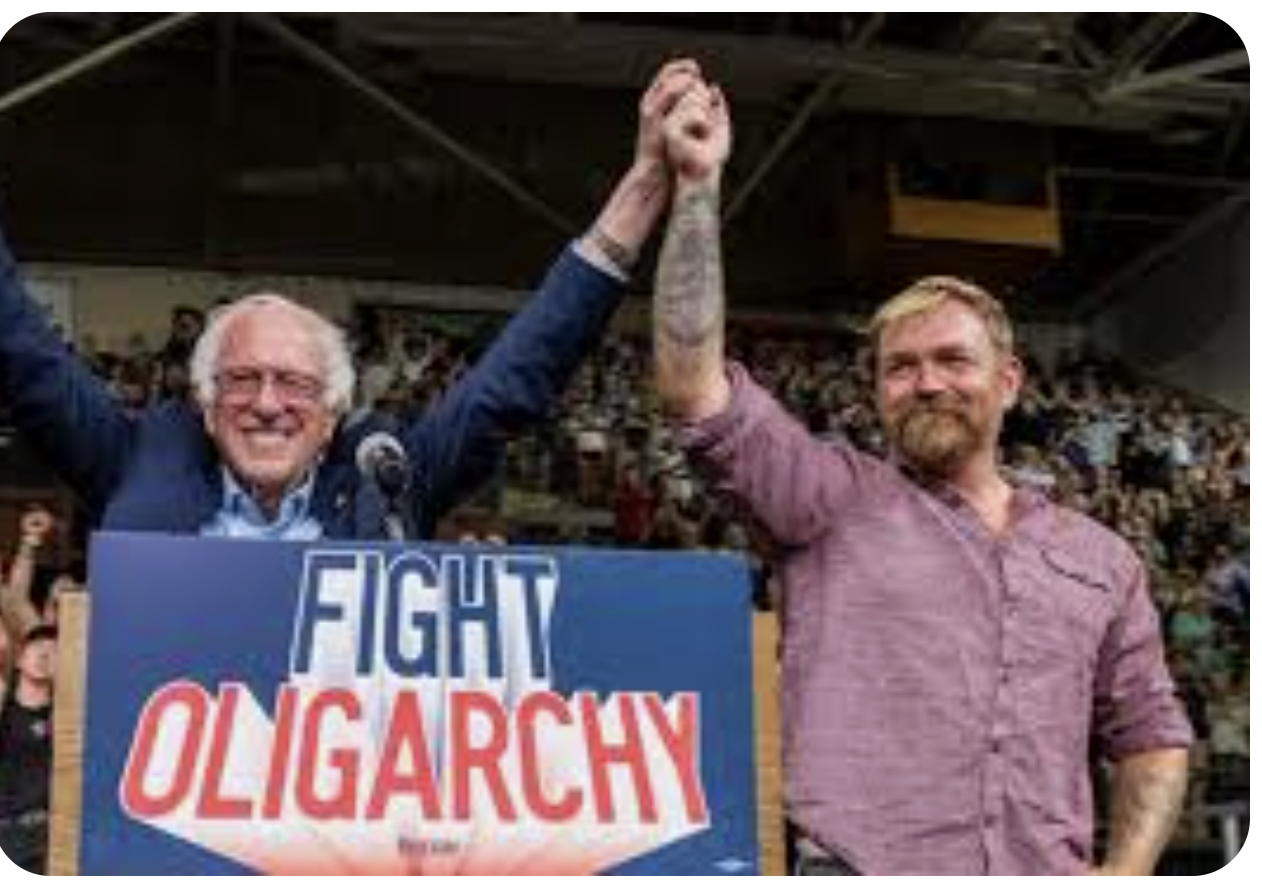
Platner, an oyster farmer and military veteran, is a far-left candidate seeking the Dem nod to challenge incumbent Sen. Susan Collins (R-Maine). Senate Democrats widely see that seat as one of their top pick-up opportunities in the 2026 midterms.
The Democratic hopeful, who drew national headlines last year for having a Nazi-tied tattoo he claimed to have gotten while inebriated without realizing its meaning [tattooed in 2007, only “discovered” its meaning in 2025, after he announced his candidacy — Ed] accused Trump of trying to distract from the controversy over late sex predator Jeffrey Epstein.
“Quite frankly, we’re doing this because Donald Trump is afraid of what’s in the Epstein files, and they want us focused on something else. That’s what’s going on,” Platner claimed in a separate video message posted on X.
Graham Platner's Emergency Portland Protest
— TheUnquirer (@unquirer) January 3, 2026
"Fellow Comrades" (lackluster crowd & speech)
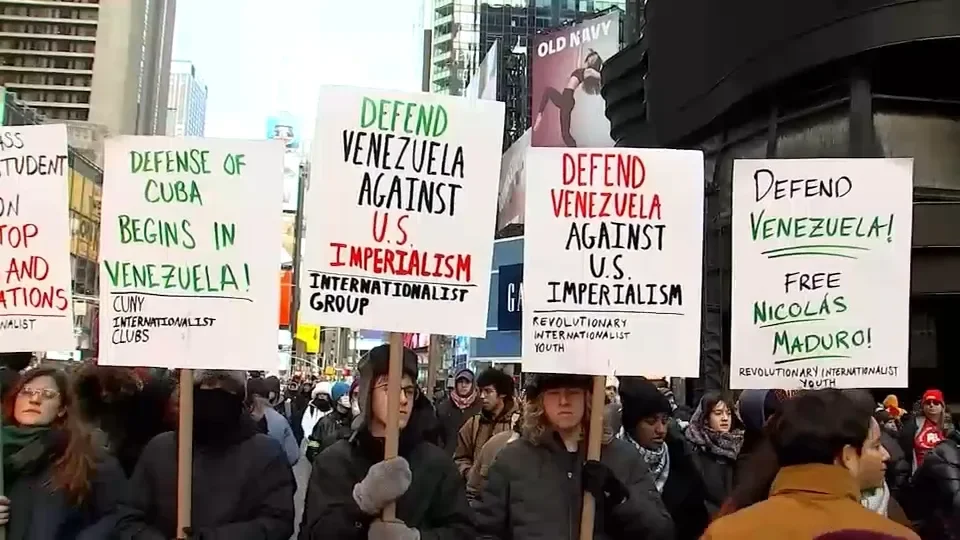
Democrat Socialists held an emergency meeting in Portland, Maine & across the nation - many using the exact same cookie-cutter flier.
Graham fails to rally the crowd as many are still… pic.twitter.com/ogkGtKFseg
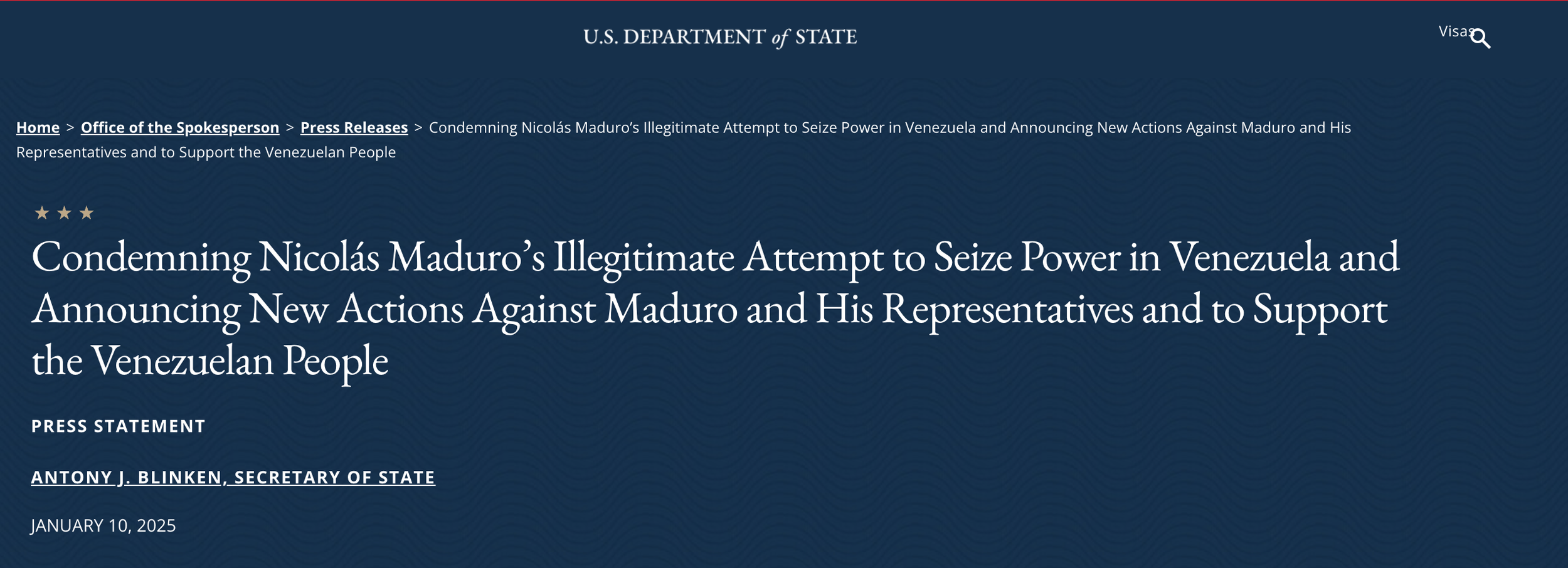
Today, Nicolás Maduro held an illegitimate presidential inauguration in Venezuela in a desperate attempt to seize power. The Venezuelan people and world know the truth – Maduro clearly lost the 2024 presidential election and has no right to claim the presidency. The United States rejects the National Electoral Council’s fraudulent announcement that Maduro won the presidential election and does not recognize Nicolás Maduro as the president of Venezuela. President-elect Edmundo González Urrutia should be sworn in, and the democratic transition should begin. We stand ready to support a return to democracy in Venezuela.
In solidarity with the Venezuelan people, the U.S. Government and our partners around the world are taking action today. The Department of State is increasing the reward offers to up to $25 million each for information leading to the arrests and/or convictions of Nicolás Maduro and Maduro’s Minister of Interior Diosdado Cabello. The Department of State is also adding a new reward offer of up to $15 million for Maduro’s Defense Minister Vladimir Padrino López. These three reward offers stem from criminal narcotrafficking indictments announced in March 2020. The State Department is also taking steps to impose new visa restrictions on Maduro-aligned individuals for their roles in undermining the electoral process or in acts of repression in Venezuela. To date, the Department of State has taken steps to impose visa restrictions on nearly 2,000 Maduro-aligned individuals.
It’s been over a year now since her humiliating loss to President Donald Trump, yet for some reason, Kamala Harris still hasn’t figured out that she’s a joke and should fade away into the sunset rather than subject herself to future embarrassment for opening her mouth.
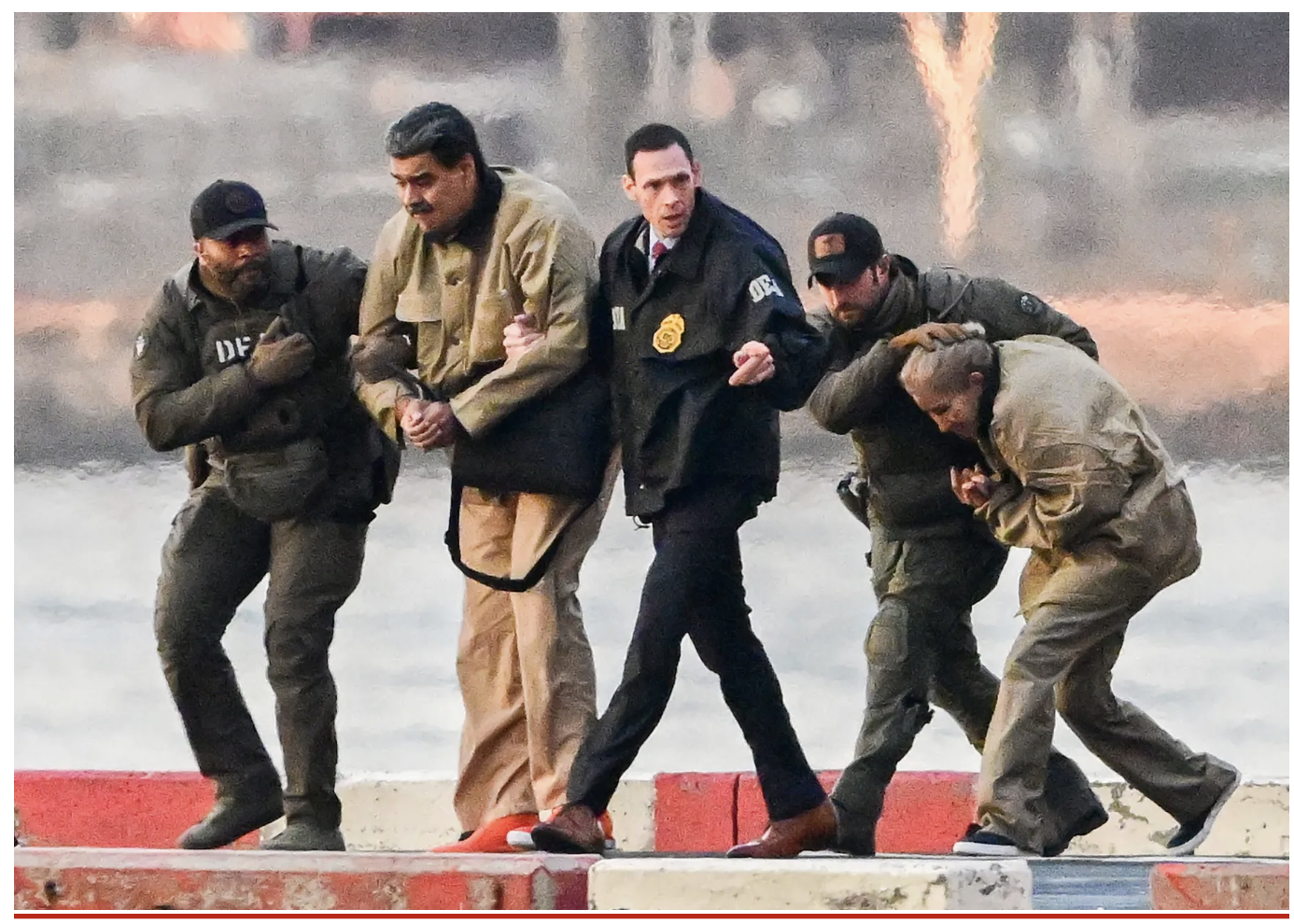
Like many other Democrats who have decided that opposing the capture of a dictator is the hill they want to die on, Kamala took to X on Saturday to condemn Donald Trump's successful military operation that captured Nicolás Maduro and his wife, Cilia Flores.
I guess she’s still on the DNC email list for the latest talking points.
"Donald Trump’s actions in Venezuela do not make America safer, stronger, or more affordable," she claimed. “That Maduro is a brutal, illegitimate dictator does not change the fact that this action was both unlawful and unwise. We’ve seen this movie before. Wars for regime change or oil that are sold as strength but turn into chaos, and American families pay the price.”
Unburdened by the Past
…. But what makes her statement even more absurd and hypocritical than those of other Democrats is that the Biden-Harris administration approved a $25 million bounty for information leading to Maduro's arrest just days before Joe Biden and Kamala Harris left office.
The Biden-Harris administration made available a $25,000,000 reward for information that would have lead to the arrest of Nicolas Maduro.
— Will Chamberlain (@willchamberlain) January 4, 2026
Now you're saying capturing him was unlawful? Did you just entirely forget your administration's policy? pic.twitter.com/fbXSDzPZ68
John Hinderaker, PowerLine
…. Maduro was indicted several years ago in the Southern District of New York. I don’t know what rules govern venue in a case of this kind, nor do I know whether it is feasible to bring a new set of charges in a different jurisdiction.
But I would warn the administration that there is little chance of convicting Maduro in the Southern District of New York, i.e., New York City. Democratic Party jurors would vote to acquit Communism, mass murder, drug trafficking and starving children 100% of the time, simply to spite Donald Trump. Maybe DOJ could get a conviction in Miami, but in New York or, say, Washington D.C.? Highly unlikely, with the Democratic Party on the other side.
I hope the administration will send Maduro back to Venezuela to face justice in his own country. There he will certainly be convicted or, perhaps, simply hung from a lamppost like Mussolini. That would be much preferable to his spending a decade or two in America’s hopeless judicial system, and perhaps emerging as a left-wing hero.

WATERBURY —U.S. Sen. Richard Blumenthal told local, state and federal officials Friday the water crisis in the city is a "warning to every municipality that it could happen to you."
The number of cities and towns in the state with aging infrastructures means more potential water breaks that demand continued work to replace aging pipes, and valves necessary to service thousands of residents and businesses, Blumenthal said at a press conference with local, state and federal lawmakers.
"Waterbury is working on it and we're here to help them," he said.
…. The city estimates the cost for the past two weeks of work to the water main system to restore and maintain water to 100,000 residents cost about $2 million to $3 million. It also estimates the immediate replacement of 10 valves will cost $5 million to $6 million.
Here’s the real story, and the explanation:
“Unlike roads and bridges, upgrades to a water system are an underground expenditure. ‘That's $8 to $10 million that people won't see,’ Hayes said. ‘It's a crisis that needs to be addressed.’
No politician ever got his picture on the front page of the local newspapers posing in front of a maintenance project, so the money gets spent elsewhere. Municipalities and states ignore their infrastructure until a crisis “unexpectedly” comes crashing into the scene, and they they wail for residents of other states to bail them out.
You want to see money flowing to pipeline and other infrastructure maintenance projects, ask the Somalis to start some construction companies.
AI:
In December 2025, Waterbury, Connecticut, experienced a catastrophic failure of its water infrastructure, which officials and residents attributed to decades of neglected maintenance and century-old piping.
Recent Major Incidents
December 2025 Disaster: A 120-year-old 12-inch main began leaking on Thomaston Avenue, eventually breaking and undercutting a parallel 36-inch high-pressure transmission main. This "domino effect" caused a system-wide loss of pressure, leaving approximately 100,000 customers (60% of the city) without water and necessitating a multi-day boil water advisory.
September 2025 Failure: Just months prior, an air relief valve failed on a 30-inch high-pressure main on Huntingdon Avenue, draining millions of gallons of water and forcing school closures.
Historical Frequency: Investigative reports found at least 13 major water main breaks in the city since 2004, with five occurring on Thomaston Avenue alone.
Evidence of Neglect & Systemic Issues
Aging Infrastructure: Large sections of the city's water system are over 120–130 years old.
Deferred Maintenance: Many older valves have not been "exercised" (tested by opening and closing) for up to 25 years because crews feared they would break if touched, a practice that eventually contributed to the 2025 failure.
Underinvestment: Critics argue the city has long relied on "Band-Aid" repairs rather than comprehensive upgrades. While a $30 million infrastructure program is now underway, it follows decades of what officials acknowledge as a "belated program" to address the system's needs.
Lack of Redundancy: During the December 2025 break, a secondary high-pressure line that could have prevented the outage was offline for scheduled reinforcement, leaving the city with no backup.

A bear has chosen to squat in — well, under — a Californian’s home and the state won’t help, presumably because its laws protect squatters. The story’s at the link, but the comments are the best part; lots of bad puns and creative solutions, like this one:
If he sets up an instagram account and starts calling the bear his pet the state will come back and euthanize the bear instantly https://t.co/IixX75Vjbl
— Raven (@raven_brah) December 30, 2025

Probably by this afternoon.
The race to be first to file began while Maduro’s plane was still in the air, and federal judges desperate for publicity will have had their clerks on the phone with the likeliest litigator firms, begging to be chosen as the one who’ll get on all the coolest cable shows and the cover of the NYT.

Trump talks tough on Venezuela, but admires thugs and dictators like Nicolas Maduro.
— Joe Biden (@JoeBiden) June 22, 2020
As President, I will stand with the Venezuelan people and for democracy. https://t.co/eUt28UxyXS
Watch this two-minute compilation of our best leftist thought leaders condemning Trump’s “inaction” — no shame among these people.
During Trump's first term Maduro stayed in power after an illegitimate election.
— MAZE (@mazemoore) January 3, 2026
The MSM/Democrats repeatedly claimed that Maduro remaining in power was proof that Trump was "Putin's puppet."
Everyone in this video will now be condemning Trump. It's so pathetic. pic.twitter.com/EpCcOxESNP
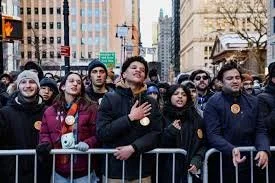
“Fans of collectivism are always expecting a party. They always end up in the pens watching the Party party instead.”
HotAir’s Ed Morrissey posted an excellent Friday discussing Mamdani’s promise to bring all the joys of collectivism to New Yorkers:
…. Yesterday, Zohran Mamdani took the oath of office as the new mayor of New York City. Mamdani doubled down on Marxism as he took the reins of the most significant capital market in the world, insisting that he would bring a new perspective to governance by, er ... trying the most-failed political-economic system of the past 100 years and painting it as "warmth".
After reminding his readers of the results of previous collectivist regimes, including the estimated 100 million deaths brought on their respective countries by Stalin and Mao, Morrissey turns to Friedrich Von Hayek’s great work, (it was the beginning of my own great awakening when I first read it as a college freshman), The Road to Serfdom:
None of this is a secret. The numbers and the inevitable trajectory of collectivism has been well known for decades. F.A. Hayek wrote the definitive explanation of collectivism in The Road to Serfdom, which should become a must-read for New Yorkers in 2026, eighty-two years after its initial publication. Collectivism, whether expressed as communism, national socialism, or any other central-planning economic and political system, are destined to create either collapse or dictatorship, and usually both.
The reason for this, Hayek explains, is that any system designed for collectivist central planning cannot possibly account for the myriad interests and transactions of the individuals within such systems at any scale. When contradictions build up and transform into failures, collectivist regimes do not usually transition back to free-market systems and leverage the power of sovereign individuals for rational transactions, but instead use increasing force to dictate outcomes. That increases the contradictions and failures, and this cycle produces ever more ruthless leadership willing to impose central-planning policies to cover up the regime's failures. Hayek explained the failures of the Soviet system as they happened, and at the same time predicted the failures and carnage of every collectivist regime that would follow – especially China, but hardly limited to it.
The "warmth of collectivism," as explained by Hayek, is basically the white-hot rage of those in power seeking to maintain their privileged positions in these "people's republics."
The entire article’s an excellent read, but it’s Morrissey’s concluding paragraphs that really caught my eye:
“Amusingly, Mamdani has already offered an example of the incompetence of his own collectivism. New Yorkers who came to the streets to celebrate his inauguration got a very good preview of the "warmth" to come over the next four years”
Scores of Zohran Mamdani fans who braved freezing temperatures to celebrate the new mayor as he was publicly sworn into office Thursday were left disappointed by the bash the socialist pol had promised.
Around 10,000 supporters stood outside City Hall during the event — billed as an “Inauguration for a New Era Block Party” by Mamdani’s staff — crammed into several barricaded pens without access to bathrooms or any food concession stands.
“It’s definitely not a block party,” said Danny Mahabir, 30, an Astoria resident who told The Post he’d been expecting a mix of food and music at the New Year’s Day festivities. ...
While Mamdani fans were still excited for the new administration to get underway, they weren’t impressed by the supposed “block party” on a frigid day when temperatures dropped to the mid-20s.
“It’s not exactly what I was expecting,” said Brooklyn resident Shane Turner, 30. “I was expecting food and music.”
As Morrissey observes,
“Fans of collectivism are always expecting a party. They always end up in the pens watching the Party party instead.”
UPDATE: This video of an idiot socialist (redundant, I know) reading a script provided by his overlords probably fits better in the previous post that discusses Chavez/Maduro’s ruination of Venezuela’s oil production, but it works to illustrate this one as well:
Leftist protestors laud Hugo Chavez:
— Western Lensman (@WesternLensman) January 4, 2026
“They want to destroy the memory of the hero Hugo Chavez. Viva Chavez!"
Minneapolis. Because of course. pic.twitter.com/2SWvHtZKJR
I don’t quite understand the commies’ upset here: it was just three days ago that Maduro volunteered to meet with US authorities “wherever they want, whenever they want”. Who can complain that his offer was so promptly accepted?
Both Maduro and Mamdani believe in redistributing wealth downward, with Mamdani focused on taxing the wealthy and corporations to fund public services, and Maduro redistributing wealth through oil revenues and state control of resources.
Mamdani and his fellow parasites have one resource from which to create their city of warm collectivism: a motherlode of high-income individuals and corporations which they believe they can drain indefinitely and never run out (their) money. Billionaires, millionaires, and, ultimately, six-figure earners will always be there to fund their looting, and a shining city on a hill will rise again.
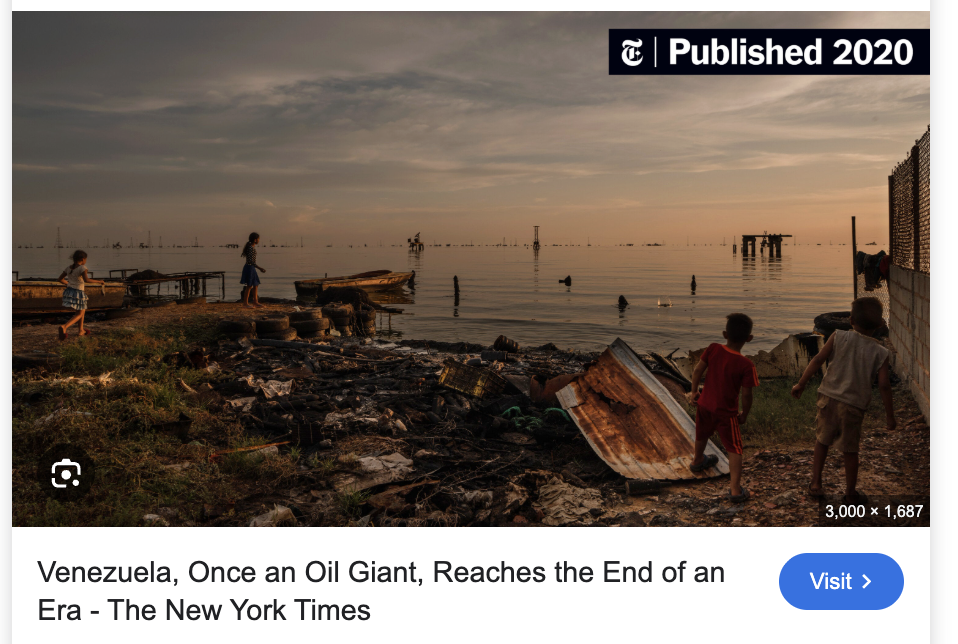
Before he buys his wife a new pair of $700 designer boots and kicks off the celebration, however, New York’s new mayor might want to look to his friend Maduro’s country and see how Venezuela’s past two communists handled their countries own sole resource, one that also promised “unlimited wealth”, and the results they brought down upon their people. Eight million Venezuelans have fled their country out of a population of 28 million, and an equal number would probably follow if they could. It’s no wonder Venezuelans are cheering the sudden removal of Maduro.
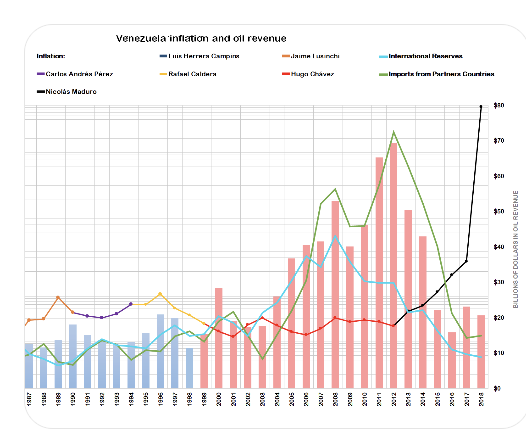
Venezuela has the largest proven oil reserves, in the world, yet is now producing less than a 1/2 million barrels a day (B/pd), compared to the 10+ million B/pd pumped by countries with smaller reserves such as Canada, Saudi Arabia, and the U.S.
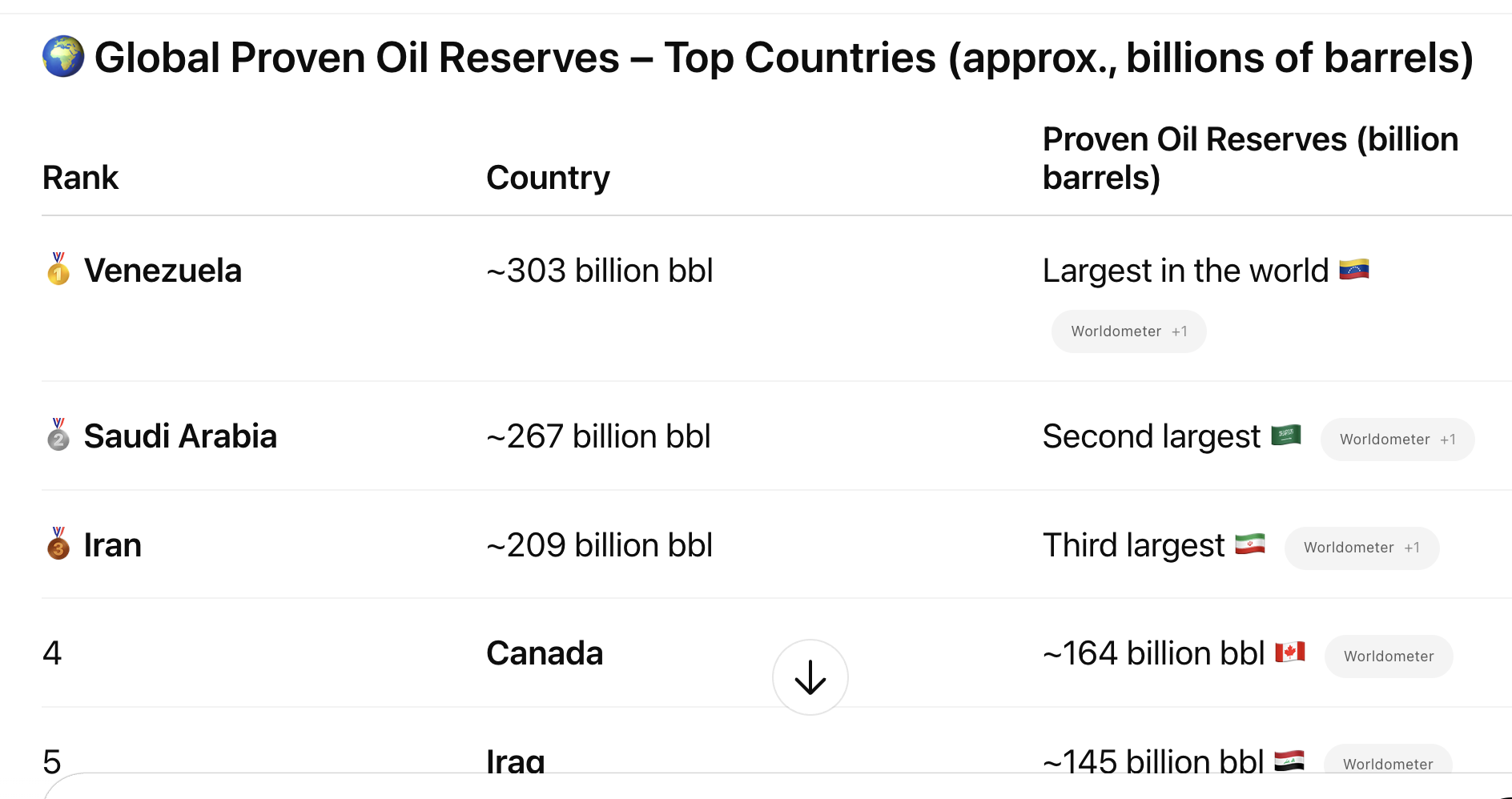
How did Venezuela’s production drop 80% during the Chavez/Maduro decades? Simple, really. Here’s a brief summary, courtesy of Google AI:
Under Presidents Hugo Chávez and Nicolás Maduro, Venezuela's government systematically diverted revenue from the state-owned oil company, PDVSA, to fund extensive social programs while significantly neglecting the necessary investment and maintenance of oil fields. This policy, coupled with mismanagement and an exodus of expertise, led to a steep decline in oil production and the eventual collapse of the industry.
Key Actions and Impacts:
Diversion of Funds: The Chávez and Maduro administrations used PDVSA as a "piggy bank" to finance massive social spending ("missions") on healthcare, education, food, and housing. While these programs initially reduced poverty, they were funded at the expense of long-term investment in the oil sector itself.
Neglect of Infrastructure: Funds that should have been used to maintain and upgrade oil facilities, which is crucial for the country's heavy, difficult-to-extract oil, were instead redirected. This lack of investment led to the deterioration of infrastructure, frequent accidents, and a sharp decline in production capacity.
Loss of Expertise: In the early 2000s, Chávez fired thousands of experienced technocrats from PDVSA after a general strike, replacing them with political loyalists who often lacked technical expertise. This loss of human capital further crippled the industry's ability to maintain production levels.
Production Decline: As a result of these policies, Venezuela's oil production plummeted. In the late 1990s, production was around 3.4 million barrels per day; by 2020, it had fallen to a low of approximately 337,000 barrels per day.
Increased Dependence: The strategy, rather than diversifying the economy, only increased Venezuela's dependence on oil exports, making it highly vulnerable to global oil price fluctuations and external shocks like U.S. sanctions.
Ultimately, the diversion of funds for social spending without reinvestment in the core industry created an unsustainable economic model that contributed significantly to Venezuela's severe economic crisis.
1. Major Nationalization Waves
1976: Venezuela first nationalized its entire oil industry, creating the state-owned company Petróleos de Venezuela (PDVSA). While this was a negotiated transition, it established state control over all oil resources.
2007: Under President Hugo Chávez, the government seized the assets of foreign oil companies that refused to grant PDVSA majority control (at least 60%) of their projects in the Orinoco Belt.
2009: The government further seized dozens of oil service companies and contractor assets, including docks and boats, to consolidate state power over the sector.
Other Industries: Beyond oil, Chávez nationalized hundreds of private businesses in sectors like telecommunications, electricity, and agriculture.
Production Decline: The combination of mass firings of skilled workers, lack of reinvestment, and international sanctions following these expropriations contributed to a collapse in Venezuelan oil production.
Here’s a longer recounting I’ve distilled from a ChatGPD response to my questioning:
In 2003, Hugo Chávez fired roughly 18,000 employees from (the state-owned] PDVSA—about 40% of its professional workforce and replaced them with untrained, unskilled party loyalists
Those dismissed included:
Reservoir engineers
Drilling supervisors
Safety engineers
Refinery operators
Project managers
Why this mattered
Oil production is not “turn the tap and pump.” It requires:
Continuous reservoir modeling
Pressure management
Complex heavy-oil upgrading
Refinery balancing and safety expertise
Concrete effects
Heavy-oil projects in the Orinoco Belt require precise steam injection and upgrading—missteps permanently damage reservoirs.
Refinery accidents increased sharply (Amuay refinery explosion, 2012).
By the late 2010s, PDVSA lacked enough trained staff to operate even existing equipment at capacity.
👉 Result: Capacity was lost permanently, not temporarily.
What happened
Cash that normally funded:
Pipeline inspection
Pump replacement
Corrosion control
Refinery turnarounds
was redirected to:
Social spending
Political transfers
Off-budget uses
Concrete examples
Refineries ran years past scheduled maintenance cycles
Storage tanks leaked or became unusable
Pipelines ruptured and were not repaired
Oil upgraders shut down because spare parts were unavailable
Key point
Oil infrastructure degrades non-linearly:
Skip maintenance for 1–2 years → manageable
Skip it for 5–10 years → facilities must be rebuilt, not repaired
👉 Result: Venezuela lost production even when oil prices were high and demand existed.
What happened
PDVSA’s capital expenditure fell sharply after the mid-2000s.
Foreign partners (ExxonMobil, ConocoPhillips) exited after expropriations.
Remaining joint ventures were starved of cash.
Why this mattered
Oil fields naturally decline:
Conventional fields: ~5–8% per year
Heavy oil: often worse without active management
In Venezuela
Decline rates exceeded 10–15% annually in some fields
New projects were announced but never completed
Even maintaining flat production would have required tens of billions annually
👉 Result: Production spiraled downward even before sanctions.
Model: Politicized state oil company
Fired technical staff
Diverted capex to non-oil uses
Expropriated foreign partners
Used PDVSA as a social-policy arm
Outcome
Production fell ~80% from peak
Infrastructure collapse
Loss of operational competence
Be notified of new posts! Sign-up here:
Want to comment without registering?