Follow up on that hateful nurse — she's been fired again. Update, and it's really weird: Different person, same post?

Florida nurse fired after vile TikTok rant targeting pregnant White House press secretary Karoline Leavitt

Florida nurse was terminated after she said she hoped Leavitt suffered severe injury during childbirth

When I wrote about this nurse, Chandra Petrey-Czaruk and her venomous, hateful post last week, she had already been fired from her position as VP of an Ohio healthcare provider back in November, when she’d first put it up on TikTok, but her “sentiments” went viral last week, and now the employment she found in Florida has also been terminated.

This began when, commenting on the news that Trump’s press secretary Karoline Leavitt was pregnant, Czuk wished her well, sort of: (Bad language alert)

"As a labor and delivery nurse, it gives me great joy to wish Karoline Leavitt a fourth-degree tear, so badly that when she gets out of the shower and walks around her bedroom naked, she accidentally picks up dog toys from the floor. I hope you fucking rip from bow to stern and never shit normally again, you cunt.”

Her new employer learned of Czaruk’s hateful post and was not amused:

In a statement to Fox News Digital on Thursday, Patty Abril, director of media relations and strategic communications at Baptist Health, said Lawler is no longer employed at the hospital. 

"The comments made in a social media video by a nurse at one of our facilities do not reflect our values or the standards we expect of healthcare professionals," Abril said. "Following a prompt review, the individual is no longer employed by our health system."

Abril added, "While we respect the right to personal opinions, there is no place in healthcare for language or behavior that calls into question a caregiver’s ability to provide compassionate, unbiased care. We are committed to an environment that promotes trust, professionalism and respect for all." 

 Baptist Health did the right thing.

UPDATE: EOS noticed, and Mick explained, that the woman fired by Baptist Health is a different person than our Ohio lady. But both Tweets are real, both identical, and both hospitals really did issue statements saying the TikToker was no longer at their institution. Did these idiots just use the same script?


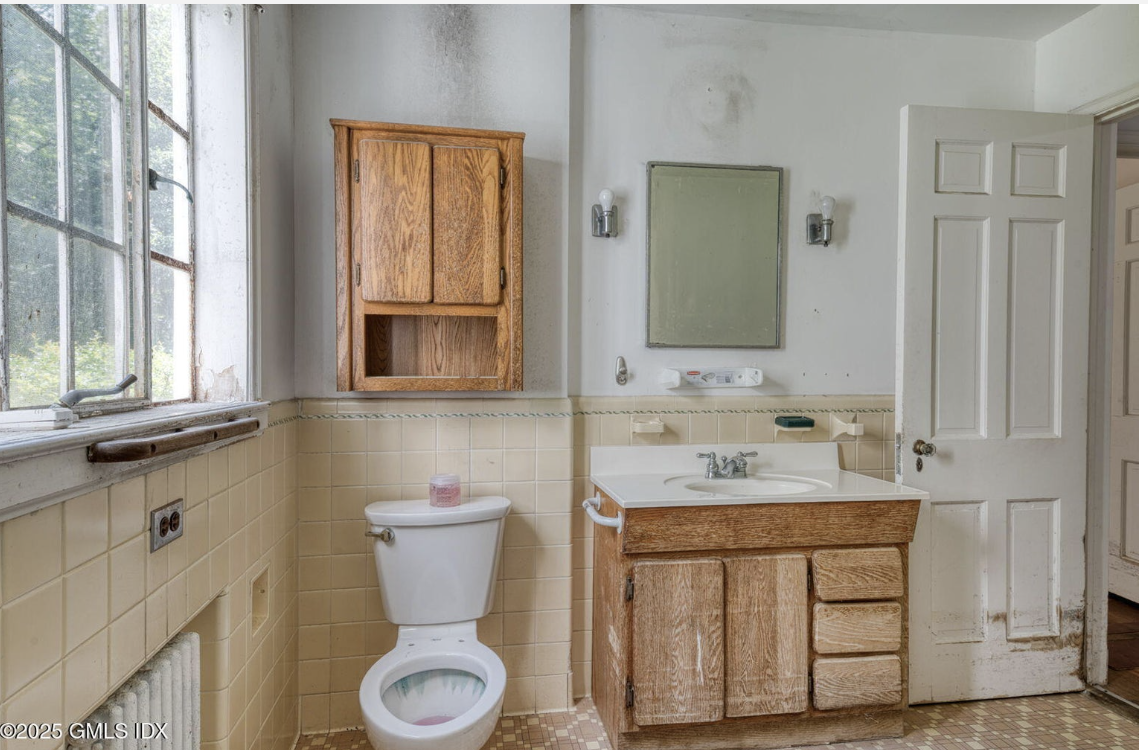
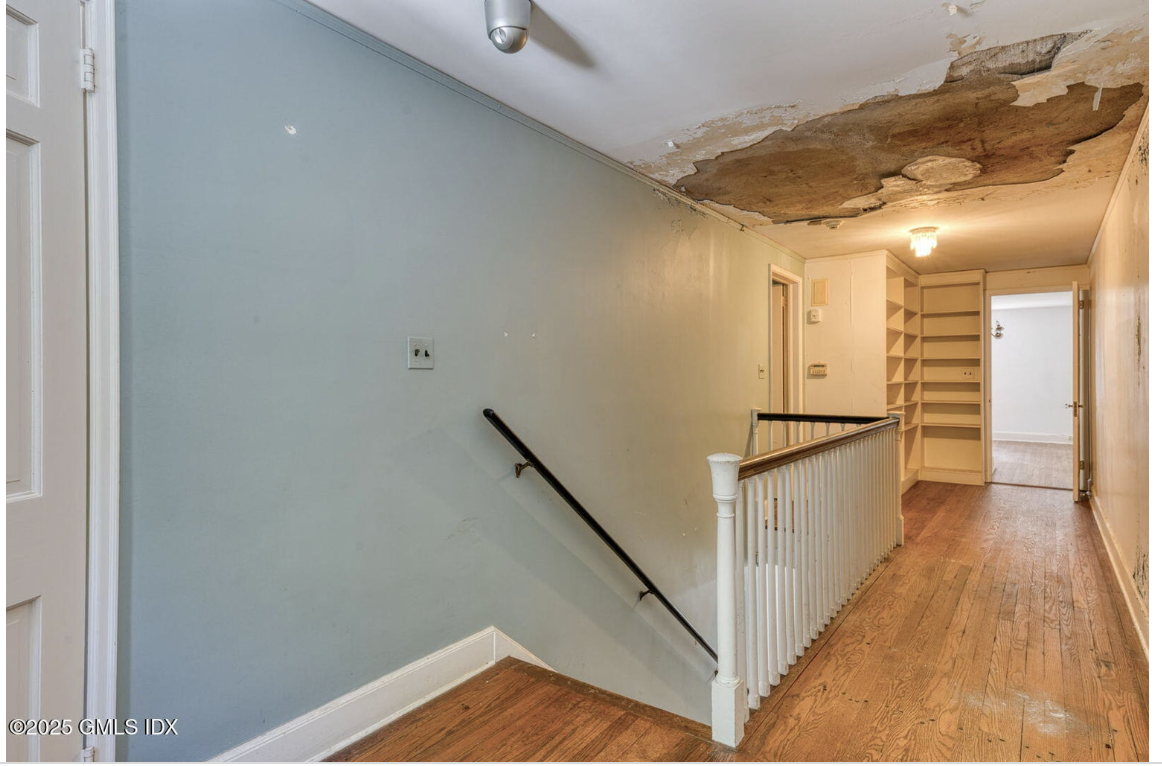
Foreclosure sale on Buckfield Lane (Updated several times — I keep uncovering more details) — 1/24: and updated again

43 Buckfield Lane, sold out of foreclosure for $2.5 million. 8.4 acres with a 1936 teardown (But not always — see below **) . A reverse mortgage that became due upon the borrower’s death on June 24, 2023, no one appeared on behalf of the defendant widower (if any), heirs or assigns, and the foreclosure proceeded relatively smoothly. UPDATE: Mrs. Ewles McDonnell outlived her husband and died, 100-years-old, in 2023)

Aline McDonnell, of Greenwich, Connecticut, USA, a member of the Elwes LG family and a descendant of King George II, died Aug. 7, 2023. Born Dec. 30, 1923, she was a daughter of (Francis) Guy Robert (1895-1966) and Barbara Dorothy (Wythes) Elwes (1896-1984). She was married in Brompton Oratory, July 17, 1948 to Hubert McDonnell Jr. (1919-2004), from a socially prominent New York family. Two daughters, (Aline) Ann Louise (1949) and Rosamond (1952).

Foreclosure documents show an initial sum borrowed from the reverse mortgage lender Financial Freedom Senior Fund of $2,016,960, with $3,372,000 due by 2024.

Financial Freedom is no more, alas, a victim of the 2007 crash, and neither is its owner IndyMac, but before it went, Financial Freedom racked up quite a record of senior abuse:

According to Google AI:

Complaints against Financial Freedom Senior Funding (and related company Freedom Mortgage) involve alleged deceptive practices, improper loan servicing, high fees, misleading statements about income/value, and violations of fair lending laws, leading to government actions and settlements for issues like misreporting data and accelerated foreclosures. Common complaints detail seniors being confused by complex documents, promised benefits that didn't materialize, and facing aggressive foreclosure despite paying, with issues including undisclosed fees, failure to pay property taxes, and targeting vulnerable borrowers for refinancing. 

Key Complaint Areas & Issues

  • Misleading Sales & Advertising: Allegations of "deceptive advertising" and "misleading documents" promising guaranteed income, low fees, and preserved home equity, which proved false.

  • Improper Loan Servicing: Claims of accelerating foreclosures, obstructing repayment options, and not following HECM (Reverse Mortgage) rules, leading to higher foreclosure rates than other servicers.

  • Elder Abuse & Fraud: Lawsuits mention elder abuse, fraudulent concealment, and negligent misrepresentation, with tactics designed to confuse seniors into taking unfavorable reverse mortgages.

  • Data Reporting Violations: Freedom Mortgage Corporation was penalized by the CFPB, 2019} for intentionally submitting inaccurate race, ethnicity, and sex data for loan applications.

  • Undisclosed Costs & Fees: Seniors reported being charged high fees, effectively prepaying interest, and facing large discrepancies in payoff statements, notes a CFPB complaint.

  • Failure to Pay Property Taxes: HUD found Financial Freedom improperly insured loans with delinquent property taxes, violating HECM rules. 

Regulatory & Legal Actions

  • U.S. Department of Justice & HUD: Financial Freedom settled for nearly $90 million in 2017 for allegedly obtaining improper interest payments and failing to disclose issues on claims.

  • Consumer Financial Protection Bureau (CFPB) (CFPB): Took action against Freedom Mortgage for HMDA data violations, resulting in penalties and orders for better compliance. 

The record is silent on whether there were in fact any heirs to contest this suit* but if there had been, a strong defense against foreclosure might have been available. We’ll never know. Anti-disirregardless, eight and a half acres for $2.5 million seems like a bargain — probably, I (and Gideon) estimate, a $1 million or so under market.

UPDATE, January 24th: an agent says differently: “The property was lousy, with lots of wetlands, seemingly not a lot of useable land. The house was beyond disgusting”.

  • Further research suggests that there might have been:

Aline Elwes McDonnell’s lineage is traceable back as far as King George II of England and Copped Hall in Essex was a site near the town of Epping that dates back to medieval times – originally home to the FitzAucher family who held the office of Foresters. The meaning of ‘Copped’ has its roots in the old English term for peak and denotes the vantage point of the site upon which the 18th century version of the house was built. No fewer than three grand country houses graced the site until the demise of the Wyatt aggrandized version (now thankfully undergoing restoration by a local trust) in a devastating fire of 1917.

The story goes that the few household staff and gardeners that remained during the war years, armed with only a small handpump to quell the flames, dragged furniture, paintings and objects out onto the lawn to save them from destruction. Much was sold off or dispersed thereafter to offset the huge losses incurred at the time but what remained was rehoused at The Wood House (an 1898 confection in the high Tudor revivalist style on the estate grounds) where the family moved following the catastrophic event. A number of the objects in this auction are featured in imagery from aforementioned Country Life article on The Wood House in 1959. This time capsule of 100 or so items made the transatlantic journey following Aline Mary Margaret Elwes marriage to New Yorker, Hubert McDonnell Jr. (1919-2004), in the Brompton Oratory in 1948. 

The pair settled in Greenwich, Connecticut and shipped the extant portion of the collection, bequeathed to Aline, by boat in the early 1950s, where they have been lovingly preserved ever since. The family hopes a new generation of custodians will care for these heirlooms and Freeman’s I Hindman is honored to be the auction house of choice for this beautiful group of English furniture, silver, portraits and forgotten treasures. Please join us this June in New York and Philadelphia to be inspired and transported with what Disraeli described as that “soul-subduing sentiment, harshly called flirtation, which is the spell of a country house”.

** An overwrought article about the house and art collection can be found here, “Sale of a Lifetime”

If T.S. Eliot’s J. Alfred Prufrock measured his life in coffee-spoons, then mine is surely measured in auctions: I’ve devoted twenty years of my life to bringing rich tapestries of collecting to sale and it still gives me a thrill to find the stories imbued in historic objects. And so it goes – a day in the life of an auctioneer: the 21st century bombardment of emails and zoom calls is intercepted by an old fashioned phone call: the opportunity to visit a private collection in Greenwich, Connecticut of “English Furniture” from the estate of Aline Elwes McDonnell. I volunteered immediately for the chance to bathe in memories of my youth (far too well-spent in the Country House Collections department at Christie’s in London).

 The visit did not disappoint! In what first appeared to be an unassuming, if much-loved home (the pink-walled kitchen bore the hallmarks of any loving family’s growth with tattered and refreshed lines denoting who grew tallest first) the cottage continued through the adjacent dining room to the library and beyond, by means of a modest passageway, to the extension built in the 1950s to house the extant collections long since removed from Copped Hall, Essex, UK.

What lay before me was a glorious recreation of an 18th century English Country House drawing room: a finely woven Brussel’s tapestry circa 1680, a rare form of commode with the signature hallmark marquetry inlay of Messrs. Mayhew & Ince, Regency period cockpen faux-bamboo armchairs, Fahua vases from the Ming Dynasty, all bound together by an illustrious group of portraits on the walls led by the tantalizing and unfinished depiction of a young woman with a fashionable late 18th century coiffure (ever the eternal optimist in me: Sir Joshua Reynolds? A precocious follower perhaps? Reverend Matthew William Peters?). By the time, dear reader, this sits in your hands, hopefully some of these riddles will be solved, but for the moment I’m armed with stories passed down through the Elwes family, Country Life articles from 1910 and 1959 respectively, a flashlight, and an insatiable curiosity as my only guide. 

Nursing homes really must stop giving day passes to their residents, especially those in the Alzheimer's wing

Last evening I told a friend of mine that his fear of an impending civil war was a tad overwrought. Reading this, I'm not so sure

fire away, boys, they’re coming in!

Arizona AG Kris Mayes wildly suggests residents can shoot masked ICE agents under state’s self-defense laws: ‘Recipe for disaster’

Arizona Attorney General Kris Mayes wildly suggested that residents can open fire on masked ICE agents if they feel their life is in danger under the state’s self-defense laws.

The Democrat, in a sit-down with 12 News anchor Brahm Resnik, warned that Arizona’s “Stand Your Ground” law, which allows citizens to use deadly force if they believe they’re in imminent danger, could become a “recipe for disaster” if protesters clash with immigration officers.

“It’s kind of a recipe for disaster because you have these masked federal officers with very little identification, sometimes no identification, wearing plain clothes and masks,” Mayes said in the Monday interview, calling ICE “very poorly trained.”

“And we have a Stand Your Ground law that says that if you reasonably believe that your life is in danger and you’re in your house or your car or on your property, that you can defend yourself with lethal force.”

A flabbergasted Resnik repeatedly challenged Mayes, cautioning that her remarks could be interpreted as a “license” to residents to shoot a federal agent.

She shot back that she was merely stating a “fact,” not encouraging violence.

“If you’re being attacked by someone who is not identified as a peace officer — how do you know?” the state’s top prosecutor pressed, adding that “real cops don’t wear masks.”

“I mean if somebody comes at me wearing a mask, by the way, I’m a gun owner, and I can’t tell whether they’re a police officer, what am I supposed to do? No, I’m not suggesting people pull out their guns, but this is a don’t tread on me state.”

The attorney general, who was elected in 2022, unleashed her jaw-dropping comments as immigration officers begin to spread into parts of the Grand Canyon State.

Other politicians have been broadly hinting that shooting at government agents might be acceptable, but this is the first time to my knowledge that a state’s chief law enforcement officer has issued a broad invitation to do just that. Things are heating up.

Yeah, why should Somalis have all the fun(ds)?

pigs at the trough

Virginia's 'Make Fraud Legal' Bill

Well, it doesn't get more obvious than this. Virginia Democrats are so jealous that backward states like Minnesota and Maine have become proficient at fraud and corruption that they are competing for ways to make Virginia the world leader in corruption in government. 

They’re no longer even pretending that the massive fraud comes as a shock and disappointment to them, they’re admitting that that was the plan all along.

Dog gone, it

New York convict at large after slipping his ankle monitor onto a dogping-his-ankle-monitor-onto-a-dog

Mister Retrops

Jan 22, 2026

Escaped convict Lamont Alexander Holmes escaped his house arrest using a technique straight from a movie plot.

No joke, the New York man slipped his ankle monitor off, stuck it on a dog, and set the dog loose. He'd been charged with felony possession of a loaded weapon, and is now on the run.

I can’t improve on “Mister Retrops” own post, so just follow the link. Very funny.

I see that my old friend Phil Russell is in the news — in a good way

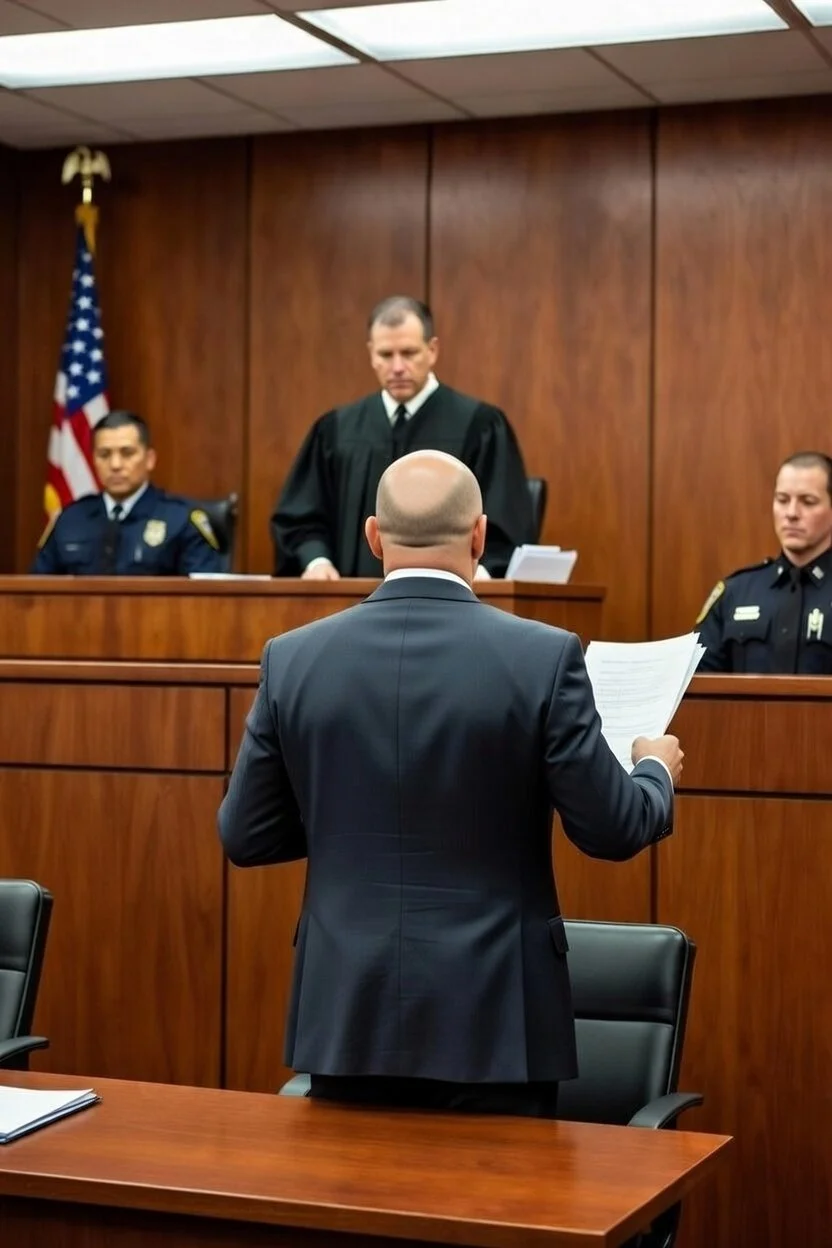
absolutely guaranteed to be a true and accurate photo of lawyer phil in action — scout’s honor (Okay, I’m not sure why he arranged the chairs to face the rear of the courtroom, but that’s phil for you)

Connecticut lawyer Philip Russell calls out his adversary for citing AI-generated fake cases in court filings

DANBURY — The attorney for a plaintiff in a Greenwich-based breach of contract lawsuit contends the defendant's lawyer used artificial intelligence in court filings that were rife with bogus and "hallucinated" case law.

"The unfettered use of AI without ensuring the accuracy of the content submitted to the Court is problematic, as it impugns the integrity of our judicial system and is a violation of the standards of accuracy, candor and professionalism owed to the Court," Greenwich attorney Philip Russell wrote in a motion for sanctions against the defendant contractor and its attorney, Nicholas Mingione.

The call for sanctions stems from a lawsuit filed in December 2024 by J. Salvatore & Sons Inc. contending that sloppy masonry work by New Fairfield-based Gencor Contracting Corp. at a construction project on Midwood Road in Greenwich led to flooding and damage estimated at more than $80,000.

Dated Jan. 16 and filed in state Superior Court in Danbury, Russell's call for sanctions focuses on the defendant's two "motions to strike," filed in October and November last year. Russell cites 12 misrepresentations in Mingione's first motion, including cited quotes that do not appear anywhere in the highlighted decisions, and cited cases that "do not exist."

Catherine R. Keenan, an attorney in Russell's firm, emailed Mingione on Nov. 3 about the suspected AI-generated fabrications.

"This is a potential fraud on the court and is sanctionable conduct," Keenan wrote, according to court filings.

Mingione, an attorney with Russo & Gould, which has offices in Stamford and Hartford, replied the same day, according to court filings.

"Our legal research software does in fact have an AI component that assists in legal drafting," Mingione wrote, according to the court filing. "With that said, no attempt to confuse the court would ever be attempted."

"As a show of good faith," Mingione wrote that he had withdrawn the motion to strike and would refile it with different citations to make the same argument.

The second motion to strike, however, "also suffers from AI fabrications," Russell's call for sanctions says, including the same fabricated quote highlighted from the first motion to strike.

Rules of conduct for Connecticut attorneys say "a lawyer shall not knowingly make a false statement of material fact or law to a tribunal." However, Russell in his motion for sanctions says there is "a dearth of law on the misuse of AI by attorneys in court filings."

The Rules Committee of the Connecticut Superior Court has been discussing the issue, according to meeting agendas and minutes. Members at the Jan. 12 meeting considered a proposal that would require attorneys who use AI programs in their legal research to certify that they have independently verified the accuracy of the citations, according to meeting minutes. No action was taken.

In the motion for sanctions, Russell cites a notice issued in September from the U.S. District Court in Connecticut to lawyers and litigants that warns against using AI without verifying accuracy, "like any other shoddy research method from other sources or tools."

The federal court, the notice says, "has a no-tolerance policy for any briefing (AI-assisted or not) that hallucinates legal propositions or otherwise severely misstates the law."

Sanctions sought against Gencor and its counsel, according to Russell's motion, include "reimbursement of counsel's time for investigating and addressing the AI hallucinations in the two motions" and any other sanctions the court deems appropriate.

This is becoming quite a problem everywhere, from student papers to computer programming, but I’ve been especially intrigued to see how it’s infected the legal world. Law professor Eugene Volokh has been following the issue for several years, and posted on it many times. Here are just two of many of those posts:

Mind you, phony citations are not new; court and lawyers have been employing them since the first stone age attorney painting used deceptive tales to defend his client against charges of defacing cave paintings. For a somewhat recent, but pre-AI example, consider the CT Appellate Court’s 2001 ruling in Leydon v. Town of Greenwich overturning the Superior Court’s decision and ruling that the town must admit non-residents to Tod’s Point according to “settled case law”.

I reading the decision, I noticed several citations to cases that the judges implausibly claimed established the relevant law, so I looked them up, and I was right; they didn’t — the court had simply tossed them in to bolster their anti-Greenwich decision and make it appear that they were following the law, rather than inventing it to support their pre-determined outcome. Whatever little faith I had in judges’ veracity I’d retained through three years of law school evaporated right there. (Proof of their duplicity came when the Connecticut Supreme Court affirmed the Appellate Court’s decision but on entirely different grounds, and didn’t use or refer to any of the case law the inferior court had cited.),

Second thoughts, or reconciliation?

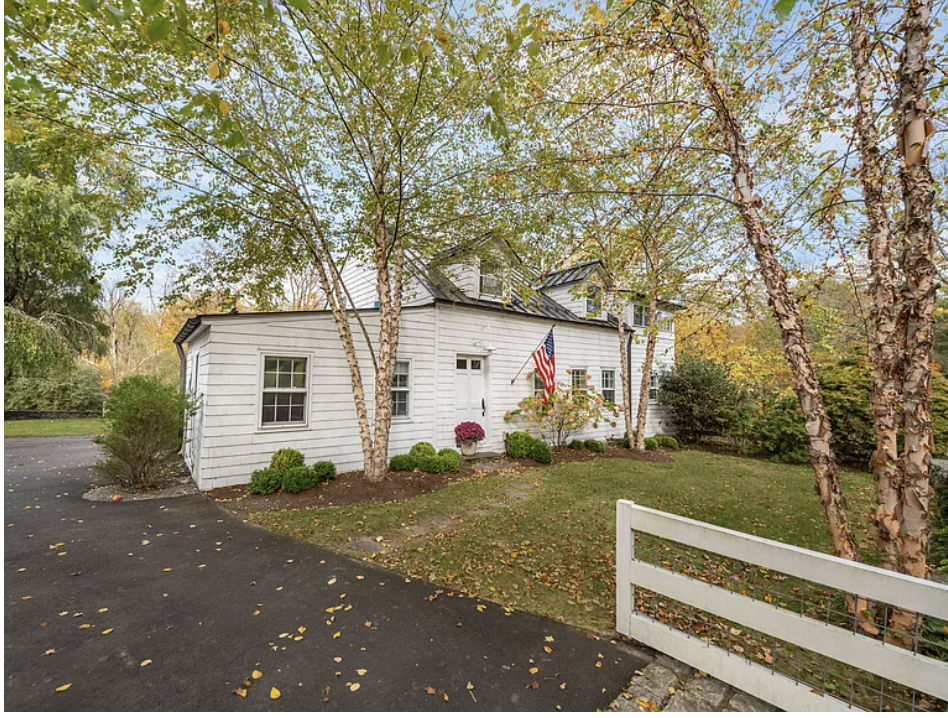
The rental cottage at 45 Burying Hill Road was reported pending this past Monday the 19th, and was put back on the market yesterday, the 21st. Asking $10,000 a month, which included utilities, lawn care, garbage pickup, etc., I thought it’d make a very nice house for someone moving out of the family abode while the divorce was pending. Maybe the would-be renter met someone at The J House with her own digs, and she invited him to shack up with her, or, in a triumph of hope over experience, his wife decided to let him return home and try again.