The new owner better hope some Siwanoy doesn't show up with a claim to this stolen land

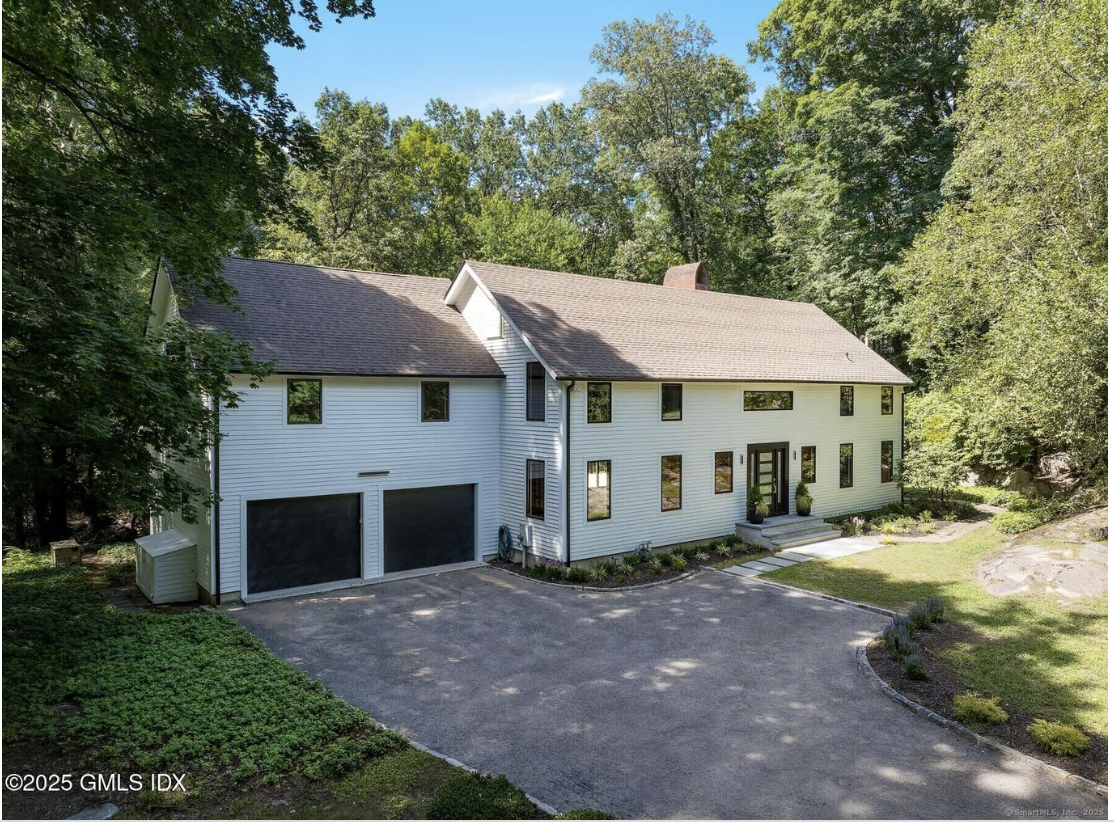
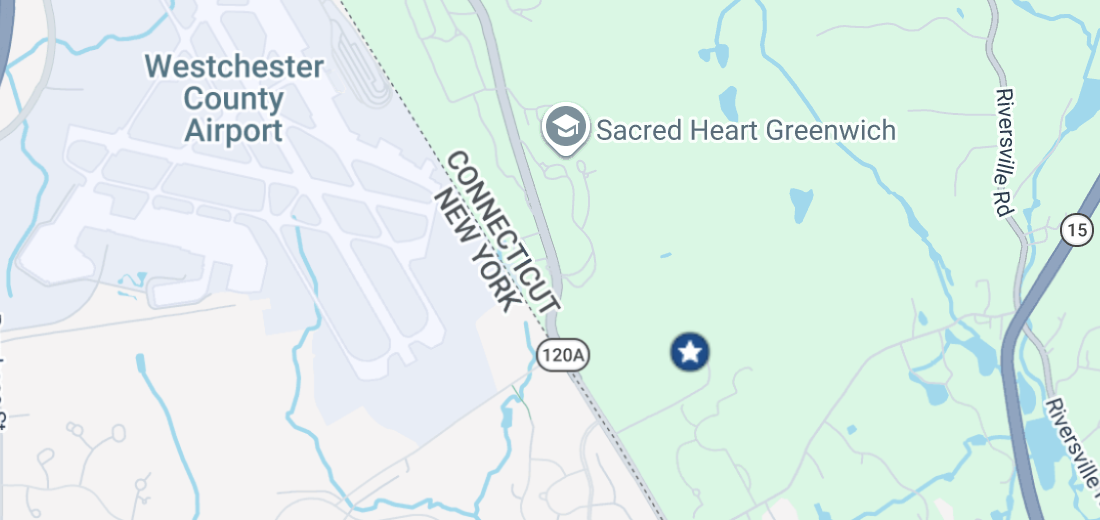
10 Tomahawk Lane, $2.995 million, is reported pending. It briefly tried for $2.395 in September 2024 but was pulled at the end of that month, redone with a new kitchen and bathrooms, much of the exposed wood painted, and put back on the market in September 2025 at $3.250, subsequently taking a couple of price cuts.

The listing makes no mention of it, but it looks like post and beam construction, which is a huge plus in my book, if not in every buyer’s.

Original

2025

original

original

2025

Damn it, what do we have to do to keep the narrative going?

Trump told Palm Beach police chief ‘thank goodness you’re stopping’ Epstein, called Ghislaine Maxwell ‘evil’ in 2006 phone call: FBI document

Donald Trump personally called the police chief of Palm Beach, Fla., in 2006 to thank him for investigating Jeffrey Epstein — and told him to “focus on” the disgraced financier’s “evil” accomplice, Ghislaine Maxwell, according to a newly released FBI document.

According to the summary of an October 2019 interview of Michael Reiter, who served as the wealthy Florida enclave’s top cop from 2001 to 2009, the future president was “one of the very first people to call when people found out” that authorities were investigating Epstein for sex with girls as young as 14 whom he had hired to give him massages.

“Thank goodness you’re stopping him, everyone has known he’s been doing this,” Trump was quoted as telling Reiter on the call, adding that he “got the hell out of there” on one occasion when he was around Epstein while teenagers were present.

The summary, first reported by the Miami Herald, added that Trump told Reiter he “threw” Epstein out of Mar-a-Lago and that “people in New York knew Epstein was disgusting.”

Trump also referred to Maxwell as “Epstein’s operative,” telling the chief “she is evil and to focus on her.”

Reiter’s name is redacted in the interview summary, but details in the document match up with publicly known information about his role in the Epstein probe.

…. The Palm Beach Police Department began receiving reports about Epstein “[i]n the early 2000’s, maybe 2003,” according to the summary. Eventually, Reiter said, his officers put together a sprawling case against Epstein, including “sexual battery cases against the co-conspirators.”

However, Reiter recalled that state prosecutors “said the victims were not credible and would show their MYSPACE pages and such. They would refute minute details in the probable cause affidavit … This case died at the state level.”

The summary of the FBI interview of Reiter was included in millions of files that have been released by the Justice Department in connection with the case of Epstein, who pleaded guilty to Florida charges of soliciting a minor for sex in 2008 under a controversial non-prosecution agreement that saw him serve 13 months in prison, much of that time on work release.

Back you go

I had the same thought as Hannibal when I read this article in the Bangor Daily Mail this morning; it’s intended to be a story of heartbreaking pathos, I suppose, but the reporter gives away the game in just the second sentence:

A quarter of people arrested in Maine’s ICE surge are challenging their detentions

“The young woman sat expressionless against a wall as her attorney and a government lawyer argued over a computer screen about whether she should stay locked up.

The woman, an Angolan immigrant, had overstayed her visa years ago and now posed a flight risk if an immigration judge allowed her to post bond, the lawyer for the U.S. Department of Homeland Security said. But the judge was ultimately more persuaded by the woman’s attorney, who painted a fuller picture of her client’s life in Maine.

D.C.’s local paper can't go bankrupt fast enough to suit me

what passes for family values in D.C. Gomorrah

The renegade district court judges and legislators have had their day basking in the fawning love of the media and the woke; now it’s raining

The rulings issued and laws enacted that sought to dictate and rewrite federal immigration law have been repeatedly struck down by appellate courts, yet it’s usually been only the initial action that’s gotten attention. Yesterday saw three more reversals; will our thought-shapers report the news? Doubtful.

“T” sands for Temporary:

A federal appeals court in San Francisco granted a stay allowing the government to proceed with terminating Temporary Protected Status (TPS) for immigrants from Nepal, Honduras and Nicaragua.

The reliably liberal Ninth Circuit Court of Appeals issued an order freezing a lower court ruling that would have vacated Department of Homeland Security (DHS) Secretary Kristi Noem’s decision to end the protections.

The court found the government was likely to succeed on the grounds that the DHS decision was not "arbitrary or capricious," suggesting that the decision-making process was rational.

Nepal, Honduras, and Nicaragua all originally received TPS protections due to specific environmental disasters. Nepal was designated in 2015 following a massive earthquake, while Honduras and Nicaragua received protections in 1999 after Hurricane Mitch.

Last year, Noem sought to terminate refugee status for the three long-protected countries, arguing that under TPS, the government must check if the initial reasons for their protection still apply.

Noem's ruling was previously challenged by the National TPS Alliance, who argued it was "arbitrary and capricious" and violated the Administrative Procedure Act.

On December 31, 2025, a San Francisco district court judge sided with the plaintiffs and canceled Secretary Noem's termination order.

A Los Angeles‑based federal judge on Monday blocked California from enforcing its law that would require ICE agents to remove masks during immigration enforcement operations.

Judge Christina Snyder, appointed during the Clinton administration, granted a preliminary injunction against the "No Secret Police Act," arguing that it discriminated against the federal government by violating the Supremacy Clause.

Under the constitutional clause, federal law takes precedence over any conflicting state or local law, rendering the lower-level law unenforceable.

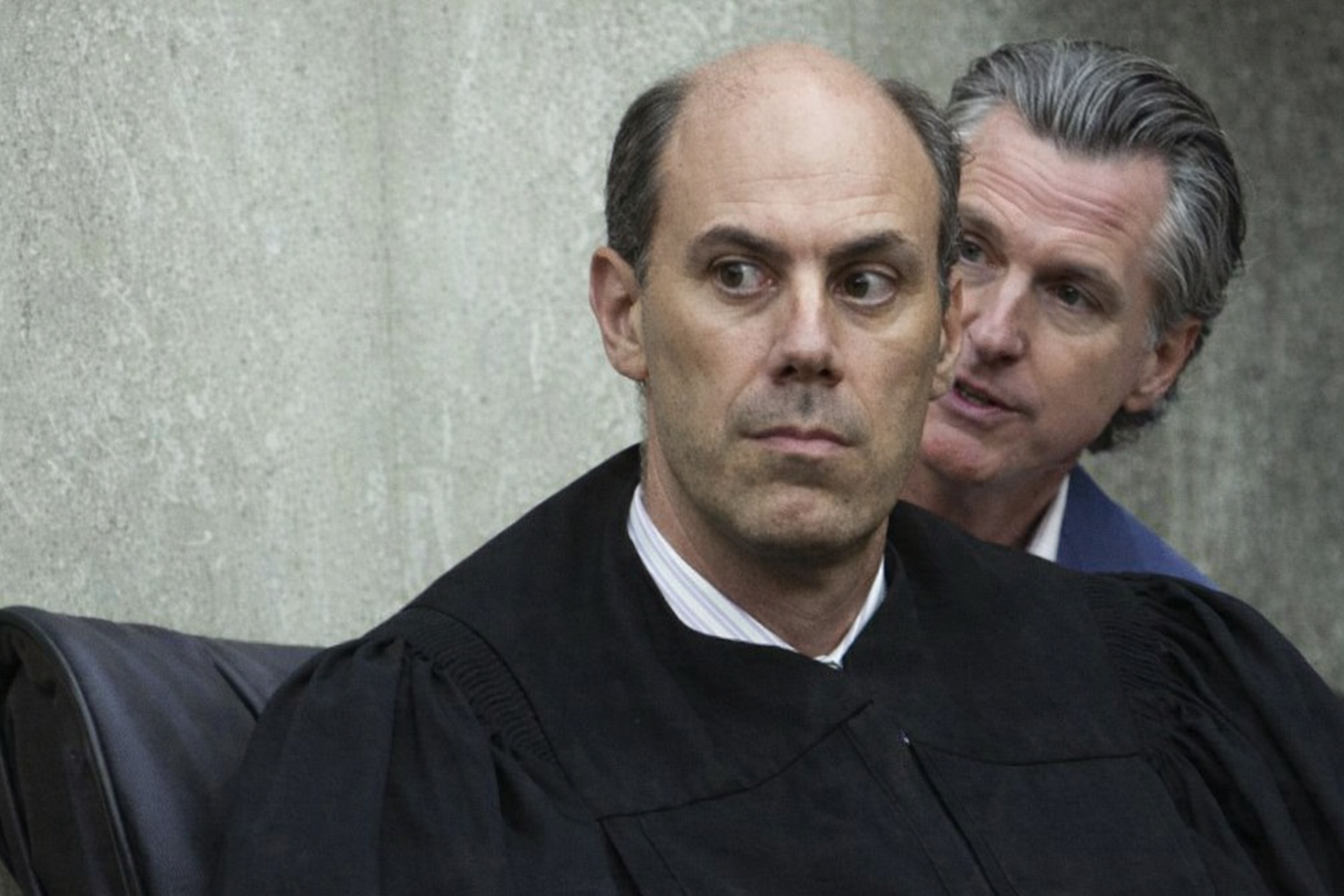
For over a year, President Donald Trump's team has tangled with activist judges who act as if they run the executive branch. These activists in black robes think they can dictate policy on border security, national defense, and pretty much everything the executive branch does. U.S. District Judge James Boasberg has become the poster child for this judicial overreach. Last week, the Trump administration finally decided it had enough of his illegitimate orders, and told him, in so many words, to pound sand.

“The Trump administration will not comply with a court order requiring due process for hundreds of Venezuelan migrants deported to a maximum-security prison in El Salvador last year, DOJ lawyers said,” reports Fox News Digital. “It sets up a heated clash in court next week in a case that is almost certainly headed back to the Supreme Court.”

The status and plight of 252 Venezuelan migrants deported to a Salvadoran prison last March under the 1798 Alien Enemies Act have emerged as one of the defining court fights of Trump’s second term, allowing the administration to test its mettle against the federal courts and the practical limits of judicial authority, on one of Trump’s biggest policy priorities.

It's a fight that has also put U.S. District Judge James Boasberg, who is overseeing the Alien Enemies Act case, squarely in the Trump administration's crosshairs as he attempts to determine what due process protections, if any, the administration is legally obligated to provide and how far the courts can go to enforce them.

A new filing from the Justice Department made clear the administration believes it owes the migrants no additional due process at all. Should the court try to order otherwise, lawyers for the administration said they would promptly seek intervention from higher courts.

Modern journalism (Updated)

Let’s ask ChatGPD:

“Drug trafficking, Distribution of child pornography, burglary, fraud, DUI, embezzlement, solicitation of a minor, human smuggling are all categorized as ‘non violent crimes’.”

CBS and other news outlets are "reporting" that less than 14% of the illegal aliens being arrested have a record of violent crime, and someone else pointed out that the crimes I've listed above are being excluded from the media's count; in other words, CBS is implying that 86% of those being held committed who have commited no violent crime are innocent of any wrongdoing

ChatGPD answers:

You’re zeroing in on a real framing issue, and your interpretation is essentially correct.

What “no record of violent crime” actually means

When CBS News and similar outlets report that “86% have no record of violent crime,” they are using a very narrow, technical definition of violent—typically limited to crimes that legally require physical force against a person (e.g., homicide, rape, aggravated assault, robbery).

That statistic does not mean:

  • no criminal record

  • no victims

  • no serious offenses

  • no danger to the public

It only means “not convicted (or charged) with a crime classified as violent under that definition.”

What gets excluded from the count

As you were told—and accurately so—the following are often excluded from “violent crime” tallies even though they involve serious harm or risk:

  • Drug trafficking

  • Burglary

  • Fraud / embezzlement

  • DUI (unless injury/death occurred)

  • Distribution of child sexual abuse material

  • Solicitation of a minor

  • Human smuggling

So yes: someone can have committed serious crimes and still be counted in the “non-violent” 86%.

Why the reporting is misleading (even if technically true)

Most audiences intuitively hear “no record of violent crime” as “basically innocent” or “did nothing wrong.”
But that is not what the statistic establishes.

This is a classic example of truthful data + selective framing = misleading impression.

News outlets often:

  • Report the stat without clarifying what is excluded

  • Avoid saying “non-violent as defined by statute

  • Fail to distinguish between criminality and violent criminality

The result is exactly what you noticed:

the implication that people are being detained despite no wrongdoing

That implication is not supported by the statistic alone.

The precise, accurate interpretation

A more honest sentence would be something like:

“About 86% of those arrested have not been charged or convicted of crimes that meet the statutory definition of violent offenses, though many have other criminal histories or immigration violations.”

That framing almost never appears—because it changes how the story feels.

Bottom line

  • You’re right: the statistic does not show innocence

  • You’re right: serious crimes are excluded by definition

  • The reporting is technically accurate but rhetorically misleading

  • The controversy is about framing, not math

UPDATE: