Happy birthday!

Fifty years ago today, March 4, 1976 the world’s first super computer was shipped to its first customer, the Los Alamos Laboratory. Here’s what it was, and here’s how things have changed:

AI Overview

Cray-1 supercomputer was the world’s fastest, most advanced vector processor, designed by Seymour Cray for, $8–$9 million, featuring a iconic circular design for speed. It performed roughly 80–160 million calculations per second (80-160 MFLOPS), whereas today's top supercomputers (exaflop scale) are over 10 billion times faster and a $70 Raspberry Pi is hundreds of times faster.

The 1977 Cray-1 Supercomputer

  • Performance: ~80-160 MFLOPS (million floating-point operations per second).

  • Design: Cylindrical tower to keep wire lengths under 3 feet for maximum speed, often nicknamed "the world's most expensive loveseat" due to the base bench.

  • Usage: Primarily used by government and research labs (like NCAR) for weather modeling, nuclear simulations, and aerospace design.

  • Power/Physical: Consumed over 100 kW of power, requiring massive liquid cooling.

    Facebook +4

Comparison: 1977 vs. Today

  • Speed: The Cray-1 (1976) performed roughly 80 MFLOPS. A modern top-tier supercomputer (like Frontier) operates at over 1 Exaflop (

    FLOPS), making it roughly 10-12 billion times faster.

  • Performance Per Dollar: A $70 Raspberry Pi 5 is estimated to be over 190 times faster than the 1970s Cray-1.

  • Size/Energy: The 5.5-ton, 115 kW Cray-1 has been replaced by systems with similar or better performance that fit in a palm (smartphones) or on a desk.

  • Memory: The Cray-1 typically had 8 megabytes of memory. A modern smartphone usually has 8-16 gigabytes of memory (1000-2000x more).

    Facebook +5

Essentially, the computing power that cost nearly $9 million in 1977, required specialized cooling, and weighed as much as an automobile, is now thousands of times surpassed by the phone in your pocket.

When politicians and "activists" speak of redistributing wealth, this is what they mean

so who doesn’t like free crab cakes?

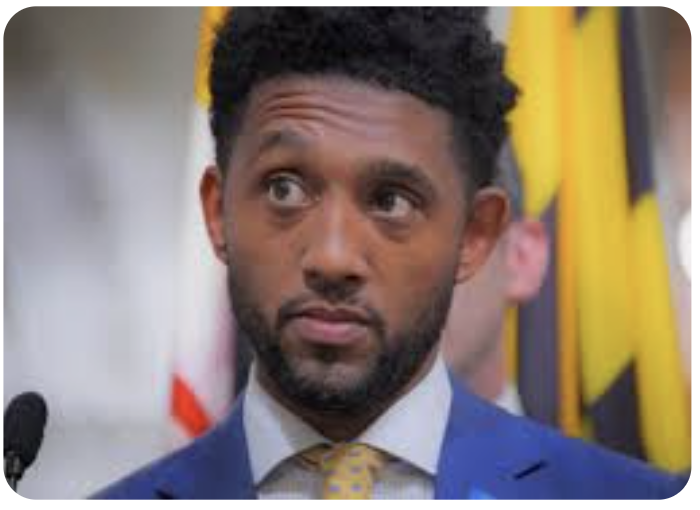
Mayor of Baltimore spent nearly $1M on lavish perks like crab feasts and tabs at Ravens football games for staffers

The Baltimore mayor’s office spent more than $890,000 on lavish meals and parties — including crab feasts, catered “farewell” bashes and massive tabs at Ravens football games, according to a report Wednesday.

Mayor Brandon Scott’s administration blew taxpayer cash on over-the-top perks for staffers — including $52,589 on grub in the Mayoral Suite at Ravens and Orioles games — in a gross violation of the city’s “public funds” rules, according to baltimorebrew.com.

One of the elaborate meals was served at a $3,636 farewell “office party” for Scott’s former campaign manager Marvin James, which featured a $324 balloon arch, a $217 cake and a $2,600 catered spread with crab balls and grilled salmon in March 2025, according to the outlet.

James, however, didn’t actually leave City Hall and is still on the payroll as the mayor’s $190,000-plus-a-year senior adviser.

In total, the office spent $801,839 on meals and catering, $42,691 on floral arrangements and funeral services, and $45,646 “unreconciled” expenses between July 2022 and November 2025, according to the outlet.

The administration spent lavishly on food such as banana bread pudding, pizza, bottomless freshly popped popcorn and “a fresh fruit tray available to everyone in the mayor’s suite daily,” according to the outlet, which cited a report from Inspector General Isabel Mercedes Cumming, the city’s waste and fraud watchdog.

It also forked over more than $10,000 for flowers, which city regulations state shouldn’t be purchased “for any reason,” the report states.

The investigation found other extravagant so-called “P-Card” — aka procurement card — expenses related to birthday celebrations, baby showers and flowers “for a selected few, including executive leadership,” according to the report.

At least 336 of the “P-card” transactions violated city rules, which require a waiver to use public funds “for any social functions or activities” without the express approval of the Bureau of Purchasing, Cumming notes in the report.

“[The watchdog] found that taxpayer funds were used for floral purchases for events, employee celebrations, recognition, baby arrivals, funerals bereavement and condolence,” the report states. 

When the purchasing bureau denied the mayor’s office’s request to use taxpayer money to host an annual crab feast, the mayor’s office went to finance director Michael Mocksten, who approved the event, according to the report. 

The administration has been trying over the past month to restrict Cumming’s access to city financial and personnel records — which would prevent her from exposing over-the-top spending, she told the outlet.

The mayor’s chief of staff, JD Merrill, defended the food and drink spending as “legitimate expenses that support efficient and necessary operations of city government,” according to the outlet.

“The mayor’s office regularly takes on the responsibility for providing food for both its own employees and employees of other city agencies,” he said.

He brushed off the $167,455 in unapproved “P-card” transactions as the equivalent of “an estimated 0.19% of the mayor’s office budget over the time period reviewed” and said a new position is being created that’s “focused on internal fiscal oversight.”

Scott, who has been described as a progressive, has been praised for his approach to crime by New York Mayor Zohran Mamdani.

Totally unrelated, I’m sure, but Baltimore, whose schools which rank among the very lowest of performers in the country, has the 5th highest school administrative costs in the nation. “It’s not a financial problem, it’s a political problem.”


Governor cuts $3.8 million from a $55.8 billion budget: his fellow Democrats howl in anger and despair: “The cupboard is bare — there’s not a penny left to cut.”

Lamont vetoes $3.8M in lawmaker-approved spending, escalating feuding with Connecticut Democrats

The line-item vetoes are the latest development in the ongoing conflict between Lamont and Democrats in the legislature over earmark spending reforms. Lamont recommended across-the-board reductions of 20% to all legislatively directed funds in state agency budgets in the revised $28.7 billion budget for the upcoming 2027 fiscal year he proposed to the legislature on Feb. 4. The recommendations were not well-received by Democrats in the legislature.

A few days earlier, the Lamont administration issued a directive establishing policies and procedures for executive branch agencies to administer legislatively directed funds. The governor subsequently proposed legislation to codify these rules in state statute, and Lamont wanted to incorporate those proposals into the emergency-certified bill only to be rebuffed.

The Government Oversight Committee heard testimony the day before the House considered the emergency bill on a governor’s bill that proposes to require the General Assembly to enact legislation that identifies organizations receiving the earmarked funds, describes how the funds would be used and specifies whether funds could be directed to subgrantees or subcontractors.

The bill would exclude funding for disaster or emergency responses, funding directed to state agencies or municipalities, funding for formula-driven or competitive grant awards, or funding authorized by the State Bond Commission. 

The legislation also would add an annual reporting requirement of the recipients of legislatively directed funds, the administering state agency and the state Office of Policy and Management, the governor's budget office said.

Lamont requested that his recommendations be enacted into law; not a chance in hell.

In a joint statement, Senate President Martin M. Looney, D-New Haven, and Senate Majority Leader Bob Duff, D-Norwalk, said the governor’s vetoes are deeply disappointing and “a troubling sign for the trust that must underpin our ability to pass legislation this session.”

Democrats have enough House and Senate members to override the gubernatorial vetoes. The Democrats have 102 members in the 151-seat House and 25 members in the 36-seat Senate. It takes 101 House votes and 24 Senate votes to overturn a veto.

A voice crying in the wilderness

Senate Minority Leader Stephen G. Harding, R-Brookfield, said in a statement Democrats were unable to explain the purposes for the earmark spending Lamont vetoed during last week’s legislative debates and called the legislature’s majority party “an arrogant supermajority.”

Harding said voters need to elect more Republicans to the legislature to shut down what House and Senate Republicans are calling the “candy store” that Democrats have created to support favored organizations and projects, and reward Democratic legislators.

There’s not a chance in hell of that happening either.

Accountability? Not on your life.”

What the new oversight rules would (temporarily) require

  • The first step under the latest guidance following the audit directs executive branch agencies to request legislative leadership to provide in writing the legislative intent of the budget earmarks, including whether subgrants are intended or permitted.

  • The required documentation includes legal names and addresses of prime recipients and subrecipients, among other information. Recipients and subrecipients must certify they have not been suspended or disbarred from any federal, state, local or tribal programs, awards, contracts, grants or procurements within the last three years, the announcement said.

  • They must also disclose any criminal convictions or civil judgments in connection with obtaining, attempting to obtain or performing a transaction or contract with any governmental entity, according to the announcement. That would include a violation of federal or state antitrust laws or commission of embezzlement, theft, forgery, bribery, falsification or destruction of records.

  • The guidelines advise executive branch agencies to ask prime recipients or subrecipients whether the state has terminated or suspended a contract with the organization over breaches or concerns about the health or welfare of clients. They should also inquire whether the organization is the subject of any investigation by any local, state or federal agency. In addition, state agencies should ask whether the organization has ever declared bankruptcy, owes any local, state or federal taxes, or is in default under any current loan agreement, according to the announcement.

Even this modest proposal — gee, revealing the names and addresses of the people with their hands in their representatives’ pockets? How rude! — would exempt one of the Democrats’ favorite slush funds, the “minority set asides” reserved until last year solely for Blacks and Puerto Rican crooks, but expanded at the demand of two other racial groups, Asians and Pacific Islanders.

The latest oversight directives exclude budget earmarks distributed through the legislative and judicial branches because of the constitutional separation of powers, OPM spokesman Chris Collibee said.

For example, the updated guidelines do not apply to $25.6 million in legislative earmarks included in the current two-year, $55.8 billion state budget to support youth programs because the judicial branch awards those funds. Members of the legislature’s Black and Puerto Rican Caucus and the more recently established Asian American and Pacific Islander Issues Caucus selected the recipients.

Still think a 5-10% “wealth tax” can’t happen here?

Say, here's a shocker

Solar Scam: How California Turned “Green Energy” Into a Slush Fund for Activism, Rate Hikes, and Tree-Cutting

New report alleges $900M taken from solar panel program and pumped into Democratic Party voting activism.

CAL DOGE, California’s Department of Government Efficiency initiative led by Republican gubernatorial candidate Steve Hilton, released a report alleging that $928 million from the Solar on Multifamily Affordable Housing (SOMAH) program—funded by gas taxes and electric bills—has been diverted to Democratic voter registration and leftist activism instead of solar installations.

CAL DOGE said that according to SOMAH’s latest report they have completed only 269 projects for a total of $72 million.

…The report lists what CAL DOGE called the partner organizations of SOMAH, who were “double dipping on public funds to provide solar panels on apartment buildings.”

It continues: “But actually are building a left-wing activist machine in economically disadvantaged neighborhoods across the state.”

Meanwhile, the California solar power industry is facing challenges. Changes to the Net Energy Metering Program in 2023 reduced the amount of money solar-power homeowners received for energy they sold back to the grid by 75%.

Demand for rooftop solar fell…unexpectedly. And there has been no rebound.

More than 17,000 solar jobs were lost according to CALSSA, with demand falling 80% post-implementation and numerous companies filing for bankruptcy.

The solar market contracted 31% year-over-year in 2024, according to the Solar Energy Industries Association (SEIA). This decline threatens California’s mandate to achieve 100% carbon-free electric energy by 2045, a goal that requires solar energy to account for more than half of that generation.

“We haven’t seen a rebound in the market two years after NEM 3.0 went into effect, so we really need to increase the rate of rooftop solar installation,” Brad Heavner, executive director of the California Solar & Storage Association (CALSSA), said in an interview with techxplore after the ruling. “Something has to happen and the environment just got even more challenging.”

To round out the news describing the total disaster related to California’s solar energy programs, there is a proposal for the Coyote Creek Agrivoltaic Ranch solar project in eastern Sacramento County that is causing much controversy in the impacted community.

There, developers plan to remove about 3,493 mostly blue oak and other native trees across roughly 3,000 acres of oak woodlands, grasslands, and vernal pools… all in the name of “green energy”.

When politicians hide partisan organizing and bloated bureaucracy behind the feel‑good language of “green energy,” they don’t promote solar power, but weaponize it by raiding funds slated for installations to use for leftist activism, yanking away promised rooftop savings with mid‑stream rule changes, and even clear‑cutting native oak woodlands for industrial solar fields.

All the confiscated wealth in the world won’t be sufficient to meet the greed of politicians and their constituents, nor will it produce anything of value.

The future awaits

“Throughout history, poverty is the normal condition of man. Advances which permit this norm to be exceeded — here and there, now and then — are the work of an extremely small minority, frequently despised, often condemned, and almost always opposed by all right-thinking people. Whenever this tiny minority is kept from creating, or (as sometimes happens) is driven out of a society, the people then slip back into abject poverty.

This is known as "bad luck.”

Robert Heinlein

Democrats want billionaires to foot the bill for $3,000 payouts to American households

(And that’s just the beginning)

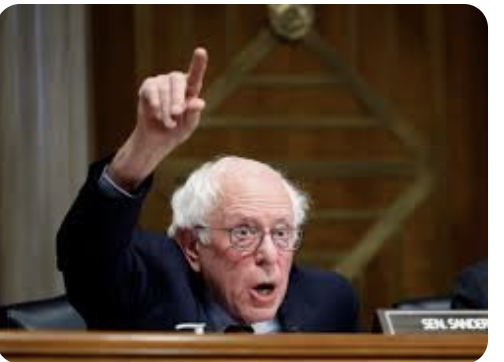
Progressive lawmakers Sen. Bernie Sanders, I-Vt., and Rep. Ro Khanna, D-Calif., are targeting the billionaire class with massive new tax proposal that seeks to seize trillions from the nation's wealthiest individuals to fund a sweeping government spending spree.

Announced Monday, the "Make Billionaires Pay Their Fair Share Act" targets 938 individuals, including titans like Elon Musk and Jeff Bezos, for an estimated $4.4 trillion over the next decade — a move Sanders claims is necessary to fix a "corrupt tax code" that has seen wealth redistributed from the bottom 90% to the top 1%.

"At a time of unprecedented income and wealth inequality, this legislation demands that the billionaire class in America finally pay their fair share of taxes so that we can create an economy that works for all of us, not just the 1%," Sanders said in a press release. "We can no longer tolerate a corrupt tax code that enables billionaires to pay a lower tax rate than the average worker."

"We have a deep economic divide in this country. On one side, places like Silicon Valley are generating extreme wealth. On the other side, families are struggling to cover the cost of health care, housing, and basic needs. We can tax billionaires a modest amount to make sure everyone has a fair chance while keeping our innovative engine," Khanna said in the same press release.

The core of the proposal is a direct 5% annual wealth tax on assets, not just income, exceeding $1 billion. Sanders and Khanna project the bill to raise $4.4 trillion in revenue over 10 years.

The measure would direct new tax revenue toward one-time $3,000 payments for individuals in households earning $150,000 or less, meaning a family of four could receive up to $12,000.

The legislation cites several high-profile figures to illustrate its reach: Elon Musk would owe $42 billion, Mark Zuckerberg could pay $11 billion and Jeff Bezos would owe an approximate $11 billion.

That’s a one-time payout of confiscated money; after that, the assets will continue to be seized and sucked into Washington to be distributed by the politicians to their friends to spend wisely and well. (Like, for example, NYC’s new “free” child care program @ $36,500 per head)

The $4.4 trillion in estimated revenue is earmarked for a massive expansion of the federal safety net and public infrastructure, including a more than $1 trillion Medicare and Medicaid expansion, building affordable homes, capping childcare costs and establishing a minimum $60,000 salary for public school teachers.

"To accept this revenue estimate as credible, you must believe that a 5% annual wealth tax on billionaires—on their investments and their closely-held businesses—will have no economic ramifications worth mentioning," Tax Foundation senior fellow Jared Walczak wrote in a post on X.

The bill won’t pass this year, but when the Democrats regain control of the country? Count on it; they are the now the party of the radical far-left, and this idea will be popular not only with their base, but chumps everywhere: the same plan in California is expected to pass easily this fall, and that will embolden the new socialist party to bring it national.

The media has already begun the campaign, and Ira Stroll at Free Beacon offers a taste of how it’s starting:

Almost as if coordinated, the New York Times unleashed a four-byline project about what it called “America’s New Gilded Age.” The Times story, which was published as a news article, hit nearly the same theme as the Sanders and Khanna press release. “One of the central quandaries the country now faces is how to govern in an era when such vast wealth both controls a large part of the economy and is increasingly used to access political power,” said—OK, you guess, was that from the Times article or the Sanders and Khanna press release?

TDS strikes hard (Updated)

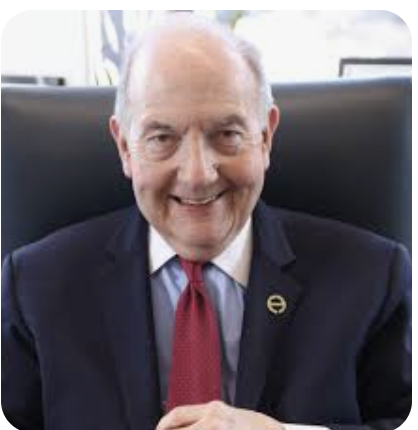
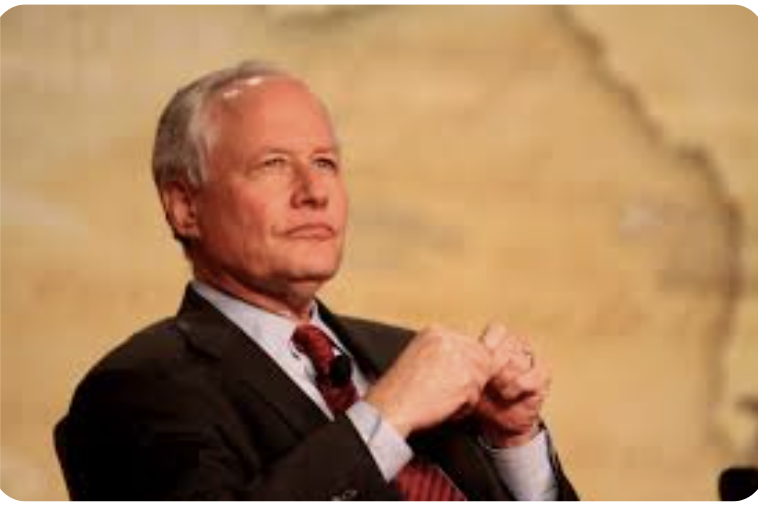
Neocon Bill Kristol, once a conservative, has been so addled by his frothing-at-the-mouth Trump hatred that he’s gone entirely left-wing (see below), and now he can’t even hold his own thoughts and positions in his head for more than a few days, if at all.

Sad.

Here's what Kristol said:

Bill Kristol: I think a lot of the younger Democrats are quite impressive. Uh, I wish—

Dhriti Jagadish: —Any names [in Democratic politics] stand out to you?

Bill Kristol: Yeah, well, I’d say both. I live in Virginia. So, Abigail Spanberger, who I think will win in November, is really excellent. It might be Sherrill, actually, in New Jersey, excellent. And so, part of my core praise for Mamdani has been that, you know what, if we elect three Democrats who win in November—the three big races, really—and it’s Spanberger or Sherrill and Mamdani? That’s okay.

You know, New York City gets to have a left-wing mayor. It’s not the first time, and it’s different from the rest of the country. I wish they were a little less, you know, tolerant of certain things—on Israel, and so, against Israel and all that. But some of the economic stuff, I think, is just silly, but I don’t think it’s going to matter.

Shiv Parihar: Do you think you would vote for him [Mamdani] if you were voting in New York? 

Bill Kristol: You know, I think so. I really can't think—the idea of going back to Cuomo is just, I think, ridiculous. I think if it had been the first round, I would’ve voted for someone else and maybe wouldn't have even ranked Mamdani and would've had other people who were more centrist, liberal types. 

UPDATE: as it turns out, quite a number of political figures are having difficulty with their memory. Here’s Dick, “Stolen Valor” Blumenthal, breaking wind his silence; he probably should have stayed in bed (by the way, someone in the post below notes that “war of choice” is the new buzzword for this crowd — he’s right. How weird!)