Sometimes; not often, but every once in a while, stubbornly refusing to drop your price and waiting for that "it only takes one" buyer to appear will pay off

78 Khakum Wood Road was listed at $6.3 million in May 2025 and stayed at that price for 251 days until the listing was cancelled on January 21 of this year. Brought back by the same broker at the same price on April 26, it found a buyer (from Riverside) in 9 days, and closed today at $6.7 million.

I'm inclined to dump this into the same recycling bin as the plastic straw feel-good charade — food waste is 75% water — but what the heck

Recycling Greenwich tax monies paid to Hartford, or “return of stolen money” — less suitable government “transaction costs”

Starting Thursday, July 9, the Town of Greenwich will expand the municipal Scraps to Soil program with the addition of smart units at Binney Park and Cos Cob Park, an innovative solution to make food scrap recycling easier and more convenient for residents.

The secure, app-accessed smart units allow residents to drop off food scraps 24/7, keeping this valuable resource out of the trash and diverting it from incineration to nutrient rich compost. Food scraps are the most significant component in Greenwich’s waste stream, accounting for over 22% of trash. By participating in this free, voluntary program, residents help reduce waste, prevent pollution and create a more sustainable community

….

Greenwich is proud to make food scrap recycling more accessible for residents,” First Selectman Fred Camillo said in a press release from the Conservation Commission. “Expanding the Scraps to Soil program with new smart bins underscores our Town’s commitment to sustainability, and we are grateful to see it grow over the past few years thanks to our wonderful volunteers.”

Funding for the smart bins was provided by the Materials Management
Infrastructure Grant program administered by the Connecticut Department of Energy and Environmental Protection (DEEP) [
a $15,000,000, two year distribution of CT taxpayers’ money to CT towns, ended in 2024 —Ed] . Competition for the grant was strong, with 20 applications submitted requesting approximately $30 million in funding [for $15 million available], and Greenwich was one of only nine applicants to receive an award.

Since its inception in June 2020, the Scraps to Soil drop-off program has diverted over 780,000 pounds [585,000 water, 195,000 actual waste], or 390 [97.5] tons, of organic material.”

Call me skeptical, but these sound like bogus numbers pulled out of someone in Hartford’s ample rear end:

“According to ReFED’s Impact Calculator, Greenwich’s emissions have been reduced by 1,420.24 metric tons of CO2e, equivalent to 3.61 million miles driven by an average gas-powered passenger vehicle, or almost 145 times around the globe.”

Garbage in, garbage out.

Land listing in Old Greenwich

say goodbye, house

67 Benjamin Street, 1942 construction on an oversized lot of 0.39-acres, listed at $2.995 million. Seems steep to me, but then again, we’re living in the crazy years, so who knows?

With some hard bargaining, you can probably persuade the owner/builder to pull the window a/c units and The Zebra from the dumpster and let you take them home with you, ready for reuse in your new mansion.

To be fair, it hasn’t been about student achievement for decades (if ever); the system is run by and for union teachers

Staggering 900 NYC public schools failing students amid grade inflation, lax accountability

Failure in the city’s public education system has become “normalized” — and even bolstered by grade inflation and fixing — with nearly half of schools consistently failing their students, a bombshell new report found.

The sweeping analysis, conducted by the Success Academy Charter Schools network, found that in those 906 public schools, fewer than half of students passed math, reading, or both, on state exams last year.

In total, a staggering 43% of the system’s approximately 912,000 students are in these failing schools, according to the shocking report released Tuesday.

About a third of the 906 schools have appeared on state “accountability” lists since 2012, and some have been designated as failures for decades, the analysis found.

Instead of attacking the 5-alarm fire, the stinging indictment claims city and state policies have only worsened the situation by failing to address the scandal or trying to hide it.

“These are not accidents. They are the product of a system that has chosen, year after year, to protect itself rather than serve its students,” the report, titled, “By Any Honest Measure,” said.

“Imagine a hospital where more than half of patients died from routine procedures. A fire department that failed to respond to more than half its calls. A municipal water utility that delivered contaminated water to more than half its residents, or air traffic controllers whose lack of oversight regularly resulted in massive casualties. 

“No other public institution would be permitted to operate in this way.”

But the level of failure in the nation’s largest public school system “has been normalized — and, worse, systematically obscured.”

Success Academy head, Eva Moskowitz, said the report marked the most extensive review to date of consistently low-performing schools.

The report also accused New York policy makers and educators of actually rewarding failure — including by pumping more funds into low-performing schools with dwindling enrollment.

New York City spent $40 billion on public education in 2024 — $36,293 per pupil, double the national average of $17,619.

Lawmakers pump more money into the failing schools, to more than $40,000 per student, the report found.

According to the analysis, 34% of elementary students attend failing schools, with that percentage going up to 49% for middle schoolers and 62% for high schoolers, based on test scores.

In many cases, students are routed from a failing elementary school to a failing middle school to a failing high school.

The problem would be worse if not for grade inflation — and the accountability system for both students and teachers is a joke, the analysis charged.

The student grading policy measures effort, participation, and attendance — but excludes performance on the state’s standardized math and English exams. 

Using state test scores as part of a student’s grade was scrapped by the Panel for Educational Policy under then-Mayor Bill de Blasio.

It means nearly all students who score poorly on state exams end up getting good grades and are promoted.

Meanwhile, state policy forbids using student test scores to evaluate teachers. Therefore, nearly all teachers receive satisfactory ratings.

The report noted: “98% of teachers [rated] effective. 43% of students failing. The math doesn’t add up.”

The state Education Department also comes under severe criticism — for repeatedly lowering benchmarks to boost passing rates on its math and reading exams, the report said.

The manipulation is exposed when students score much lower on the federal government’s National Assessment of Educational Progress exams, considered the gold standard for testing.

I’ve been accused of being “heartless” and “lacking compassion” because of my conservative views, yet what’s more heartless than dooming generations of children to a life of illiteracy and poverty? Because that’s what liberal dogma and teachers unions have done, in New York, Chicago, Baltimore, Hartford, ….

Recently, an acquaintance insisted to me that we spent more on uncovering medicaid fraud than we saved. "How do you know that,” I asked, “when every day, more is discovered?” He had no answer.

“But, but … Trump!”

Woman who wrote book on healthcare fraud sentenced in $136 million Medicare scheme

The author of multiple books on healthcare compliance was sentenced Tuesday to federal prison for fraudulently billing Medicare as part of a $136 million scheme that spanned several U.S. states, the Washington Examiner has learned.

Jean Wilson, 54, received a 10-year prison sentence, followed by three years of supervised release, in the U.S. District Court for the District of New Jersey for her role in the medical billing scam involving illegal kickbacks and massive quantities of phony prescriptions.

According to the superseding indictment, Wilson owned and operated two telehealth companies that paid medical providers to place bulk orders of orthotic devices and prescription drugs for Medicare patients who did not need the braces or medication. Prosecutors said Wilson, a licensed nurse, signed many of the prescriptions herself.

Elihu Yale, 1701: "Our students will come not to praise the classics, but to bury them". After 325 years, mission accomplished.

(Not a single Greek actor: male, female, shemale, or it, was cast in this film.)

Kenyan “Helen of Troy” actress slams Homer for ignoring “female perspective” in the legendary war her character caused

When you read the 'Iliad' and 'The Odyssey,' very little time is spent from the perspective of the women. It's told from a very masculine side of things.

"The Odyssey" [film] takes a lot of time to really consider things from the female perspective. And so we see in Helen and Clytemnestra how this war has affected them both, and they respond to it very differently because of their experience.

This actress has a master's degree in fine arts from Yale but had never heard of "The Odyssey" until Chris Nolan asked her to play Helen of Troy.

It shows.

More:

Kenyan actress hired to play Helen of Troy had never heard of "The Odyssey" (she has a master's from Yale)

That is an excerpt of an interview with Kenyan actress Lupita Nyong'o and Elle magazine, published May 21st in the Year of Our Lord 2026.

When her agents informed her that Nolan wanted to see her for a role, she admits that she 'went in quite blind.' During their meeting, he gave her the script, and she read it in one sitting. She was immediately all in. 'I mean, I was saying yes even before he told me what role it was.' Once signed on, she was excited to dive into the world of Homer. She had performed a few monologues from Greek mythology in drama school at Yale, but was unfamiliar with the source material.

'I really had no idea what The Odyssey was,' she says. 'I was like, "Oh, snap, I don't know the first thing about this.'"

  • Diversity hire? ✅

  • Totally unprepared for the role? ✅

  • Graduated from Yale without ever encountering a book that most people study in 9th grade English class? ✅

How does one graduate with a master's in acting from Yale University without knowing what might be the foundational epic poem of Western literature? One can graduate from an Ivy League school without studying Homer?

But wait, it gets worse.

'I have this film to thank for my Greek mythological education.' And by 'picked up the books,' she really means she read The Odyssey and listened to The Iliad, and for good reason. 'Audra McDonald reads it,' she says by way of explanation, in between sips of hot lemon water. 'It is the best audiobook I have ever listened to.'

Audra McDonald is an actress who reads the 2017 feminist translation of "The Odyssey" by Emily Wilson that inserts phrases whole-cloth into the original Greek. Nolan is said to have liked her translation, but it has been panned by every respectable historian, dramatist, and linguist on the planet. Wilson portrays Odysseus, the hero, as "problematic," following the modern theme of painting the male heroes of film and literature as sad, broken, and bitter (Luke Skywalker, Indiana Jones, etc.)

Here's Wilson explaining how she took "misogyny" out of her translation and made sure to include "intersectional" (Marxist) analysis to smooth out "gender inequalities":

This is exactly my suspicion: the Democrats learned ahead of time what was coming Platner's way and leaked it themselves to get him off the ballot in time to field a replacement

Let he who hasn’t shown up drunk at an ex-girlfriend’s house and raped her cast the first ballot

Now that we've peeked at Easton, let's get back to more reasonable Greenwich prices. Some people ask, "why not?", others ask "why?"

60 Benjamin Street, Old Greenwich, $6.850 asked, $7.250 received (!)

1 Bramble Lane, Riverside, asked $ 5.995 million, sold at a discount ($5.9 million) to folks from San Diego Texas

85 Mallard Drive, listed at $3.995 million, sold for $4.350.

112 Sheephill Drive, Riverside. Listed at sold for $4.350 million. NYC (10111 zip) buyers.

David Strom asks and answers the question …

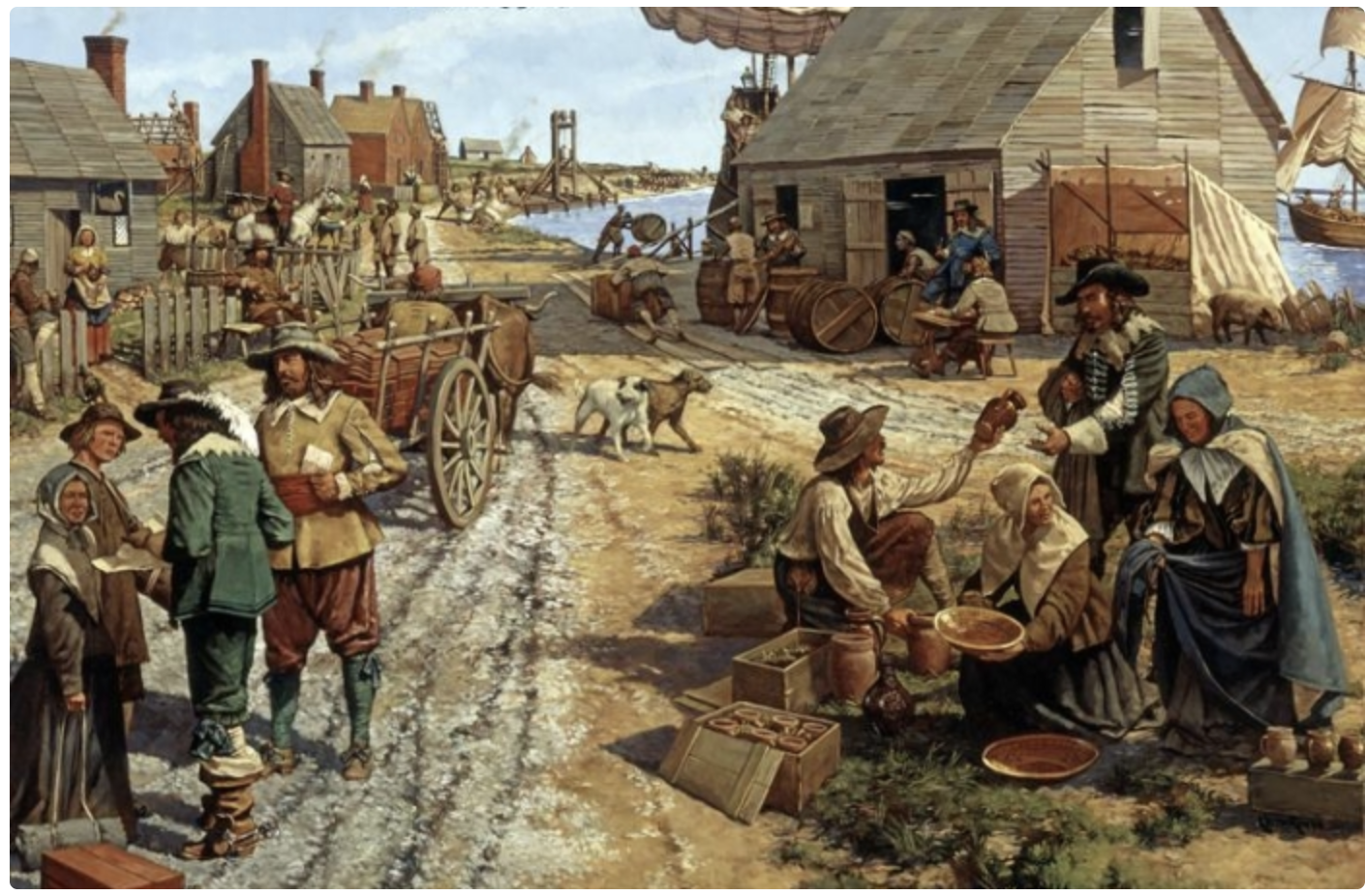
Once they shipped Bernie sanders back to England, the plymouth bay colonists prospered

What Does It Mean to Say Somebody Has a 'Right' to Something?

Most people agree that we don't want to live in a society with people starving and living on the streets. We want everybody to have the basics necessary to live. 

But does it make sense to say that people have a "right" to such things? Is it outrageous to demand that able-bodied people work to feed and house themselves?

Many people who call themselves socialists think so. Everybody should have a right to food, clothing, housing, medical care, and all the basics that we expect today. 

…. Socialists always skip the producer. They talk endlessly about consumption as if food grows in grocery stores, homes build themselves, electricity appears by magic, and doctors don't have to work. Every "basic necessity" they demand is someone else's profession, skill, investment, and effort. They speak as though declaring something a right somehow abolishes the need for someone else to create it. It doesn't. If you make consumption the entitlement while treating production as an obligation, you don't eliminate scarcity. You eliminate the incentive to produce.

This claim, though, is based on a fundamentally broken understanding of how those "basics" come to be. None of them merely exist in nature; each of them is the product of somebody's labor, and when you make the claim that everybody has a "right" to them, it is equivalent to saying that they have the right to others' labor. 

Food doesn't just appear. Houses and apartments don't just grow out of the ground. Medical care is not magically produced in the air. All these things are produced, and one reason they are unevenly distributed is that some people and some systems are far better at producing them than others. 

Industrial capitalism is extraordinarily good at producing them—so good, in fact, that the burden for giving them away is relatively small and people are willing to give them away without thinking that much about them. Some of that is out of the goodness of their hearts, and some is just a practical decision based on the fact that we don't want to be stepping over drug addicts who poop in the streets. 

Whatever the reason, it's not that the recipients of others' largesse have a "right" to the labor and efforts of others. And if we rearrange our societies based on the mistaken notion that they do, it turns out the very system that produces all that extra wealth we are generally happy to share collapses.

It's not theoretical that this is the case. Socialism has been tried in many forms and many places*. The Nordic countries, which many socialists wrongly believe are socialist, gave up on the idea back in the 80s and 90s and are now free-market systems (in many cases freer than our own, which has become bogged down with excessive government regulations) with a high level of social insurance. 

One of the reasons why all these countries are working mightily to kick migrants out is that they treat that social insurance as a "right" to state support and thus abuse the system, which is supposed to be for the aged, infirm, and those in temporary distress. When people demand something for free, they are really demanding that others do all the work while they get to consume the product of others' labor. 

This is why communes tend to fall apart. I looked it up, and 90% of all communes fall apart within the first year. Almost none persist for any length of time. There are always makers and takers. 

On a practical level, you can see how perverse the incentives are just by looking at the arguments around SNAP benefits, or all the welfare fraud that we have seen over the past few years. The less people feel that welfare is something to be avoided, the more people abuse the system. 

Telling people they have a "right" to something inevitably means that they have no obligations attached to getting it. 

When some states removed sugary drinks, snacks, cakes, and cookies from eligibility for SNAP benefits, the internet exploded with outrage. Democrats went apoplectic, based on the bizarre notion that it is wrong for taxpayers to have a say in how their money is spent. 

The "basics" aren't manna from heaven. They only exist because people produce them. And there is more than enough to go around, and people are willing to share with others less fortunate, only when you have an economic system that generates a lot of surplus. 

That's capitalism. Before capitalism, every society lived on the edge of famine. Under capitalism, starvation is nonexistent. 

We can argue about the appropriate level of social insurance, who should receive it, and for how long. But once you cross the line into claiming that people have a "right" to the labor of others, you've gone off the rails. 

*We’ve known this since the Pilgrims’ experiment with socialism in 1620-1622

AI Overview:

The Pilgrims arrived in 1620 and were originally required by their English investors to live and farm under a communal system, known as the "common course". This resulted in chronic food shortages, low morale, and near-starvation.

By the spring of 1623, facing another potential famine, Governor William Bradford abandoned the experiment and assigned private parcels of land to each family. This shift in economic incentives drastically increased productivity, and the colony never faced severe food shortages again.

(You can read more on the Pilgrims’ experience here).

“In 1620 Plymouth Plantation was founded with a system of communal property rights. Food and supplies were held in common and then distributed based on equality and need as determined by Plantation officials. People received the same rations whether or not they contributed to producing the food, and residents were forbidden from producing their own food. Governor William Bradford, in his 1647 history, Of Plymouth Plantation, wrote that this system was found to breed much confusion and discontent and retard much employment that would have been to their benefit and comfort. The problem was that young men, that were most able and fit for labour, did repine that they should spend their time and strength to work for other men’s wives and children without any recompense. Because of the poor incentives, little food was produced.”