Should be required reading for all corporate and bureaucratic leaders (and those dreaming of a socialist society), but won’t be: “Think of the risk to our phoney baloney jobs, you fool!”

continued ….

and 6 to 18 months of documentation.

At SpaceX, his new supervisor said "if it works, build it. If it doesn't, change it by Friday." He sat at his desk after the first day and called his wife. He told her he felt like a man who had been swimming with ankle weights for 25 years and someone just cut them off. He could move. He could decide. He could build something in the morning and test it in the afternoon. The constraint that he had accepted as the nature of aerospace engineering turned out to be the nature of bureaucracy.

Within 6 months he had contributed to more design iterations than he had completed in his last 5 years at NASA. Not because he was working harder. Because the time between having an idea and testing the idea collapsed from months to hours. The same brain. The same knowledge. A different operating system. He described a specific moment where he proposed a modification to a Raptor engine component. At NASA, the proposal would have entered a queue. At SpaceX, the modification was machined by the end of the day and tested by the following morning. He watched his idea become a physical object in 18 hours. At NASA, 18 hours would not have been enough to schedule the first meeting to discuss whether to schedule a meeting.

He told an interviewer: "I didn't get smarter when I went to SpaceX. I got faster. The intelligence was always there. The system was in the way."

The difference between SpaceX and NASA is not talent. NASA has extraordinary talent. The difference is the time between a thought and a test. SpaceX compresses it. NASA elongates it. The same engineer produces 10x more at SpaceX than at NASA because the bottleneck was never the engineer. It was the meetings about the meetings about the work.

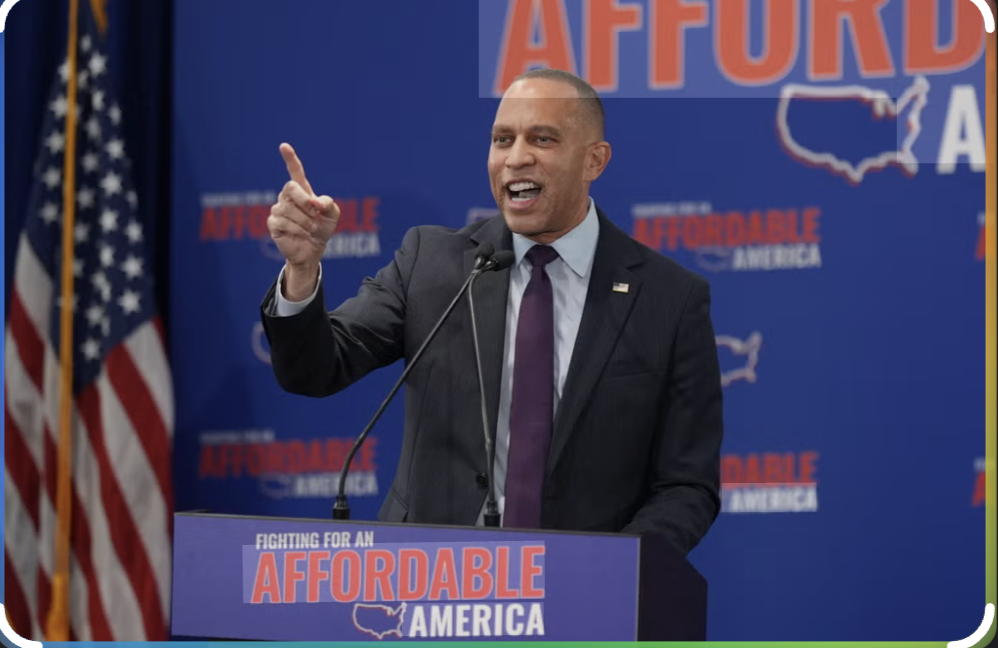
Deficit reduction 101

WASHINGTON, D.C. — After significant bipartisan backlash, President Donald Trump ordered the Pentagon to cancel the livestream of convicted domestic terrorist Nidal Hasan's execution and instead move it over to pay-per-view.

Dubbing the PPV show "FORT HOOD: THE RECKONING," Trump set the price at $79.99, with an undercard featuring five other executions of death row inmates in Texas.

"It's going to be a terrific show, believe me," said Trump. "People were very upset about the livestream, really not happy about it. 'You can't make that sort of thing public,' they said. And I realized they were right, that it really should be pay-per-view. I don't normally change my mind, but it was a fantastic idea to not make it public. It's going to be a huge moneymaker."

Probably the wrong year to have done this

New CT Law Bars Police from Polling Places

Connecticut’s new election law bars police officers from being at or near polling places. Officers may still respond to emergencies, pass through the area, vote, conduct certain authorized law-enforcement activity or be present with permission from the secretary of the state or an election moderator. But without one of those exceptions, the law bars them from being within 250 feet of an election polling site.

Public Act 26-42, signed by Gov. Ned Lamont in May and effective July 1, prohibits law-enforcement officers and those authorized by a state or the federal government to use force, search, detain, or arrest people from remaining within 250 feet of an election site. The restriction applies to Election Day polling places, early-voting locations, same-day registration sites, central ballot-counting locations, recanvass sites and absentee-ballot drop boxes while they are in use.

For Greenwich Police Chief Jim Heavey, that distinction is central. Police departments have long used visible officers at polling locations not only to respond immediately when trouble begins, he said, but to discourage it from happening in the first place.

“The public act was a surprise to the police and kind of insulting, to be honest,” Heavey said in an interview Wednesday.

… . In discussing Greenwich’s approach to elections before the new law, Heavey described the department’s traditional role this way: “We’re going to be present. We’re going to be a visible presence to deter any conflict.” In 2024 he issued a statement prior to the election which assured Greenwich residents that officers would be present at key locations on Election Day to help ensure voters could travel safely to and from polling places.”

Asked whether police could provide that same presence this year without additional authorization, Heavey answered, “No.”

The issue has gained attention as U.S. Rep. Jim Himes has warned about possible violence or intimidation at polling locations during the 2026 midterm elections. Himes said Wednesday that his greatest election-security concern was violence or disruption at a limited number of polling places.

That creates a practical distinction between responding to violence and trying to prevent it.

Heavey said police chiefs met with state officials after the law was enacted. Greenwich then coordinated with the town’s Democratic and Republican registrars of voters and election moderators so officers could continue police work.

“Nobody really has given us the straight answer as to why this law was enacted,” Heavey said.

He also questioned the size of the restricted area. Connecticut prohibits electioneering within 75 feet of the outside entrance to a polling place, while the new law establishes a 250-foot restriction for law enforcement.

Greenwich’s legislative delegation divided along party lines on HB 5001, the election bill containing the restriction.

According to Connecticut General Assembly roll-call records, Democratic state Reps. Hector Arzeno and Steve Meskers voted for the bill when the House passed it 101-49 on April 23. Republican state Rep. Tina Courpas voted against it. Arzeno was also listed as a co-sponsor.

Republican state Sen. Ryan Fazio voted against final passage when the Senate approved the bill 25-11 on May 6. Lamont signed it May 15.

Well butter my buns and call me a biscuit — an objective look at what’s going on with the latest Eversource “scandal” and why in fact it doesn’t matter — your rates are going up anti-disirregardless

I like ryan, and i understand why in a political campaign you take your issues as they’re manufactured, but I’m not convinced on this one

The article that appears in today’s Greenwich Time is by Hearst’s Connecticut political columnist Dan Haar, whose opinions I often disagree with — that’s why they’re called opinions — but generally strike me as fair: Democrat-leaning, for sure, but he presents the fact behind those opinions, allowing the reader to judge their soundness, and that’s rare. His column today delves into and ultimately dismisses an ongoing controversy concerning a supposed too-cozy relationship between Eversource’s CEO and Dan Lamont, and then turns to the nub of the matter:

Why your electric bills are going up regardless of what a CEO and Lamont say or do

Hand-wringing and political intrigue aside, comments by Nolan and Lamont have precisely zero to do with how much you and I will pay for power….

In this world? Joe Nolan and Ned Lamont could be the Hatfields and McCoys or they could be old frat brothers sailing on the Sound every Saturday. It doesn't matter one little bit. 

What matters are these five reasons why Connecticut ratepayers are extremely likely to see their rates rise, not fall: 

  • Eversource is seeking a rate hike averaging 13% for delivery of electricity to households. Politicians of both parties say that's outrageous. Maybe it is. Sure, a sharp pencil can find some bloated costs. But the company hasn't had a regular rate increase since 2018. Yes, it has had some "tracking" increases to cushion the blow of a full rate hike, but guess how much consumer prices have gone up in those eight years. Thirty-three percent, friends. Excessive profits? Connecticut Light & Power, the Eversource electric business in this state, has shown returns of about 7% in recent years. Not much wiggle room there. 

  • Those pent-up storm costs are huge. We the ratepayers must reimburse the company at least $861 million starting next year, and that's just for storms from 2018 to 2023. On Thursday, Eversource appealed a decision by the state Public Utilities Regulatory Authority, PURA, to deny $400 million in interest charges for the years the company has not been paid. Lamont, perhaps sensitive to the idea that he's too chummy with Nolan, issued a terse statement calling the lawsuit "an absurd money grab by Eversource, and we won’t stand for it." Strong language but the law matters more. Win or lose, rates are going up just for the storm payments. And remember, we have three more years of storms to pay for. News alert: Weather isn't getting tamer in the post-climate-change era.

  • Smart meters will cost more than $1 billion and we haven't started installing them yet in Connecticut after years of haggling. Massachusetts reached a nice deal with Eversource years ago and is well underway at a lower price than we will have to cough up. 

  • Eversource sustained credit-rating declines in its yearslong standoff with PURA. That raises the cost of borrowing, not to mention rising interest rates for all of us for deeper reasons. Utilities borrow huge amounts of money to make investments that we later reimburse. And who's paying for the higher interest rates? I don't think you need a hint. 

  • Finally, power supply is the wild card. That's the biggest part of our bills and it is not related to Eversource at all. Anything can happen, but we know the main sources are natural gas and nuclear. Gas prices hit us hard because we have too little pipeline capacity coming into Connecticut; and the 10-year deal we have with Millstone to buy power at 4.99 cents per kilowatt-hour expires in 2029. Plus, demand is rising even without much population growth. My guess on prices: Up. 

Getting back to the Eversource investment squeeze in Connecticut, I was the first to report it in May 2024. Nolan said then that Connecticut would see a decline of $100 million a year for five years, and that didn't even include forgoing special projects like a massive switching station in Cambridge, Mass., which is making that region more efficient. 

Since then, Lamont has remade PURA after the exit of the lightning rod commission chair, Marissa Gillett. And lo and behold, Eversource has announced a new investment schedule for Connecticut that's rising by $50 million a year, from a base of just over $600 million. The faucet is back on, for now. 

It's hard to say what that means for rates and reliability. For example, we don't know whether the power surge in East Hampton this week was affected by Eversource's slowdown in routine upgrades and maintenance. It's like when you delay changing the oil in your car. Did that lead to your sluggish acceleration? Maybe yes, maybe no. 

The good news is that we're back to something closer to a normal relationship between the state and the regulated monopoly power company. Fazio was wrong to criticize a friendly working relationship between Lamont and Nolan, which isn't a bad thing. Call me naive if you want. 

Lamont was wrong to let this crisis fester for more than three years without mediating the standoff between PURA and Eversource, as some of us were suggesting. Whether Jonny Dach, his former chief of staff, would have been the best person for that role, we will never know. 

I’d like to see Haar write a column on the effect the entire Zero Carbon campaign has had on the price of energy itself, from cancelled pipelines and forced expenditures on windmills and solar farms, for instance, but I’ll settle, today, for this good look at why those prices aren’t coming down anytime soon.

Well, Bridgeport

GreenwichWise reports that there’s been an incident (one of many, I’m sure) of ballot fraud in the Circus City. The details are so damning that the accused’s lawyer is certain to pull out that defense lawyers cliche used when representing truly guilty clients caught standing over their murder victim, bloody knife in hand: “My client looks forward to his day in court, where we will establish his innocence.” That’s usually followed by a plea bargain, of course, and that day in court never happens. Not that this latest miscreant murdered anyone, that we know of, but the “looking forward to his day in court” line is a standard phrase imbibed by every defense lawyer in his mother’s milk.

In any event, here’s GreenwichWise:

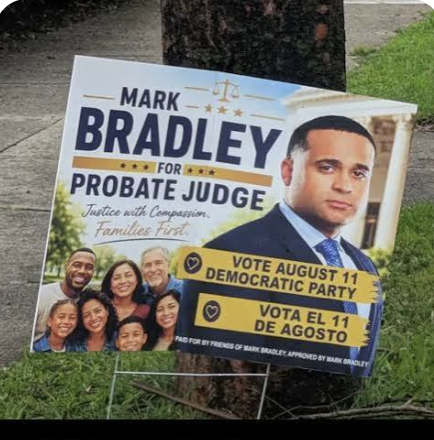
Former Democratic State Senator Dennis A. Bradley Jr. was arrested in connection with a state investigation into Bridgeport’s August 2026 Democratic primary. The primary featured a contested race for Judge of Probate between incumbent Paul Ganim and challenger Mark Bradley—Dennis Bradley's brother.

Charges of Absentee Ballot Fraud

Chief State's Attorney Patrick J. Griffin announced that Bradley was charged with (1) Two counts of Illegal Possession of Absentee Ballots and Envelopes, and (2) Being Present When an Absentee Ballot Applicant Executes an Absentee Ballot.

According to the arrest warrant, the investigation began after a resident lodged a complaint with local police and the State Elections Enforcement Commission (SEEC). Prosecutors allege that Bradley entered a voter's apartment, opened her previously completed absentee ballot, and instructed her on how to alter her vote from Paul Ganim to Mark Bradley. Video footage captured inside the residence was provided to authorities as part of the evidence.

Bradley's legal counsel has stated that Bradley maintains his innocence and denies all charges. This state arrest follows a separate federal case earlier in the year, in which Bradley was convicted on federal wire fraud charges stemming from misuse of public campaign financing funds during his 2018 state senate campaign.

Commenting on the allegations, Greenwich Registrar of Voters Fred DeCaro highlighted the seriousness of the breach: "Imagine someone coming into your house and opening your ballot."

Of course we can, Fred, where've you been?

Didding a little deeper into that reference to Mr. Bradley’s prior conviction, we found these details in CT News Junkie:

Former CT State Senator, Convicted Of Fraud

In March, Bradley was found guilty of conspiring to defraud the state’s program for publicly funding political campaigns during his 2018 run for office.  A federal jury in New Haven convicted him on one count of conspiracy to commit wire fraud and five counts of wire fraud, although a judge later dropped three of the wire fraud counts.

He is scheduled to be sentenced on the fraud convictions Dec. 3.

But here’s the fun part: Bradley is running against the incumbent Probate Judge, Paul Ganim, brother of Joe Ganim. You remember Joe, don’t you?

Bridgeport Mayor Joe Ganim was convicted in March 2003 on 16 federal corruption charges after a two-month trial. [1, 2]

  • Date of Verdict: March 19, 2003

  • Charges (16 counts): Racketeering, racketeering conspiracy, extortion, mail fraud, bribery, conspiracy, and filing false income tax returns.

  • The Scheme: A six-year operation where Ganim and aides (including Paul Pinto and Leonard Grimaldi) shook down city contractors, soliciting and receiving more than $500,000 in cash, meals, entertainment, merchandise, home improvements, and professional services.

  • Prison Sentence: Sentenced to 9 years in prison on July 1, 2003.

  • Time Served: Released in 2010 after serving nearly seven years (partially reduced for completing a drug treatment program).

  • Financial Penalties: Ordered to pay a $150,000 fine and $148,617 in restitution.

Naturally, because Bridgeport’s citizens are just as loyal to ex-con mayors as those in D.C., who returned Marion Barry to his rightful position as Mayor after his release from prison, Ol’ Fightin’ Joe came back:

2015 Return: Ganim ran for mayor again in 2015, apologizing for his past actions and campaigning on the message that everyone deserves a second chance. He won the Democratic primary and the general election with nearly 60% of the vote.

  • Reelections: He won subsequent reelections in 2019 and again won the Democratic primary for another term in September 2023, continuing to lead Connecticut's largest city.

And then, and here’s the ironic part, “Incumbent Mayor Joe Ganim won re-election in Bridgeport, Connecticut, on February 27, 2024, securing another four-year term.”

The race concluded after a court-ordered do-over election following an absentee ballot scandal that invalidated the initial September 2023 primary and subsequent elections.

Now, it’s certainly possible that Joe’s brother Paul, who’s won every election for Probate Judge since 1999, had nothing to do with all this — hell, maybe they don’t even speak to eaach other, I don’t know, but one soon-to-be convicted felon competing against the brother of an already-convicted felon entangled in ballot fraud scandals of his own is cause of a chuckle, perhaps even a hearty guffaw.

If Chris Murphy had the intelligence of a flatworm he'd stay as far away from Florida as he could, but face it, comparing Murphy to a flatworm is unfair to the worm

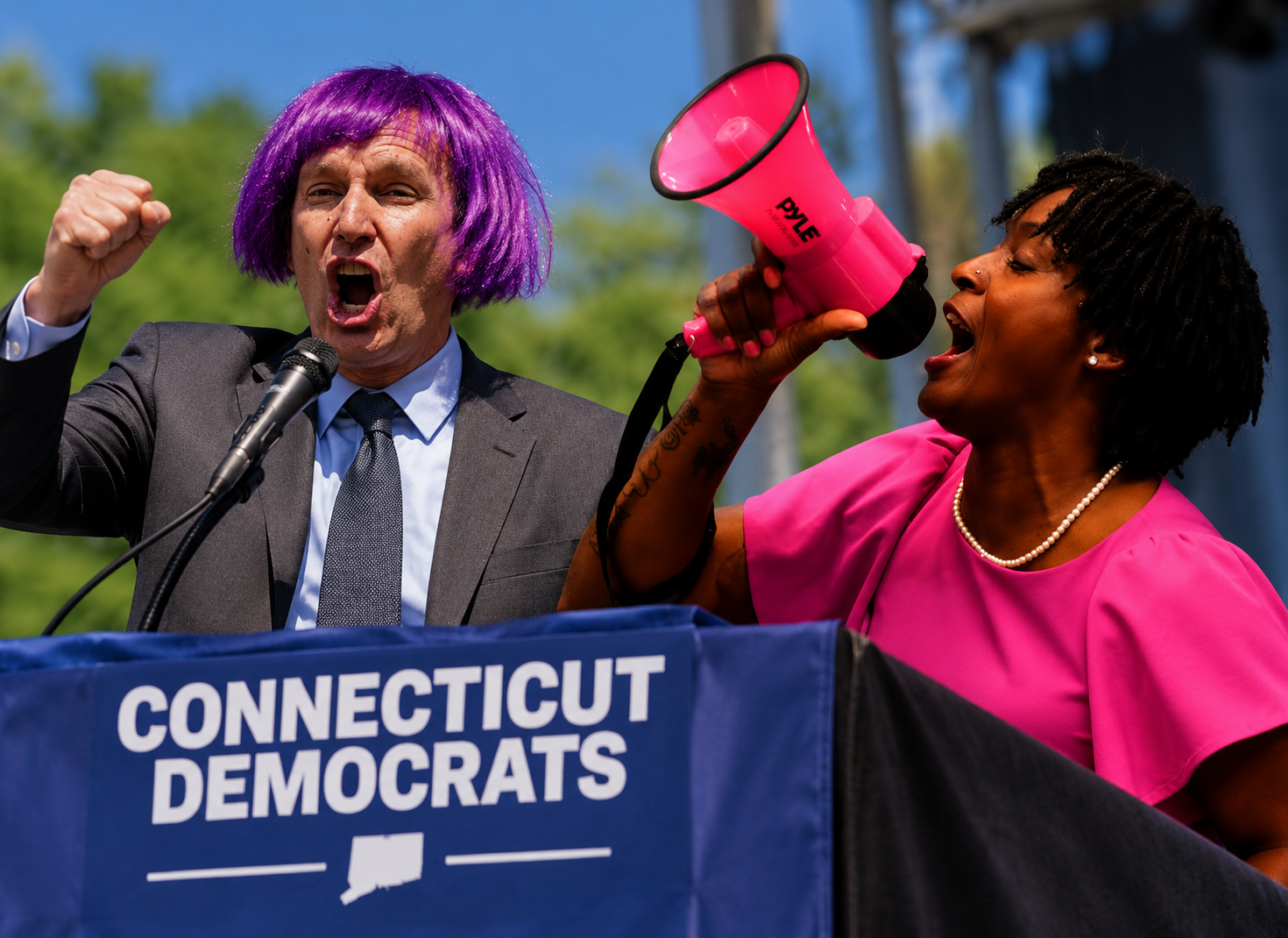
HotAir’s Beege Welborn has a fun look at Angie Nixon, the crazed socia-communist who is the Democrats’ Senatorial candidate in Florida. There’s lot’s of good stuff in the article, all of it entertaining, but it’s long, so we’ll just focus here on Welborn’s coverage of the Nutmeg State’s own lunatic, Chris Murphy’s active participation in Angie’s campaign*.

…. Some nationally recognized Democrats have trickled into the state to brave an appearance or two. AOC finally popped in for a quick rally in the pouring rain to rah-rah with Nixon. 

The most recent was Connecticut Sen. Chris Murphy. Now, granted, he's not the sharpest tack in the box, but he is a whale of an opportunist, so if anyone was going to take a chance on being at Nixon's side when there was a 'moment,' why Murphy is one of the guys you'd pick first for being that stupid.

Murphy put up this lovely green room sort of vignette yesterday - long day, lots of events, look how well I get along with the black lady.

Things did not go well for the Senator after that:

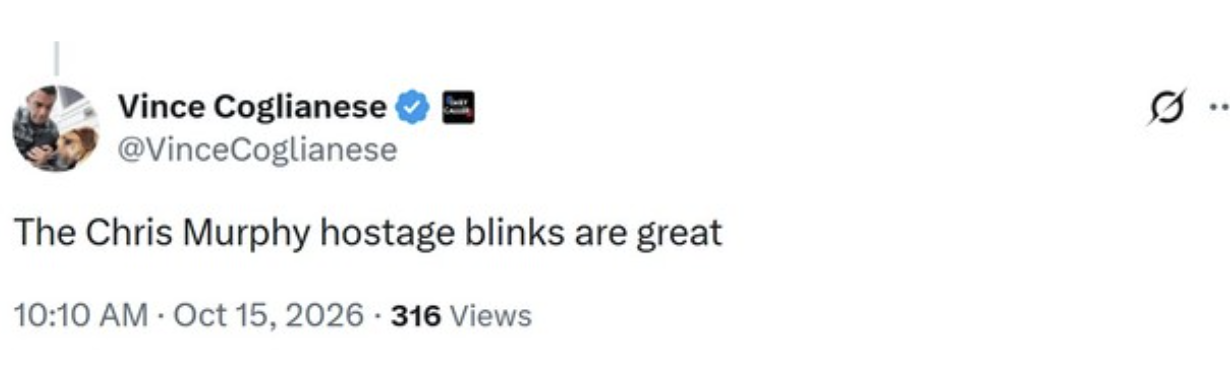
It makes my day watching the insufferable Murphy turn a putrid shade of green.

*Okay, I couldn’t resist showing just one bit of bonus material:

Who, what, where, where, yes; but don't forget the “why”; tip for young reporters (and their editors)

Greenwich Free Press published a decent article on a recent event at Tod’s Point:

Volunteers Work to to Reestablish Eelgrass Growth in Offshore Waters

The trouble is, either the young high school student who wrote the article forgot, or his editor dropped, the most important question that readers will ask: why? Why does this event matter, why should I care?

I spent a lot of time back in the day volunteering with the Shellfish Commission, and, knowing the importance of eelgrass to the marine environment, I was annoyed at this article’s omission. I put aside my irritation when I saw that the reporter was a high school student, but the efforts of these volunteers are important, so I asked ChatGTP to help Jimmy Olsen out:

Eelgrass is one of those unassuming plants whose ecological importance is wildly disproportionate to its appearance. A healthy eelgrass meadow is rather like an underwater forest, nursery, water-filtration system, and shoreline stabilizer rolled into one. And its disappearance from Long Island Sound has had consequences extending well beyond the loss of some underwater greenery.

What makes eelgrass so important?

Eelgrass (Zostera marina) is a true flowering plant, not seaweed. It has roots, produces flowers and seeds, and forms extensive underwater meadows in shallow coastal waters.

Its importance comes from five interrelated functions.

1. It's a nursery for marine life. Young fish, crabs, shrimp, and other creatures find shelter among its blades. The vegetation provides protection from predators and abundant opportunities to feed. Species such as bay scallops are particularly dependent on eelgrass habitat.

2. It supports the marine food web. Tiny organisms grow on the eelgrass blades, attracting small invertebrates, which in turn feed fish and larger predators. Eelgrass also contributes organic material to the food web as it decomposes.

3. It improves water clarity. Its leaves slow currents, allowing suspended particles to settle. Its roots help hold bottom sediments in place, reducing the amount of mud stirred up by waves. Clearer water, in turn, allows more sunlight to reach the plants.

4. It protects shorelines. By reducing wave energy and stabilizing sediment, eelgrass meadows help limit erosion, particularly in sheltered coastal environments.

5. It captures and stores carbon. Like land plants, eelgrass absorbs carbon dioxide through photosynthesis. Some of that carbon can be stored in the sediments beneath its meadows for long periods. This is part of what's known as blue carbon.

The third function is especially interesting because it creates a feedback loop: eelgrass helps keep water clear, and clear water helps eelgrass survive. Conversely, once a meadow disappears, sediment can become more easily disturbed, making it harder for eelgrass to reestablish itself.

What happened to eelgrass in Long Island Sound?

There have been several major causes:

  • Disease: In the early 1930s, an epidemic of eelgrass wasting disease devastated meadows along the Atlantic coast, including Long Island Sound.

  • Nitrogen pollution: Fertilizer runoff, sewage, and other nutrient sources encourage algae to proliferate. These algae block sunlight, sometimes coating eelgrass directly.

  • Warming water: Eelgrass is a cool-water species. Prolonged summer heat can damage or kill it.

  • Coastal development: Dredging, construction, boat traffic, and changes to shorelines have destroyed or degraded suitable habitat.

Invasive algae can also compete with eelgrass, but the evidence points primarily to pollution, warming, disease, and physical disturbance as the major causes of its decline in the Sound.

Why plant seeds instead of letting nature take its course?

This is another fascinating aspect of the problem.

Even where water quality has improved sufficiently for eelgrass to grow again, there may be no nearby eelgrass meadows to supply seeds. The habitat has become suitable, but the plants can't easily recolonize it.

Researchers are experimenting with an ingenious solution: attaching eelgrass seeds to live clams, which carry them down to the seabed and burrow into the sediment. An October 2025 report described plans to deploy 40,000 seed-bearing clams near Duck Island in Westbrook, Connecticut.

The idea is to establish enough healthy plants that they eventually reproduce and maintain the meadow without further human intervention.

So, this blogger’s helpful, if unwanted advice, is to try inserting a “why” paragraph into your next article early on, to tell the reader why he should keep reading. No need for a lengthy essay, something short will do, like this:

Eelgrass meadows are among Long Island Sound's most valuable marine habitats, providing shelter and feeding grounds for young fish, crabs, and shellfish while improving water clarity, stabilizing sediments, and reducing shoreline erosion. Once widespread, these underwater meadows have declined dramatically because of pollution, disease, coastal development, and warming waters. Restoring them could help rebuild the Sound's marine ecosystem.

Class dismissed.

Bid in haste, repent at leisure

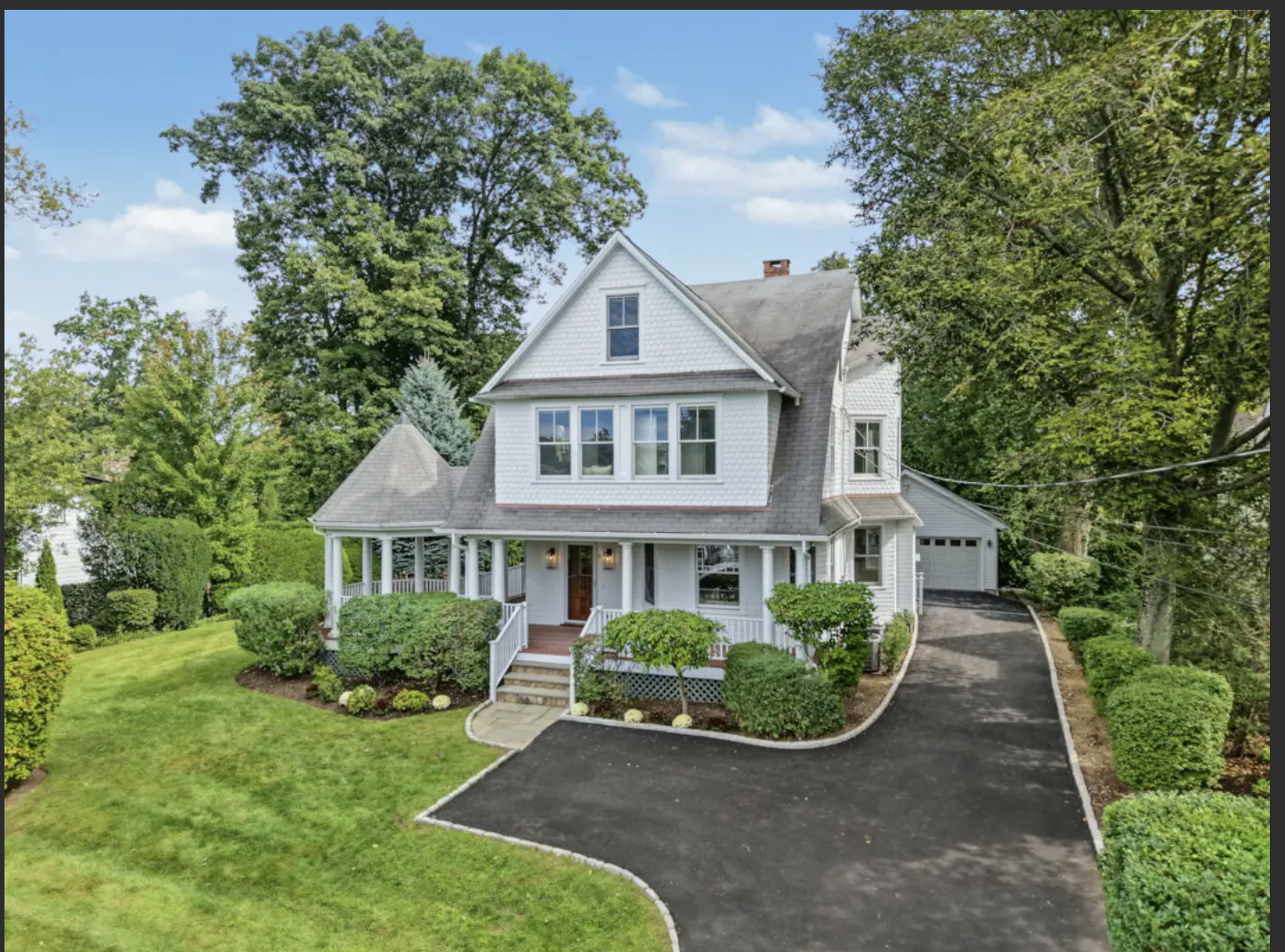
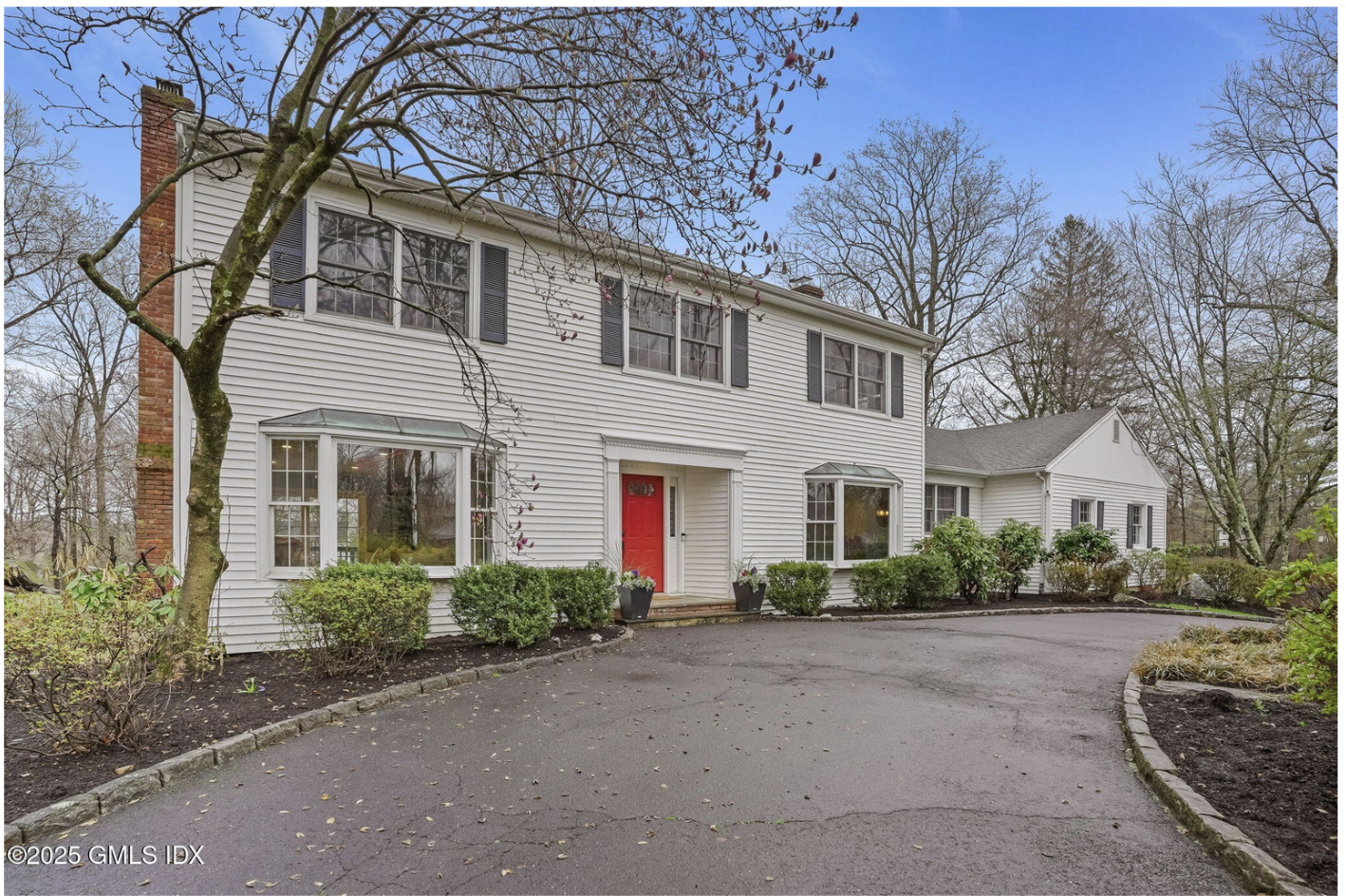
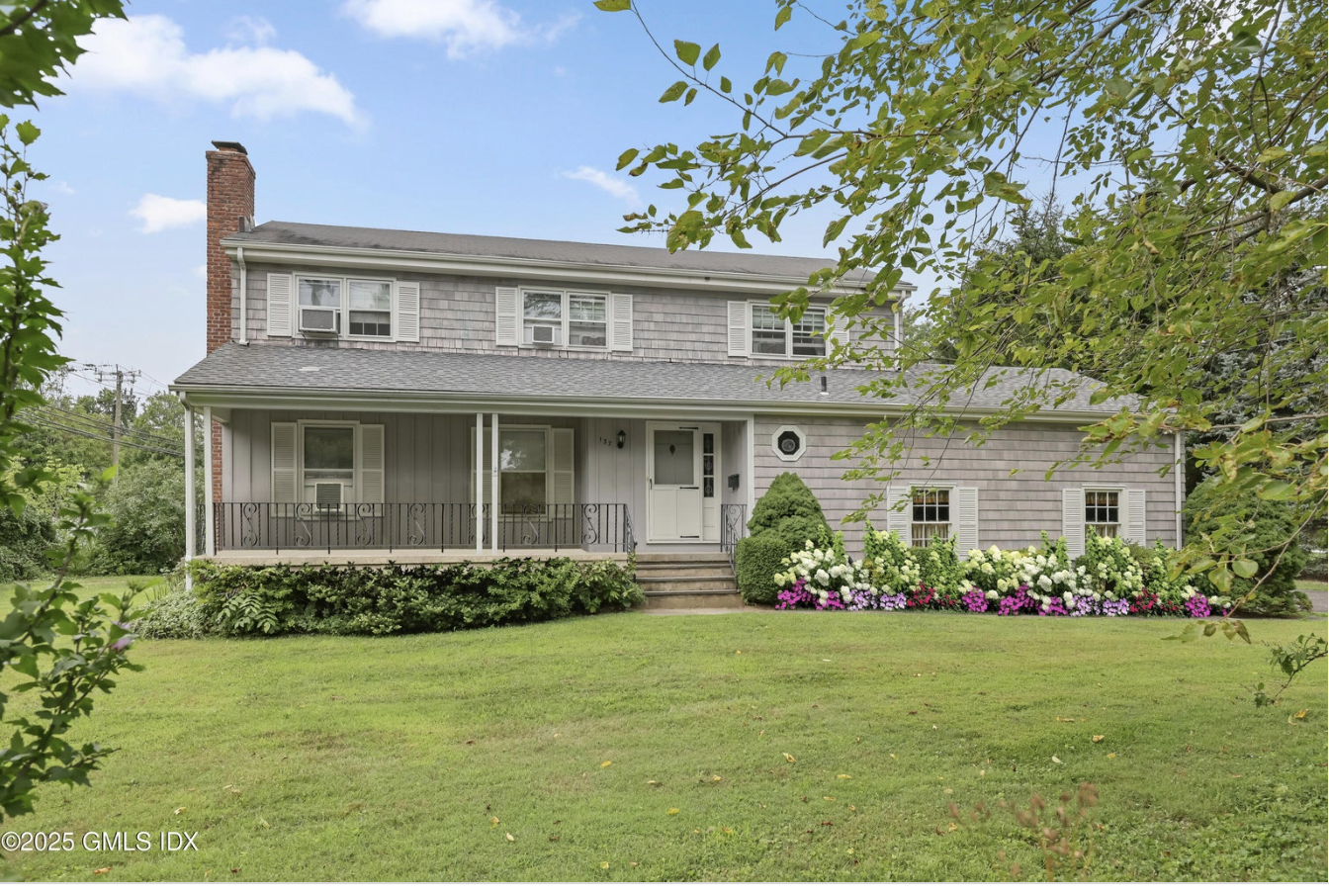
The buyers of 35 Turner Drive, in the “sought-after Calhoun Association” paid $2.7 million on its asking price of $2.395 back in May 2025, offered it for rent at $15,000 in October of that year, settled for $10,000 in March, and placed it back up for sale as land in August 2026 for $3.950 million. There was no noticeable rush of buyers eager to take advantage of this stunning opportunity, and that March rental expires today, so the property’s back, this time as either land or residence, take your pick, each with the same enticing new price of $3.695.

Hey, if you don’t ask, the answer’s always no.