Perhaps he has it backwards, and it's because intelligent, conservative (but I repeat myself) blacks are drawn to integrated churches?

Why should conservative blacks be any different from the tens of thousands of white conservatives who, fed up with lefty politics spewed from the pulpit on Sundays, have left the episcopal church?

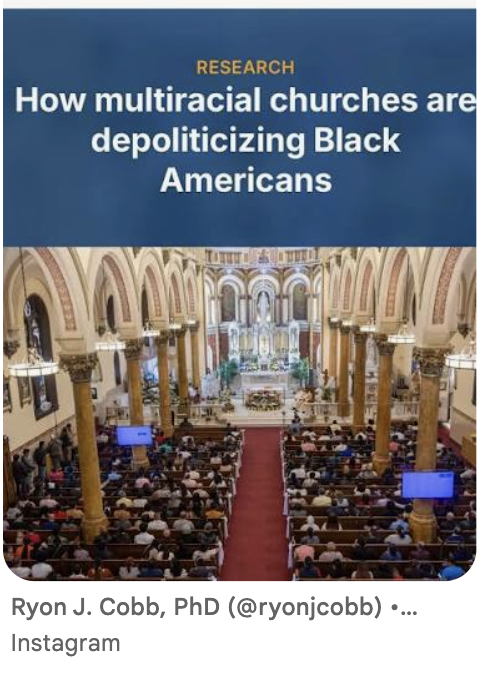
Rutgers scholar [sic] opposes integrated churches because black people may vote Republican

Rutgers Professor Ryon Cobb argues “while 84% of Black adults identify as Democrat or lean Democratic, that number hides what congregational diversity costs Black politics.”

“Among Black nondenominational Protestants, that figure drops to nearly 60%, with one in three calling themselves independents,” Cobb wrote in an essay for the Brookings Institution.

Cobb, an “inclusive excellence in research” scholar considers it a “loss” when black people vote Republican.

He wrote:

Where Black Americans worship shapes their politics, and the data show the cost. The losses run in two directions: White congregations convert Black members to Republicanism, while multiracial congregations pull them out of partisan politics altogether. The mechanism is not diversity itself—it is who holds power inside those congregations. 

He adds in the requisite warning about “white Christian nationalism” and also points out that some black people are less likely to identify with either political party when they attend multiracial congregations.

Professor Cobb does not provide any data to show these people are less likely to vote, follow the news, or attend local city council meetings, but simply asserts they are less politically engaged.

The data show a slight increase in Republican identification when black people attend a multiracial church, and a larger increase when they attend a church considered “white.”

A multiracial church, according to Cobb’s research paper, refers to a church “where no single racial group constituted a majority in leadership or membership.”

Cobb also criticizes black people who adopt “white cultural norms.”

“Multiracial congregations don’t convert—they drain Black members of the political identity Black-majority congregations build,” he writes. “They hold together not by centering integration but by defaulting to white cultural norms.”

Cobbs does not define what “white cultural norms” are in either this essay or the full academic paper.

And this you already guessed:

The professor conducted research for this academic paper with assistance from the federal government.

He disclosed funding from the National Institute on Aging of the National Institutes of Health through a grant which funds a University of Michigan urban issues research center.

Some might find this troubling; we know who they are, just as we know who's cheering

despite their signs, These sheeple are not in the first group

I’m providing a list of all the Democrats: politicians, academics and the “Invisible Ladies of Belle Haven” alike, who have denounced this U.S. Senator. I’ll update it as the names come flooding in:

Not to fret, Gov, I’m sure some of the relatives of the 13 people he killed, or a sufficient number of the 22 wounded survivors will be happy to do the job; they’ll just have to aim low

A brief summary of the now-chairbound (thanks to the bullet that ended his murderous spree) Dr. Hasan can be found here. One small detail Governor Sherrill might want to consider is execution of a female MP by Hasan: as she lay on the floor, wounded, he went over, kicked her gun away and shot her in the head. Should he have propped her up against a wall before executing her?

Ya think?

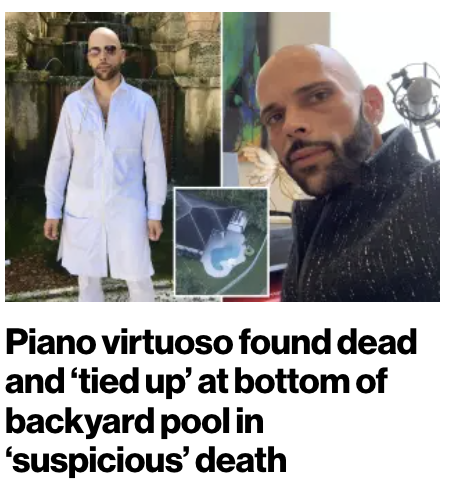
(I didn’t bother reading the article itself —I was just amused at the headline, but here’s the link)

Shades of Andrew Kissel, found dead on his basement floor at 10 Dairy Road, bound and stabbed five times in the back: “Suicide” our GPD declared, thereby continuing its tradition of investigatory prowess: in 1937, our finest also declared the death of a resident to be a suicide after his bullet-riddled body was discovered in his home. An intrepid reporter for the predecessor of Greenwich Time investigated, and wondered how the victim, armed with a six-shot revolver, had managed to reload and shoot himself seven times; also, like poor Mr. Kissel, in the back. So far as I know, that mystery was never solved.

A Tale of Idiot Bars, Sold By An Idiot And Signifying Nothing

I’ve never heard of the guy, either, but he claims to have 6 million followers; he also boasts that he has “Zero sponsors telling me what to say”, so you — well, he, actually — can take everything he says to the bank.

In any event. here he is, with a response from someone with a brain and nothing to sell:

And the response:

continued: …. powered by the electrical grid, sealed in plastic made from petroleum pumped out of the earth by giant drills, boxed, labeled, barcoded, and scanned into an inventory system running on servers cooled by industrial AC units humming 24/7, then loaded onto a DIESEL TRUCK that hauls them down an interstate bulldozed straight through the exact wilderness you want to get lost in (you will not get lost, there is a Buc-ee's), dumped into a sorting hub full of conveyor belts and robotic arms and lasers, thrown onto ANOTHER truck, handed to a mail carrier idling in a van in a cul-de-sac, and dropped on a porch in a cardboard box that gets ripped open in four seconds and tossed in the recycling, all so someone can eat a bar they bought on a phone with a credit card processed in 0.3 seconds by a bank mainframe and then YOU logged on to tell the rest of us technology doesn't make anyone happy, when it's clearly making YOU very happy, and the second someone figures out drone delivery you'll be first in line with your logo on the propellers, so no, you're not a troglodyte, because troglodytes never offered free shipping on orders over $75.

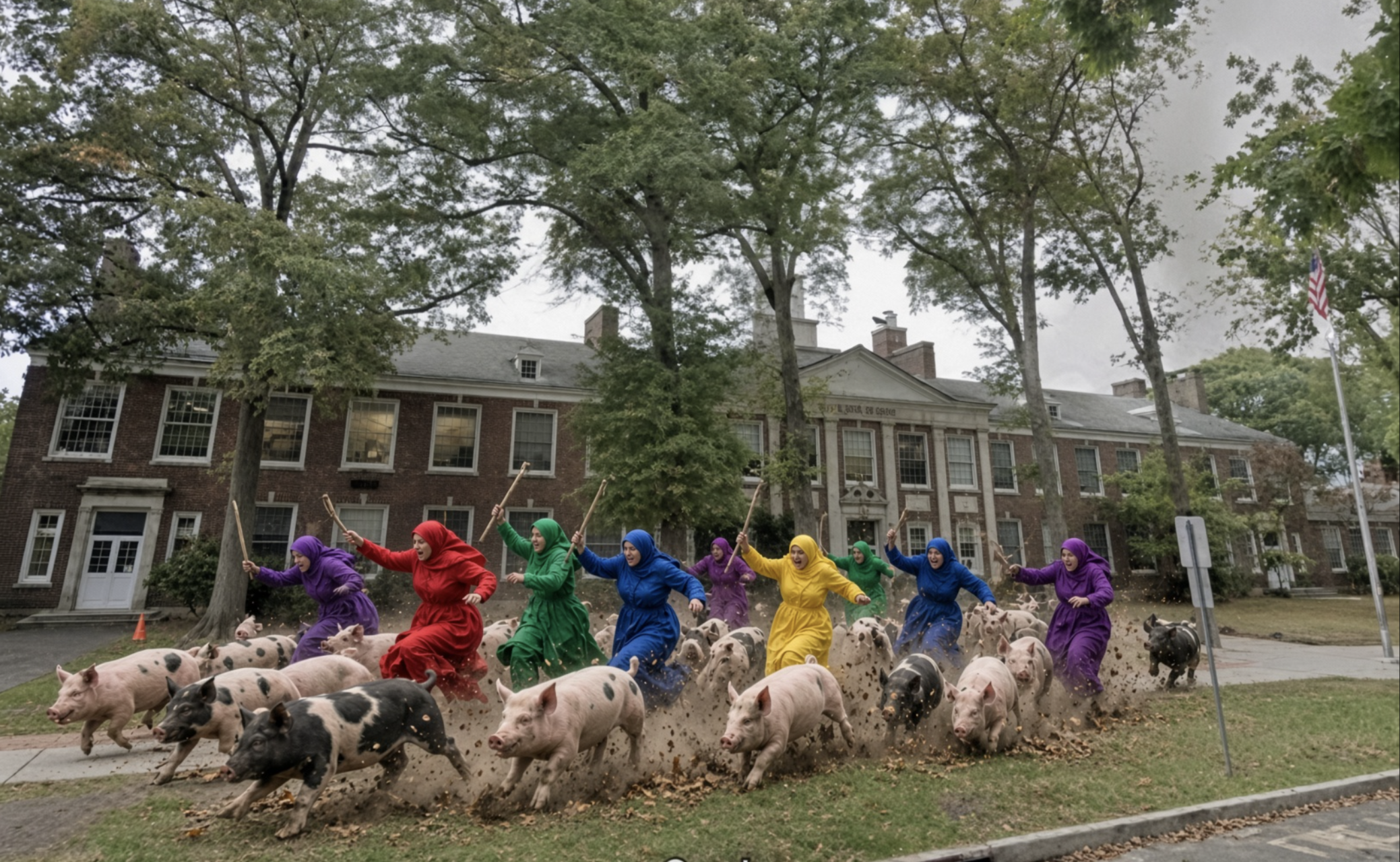
Will this be the next demand on Greenwich’s school system?

Pork Removed From [some northern] Italy's School Lunches

Italian schools are replacing traditional dishes with Muslim-friendly foods such as chicken curry and couscous.

The move in certain parts of Italy, which also includes the removal of pork from menus, is designed to accommodate the dietary and cultural needs of the growing number of pupils from migrant backgrounds.

Dishes being banished from schools in a province in the north of the country include air-dried San Daniele prosciutto, pasta all’amatriciana – which has pork jowl as a key ingredient – and porchetta or crispy suckling pig.

Proponents of the measure say it is well-meaning and inclusive, and it does not make sense to offer pork in schools where a large proportion of children cannot eat them because of their religious beliefs.

Gee, it seems like it’s been just a few hours [it was — ED] since I posted about a letter sent from (a small handful, I hope) of Greenwich parents to the School Board, demanding the removal of all Israeli flags, as well as yellow ribbons memorializing the Palestinians’ October 7th October massacre of Jews, be removed from the (Jewish) camp that’s been rented by the school for next week’s 6th Graders’ 4-day “Outdoor Classroom” trip.

In addition to their demand that anything that reminds them or others of their relatives’ and friends’ horrific acts three years ago, one Farhan Memon, Chairman of the CT branch of [We Don’t] CAIR also “asked'“ the district to seek an alternative location for the field trip, scheduled for next week:

“The district has an opportunity to resolve this constructively: preserve the Outdoor Classroom experience while choosing settings that allow every child, in every school, to participate with confidence and dignity,” he said. 

And change the menu, of course; we don’t want a single 6th Grade Muslim or Hamas sympathizer to be offended by the presence of pork in the cafeteria options.

Yup

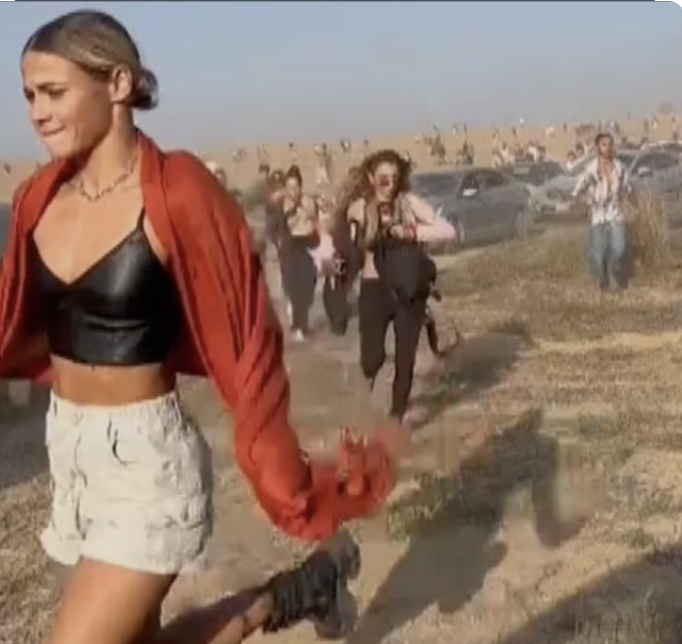
They're right: look how the sight of such flags at the Nova Music Festival turned a peaceful, loving group of Palestinians into a raging mob of rapists, kidnappers and murderers on October 7, 2023

Greenwich parents raise concerns over Israeli flags and yellow ribbons marking the October 7th “Israeli military experience” at site for middle school field trip

GREENWICH — Some Greenwich parents are asking the school district to have Israeli flags and other displays removed at a Massachusetts camp before sixth graders arrive for an overnight field trip next week, saying the symbols could make some students uncomfortable.

The four-day, three-night trip will take the middle school students to Eisner Camp, a Jewish sleepaway camp that rents its facilities to Outdoor Classroom, the organization running the program.

In a joint statement Tuesday, the parents said they saw what they called “political signage” in an orientation video and asked the district to remove the displays for the field trip or, “time permitting,” relocate the trip to another venue. The parents also requested the district create a policy for choosing future field trip sites.

Farhan Memon, chair of the [designated terror organization] Council on American-Islamic Relations in Connecticut, also sent a letter to Greenwich school Superintendent Toni Jones, urging the district to find another location. 

The parents and Memon raised the issue in the context of the ongoing Israel-Gaza war, with Memon writing to Jones, “The concerns raised must be understood in the context of the devastation inflicted on Palestinians in Gaza.” 

Memon said in his letter that parents noticed Israeli flags and yellow ribbons “prominently displayed” on the camp’s grounds in the video. According to The Associated Press, the yellow ribbons serve as a symbol to remember the hostages taken by Hamas during an attack on Oct. 7, 2023. 

“For Palestinian children whose families have experienced displacement, injury or bereavement, a venue displaying Israeli national symbols and associated with Israeli military experiences [bolding added] can evoke profound distress,” Memon wrote in his letter. “The district should not require those families to disregard that context as the price of participating in a school trip.” 

Superintendent Toni Jones to these Muslim “concerned parents” : “Go Pound Sand”. I’d have been ruder.

Greenwich Public Schools confirmed Wednesday that the field trip will still take place at Eisner Camp. In a statement, the district said, “We appreciate the feedback we have received from some of our families with sixth grade students as two of our middle schools prepare for one of their most important trips that fosters self-discovery, teamwork and adventure. We have listened to their concerns and we sincerely appreciate their sentiment.”

“We have made it clear to these families that we will not take a political or religious stand,” the district continued. “We will, however, provide an inclusive and safe educational environment for all Greenwich Public School students, including when they are on field trips under our care. Greenwich Public Schools has a working relationship with an organization that provides non-affiliated experiences for children, and they contract the venue space uniquely designed for high-quality outdoor learning,” 

Outdoor Classroom provides “an immersive learning experience” that focuses on environmental science, social-emotional learning and adventure education during its overnight programming, according to its website. Outdoor Classroom uses different venues across the Northeast for this program. 

“Outdoor Classroom is committed to fostering an inclusive and diverse environment for students and staff. We partner with camps throughout New England, including camps with and without religious affiliations, to provide students with immersive, hands-on learning experiences,” said a Wednesday statement from Outdoor Classroom.

Eisner Camp, which is a part of the Union for Reform Judaism, is one of the sites rented by Outdoor Classroom.

“We welcome Outdoor Classroom to use our camp facilities,” said Paul Isserles, director of Eisner Camp, in a statement Wednesday. 

“Throughout the year, many outside organizations rent our facilities for various programs. URJ Eisner Camp is proud to have an Israeli flag displayed for our camp program,” he said. 

In his letter to Jones, Memon asked the district to seek an alternative location for the field trip. 

“The district has an opportunity to resolve this constructively: preserve the Outdoor Classroom experience while choosing settings that allow every child, in every school, to participate with confidence and dignity,” he said. 

Jones responded to Memon, and included a leader at Greenwich Reform Synagogue in her emailed response. “I chose to email all of you together as this reflects how our community operates as a considerate and respectful community,” she said. 

“In regards to the Outdoor Classroom experience for two of our middle schools, there is no political or religious activity whatsoever,” she said. “The venue where our students will travel to in Massachusetts is a campsite which hosts a variety of their own camps (mainly in the summer months), and also contracts their site out for other companies who seek a unique venue for students to have an outdoor experience which cannot be provided otherwise. In our situation, we contract with Outdoor Classroom, who runs the multi-day experience as an independent organization, along with the support of our Greenwich Public School teachers and staff. Our GPS staff also come from a wide variety of backgrounds.”

Jones added that “this trip is a highlight of the year for many of our sixth grade students and they are excited to follow in the path of older brothers and sisters who also had this wonderful outdoor experience.” 

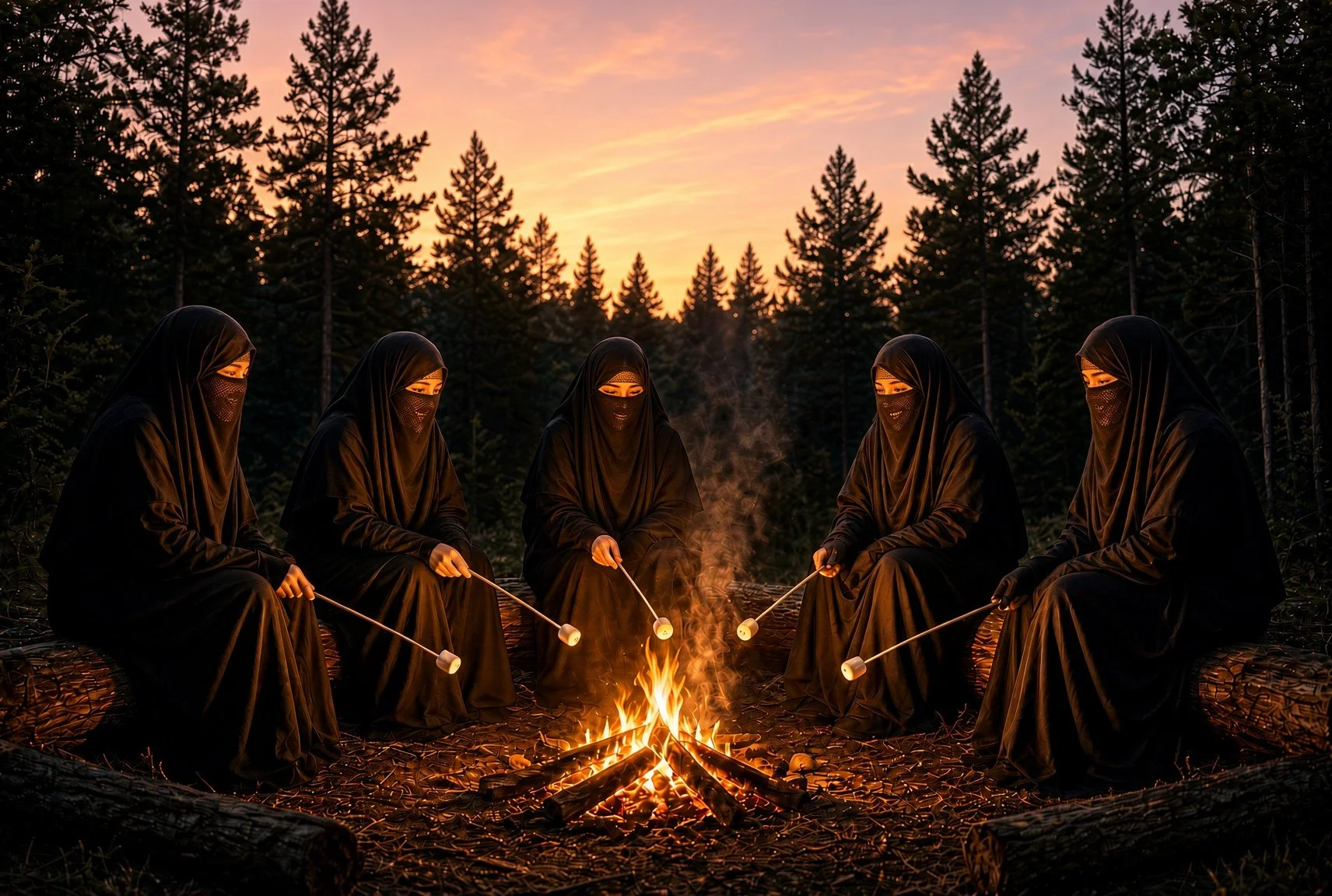
Next year’s camping experience, Insha’Allah:

I didn't post this yesterday because it was so long, but there have been a couple of reader comments on the issue, so here's a two-part look at "when's a lawyer a lawyer"?

Zacharia had for years offered legal analysis on national television, identifying herself as a lawyer. In reality, she never passed the bar exam in any state, as she admitted to Fox News’ Sean Hannity on Thursday evening. 

Calling herself an attorney might have landed her in legal trouble — at least in Connecticut, where representing oneself as a lawyer violates state law.

J. Paul Vance Jr., president of the Connecticut Bar Association, told CT Insider in a phone call that Zacharia could have been investigated had she been holding herself out as a lawyer in Connecticut.

There may not be data on the number of people who misrepresent themselves, but there are statistics on how many people fail the bar exam each year.

In that regard, Zacharia is in good company. A two-day test, hopeful lawyers spend months in preparation only for many to come up short. In 2011, the year she sat for the exam, Zacharia was one of almost 25,000 test-takers in the United States who didn’t pass.

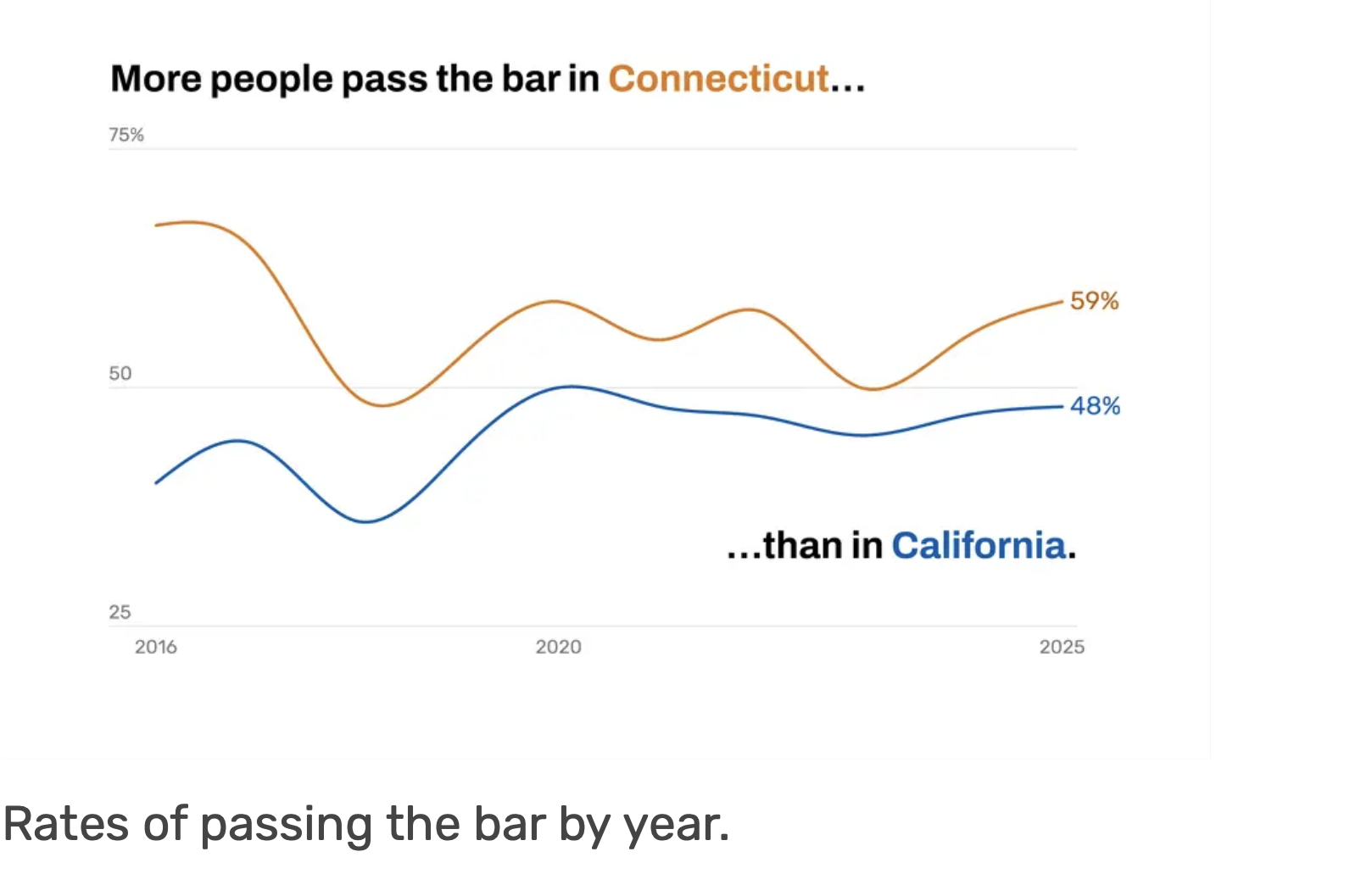
California, where she is believed to have sat for the exam, is one of the hardest states to pass the test in the country. That year, about half of exam-takers in the Golden State failed.

A couple of things: the bar exam is comprised of two parts, administered over two days: the nationwide Multi-State, and a second exam specific to the laws of the state examinees are seeking admission to. The Multi-State is pretty generic, testing for a general knowledge of broad legal concepts and if you flunk it, you probably shouldn’t have graduated law school to begin with.

The state portion can be harder, because it’s designed by already-admitted lawyers who want to limit competition. My best friend in law school, very, very bright, top of his class, LSAT scores (almost - ha!) as good as mine, once decided to take the Maine bar exam so that if he cared to, he could live and practice in Maine sometime in the distant future. It’s not required to retake the multi-state score in such circumstances (assuming you passed it in the first place) so my friend sat only for the Maine exam, and, to his utter outrage (and my gloating delight), he flunked!

At the time he was tested, Bob had already spent one year clerking for a federal judge (a highly competitive, coveted position), two years as an Assistant U.S. Attorney, 2 years as an associate at one of New England’s largest law firms and was into his 3rd year as partner at that same firm. If anyone knew “the law”, it was Bob. But he flunked anyway (the first time; he retook it, passed, was admitted, and then never left Boston); under the guise of testing for knowledge of local procedure, Maine, it turned out, tested on such super-specific topics as the sheriff’s fee for serving a subpoena on a witness. Hell, the sheriff would and could tell a lawyer requesting such service what the charge was or, gosh, the lawyer could pick the Practice Book off his desk and look it up himself. Stupid, irrelevant question, included in the test solely, in my and Bob’s opinion, to keep flatlanders from away, away.

All that said, the dismal failure rates cited in the linked-to article are misleading: many/most of the flunkees should never have been admitted to law school in the first place, and many of the law schools churning out these failers are low-tier schools teaching low-tier students — especially in California, where there are literally dozens of non-profit and even for-profit “law schools” that no one has ever heard of, and deservedly so: bar exam pass rates for their graduates are as low as 25%, some as low 10%. That’s why the state-wide passing percentage is so low.

Theres a high pass rate for those taking the exam the second time, but after that, forget it; there’s something in your brain or in your training that’s preventing you from succeeding in correctly filling out the little answer boxes and writing a few paragraphs on specific topics. Quit trying, relax, and go find something more profitable and enjoyable to do.

PART TWO: WHAT’S A “LAWER”?

I ASKED ChatGTP:

Q: Here's question I as a retired lawyer should know the answer to but don't: it's been revealed that the now one-day White House Press Secretary graduated from law school but never passed a bar exam. Is admission to at least one state's bar required before a law school grad can legitimately describe herself as a lawyer and, related question can she charge a client or be paid by an employer for legal advice? I'm sure that question was on at least some of the state bar exams I took (I passed several back in the early 1980s), but I really haven't thought about it since.

A: The short answer is generally no to the first question, and no to the second—with some important qualifications.

And I suspect that if you were taking the bar exams again today, you'd recognize the underlying principles immediately. The rules haven't changed nearly as much as the terminology surrounding them.

There are actually three distinct questions here:

  1. Can someone who graduated from law school but was never admitted to the bar legitimately call herself a lawyer?

  2. Can that person provide legal advice to clients for compensation?

  3. Can an employer hire and pay that person to perform legal work?

The answers turn on a distinction that sometimes gets blurred in ordinary conversation: having a law degree is not the same as being licensed to practice law.

One other preliminary point: passing a bar examination isn't invariably necessary for admission. Wisconsin's diploma privilege, admission on motion, and certain other admission pathways illustrate why the legally significant event is ordinarily admission to practice, not passing an examination.

1. Can an unlicensed law graduate call herself a lawyer?

In most American jurisdictions, not in a professional context where the designation implies authorization to practice law.

The National Conference of Bar Examiners addresses almost precisely your question in its guidance on when a successful bar applicant may begin using professional titles. Its advice is that even passing the examination doesn't authorize someone to call herself a lawyer. She must first satisfy the jurisdiction's admission requirements.

Georgia's State Bar is particularly unequivocal. Its published guidance says that even someone who has passed the examination and is employed by a law firm cannot use the title until formally admitted.

The terms lawyer and attorney are sometimes distinguished colloquially, with lawyer supposedly referring to someone educated in law and attorney referring to someone licensed to practice. But that distinction is not a reliable statement of American licensing law. Many jurisdictions treat the two titles equivalently when determining whether someone has improperly held herself out as authorized to practice.

Someone can, of course, truthfully describe herself as a law school graduate, a J.D., a legal researcher, or a legal analyst, provided the description isn't misleading.

2. Can she charge for legal advice?

Ordinarily, no.

The relevant principle is the prohibition against the unauthorized practice of law (UPL).

Providing individualized legal advice—applying law to a particular client's circumstances and recommending what that client should do—is generally among the activities reserved to licensed practitioners or people otherwise specifically authorized by law.

And here's a distinction you undoubtedly remember from your own practice: the prohibition does not depend upon compensation.

An unlicensed individual can engage in unauthorized practice even if she gives the advice free of charge. Charging a fee may create additional problems, but it isn't essential to the underlying violation.

There are exceptions for certain authorized nonlawyer services, including particular administrative proceedings and specialized regulatory practices. But a J.D. alone does not confer that authority.

3. Can an employer pay her to do legal work?

Absolutely. And this is where the answer becomes more nuanced.

A law firm can employ a J.D. who has never been admitted to practice and pay that person to perform substantial legal work.

That work may include legal research, preparing memoranda, reviewing contracts, drafting pleadings, and analyzing statutes or regulations.

The critical requirements are that the employee not independently engage in activities requiring a license, that appropriate attorney supervision be provided where necessary, and that the employer not misrepresent the employee's professional status.

An Illinois State Bar ethics opinion, for example, expressly permits law graduates awaiting admission to perform much of the work ordinarily assigned to first-year associates, subject to attorney supervision and responsibility for the work.

The same basic distinction applies to corporate employment. A corporation can pay an unlicensed J.D. to perform compliance work, legal research, contract administration, or policy analysis. But simply being an employee does not create a general exemption permitting that person to act as the corporation's independent legal counsel.

ABA Model Rule 5.5 provides special multijurisdictional rules for certain in-house counsel, but those provisions generally contemplate lawyers already licensed somewhere or otherwise authorized under applicable law.

4. Now, the particularly interesting California question

This brings us to Katie Zacharia.

According to CBS News reporting dated October 15, Zacharia acknowledged that she had taken but not passed the California bar examination. She has maintained that legal experts told her she could describe herself as a lawyer, although not an attorney at law, because she possessed a J.D. and had international transactional-law experience.

California Business and Professions Code § 6126(a) makes it a misdemeanor for an unauthorized person to hold herself out as practicing or entitled to practice law, or to actually practice law.

The significant issue is not simply whether she used the word lawyer. It is whether, considering her statements and their context, she represented herself as someone legally authorized to practice.

There's also a separate factual question: she reportedly identified herself as general counsel to a California nonprofit. That title and the duties she actually performed could be much more consequential than describing herself as a lawyer during a television appearance.

Her employment at a Chinese law firm raises still another issue. Working on international transactions under appropriate supervision is not necessarily the same as being admitted to practice Chinese law, and neither establishes authorization to practice California law.

My conclusion

I would distinguish the issues this way:

Conduct by an unlicensed J.D.

General legal position

Identifying herself as a J.D. or law graduate

Permissible

Calling herself a lawyer in a professional biography

Potentially misleading or prohibited

Calling herself an attorney entitled to practice

Generally prohibited

Giving individualized legal advice independently

Generally prohibited absent specific authorization

Being paid for supervised legal research or drafting

Permissible

Serving as independent general counsel

Generally requires appropriate licensure or other authorization

Offering general legal commentary on television

Generally permissible, provided professional status isn't misrepresented

What strikes me as particularly interesting about Zacharia's explanation is her apparent reliance on the distinction between lawyer and attorney at law. That might have some colloquial appeal, but it is not a distinction I would want to rely on as a defense to a California unauthorized-practice allegation.

And I think you'd recognize the underlying issue from your early-1980s bar exams: it is fundamentally a question of holding oneself out as authorized to practice, quite apart from whether one has actually represented a client.

One final wrinkle worth mentioning: California's statute expressly reaches representations of entitlement to practice. Consequently, an investigation wouldn't necessarily have to establish that Zacharia ever charged a client or even rendered a single piece of legal advice. The manner in which she presented her professional qualifications could itself be relevant.

That's what makes this more than an academic question about nomenclature.

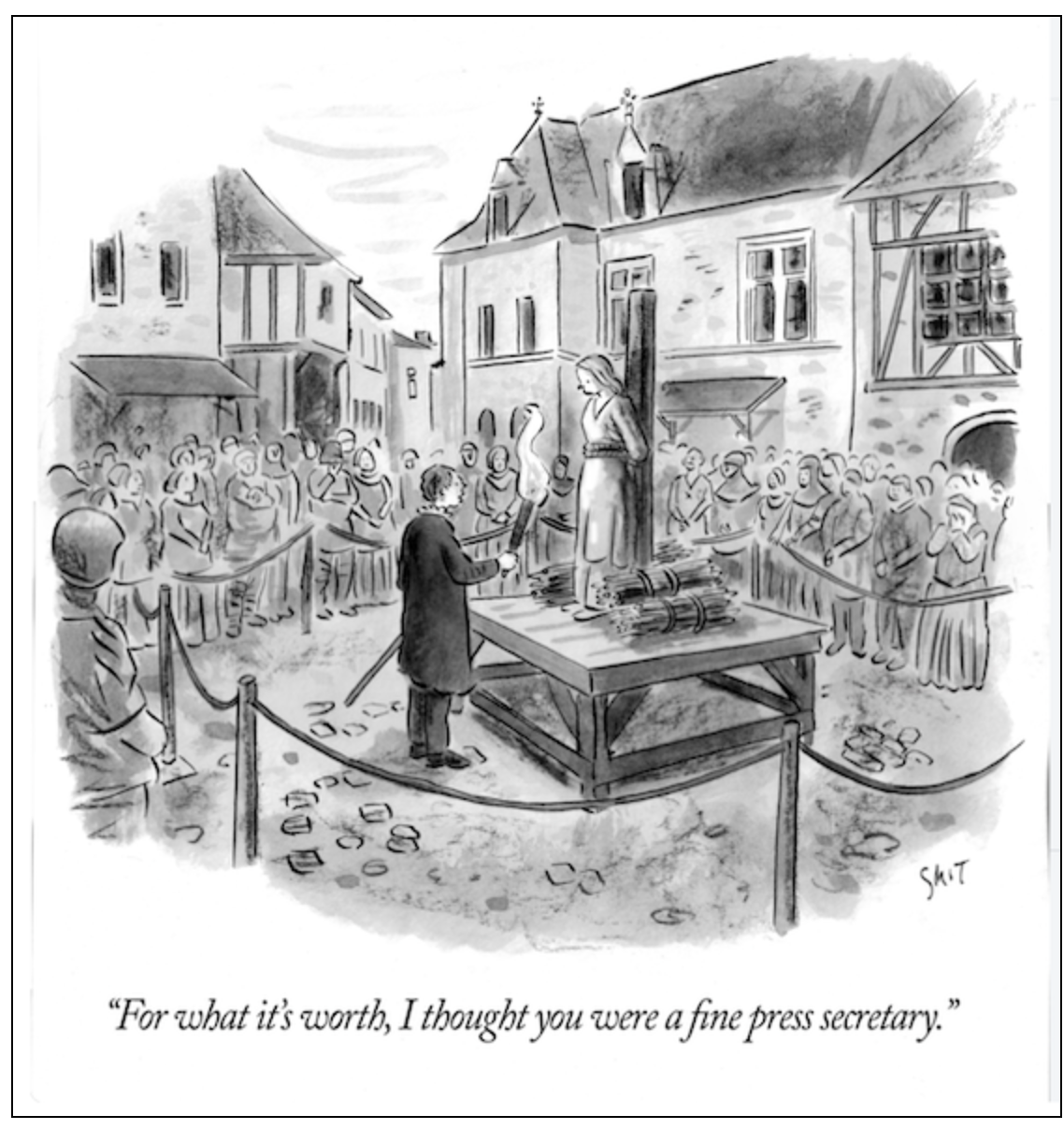
UPDATE: Saw this in Week in Pictures: