Say Goodbye To All That

Microsoft announces buyouts for 60K employees — quarter of workforce — as part of AI transformation

Microsoft is offering voluntary buyouts to 60,000 employees — over a quarter of its workforce — as the software giant works to cut costs and revamp its staff for the AI era.

Employees in the US, Canada, the UK, and India on Monday received a memo saying the voluntary exit offers “are a few of the ways we’re trying to meet different business needs while continuing to create opportunities for our own people to grow and contribute.”

Microsoft had about 223,000 employees at the time the memo went out.

The large corporations don’t need them and their participation diplomas are useless because they deliberately cheated their way through college and learned nothing, so what else have these kids to do except screw around?

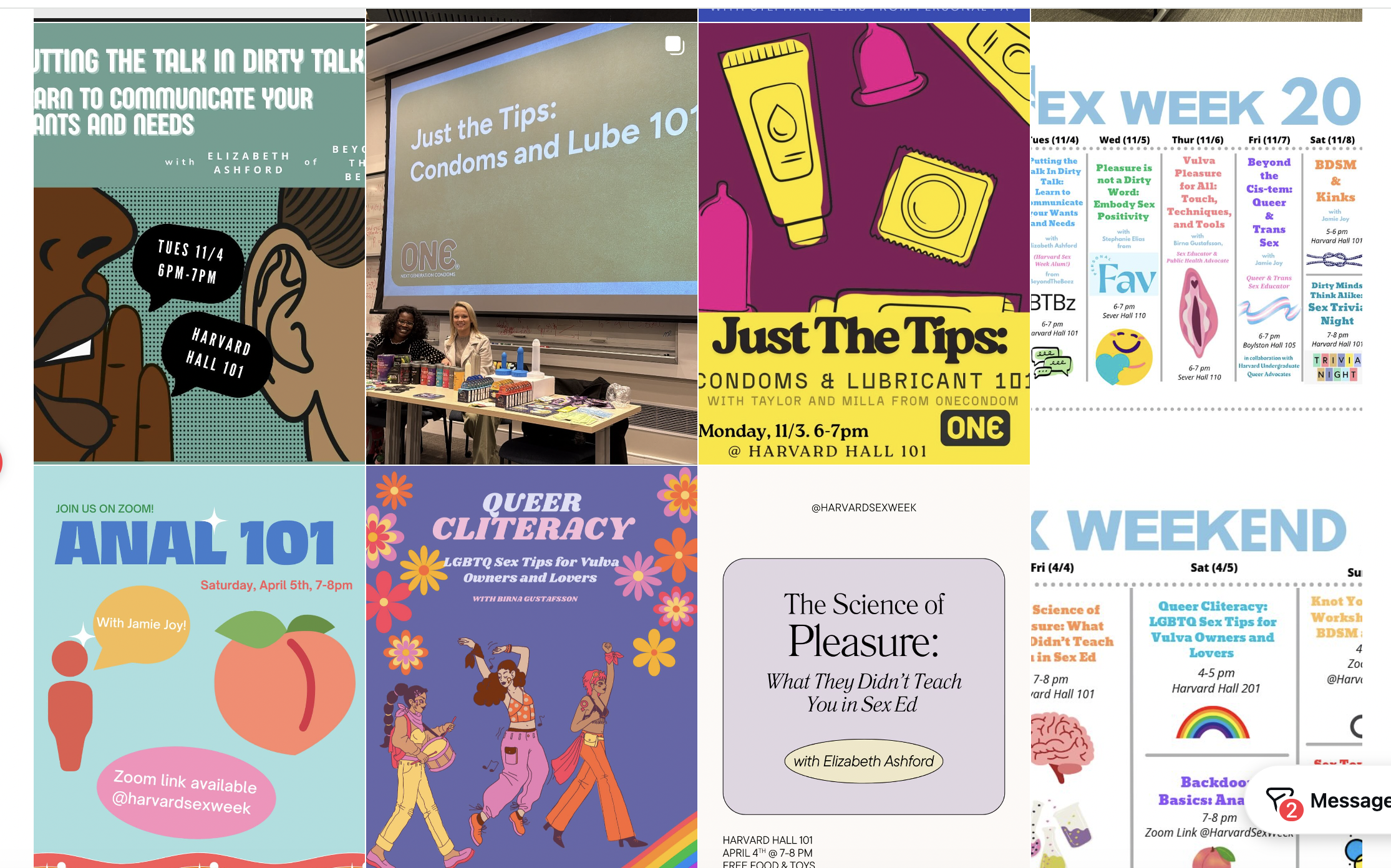
HIGHER EDUCATION BUBBLE UPDATE: ‘Comprehensive kink guides,’ ‘dildo-making contest’ part of University of Southern California’s annual Sex Week.

These learing opportunities are available at all our finest universities, like Harvard, whose own kink fest is coming in two weeks.
Hell, even the traditional dumping ground for the untalented and unwanted, government, seems to be in jeopardy

Dutch government to cut 16 percent of workforce as part of AI efficiency push.

No job is secure from the advent of artificial intelligence’s rapid growth. In a lengthy post detailing how the Dutch government plans to improve efficiency, it announced that it would get rid of 25,000 full time jobs over the span of a few years as part of cost-cutting measures. As part of that effort, the government is also planning to lean on AI to contribute to productivity.

According to the Dutch government, the goal is to cut back 900 million euros, or around $1 billion, in costs by 2027, with that estimate rising to 3.5 billion euros, or approximately $3.9 billion, by 2035. The post detailed that not all government agencies will be affected, with police and defense being excluded.

It’s unclear how the government plans to deploy AI to reduce costs, but the post read that the Dutch cabinet will “come up with goals and savings plans for deploying AI to work more productively,” in the first quarter of 2027. The country’s state secretary, Eric van der Burg wrote in a letter to the Dutch parliament that this overall effort was part of a push to make the government “simpler, smart and smaller.”

DOGE helped shrink the federal workforce to its lowest level in 60 years, but there’s always room for AI-enhanced improvement.


Old Greenwich, sale, NoVi (North of Village?)

18 Shady Brook Lane, listed at $3.450 million, has “sold direct” to Park Slope buyers for $3.5 million. Not quite sure how that works; sometimes, the listing owners have a family friend or relative who’s previously expressed interest in the property and their names are excluded from the listing’s requirement that a commission be paid on any completed sale.

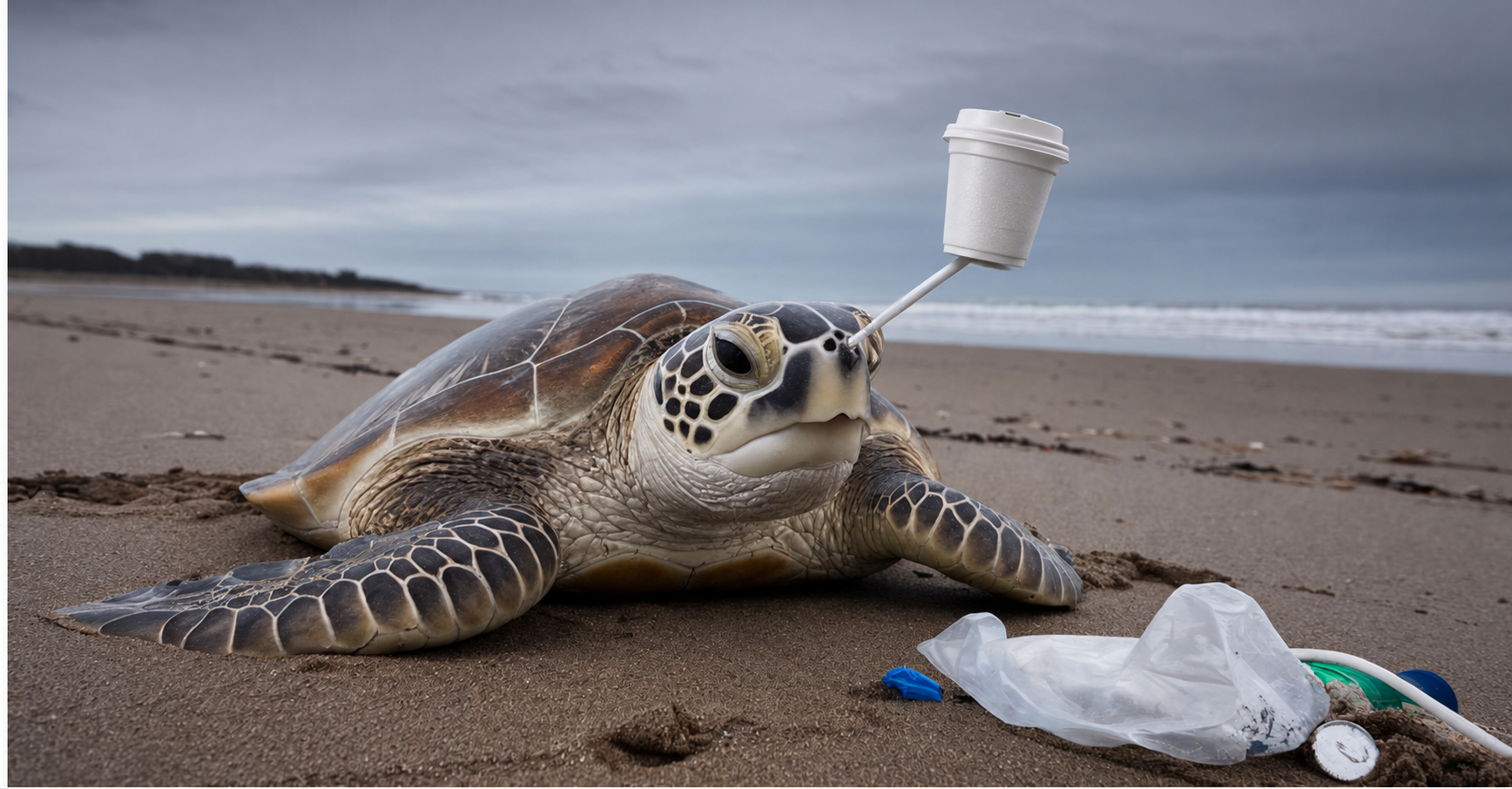
And styrofoam coffee cups are better than paper leakers*

moral: don’t leave environmental policies to 7-year old’s school projects or paste-eating “Good intentions” eco-warriors.

A South Korean government-commissioned study has determined that paper straws are actually worse for the environment than plastic straws.

Researchers measured the full life cycle impact of four types of straws: plastic straws, paper, biodegradable, and bio-based polyethylene.

From The Korea Herald:

Conventional plastic straws had the smallest impact in 10 of the 16 categories, including climate change, acidification, particulate matter, and human toxicity.

Bio-PE straws had the largest impact in 10 categories, including ozone depletion, acidification, and smog.

Paper straws had the largest impact in three categories, while biodegradable plastic straws did so in two.

South Korea has some skin in the game here. They restricted plastic straws at cafes and restaurants in 2022. A survey, of course, found that almost 90% of Koreans prefer regular old plastic straws.

And they’re environmentally correct in doing so.

Compared with conventional plastic straws, paper straws also had 2.04 times the acidification impact.

Bio-PE straws were even worse, with 16.18 times the human carcinogenic impact and 5.9 times the acidification impact.

Biodegradable plastic straws had 3.34 times the carcinogenic impact and 1.98 times the acidification impact.

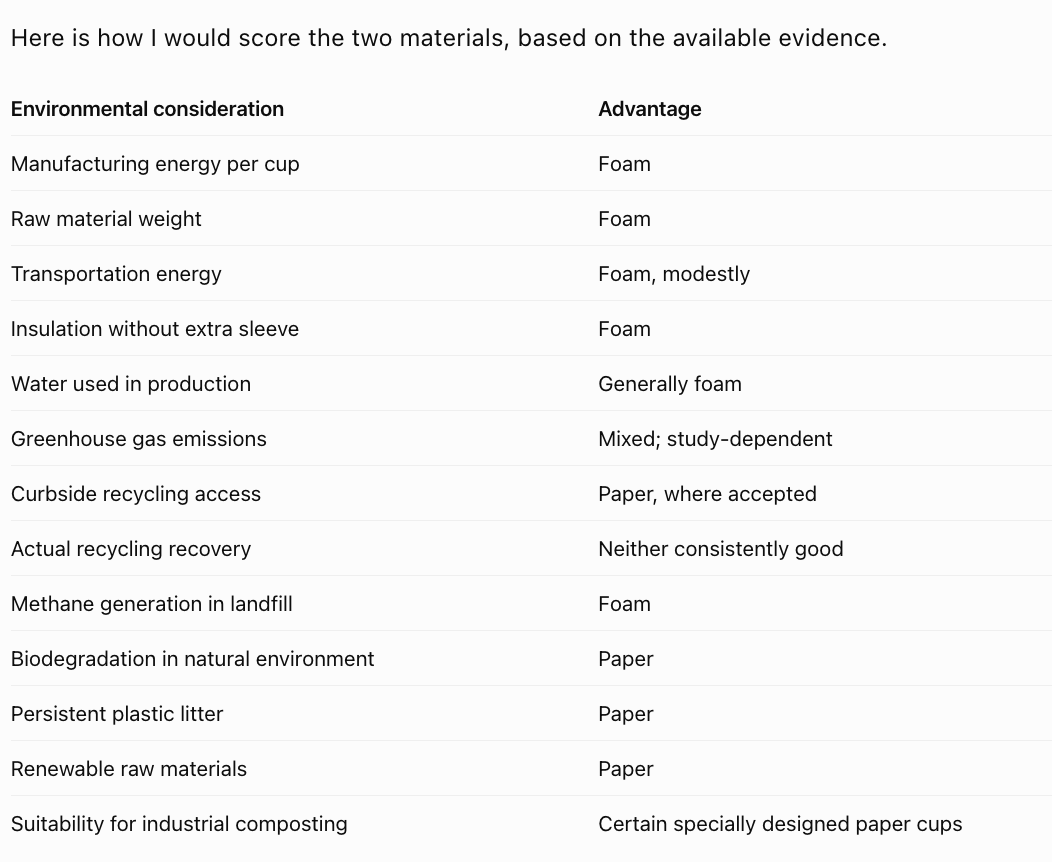
*I have a lengthy, lengthy ChatGTP analysis of the environmental impact of styrofoam vs paper cups, suitable for framing and available on request, but it’s far too long to burden readers of this blog (especially our Irish ones), so here’s just the concluding summary:

Foam tends to perform better on resource efficiency; paper tends to perform better on environmental persistence and litter. The importance assigned to those different impacts determines the winner.

One final point: A particularly revealing study is A Critical Comparison of Ten Disposable Cup LCAs (2013). Rather than advocating for either material, its authors examined why different scientific studies reached different conclusions.

That is the sort of work I would give more weight to than the claims of either the plastics industry or the anti-plastics movement.

And if I were evaluating a proposed ban on foam coffee cups, I'd insist that its supporters distinguish between reducing plastic litter, which is a defensible environmental objective, and reducing energy consumption or greenhouse gas emissions, which the evidence does not consistently support. Those are different policy goals, and conflating them makes for poor public policy.

This is now, that was then; I prefer then

october 17, 2026

I could swear that I've seen this house before – oh! that's right: 33 days ago

3A W End Court, Old Greenwich, listed June 10th $1.595 million, went to “highest and best” immediately, and closed September 23rd, 2006 at $2.135 million. That lucky bidder has put it back on the market today for the same price, $2.135.

Now you see it, now you do, I assume there’s a story here; I hope it’s not an unhappy one.

Ah, those Jews — is there anything they won't do, nothing they'll stop at?

A new ad supporting Michigan Democratic Senate candidate Abdul El-Sayed blames Israel for rising grocery prices, triggering allegations of antisemitism.

The spot shows a couple in a grocery store grumbling over the prices of eggs and bananas — and claiming that US aid to Israel is the reason they can’t afford the staples.

“Honey, you’re going to have to put those eggs back,” the woman says. “They like eggs, but we have to set that $7 aside for killing Palestinians.”

“Yeah, and now we’re giving them another $26 billion,” she explains. “It’s like $161 per person. Apparently it’s costing us a lot of money to drop bombs on Gaza.”

The spot was released by Rebellion PAC, created by “The Young Turks” co-founder Cenk Uygur, and blames the war in Iran for high gas prices before accusing Rogers of being too supportive of Israel.

“Mike Rogers is for they/them,” a narrator says … “Abdul El-Sayed is for you.”

An interesting thought problem: what do we do when we run out of students who no longer learn?

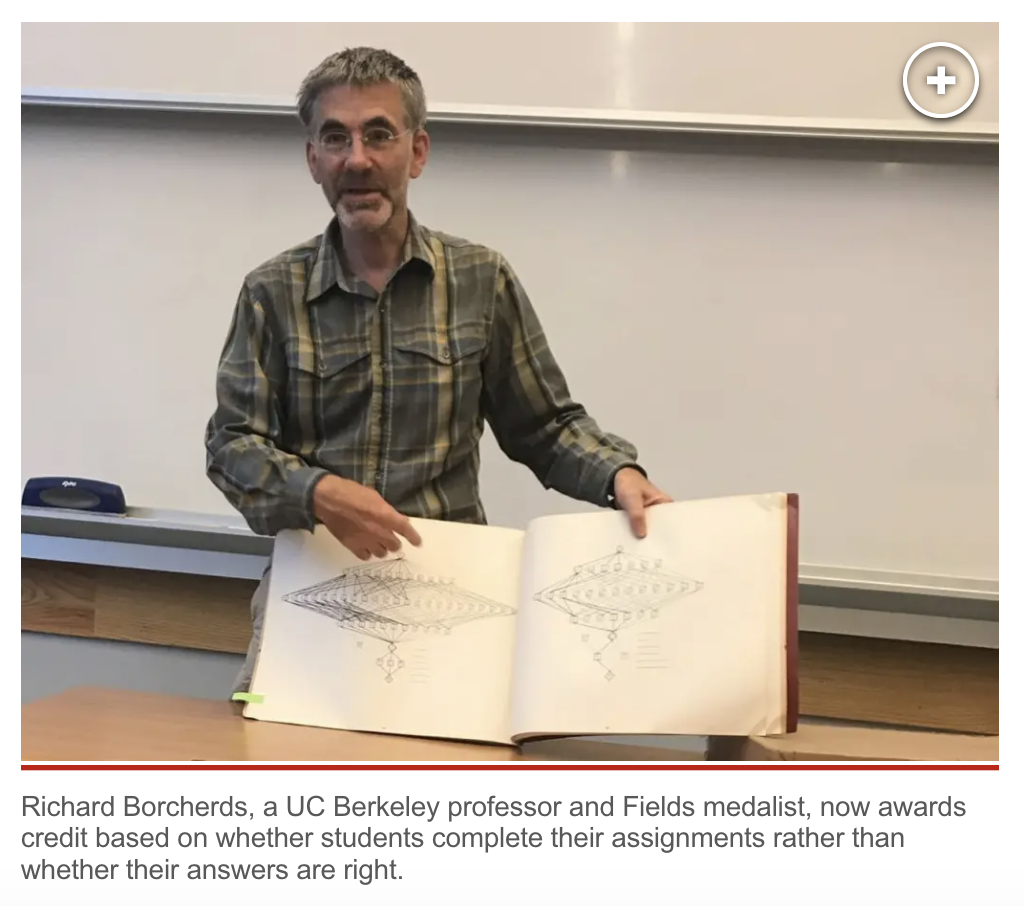
We still have the borcherds, but who will replace them?

UC Berkeley professor refuses to grade his students’ homework after noticing worrying trend: ‘No point’

A UC Berkeley professor has stopped grading students’ homework for correctness after noticing artificial intelligence tools were helping them rack up top marks.

Richard Borcherds, a renowned mathematician who received the prestigious Fields Medal in 1998, said widespread student use of AI has undermined the value of traditional homework grading.

“Student use of AI for homework is now widespread,” Borcherds told The California Post. “Grading for correctness just adds a huge incentive for them to use AI for homework instead of doing it themselves, and penalizes students for honesty.”

Borcherds now awards credit based primarily on whether students complete their assignments rather than whether their answers are correct, acknowledging that he does not know of a better solution.

The professor said it has become increasingly difficult to distinguish work produced by artificial intelligence from work written by students themselves.

“There is no easy way to tell the difference between human and AI generated work,” he told The California Post. “Occasionally one could tell it is AI because AI made a few characteristic errors, but AI has now improved so much that it rarely makes obvious mistakes.”

His comments come as AI tools grow increasingly capable of tackling complex academic problems, raising questions about how universities will assess students’ work and prepare the next generation of mathematicians.

Borcherds’ concerns about the future of mathematics were also highlighted in an interview with the Daily Californian, UC Berkeley’s student newspaper.

“If AI continues to improve at present rate, then, in a few years, there’ll be nothing human mathematicians can do that AI can’t do better,” Borcherds told the paper.

The professor expressed uncertainty about whether aspiring mathematicians should still pursue the field, saying that just five years ago, mathematics appeared to offer relatively strong protection against the technological disruption now sweeping through other professions.

“I have no idea what to advise. I even asked ChatGPT this exact question, and even ChatGPT said it didn’t have any idea what was going to happen,” he told the student newspaper.

….

“There have been plenty of technical breakthroughs in the past — hand weaving was put out of business by looms, and horses were put out of business by motor cars, and so on,” Borcherds said. “This is the first time anything like this has happened in mathematics, though.”

With no better solution in sight, Borcherds told The California Post that he now bases grades mainly on in-person exams, where students are not allowed to use electronic devices.

Online exams, meanwhile, have become “a waste of time,” he said, because some students use AI to answer the questions.

Borcherds said he cannot tell which students are using AI but has noticed that average scores rise substantially on online exams.

….

And this final note

For Borcherds, however, the challenges of grading homework may pale in comparison with the wider consequences of artificial intelligence.

“If the worst effect of AI on society is that it is harder to assess homework then I will be very relieved,” he told The California Post.