Four surprisingly fascinating, fun reads on subjects that I'd never have suspected would be so interesting
/
Gideon and Susie both read this book and passed it along to me, and now I’m recommending it to FWIW readers.
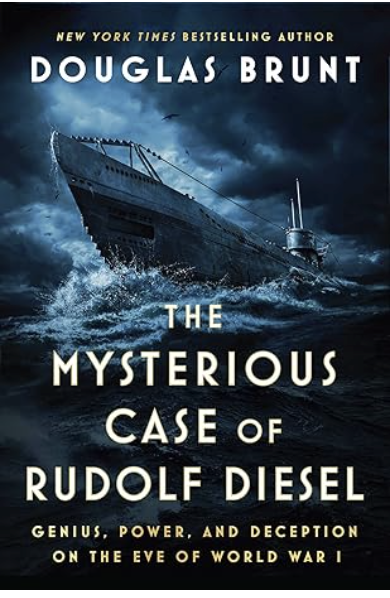
The Mysterious Case of Rudolph Diesel
This instant New York Times bestselling “dynamic detective story” (The New York Times) reveals the hidden history Rudolf Diesel, one of the world’s greatest inventors, and his mysterious disappearance on the eve of World War I.
September 29, 1913: the steamship Dresden is halfway between Belgium and England. On board is one of the most famous men in the world, Rudolf Diesel, whose new internal combustion engine is on the verge of revolutionizing global industry forever. But Diesel never arrives at his destination. He vanishes during the night and headlines around the world wonder if it was an accident, suicide, or murder.
After rising from an impoverished European childhood, Diesel had become a multi-millionaire with his powerful engine that does not require expensive petroleum-based fuel. In doing so, he became not only an international celebrity but also the enemy of two extremely powerful men: Kaiser Wilhelm II of Germany and John D. Rockefeller, the founder of Standard Oil and the richest man in the world.
The Kaiser wanted the engine to power a fleet of submarines that would finally allow him to challenge Great Britain’s Royal Navy. But Diesel had intended for his engine to be used for the betterment of the world.
Now, New York Times bestselling author Douglas Brunt reopens the case and provides an “absolutely riveting” (Chris Bohjalian, #1 New York Times bestselling author) new conclusion about Diesel’s fate. Brunt’s book is “equal parts Walter Isaacson and Sherlock Holmes,[and] yanks back the curtain on the greatest caper of the 20th century in this riveting history” (Jay Winik, New York Times bestselling author).
And three other books on seemingly prosaic subjects that turn out to be page -turners: I read all three of these in the years they were first published, but all are still entirely satisfying upon re-reading. The first, “Cod” unfortunately, is only available in book form as a used paperback, but it’s also on Kindle, so that works.
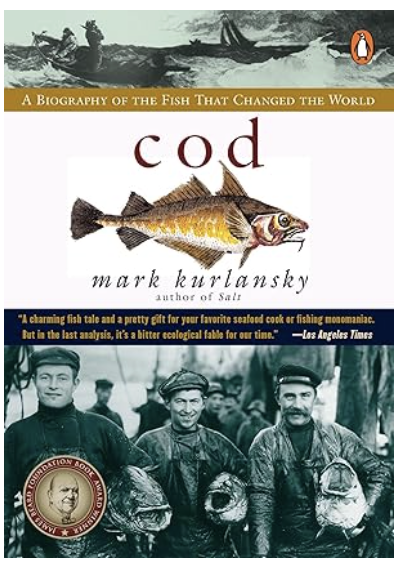
Cod: A Biography of the Fish that Changed the World Paperback – July 1, 1998
An unexpected, energetic look at world history on sea and land from the bestselling author of Salt and The Basque History of the World
Cod, Mark Kurlansky’s third work of nonfiction and winner of the 1999 James Beard Award, is the biography of a single species of fish, but it may as well be a world history with this humble fish as its recurring main character. Cod, it turns out, is the reason Europeans set sail across the Atlantic, and it is the only reason they could. What did the Vikings eat in icy Greenland and on the five expeditions to America recorded in the Icelandic sagas? Cod, frozen and dried in the frosty air, then broken into pieces and eaten like hardtack. What was the staple of the medieval diet? Cod again, sold salted by the Basques, an enigmatic people with a mysterious, unlimited supply of cod. As we make our way through the centuries of cod history, we also find a delicious legacy of recipes, and the tragic story of environmental failure, of depleted fishing stocks where once their numbers were legendary. In this lovely, thoughtful history, Mark Kurlansky ponders the question: Is the fish that changed the world forever changed by the world's folly?
“Every once in a while a writer of particular skill takes a fresh, seemingly improbable idea and turns out a book of pure delight. Such is the case of Mark Kurlansky and the codfish.” –David McCullough, author of The Wright Brothers and 1776
Kurlansky also wrote “Salt”, which is just as well written — who’d have thought it?
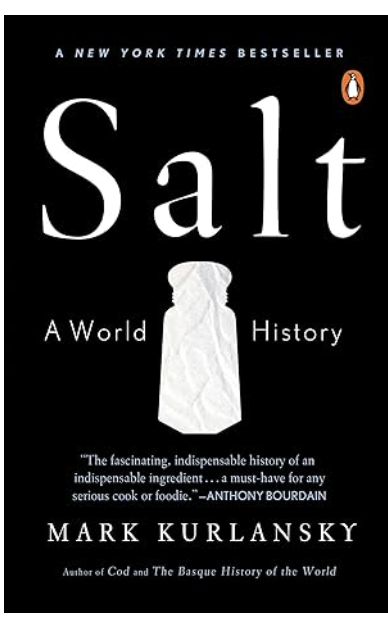
Salt: A World History Paperback – Illustrated, January 28, 2003
“Kurlansky finds the world in a grain of salt.” - New York Times Book Review
An unlikely world history from the bestselling author of Cod and The Basque History of the World
Best-selling author Mark Kurlansky turns his attention to a common household item with a long and intriguing history: salt. The only rock we eat, salt has shaped civilization from the very beginning, and its story is a glittering, often surprising part of the history of humankind. A substance so valuable it served as currency, salt has influenced the establishment of trade routes and cities, provoked and financed wars, secured empires, and inspired revolutions. Populated by colorful characters and filled with an unending series of fascinating details, Salt is a supremely entertaining, multi-layered masterpiece.
And dating all the back to 1976 but a classic that’s stood up to time’s passage far better than I have, “Beautiful Swimmers”
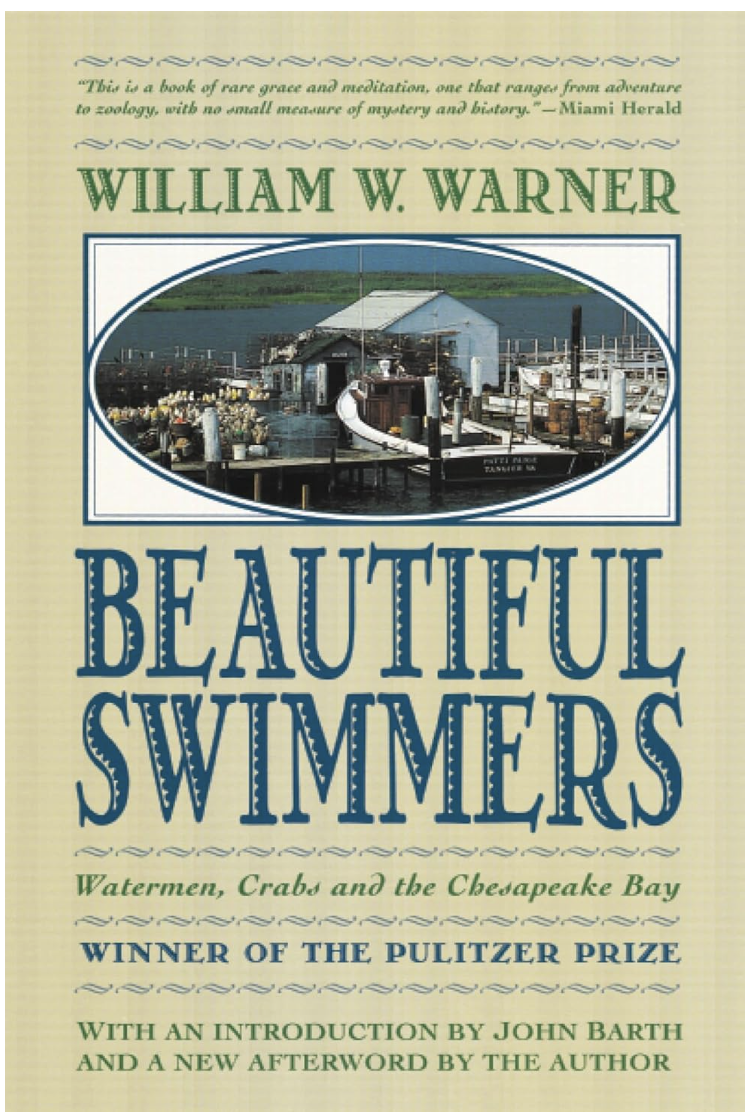
Beautiful Swimmers: Watermen, Crabs and the Chesapeake Bay Paperback
The classic Pulitzer Prize-winning study of the Atlantic blue crab and the people of the Chesapeake Bay who have depended on it for generations.
For decades, William Warner's exploration of the Atlantic blue crab and the Chesapeake Bay has delighted thousands of readers and become a modern American classic. Nature enthusiasts and fans of fine literature alike will find Beautiful Swimmers a timeless and enchanting study in the tradition of Rachel Carson and Annie Dillard.
In these pages, we are immersed not only in the world of the Chesapeake's most intriguing crustaceans, but in the winds and tides of the Bay itself and the struggles of the watermen who make their living in pursuit of the succulent, pugnacious blue crab.
"This is a book of rare grace and meditation, one that ranges from adventure to zoology, with no small measure of mystery and history." --Miami Herald
"Beautiful Swimmers is wonderful to read and a distinguished addition to our literature." --Larry McMurtry